
Saturday March 8, 2025
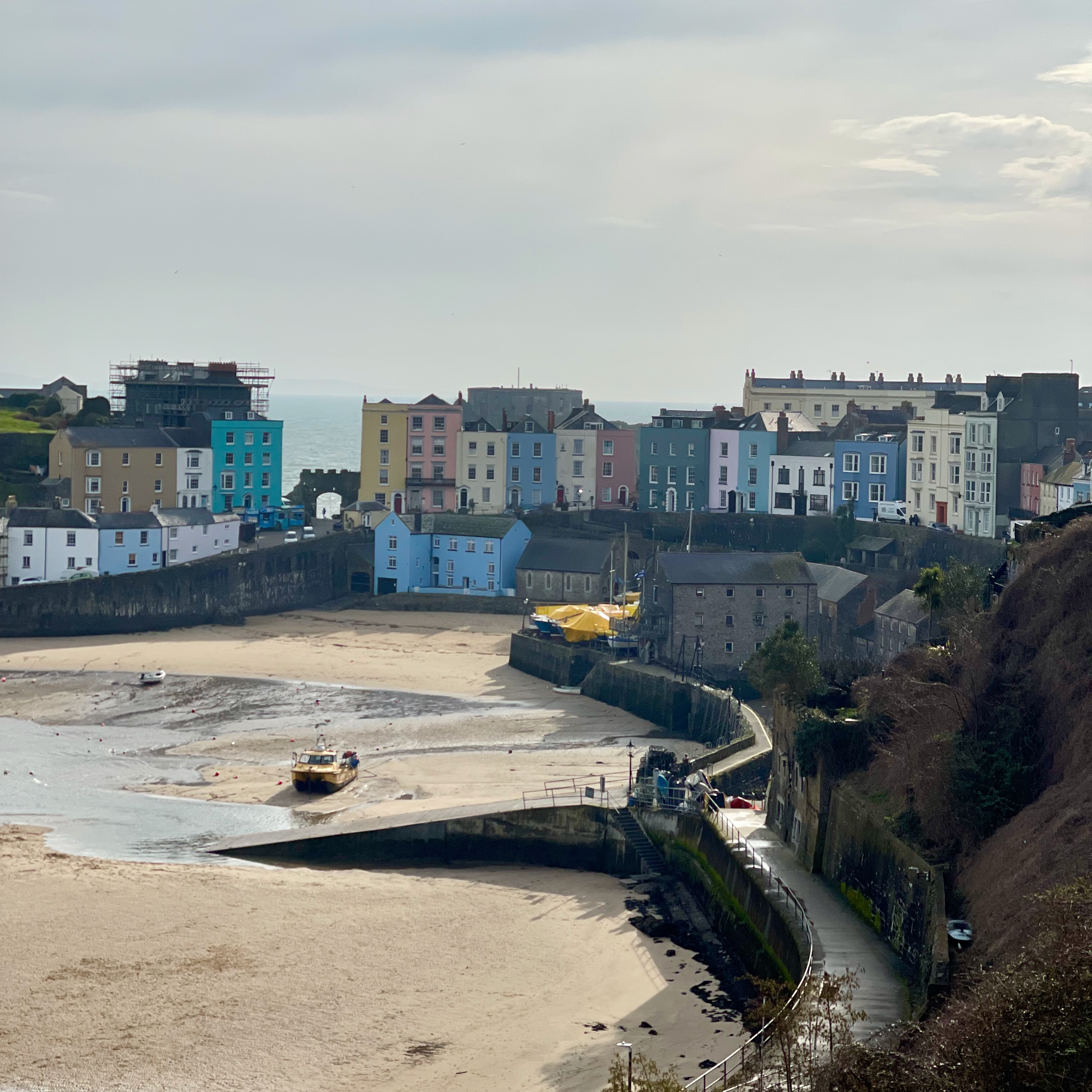
Today was a day of two halves. We spent the morning walking around the town and the 13th century town walls, and the afternoon doing faff all.
A bit about Tenby’s history…
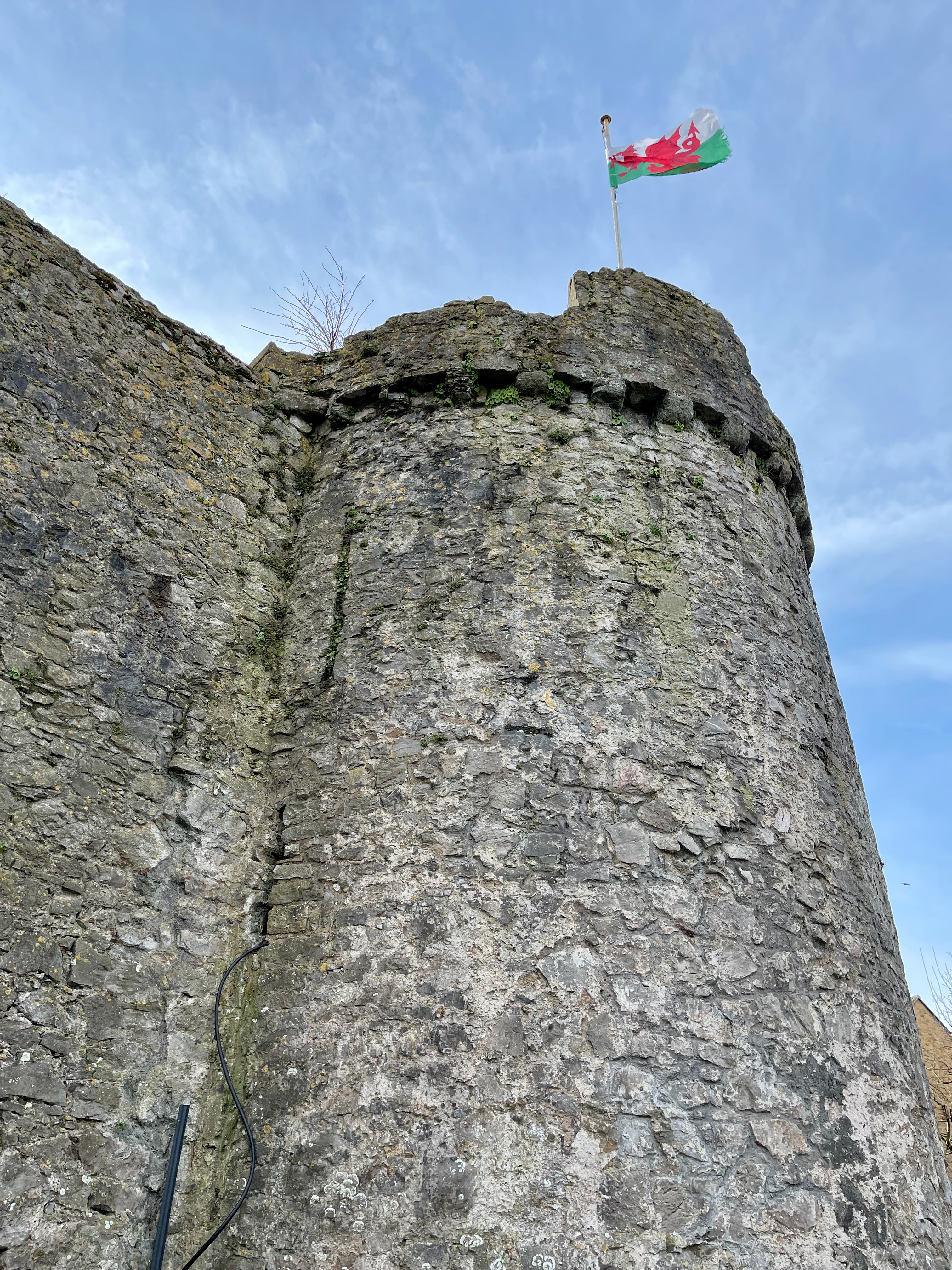
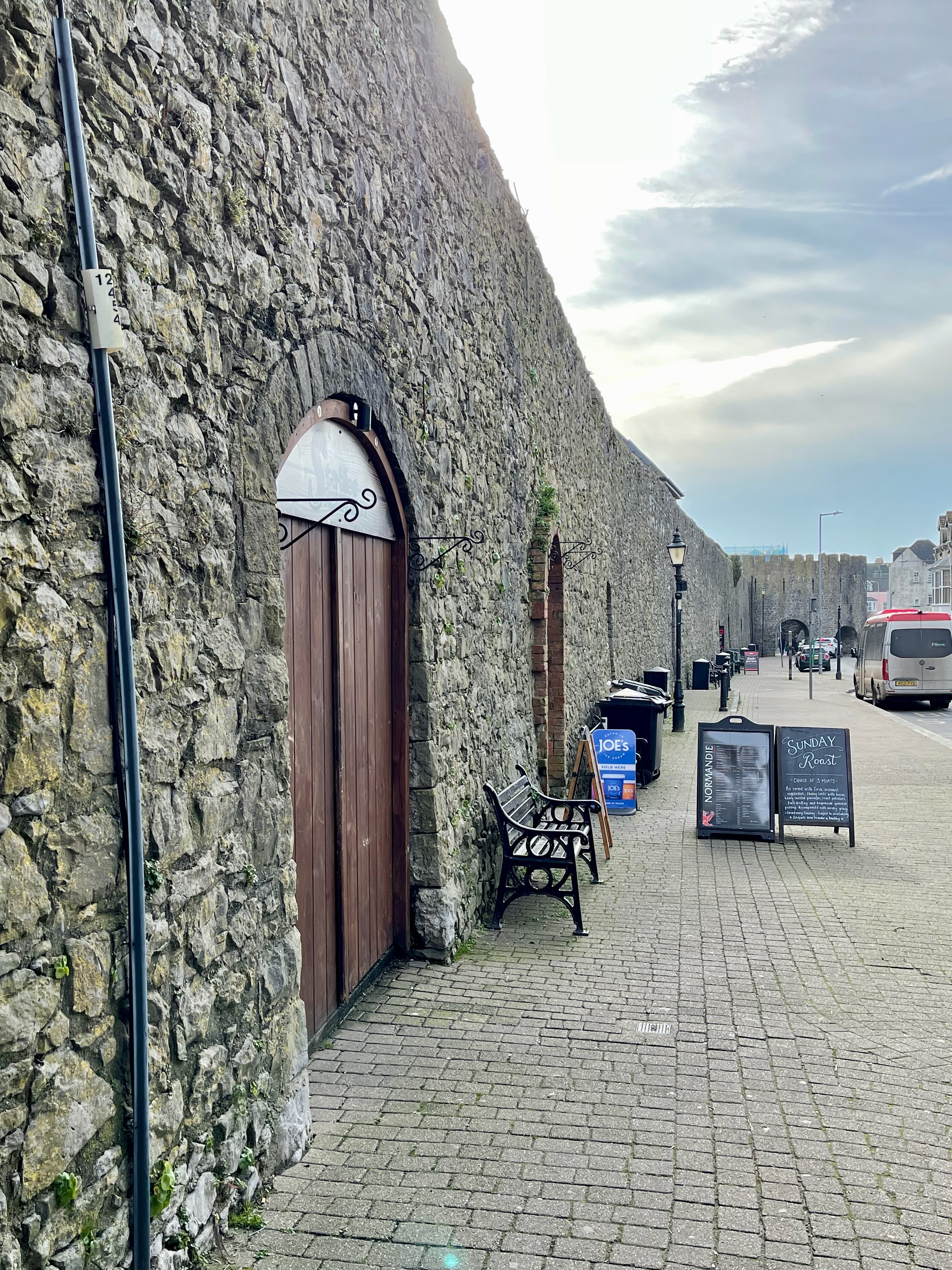

Tenby’s history is also one of two halves.
Tenby’s Welsh name Dinbych-y-Pysgod means Little Fortress of the Fish – and long before it was a tourist town, it was a fishing town. With a naturally sheltered harbour and its position on the far west coast, Tenby’s early history was also strategically important – and, as befell most towns with a strategic position in those days – a tumultuous one.
The earliest reference to the town was in a poem from the 9th century, but it was when it was taken by the Normans when they invaded West Wales in the early 12th century that things got serious. The first stone wall fortification was built on (the creatively named) Castle Hill, and trade grew as it developed into a major seaport.

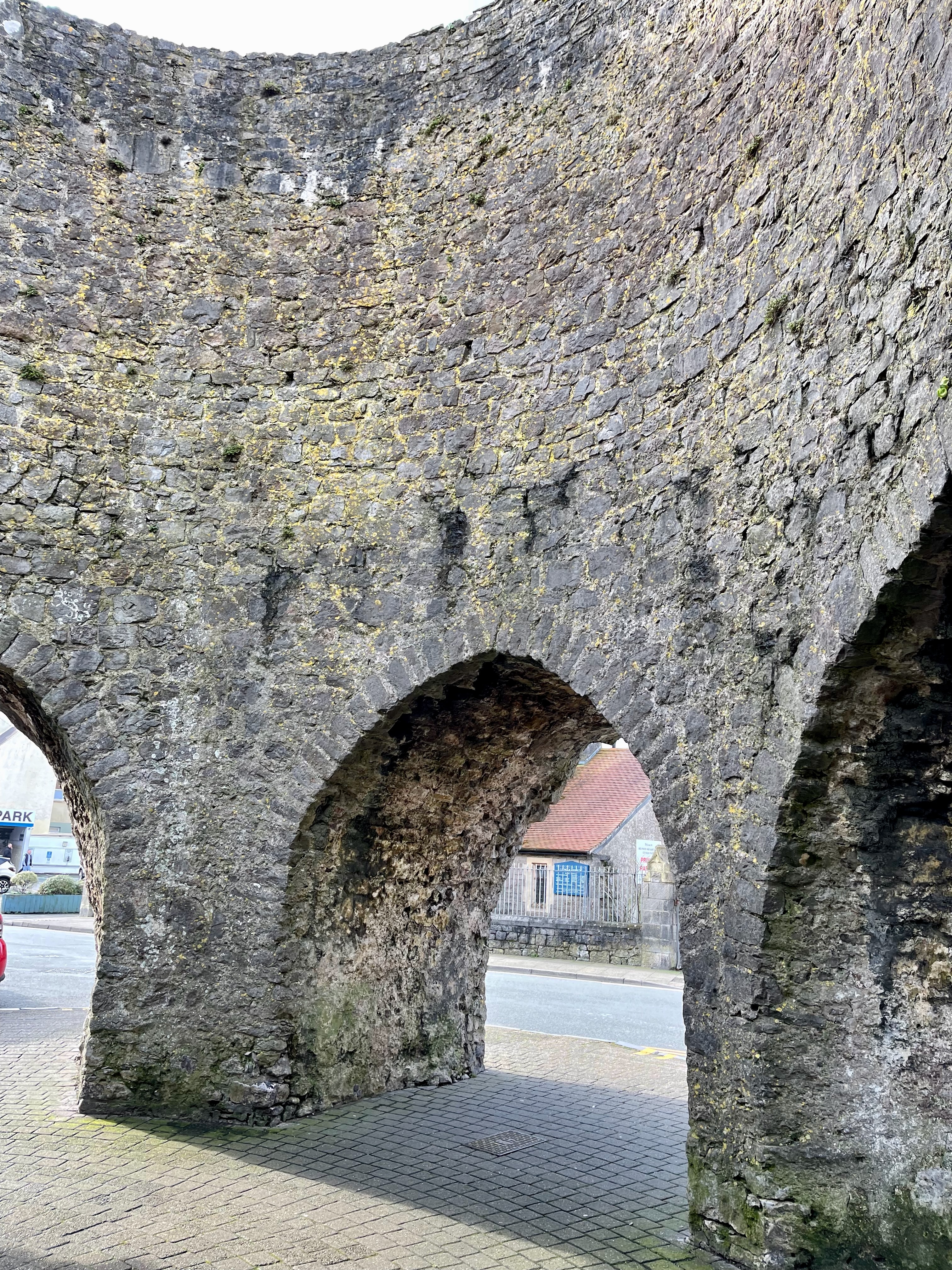

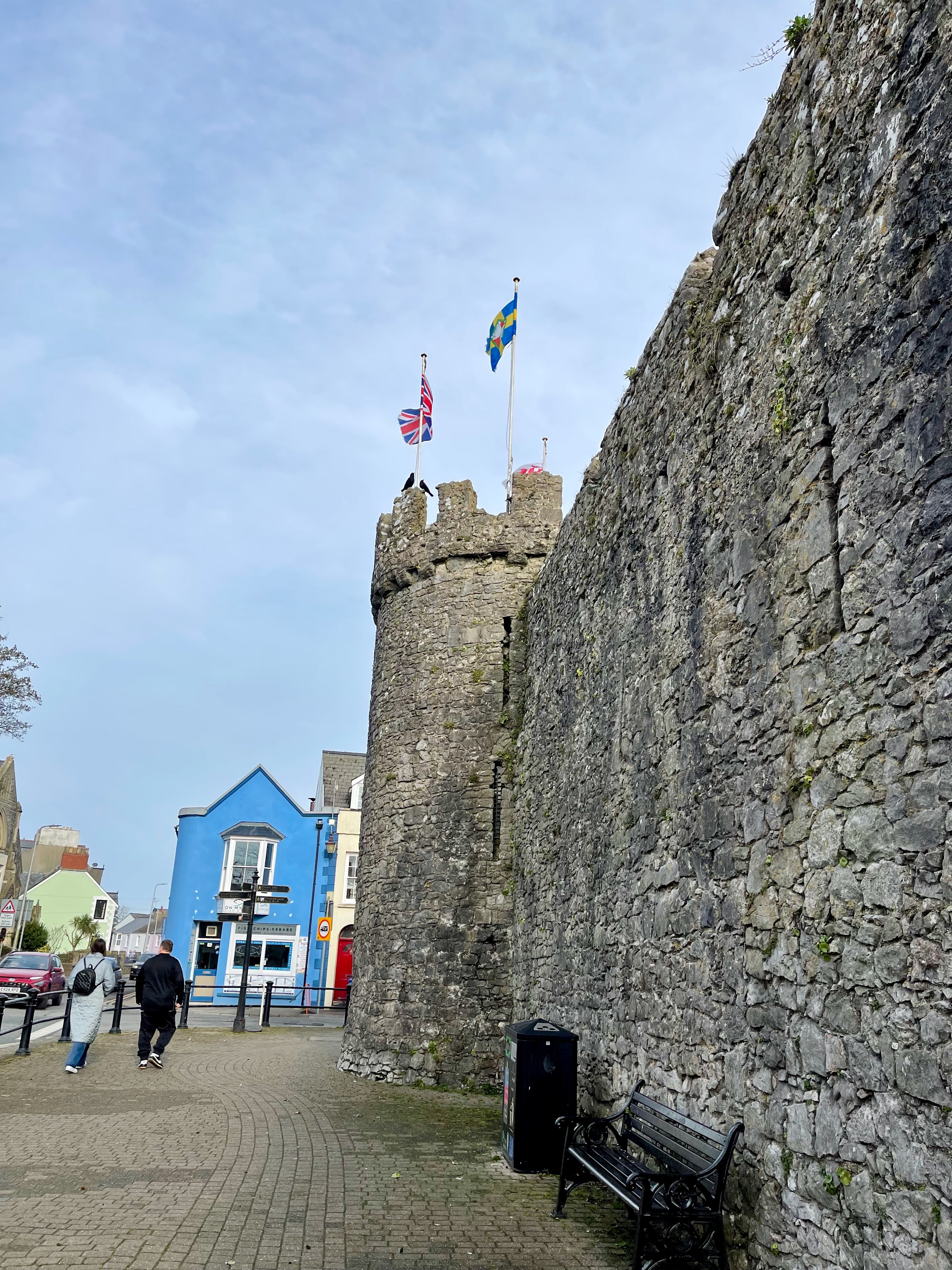
An attempt to assassinate Cadell ap Gruffydd, a Welsh prince, and a couple more sackings over the next century resulted in the construction of Tenby’s town walls in the 13th century. This made the castle on Castle Hill obsolete and by the end of the 14th century it had been abandoned. (I’ll post some pics of what’s left of this in the next instalment).
These defences were further strengthened in the 15th century during the War of the Roses, and Henry Tudor (the future King Henry VII) sheltered in Tenby before sailing into exile for a bit.
By this time Tenby was an important trading port with traders sailing along the coast to Bristol, Ireland and further afield to France, Spain and Portugal. The first oranges in Wales came into Tenby from Portugal in 1566. At this time there were also fears of a second Spanish Armada so the stone defences were strengthened even more.


The decline of Tenby’s fortunes in the 17th century began when the town declared for the wrong side in the English Civil War, and then later when a plague outbreak killed half of Tenby’s remaining population.
With limited resources, infrastructure and people, the economy fell into decline and the merchant class left. By the end of the 18th century it was reported that two-thirds of the old town was abandoned and in ruins.
Tenby’s reinvention in the early nineteenth century came about as a result of the ongoing Napoleonic wars in Europe. With Europe no longer a preferred destination for the British upper classes, and a growth in saltwater sea-bathing for health purposes, seaside destinations closer to home became more attractive. Tenby was one of those towns where investment centred around attracting rich Victorian tourists. Further, because walkways were built to accommodate Victorian nannies pushing prams, many of the beaches today still have good accessibility.
The railway was extended as far as Pembroke in the 1860s and the rest is, as they say history. Today Tenby’s economy is based around tourism.
Walking Tenby

While it was a mild start this morning, the “feels like” temperature has been just 2C all day. It’s been the sort of cold day that gets into your bones, despite being kitted out in parkas, beanies and scarves.
The end of our little laneway brought us to the harbour, so that’s where we began our walk.


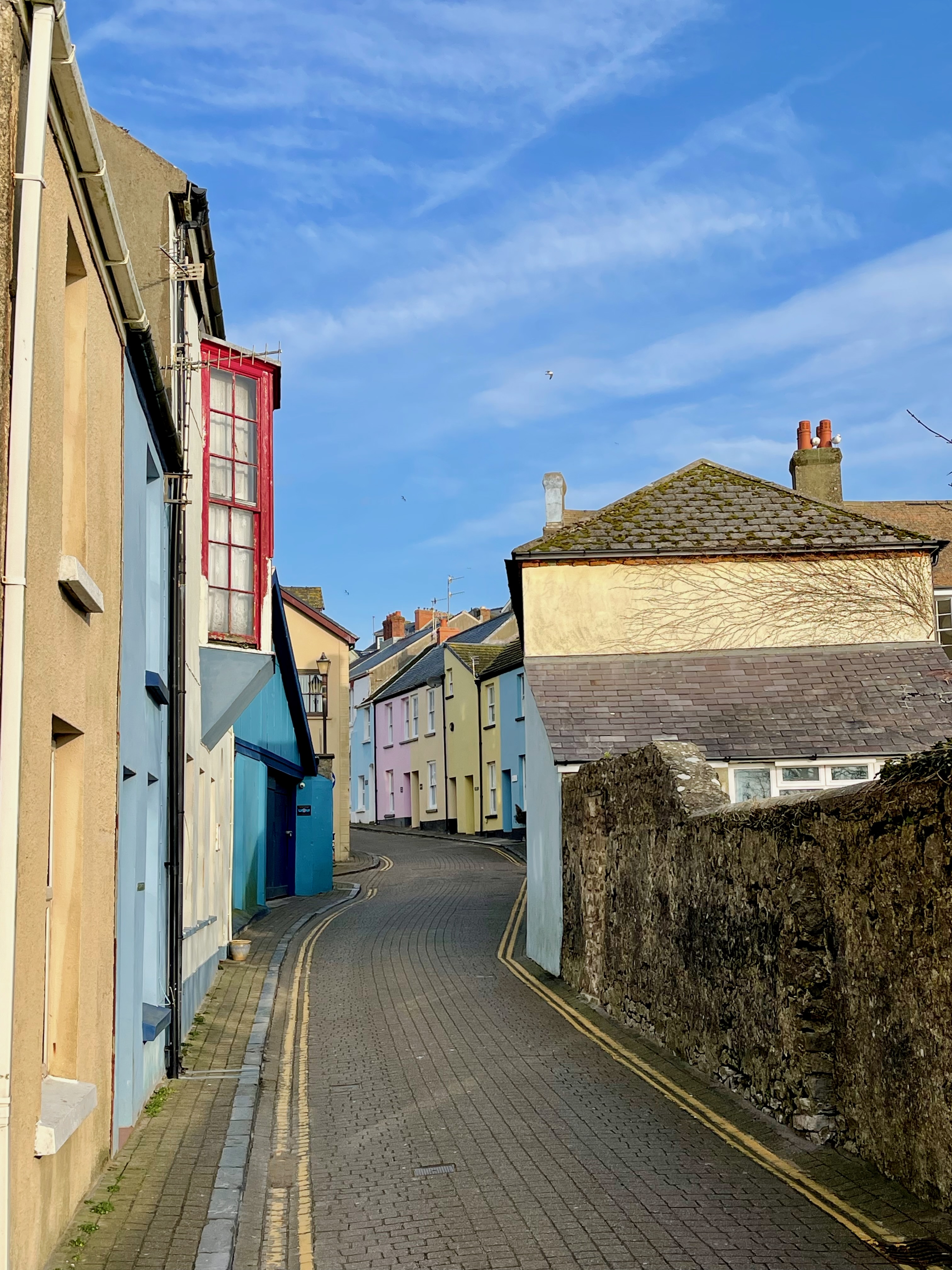
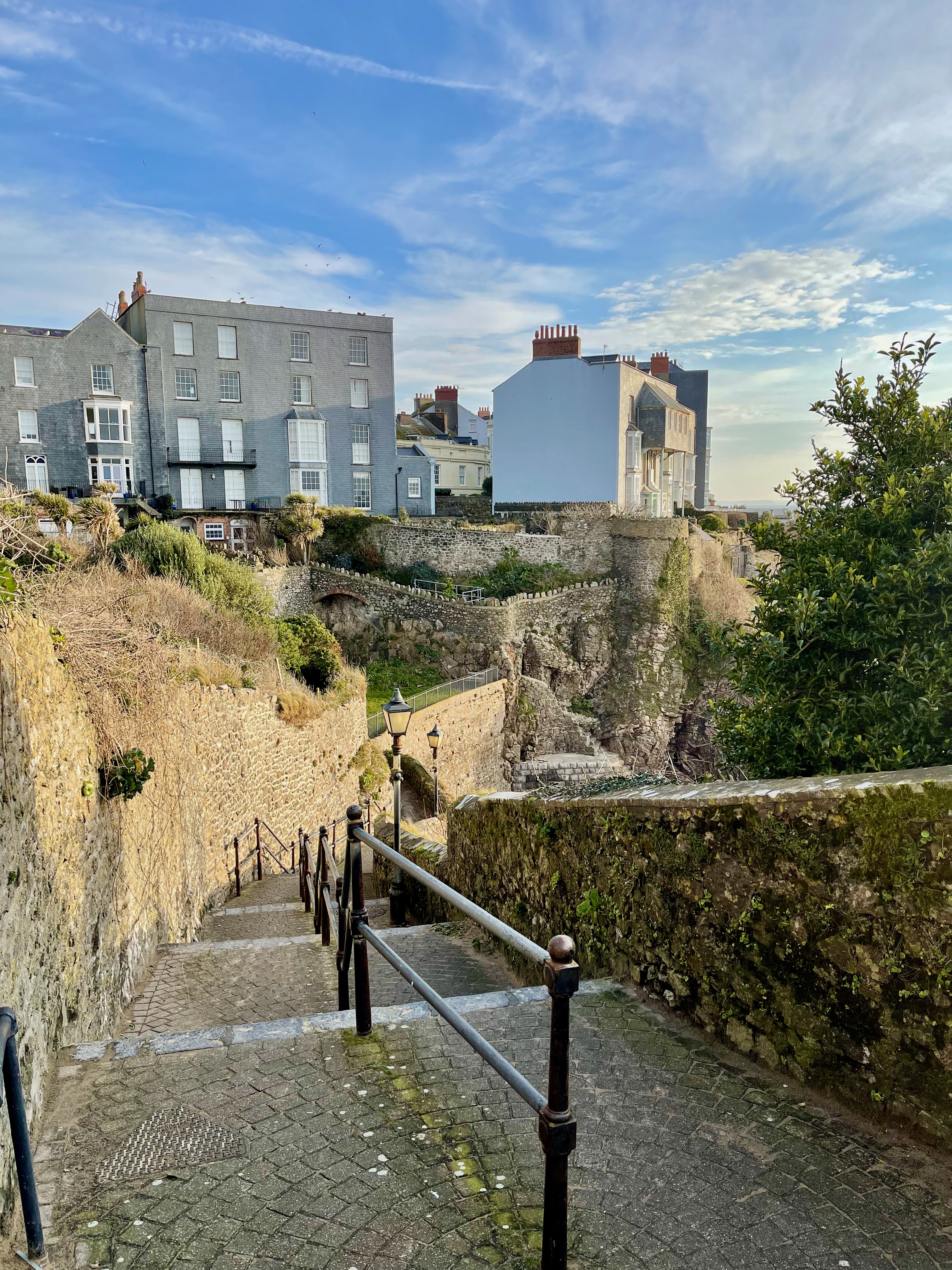
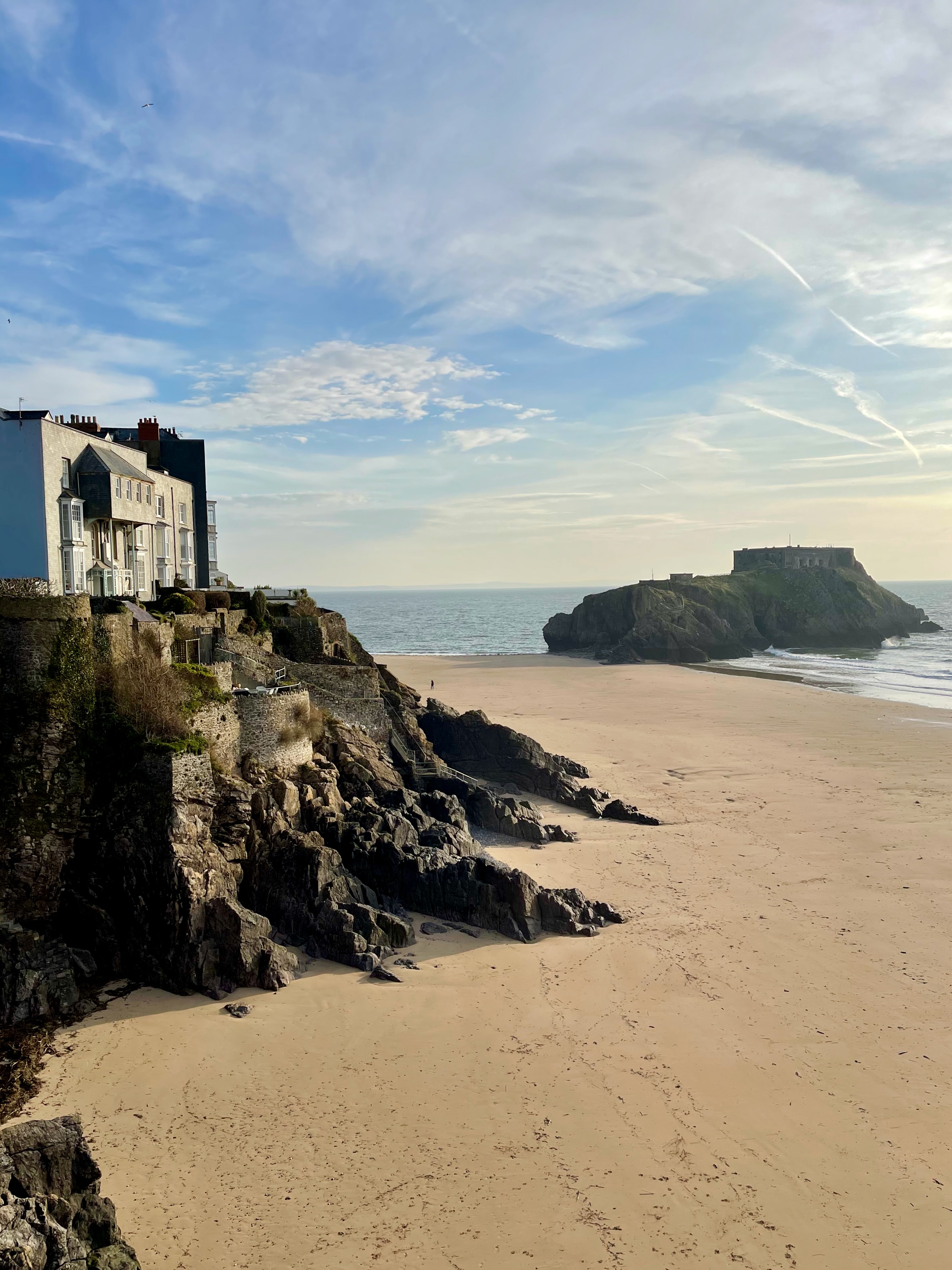
Brekky this morning was a series of shared snacks.
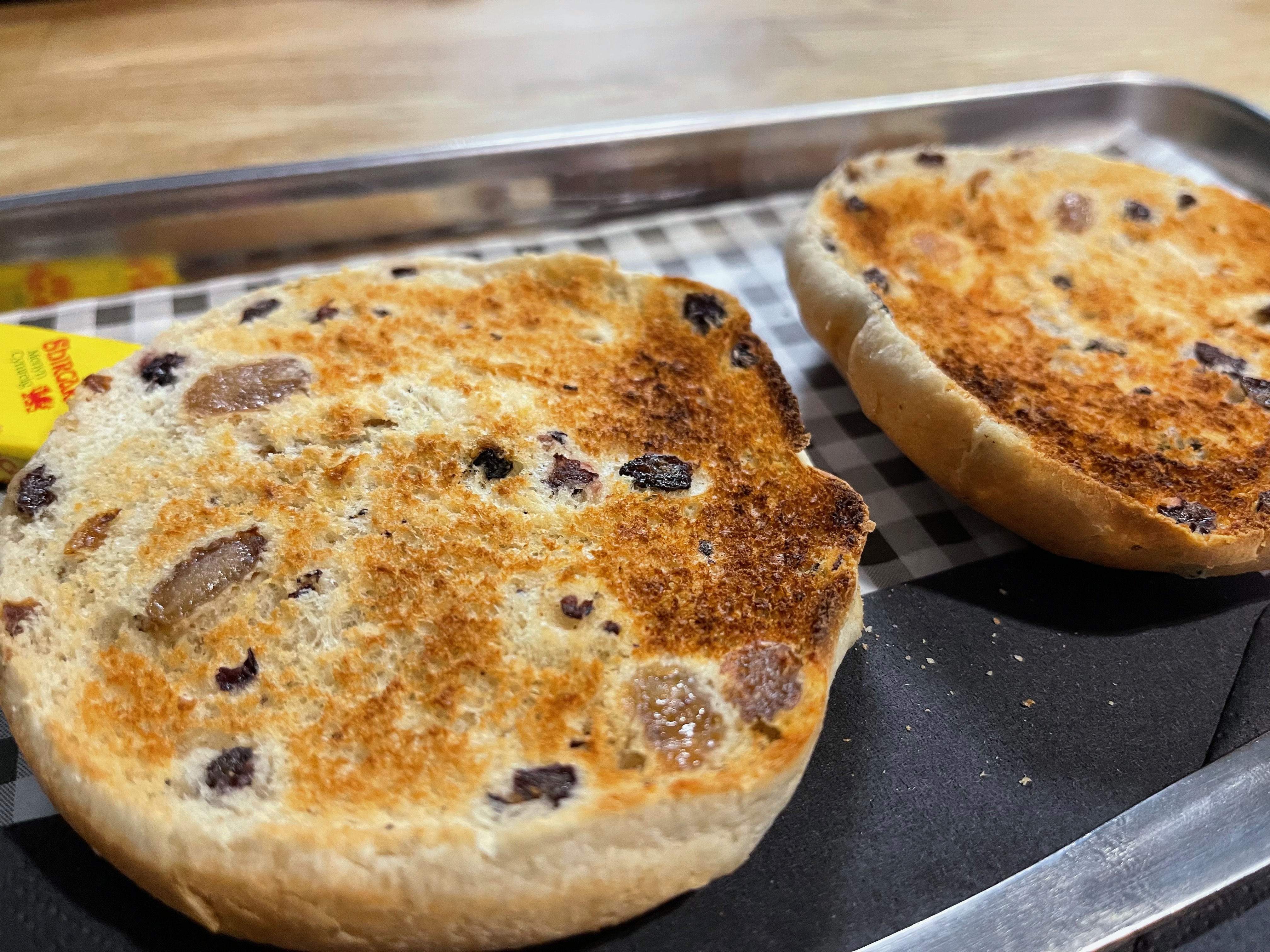

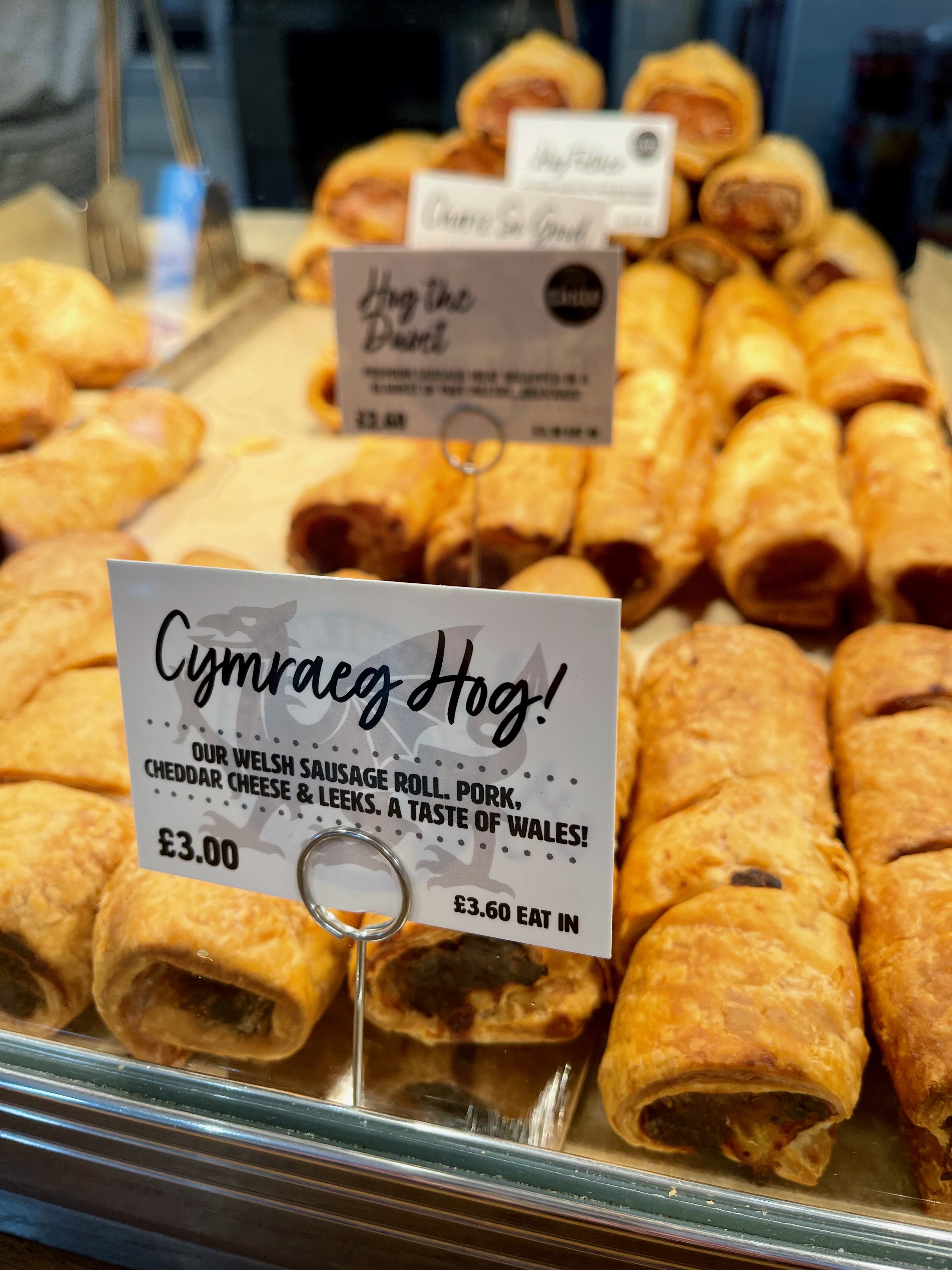
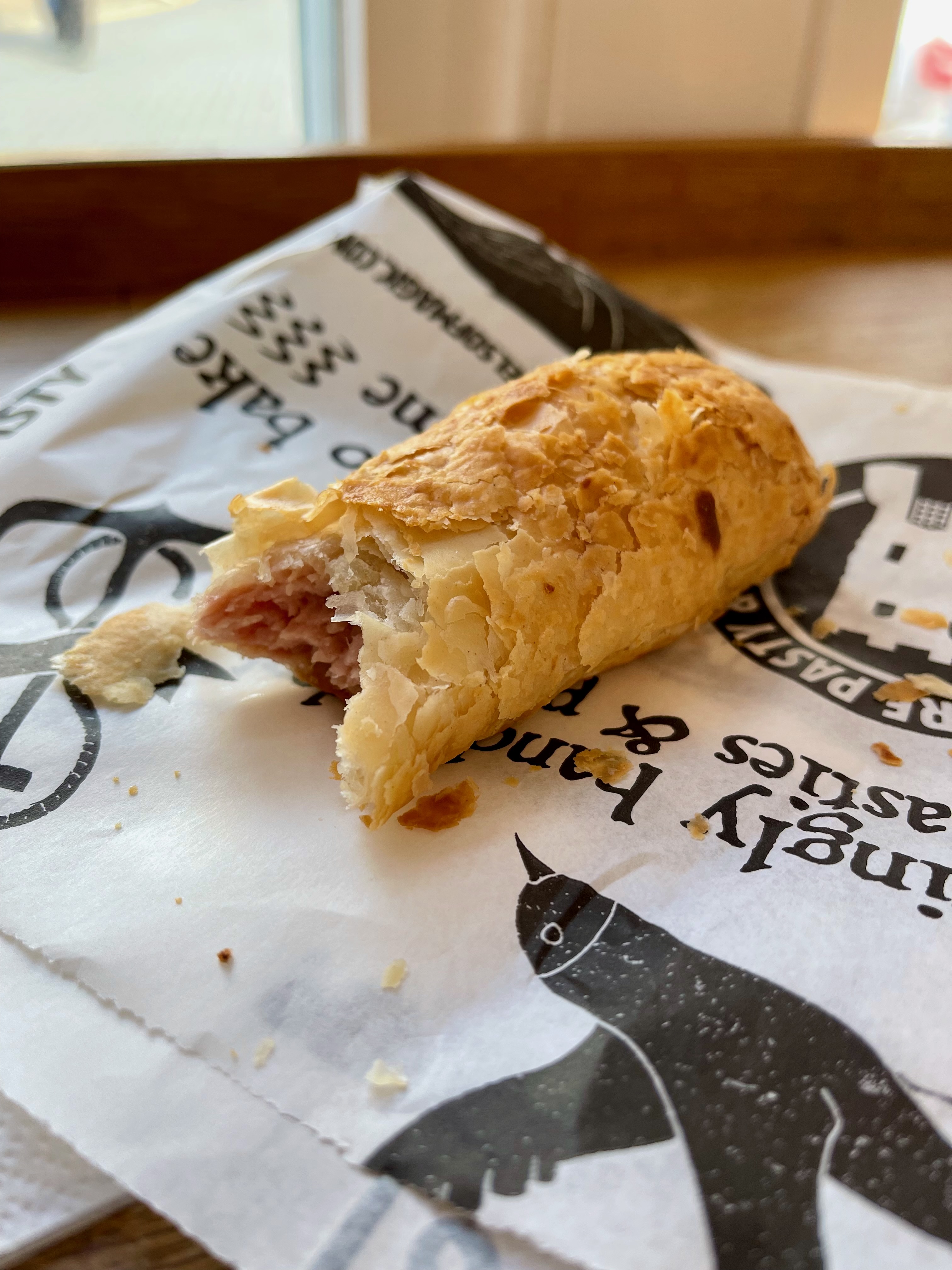
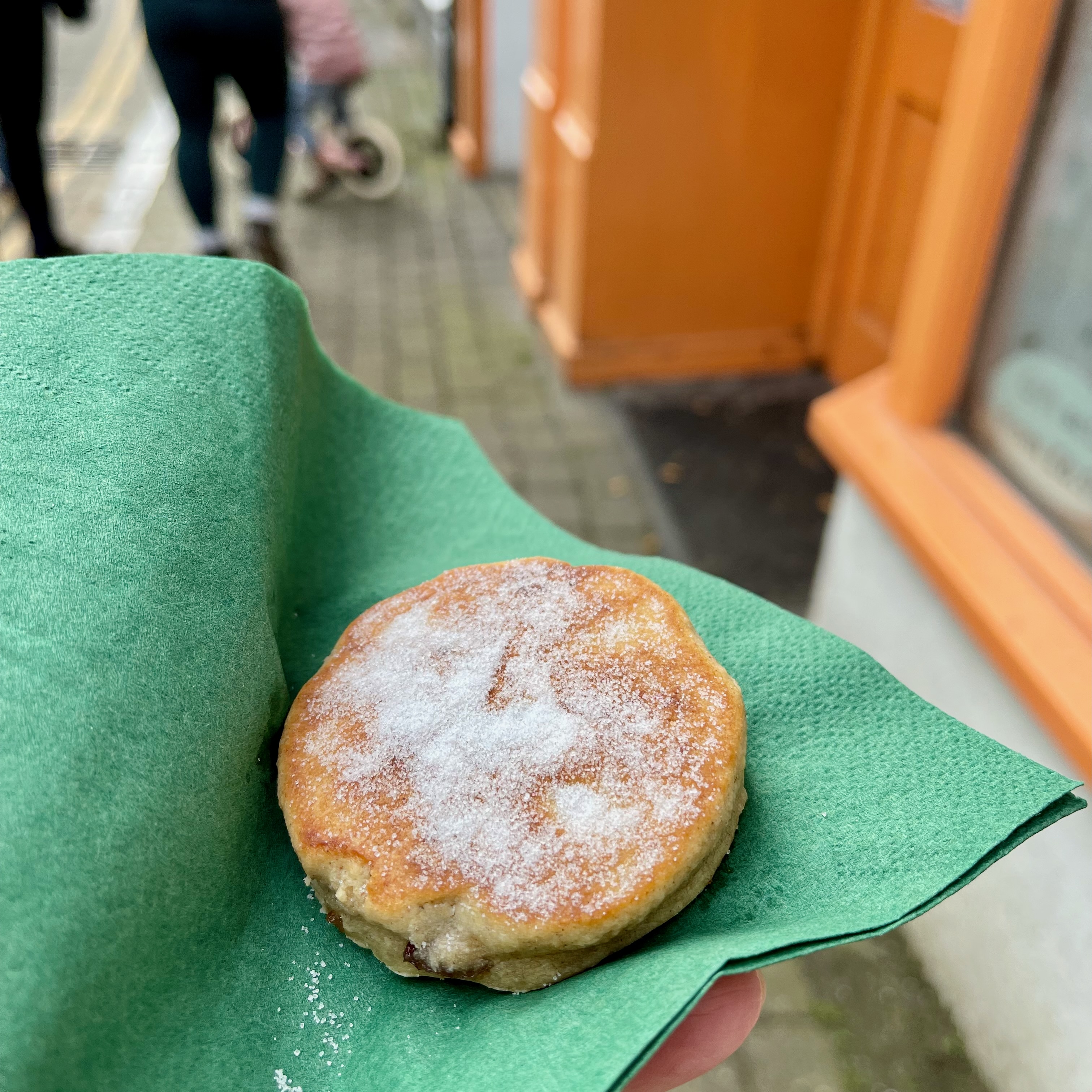
We stopped for a shared toasted buttered teacake and buttered Welsh cake in one cafe, a shared sausage roll (scored 8.5/10) from the bakery on the corner, and a Welsh cake dusted with sugar hot off the griddle somewhere else.


Aside from walking the perimeter of the old town, we spent ages in St Mary’s Church talking to the warden about the church’s history.

She told us how many of the really early churches in Wales were built by women. By early, we’re talking the 6th to the 12th century. This was, she said, because of the Celtic influence in early Christianity in Wales.
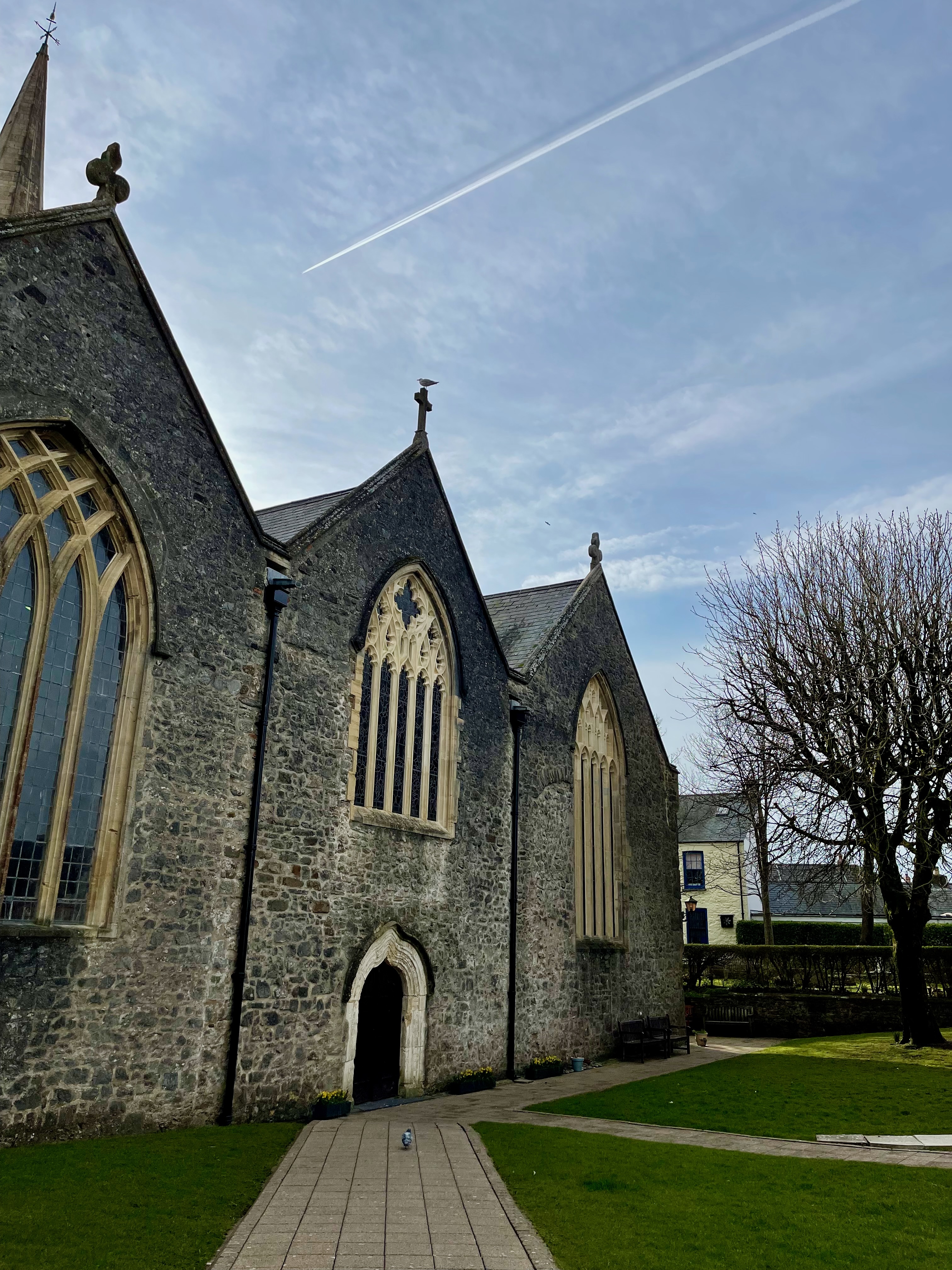

Many were also built near wells. This was both for practical and spiritual purposes. Practical in that priests and their families needed a source of water, but spiritual because many of these wells had already been venerated or considered sacred before the arrival of Christianity. Hand in hand with this was the concept that the church needed to be near a supply of watercress as that was considered the food of life.
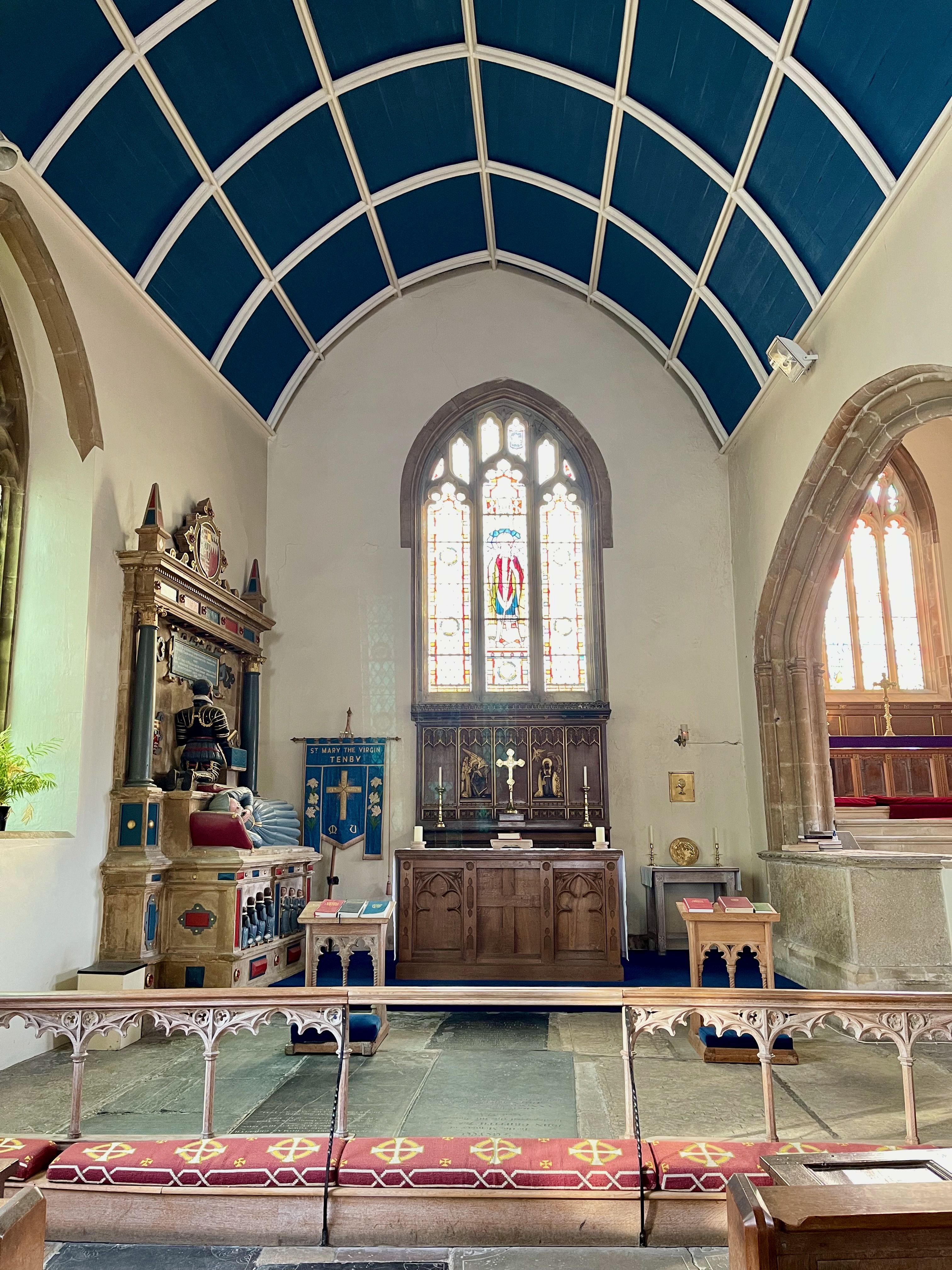

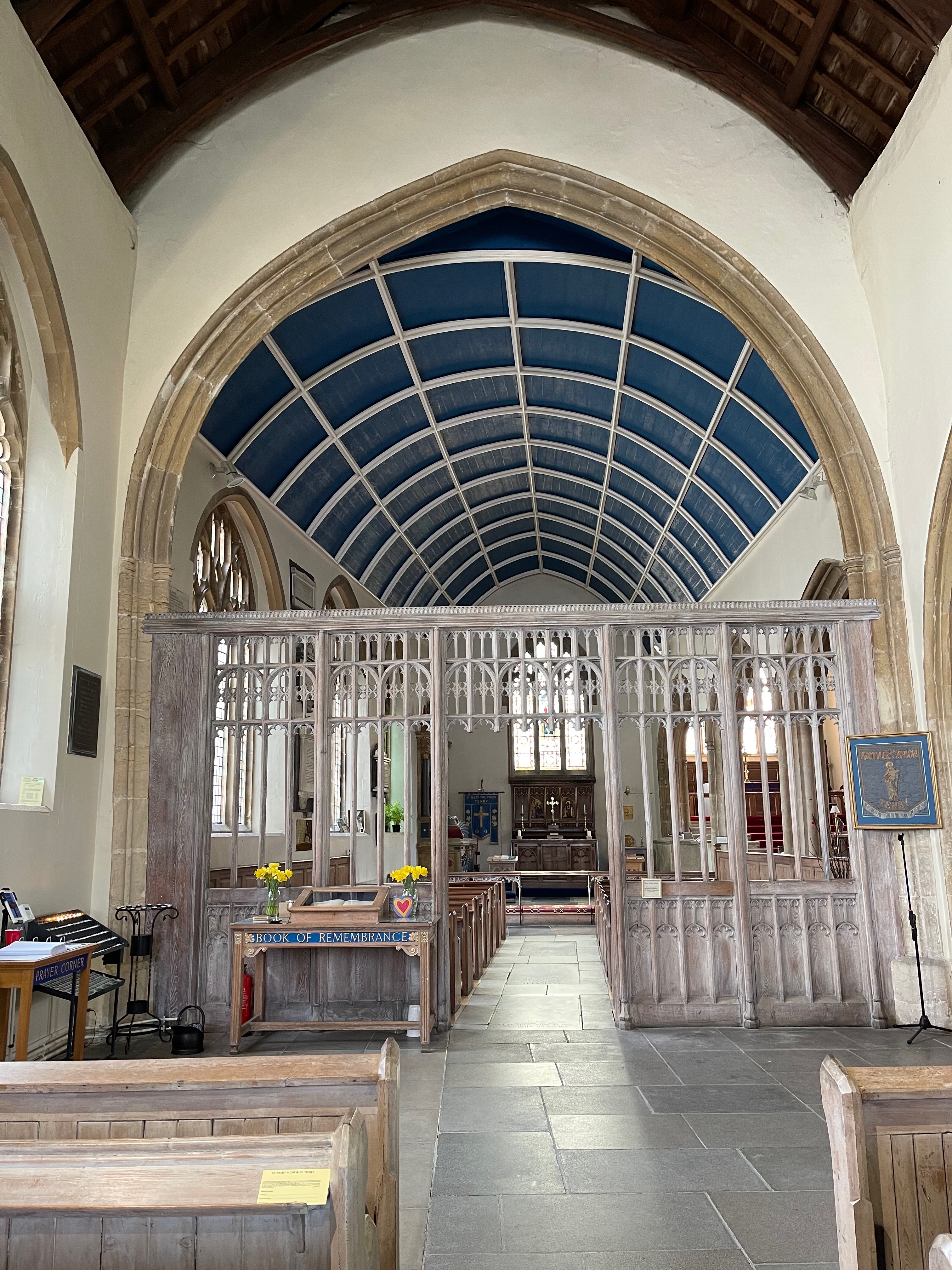

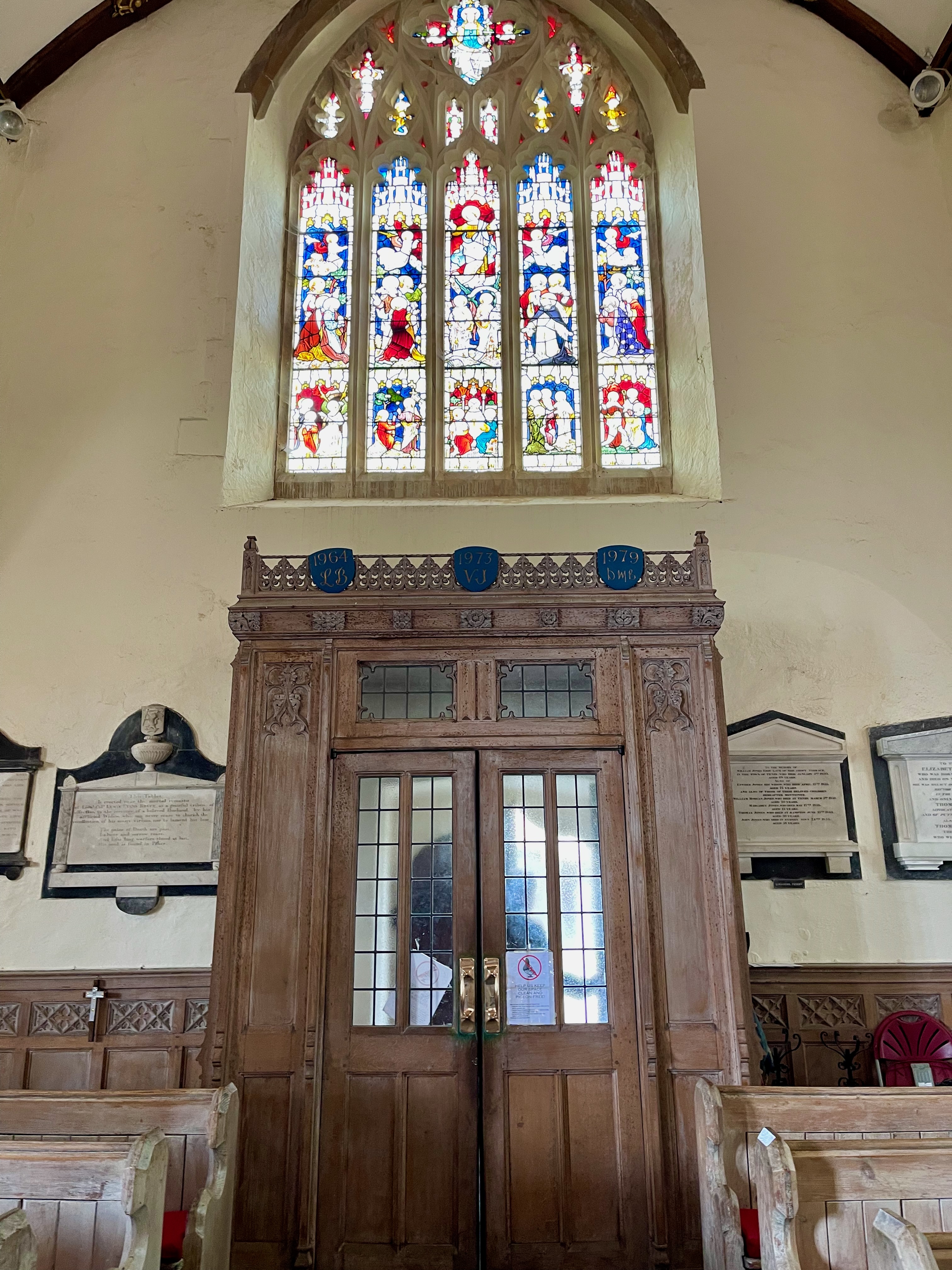
She had a lot more to say and I could have listened for even longer than we did.


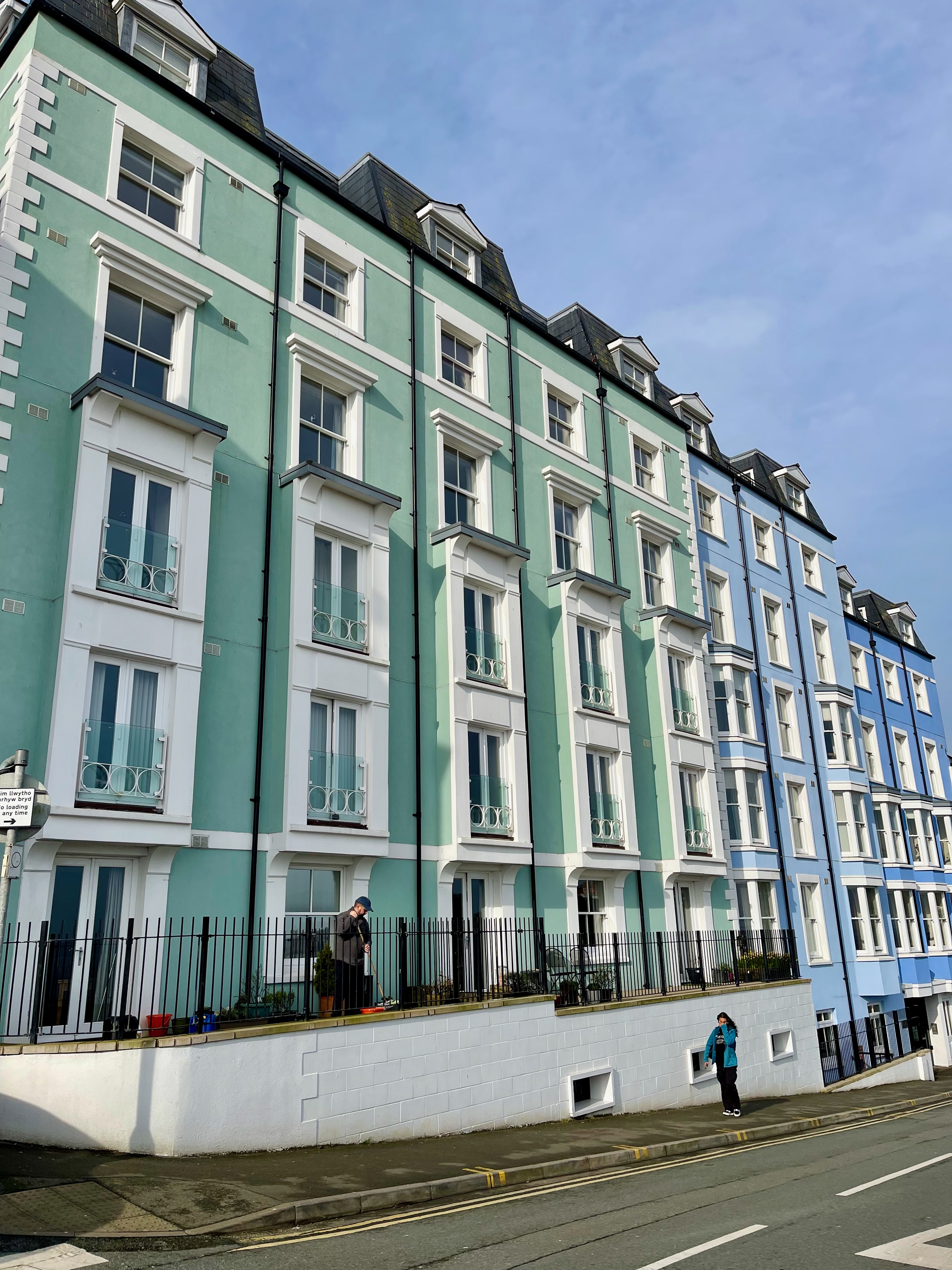
Lunch was at On George, where, for the second day in a row, we both ordered the cawl. Today’s came with a wedge of cheese instead of grated cheese.

Today was one of those days where we both decided we needed some proper downtime so after lunch we went back to the apartment and hunkered down – Grant to sleep and me to watch Miss Austen on BBC iPlayer.
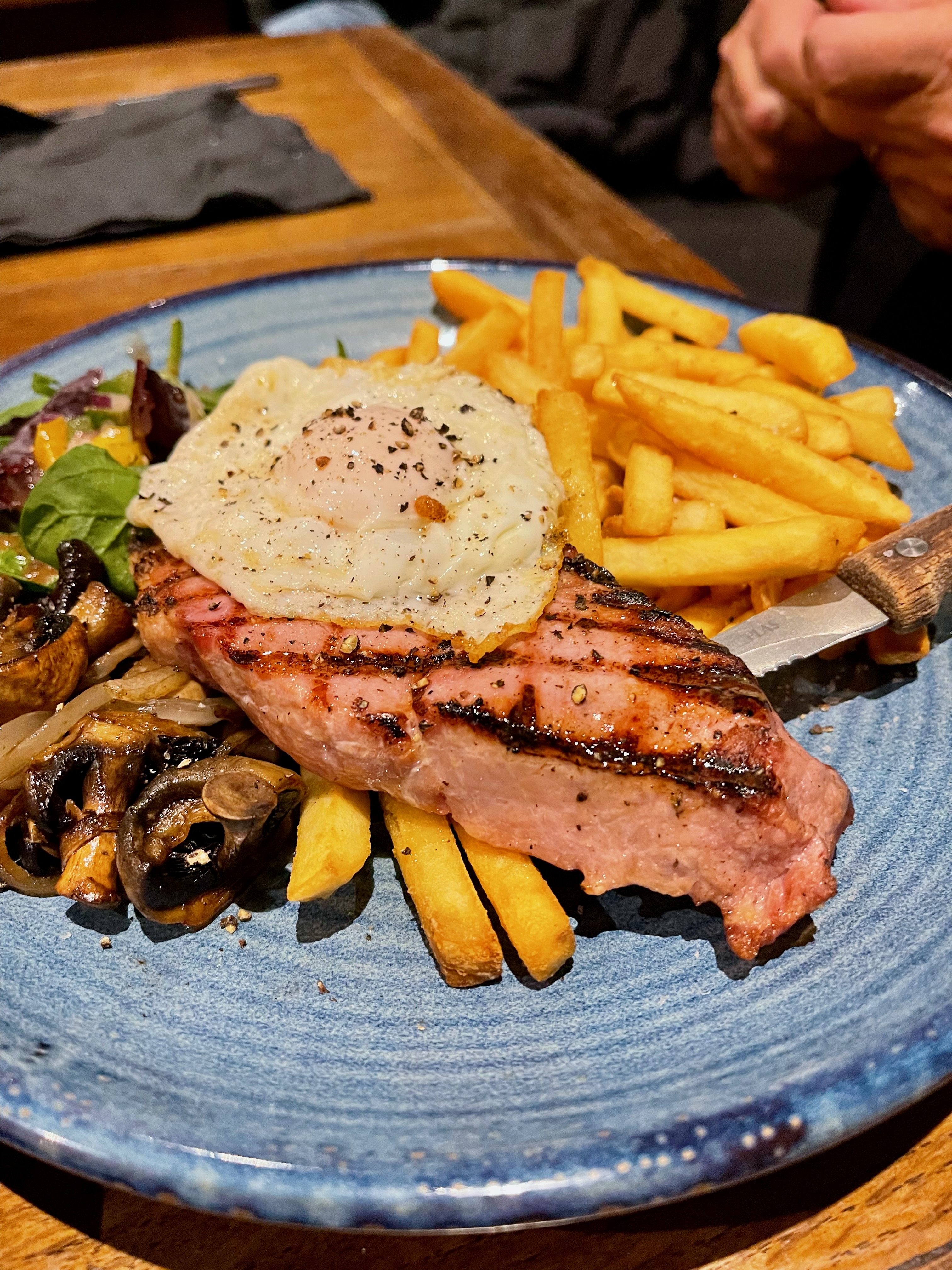
Refreshed after a few hours doing faff all, we headed back to On George for dinner. Grant had the gammon and I had monkfish scampi. Both meals were good.

In cyclone-related news from home, Cyclone Alfred finally made it on shore and the Sunny Coast escaped the worst of it. Phew.
Welsh Cawl

Today’s recipe has to be Welsh Cawl.
A homely soup, the stock is made with lamb neck and then root vegetables and leek are added. Sounds simple, but it’s sooo good. In Wales they serve it with a wedge or grating of cheese and some good bread.
The actor, Michael Sheen’s recipe is here, but I used this one. I passed the stock through an old tea towel to capture any scummy bits and most of the fat, and popped it in the fridge overnight so I could skim more of the fat off before making the cawl.

The stats…
Temperature: 9-11
Miles travelled: None! (Unless you count walking…)


 And Anyways...
The harbour is so interesting in how it is curved around and then the town is literally built right at the edge. I also loved how the castle ruins literally had buildings right at the edge of it. Thanks for sharing all the history, the great photos and the scrumptous looking food! Bernie
We loved Wales when we travelled there years ago. We were staying at a little guesthouse, and got there in the dark. Woke up, had brekkie then went walking only to discover the gorgeous sea view of the Gower peninsula. Looks like a fun trip! Always good to chat with a local about the local area.
sherry https://sherryspickings.blogspot.com/
I love Tenby and have had several lovely holidays there over the years. Your photos brought back some great memories
What a lovely area! I definitely try to plan some downtime into our trips too; those afternoon naps/TV time feel so restorative.
Your photography is incredible, as are your words. Thank you for taking us along.
BTW – I can’t believe you are on holiday again — lucky devil!
just told my husband that Grant had the gammon with a fried egg on top – he was very jealous as it’s one of his favourite pub meals
Cawl is a new word for me. I like it. Your Welsh cawl looks hearty and delicious. I think I could eat soup…cawl…on the daily.
The first picture you shared is such a great shot. It reminds me of a painting I’ve seen somewhere. Do you paint? I think it would be lovely painted in acrylic.
Appreciate all the bits of history you share in your posts. Can’t imagine women building the churches. But then again, women can do anything. Those churches look kind of severe and stark on the exterior but goodness, they are beautiful inside. Those windows.
Can’t believe how long you have been gone but sure enjoying your trip. Are you getting anxious to return home?
When I was at university half a century ago (ouch, that hurts!) my best buddy was from a Welsh heritage. When his parents visited him his mother brought a large supply of Welsh cakes to remind him of home, and I was only too pleased to stop him wallowing in nostalgia by eating as many of them as possible. One of the highlights of my university career!
That is such a selfless act lol.