Sunday March 2, 2025
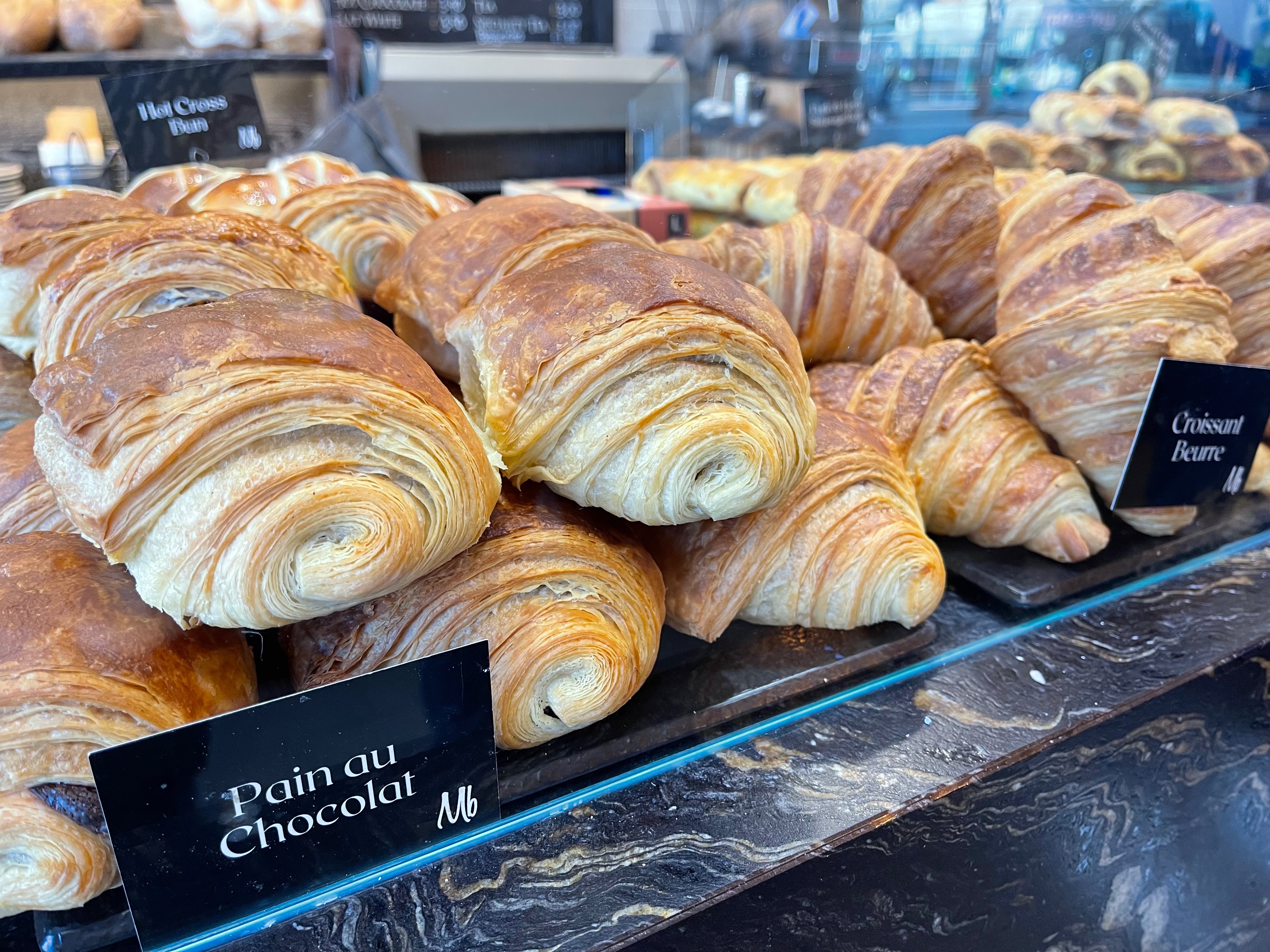
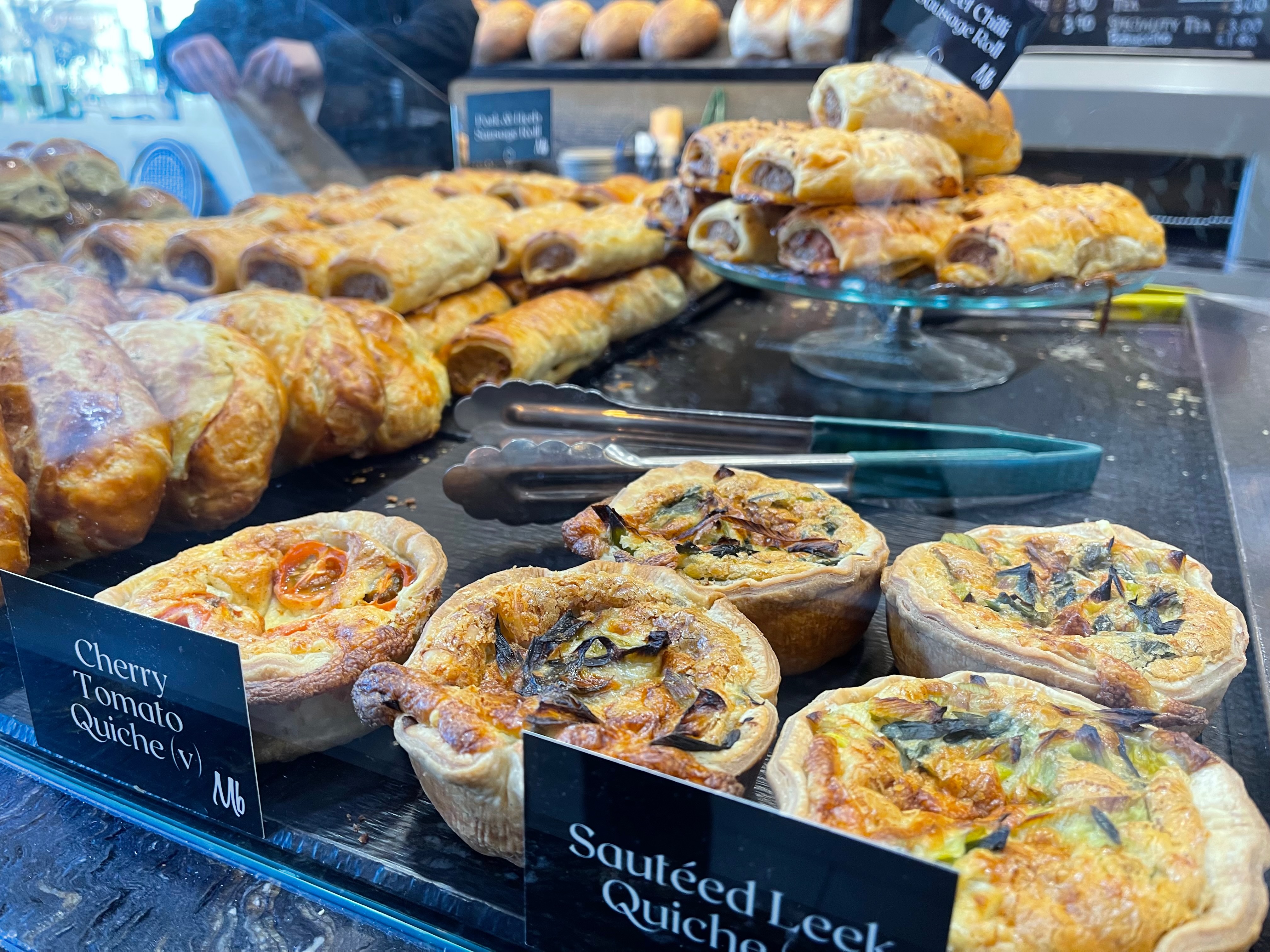
When we woke this morning, it was minus something: a crispy frost on the ground. Grant, Jessie and I drove the short distance to Mark Bennett Patisserie at Broadstone for croissants. Although they were good, they’re not as good as La Petite Souris at home. The sausage rolls were calling me, but I blocked my ears against their siren call.

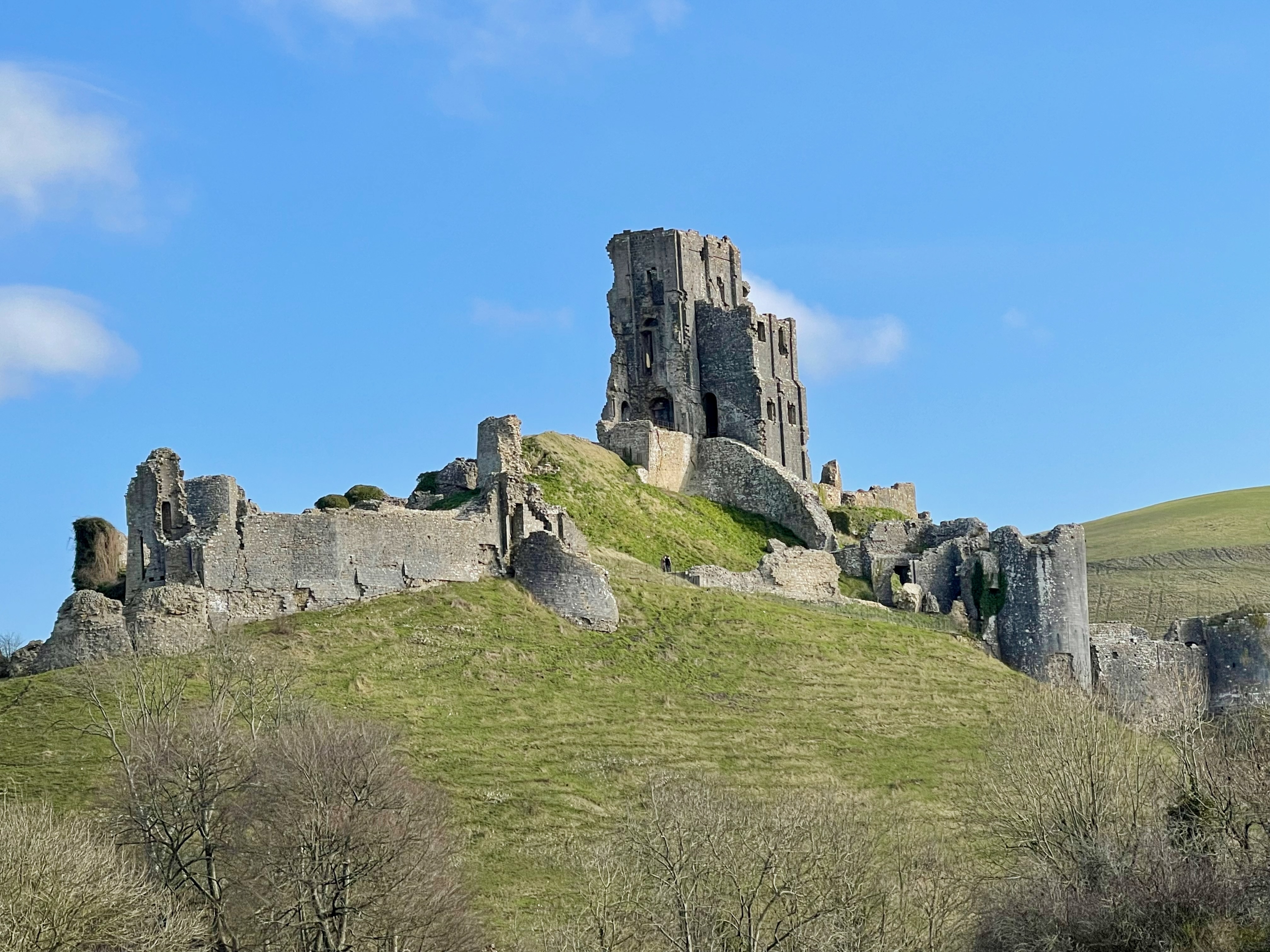
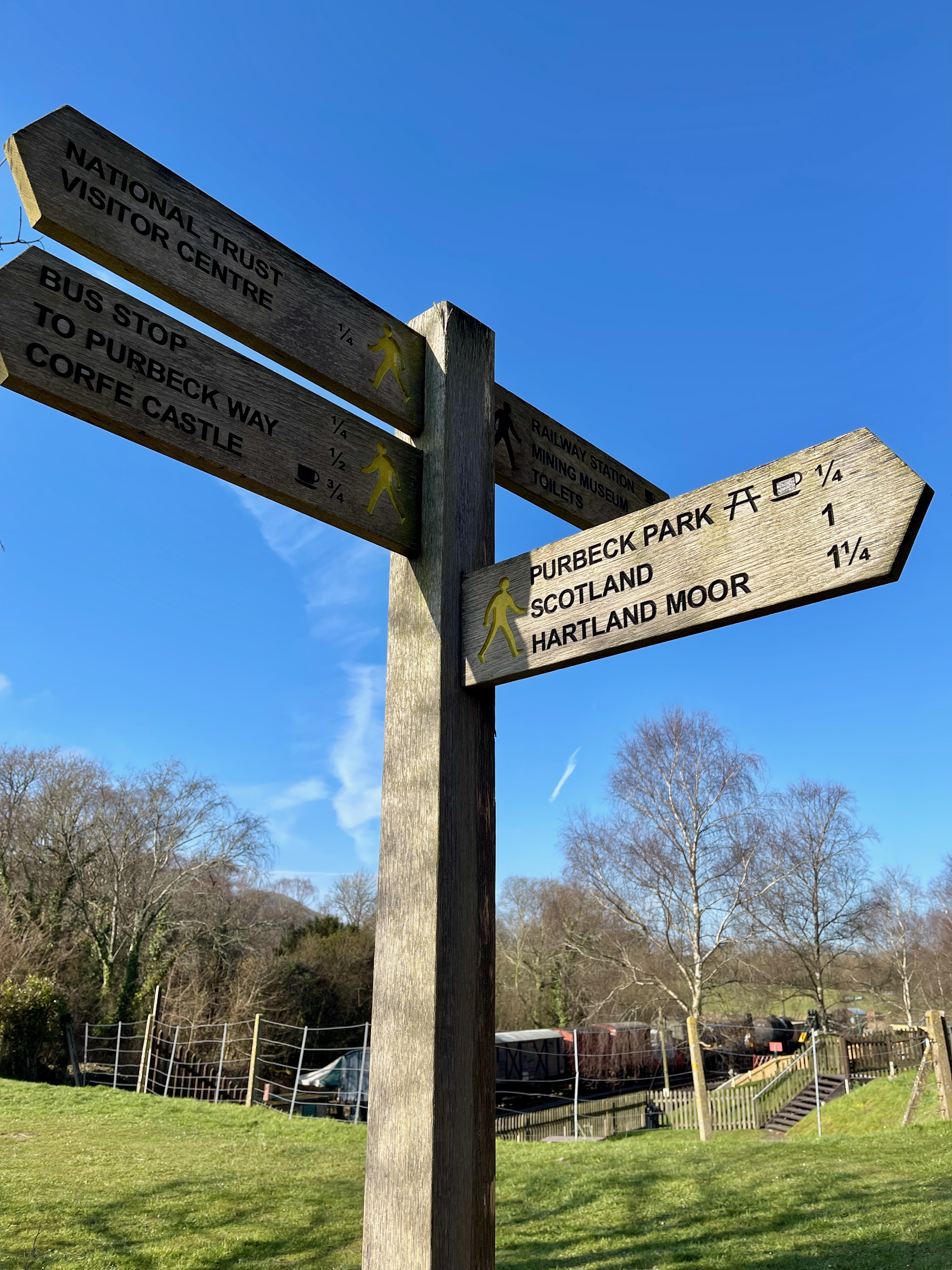
We drove down to Corfe Castle this morning, choosing to park over near the Purbeck Mining Museum so we could take a walk through the (muddy) lanes towards the castle. I’d learnt from yesterday’s mistakes and worn my hiking boots.

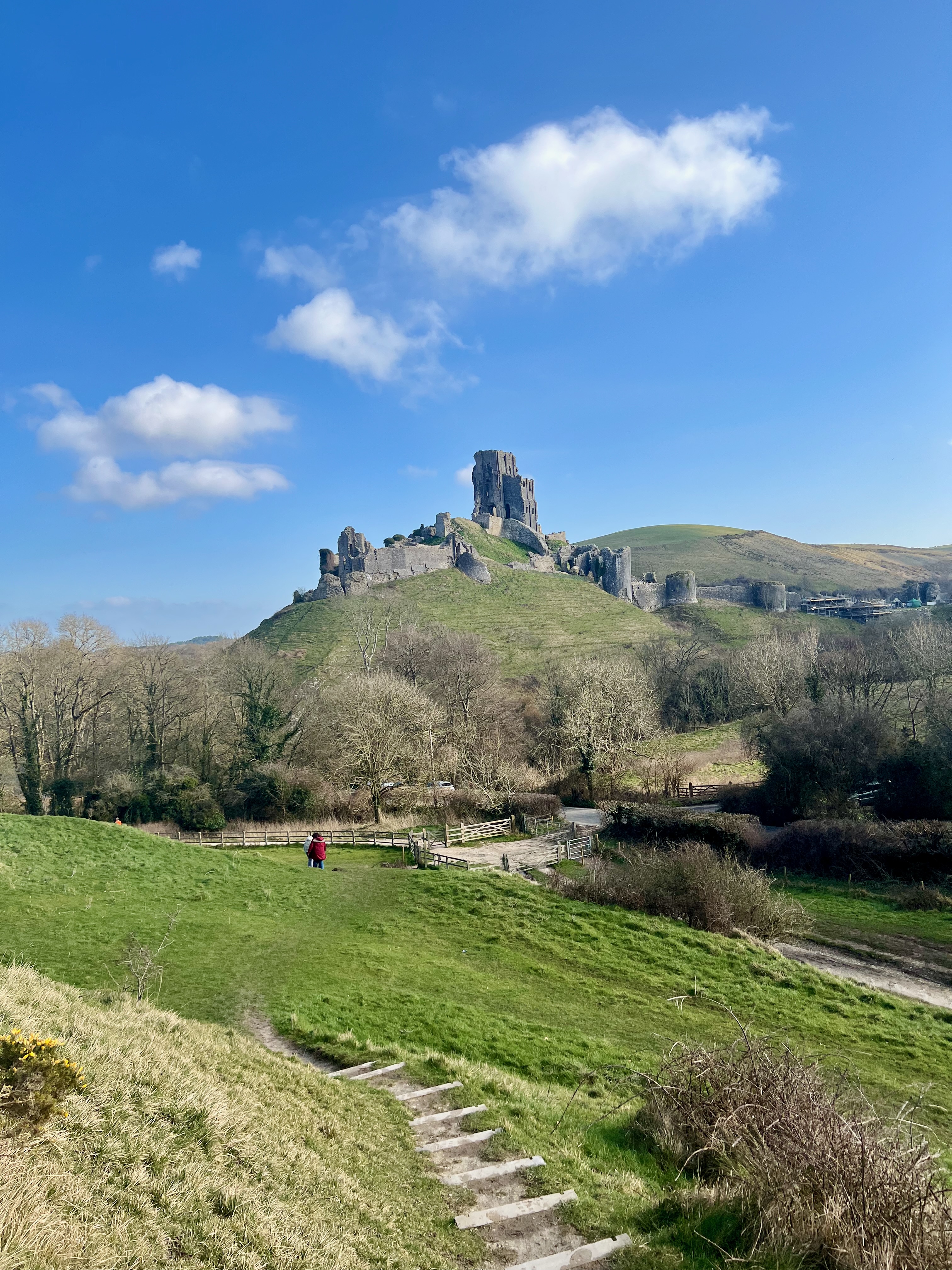
After seeing how slippery the steep path to the castle was, we decided (ok, I decided) that while it would be fine to walk up, I didn’t want to risk sliding and falling on my way down and ruining the holiday on day 2. (Later we discovered we could have borrowed walking poles from the visitors centre… hey ho).
Grant and Shirley walked up the adjacent hill for a better view of the castle, but Mike and I couldn’t be faffed.


The castle itself has a long and chequered history – as castles in this part of the world tend to do.
In 978, while it was still a Saxon stronghold, the teenage King Edward (later to be known as Saint Edward the Martyr, King of the English) was murdered here while visiting his younger brother. Right, you’re going to need to concentrate if you’re to understand the rest of the story… Here goes.

Edward the Martyr was the eldest son of Edgar the Peaceful, King of the English and (probably) Æthelflæd. When Edgar died, the succession to the throne was contested between Edward and his younger brother the future King Æthelred the Unready. (The clue is in the name). Not that the boys (who were 13 and 7 respectively) would have had much to do with it. The real dispute was between rival family alliances.
Edward’s principal supporters were Dunstan, Archbishop of Canterbury and Æthelwine, Ealdorman of East Anglia, while Æthelred was backed by his mother, Queen Ælfthryth (the old king’s second wife) and her friend Æthelwold, Bishop of Winchester. I did warn you it was convoluted. Anyways, long story short, Edward was chosen as king and Æthelred received lands in compensation.
Queen Ælfthryth, however, wasn’t done. She was a political force in her own right and wasn’t at all happy that her son wasn’t on the crown (with her ruling in his stead). So, the story goes, she invited Edward to her hunting lodge (on or near the mound where Corfe Castle stands) and welcomed him with a cup of wine (as you do). As Edward drank the wine, he was stabbed in the back, fell from his horse but with his foot caught in the stirrup was dragged to death, leaving Æthelred the Unready to take the throne. He must have been at least a little bit ready as he ruled for most of the next 38 years. (There was a brief spell towards the end when… wait for it …Sweyn Forkbeard did the viking rampaging thing and was king for five weeks).
The castle itself was built by William the Conqueror in the 11th century and was one of the earliest castles to have been built from stone rather than earth and timber. After this it followed the usual sort of history – was a bolthole for King John (who possibly should have been known as John the Ridiculously Insecure or John the Paranoid) and was later sold during Elizabethan times to one of Elizabeth I’s favourites, Christopher Hatton and from there through to the Bankes family.
In the 17th century it was besieged a couple of times by the parliamentary army and was eventually slighted (that’s a euphemism for knocked down) on parliament’s orders.
What is possibly more interesting than all of that, is it was also (probably) the inspiration for Enid Blyton’s Kirrin Castle, featuring in some of the Famous Five Mysteries – especially Five on a Treasure Island.
Anyways, what was left of Corfe Castle and the Bankes Estate was gifted to the National Trust along with the family’s extensive holdings in Purbeck, their mansion at Kingston Lacy near Wimborne and its adjoining land.

Corfe Castle, the village, is super cute and was super busy. We’d been umming and aaahing about choosing one of the pubs in the village for our Sunday lunch, but are glad we didn’t. The streets are steep and narrow with virtually no available parking.

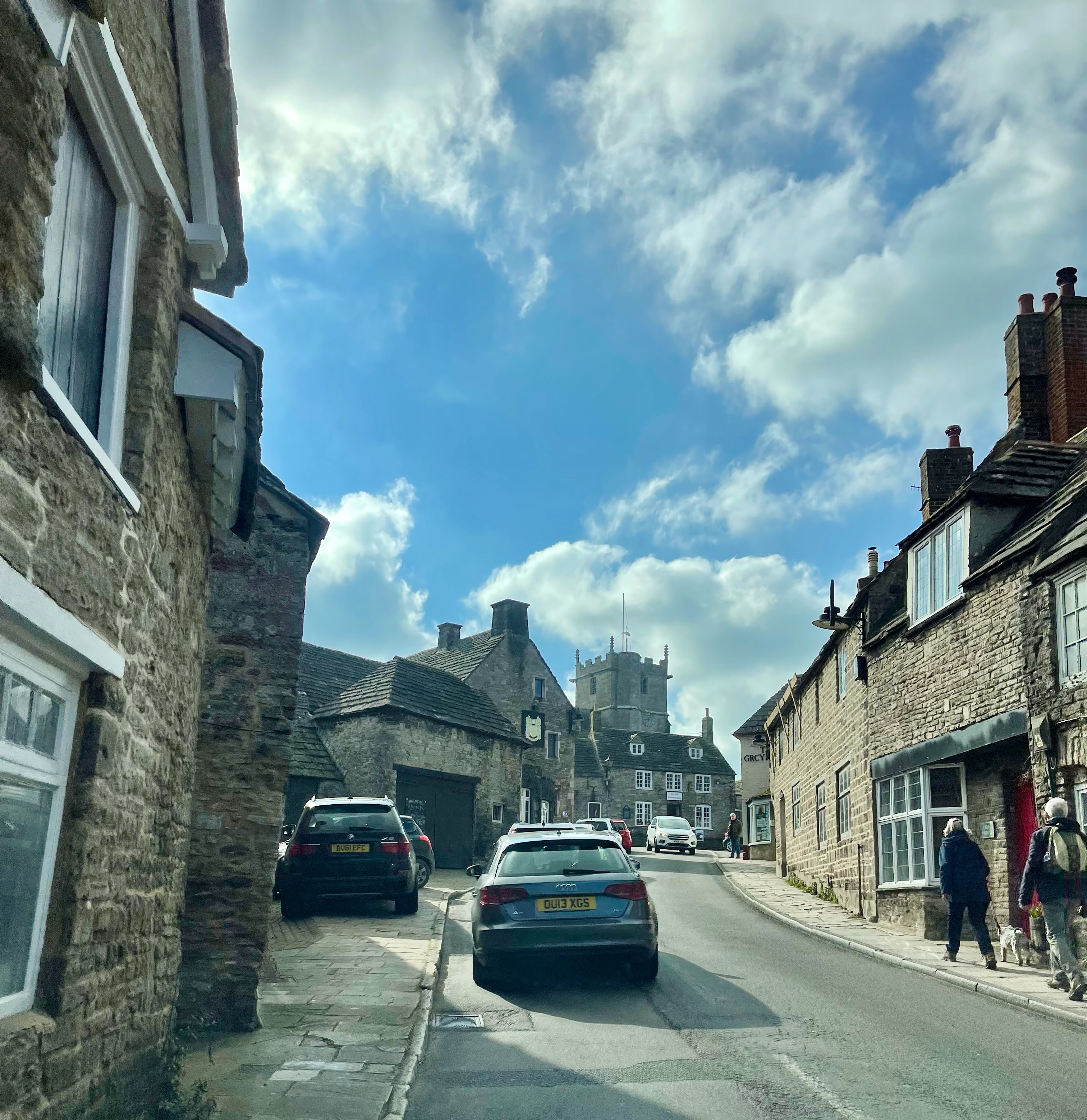

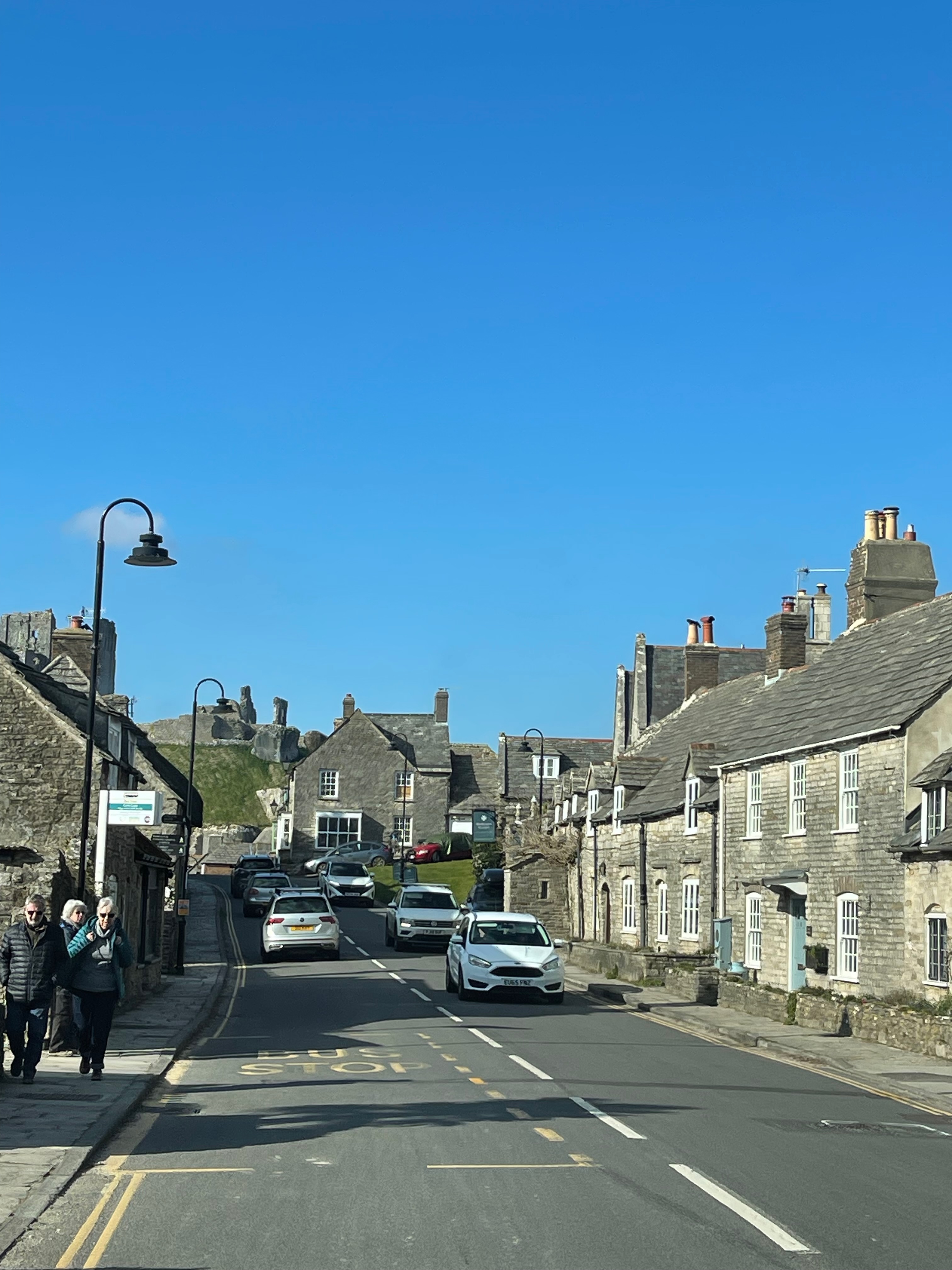
We didn’t stop, but instead drove down to Kimmeridge Bay for a look at the coast.
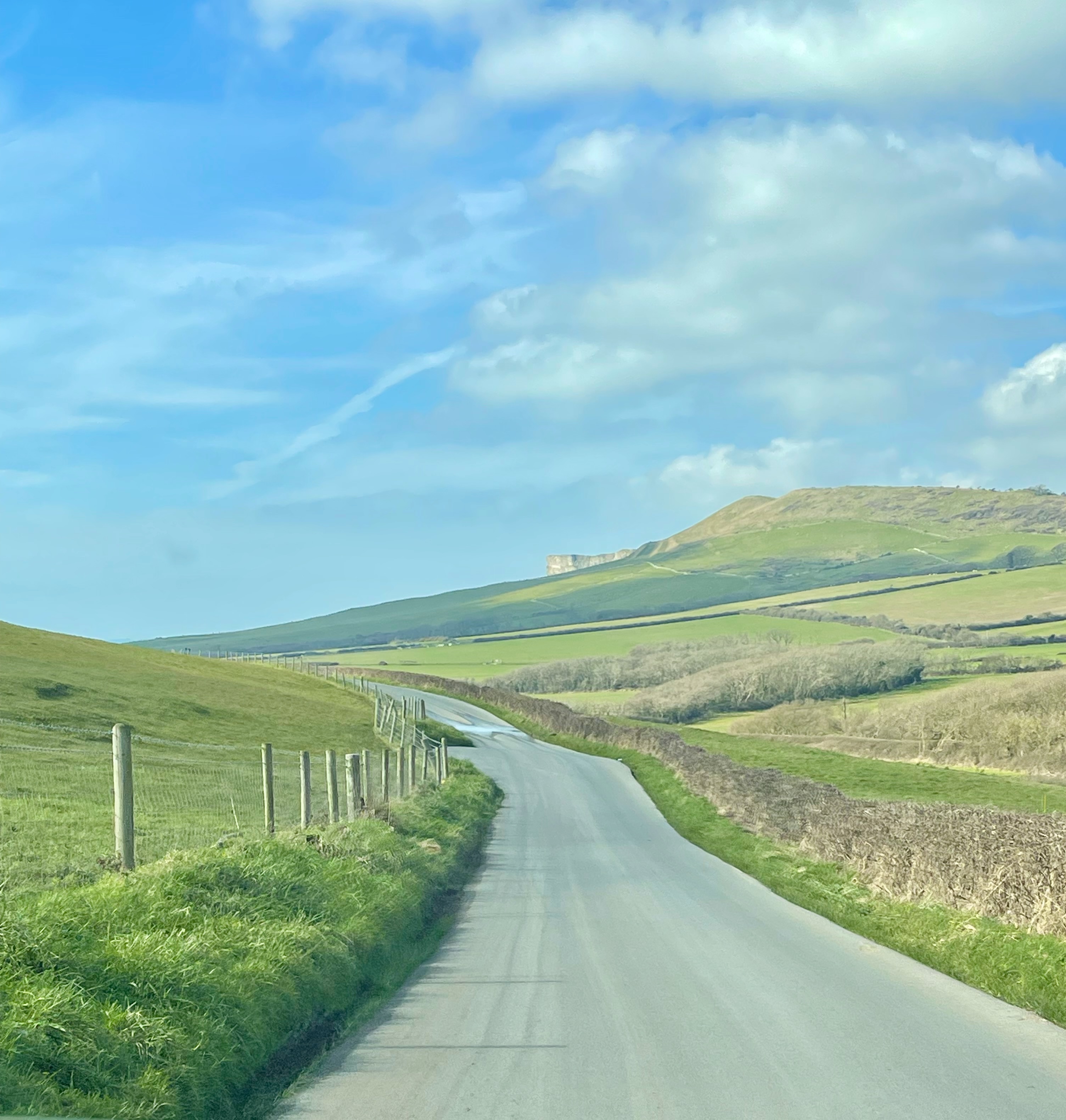

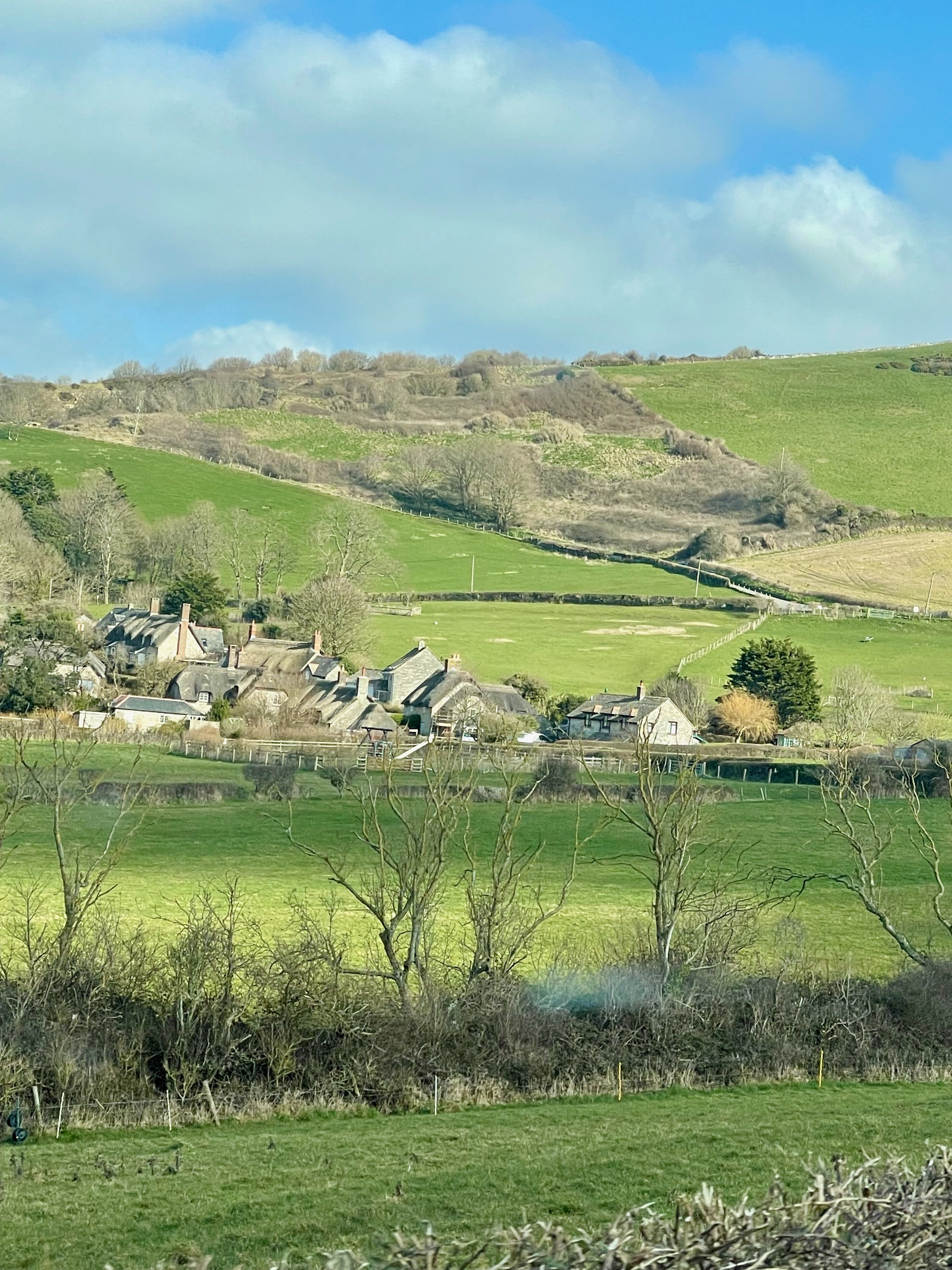
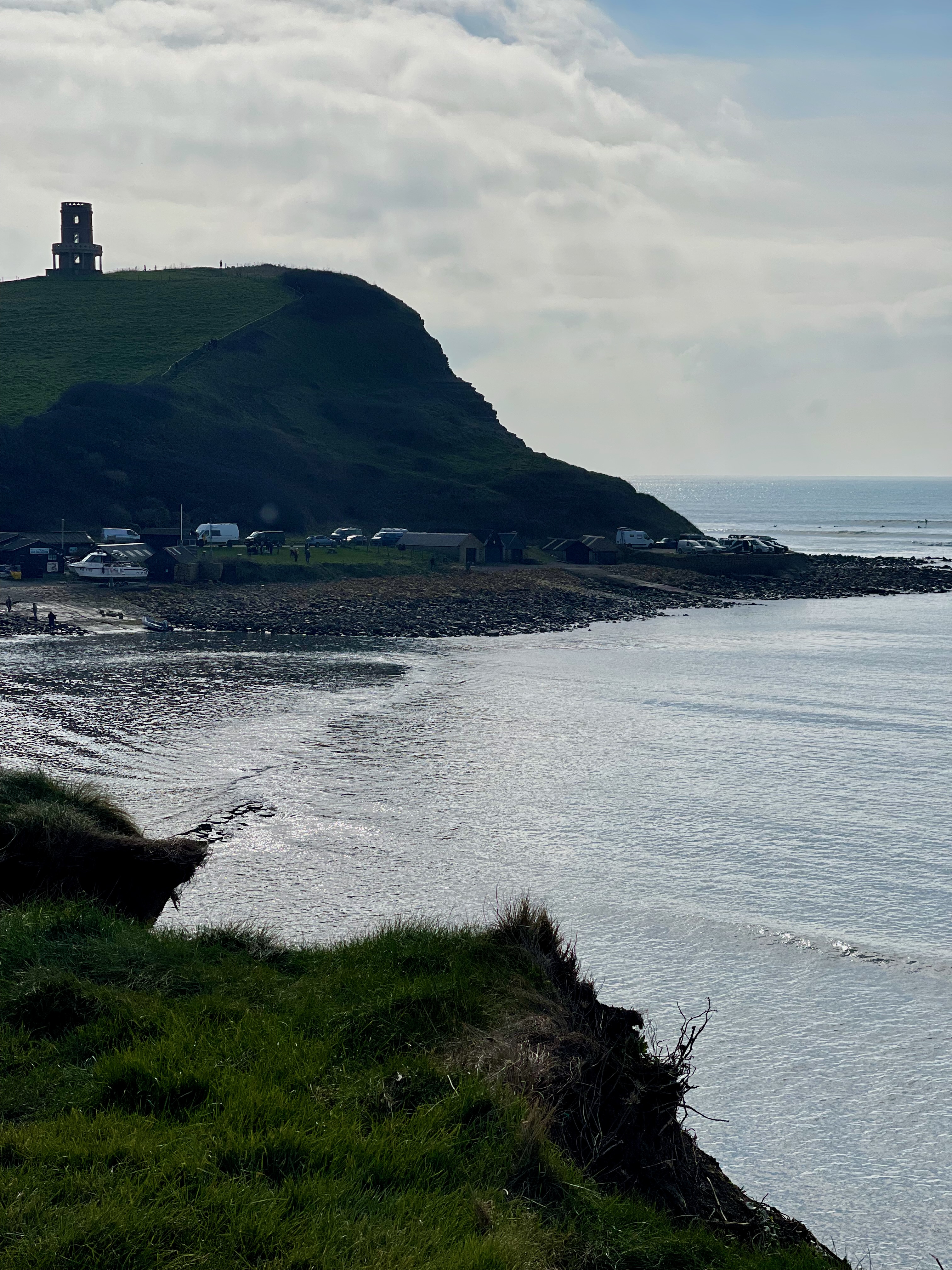
Massive scenery and fantastic views. Even though there is no sand, it’s a popular spot in summer for swimming, snorkelling and diving – and fossil hunting.


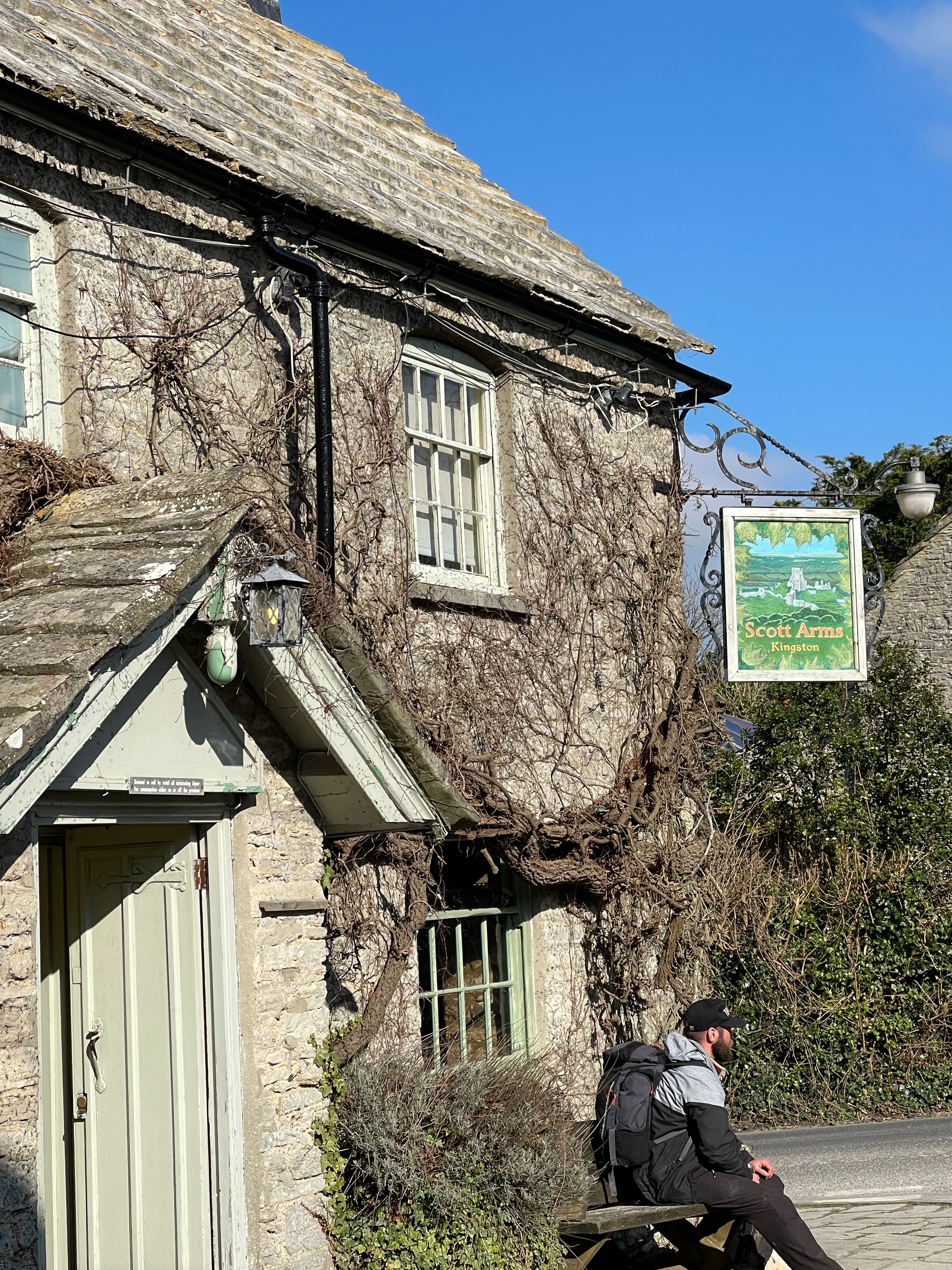
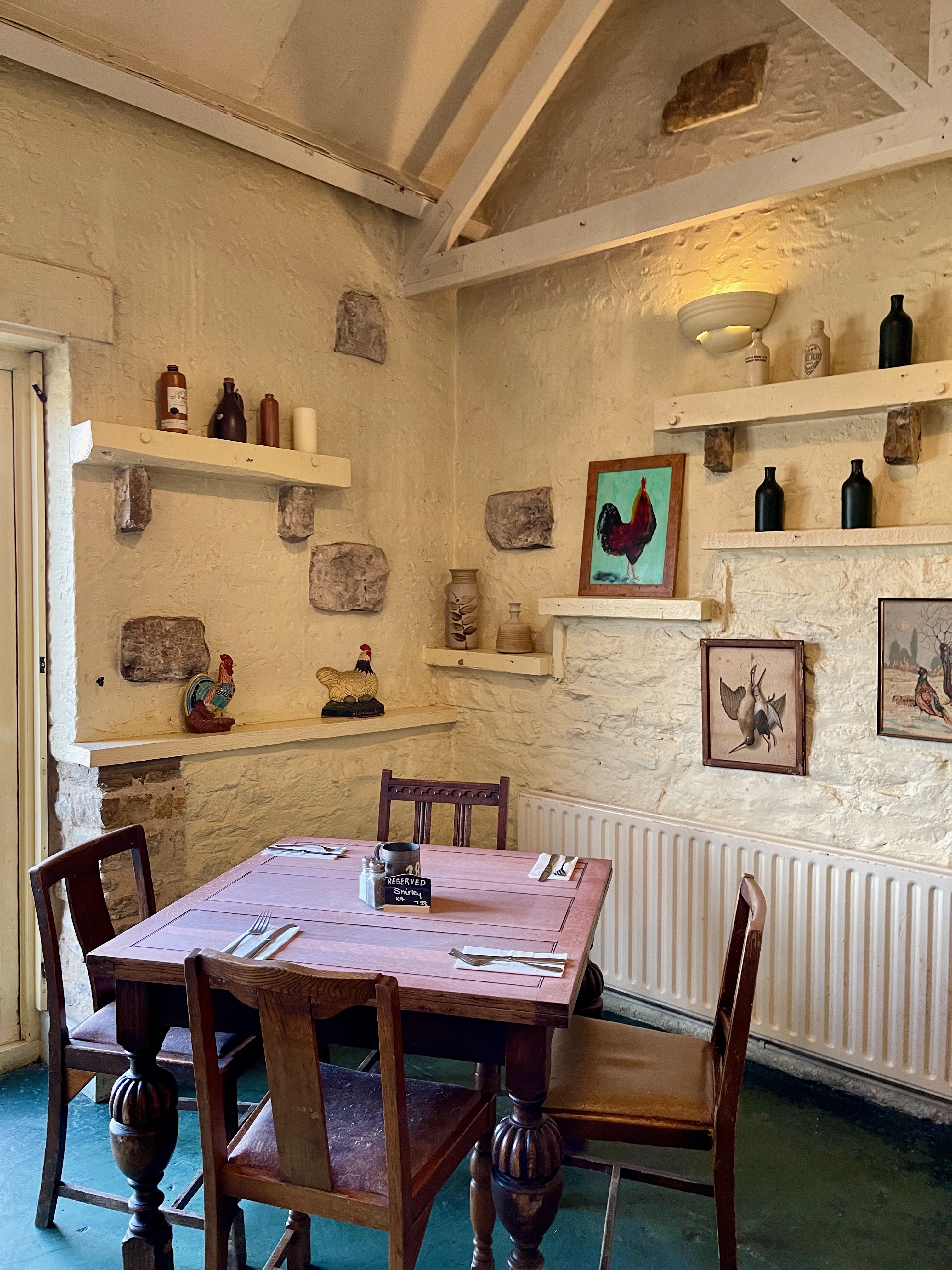
Lunch was at The Scott Arms in Kingston. The beer garden commanded a view across to Corfe Castle, while inside was super quirky.




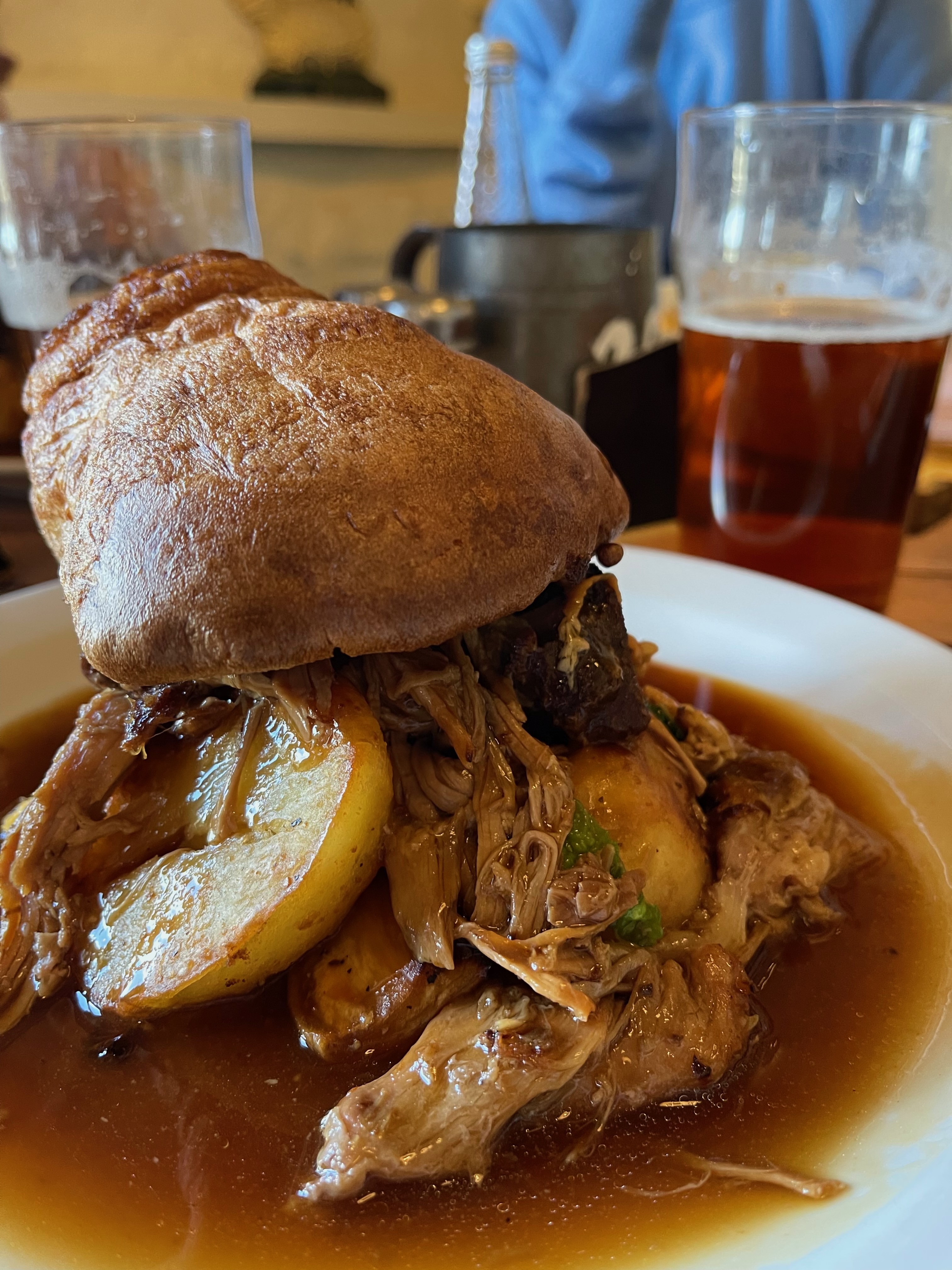
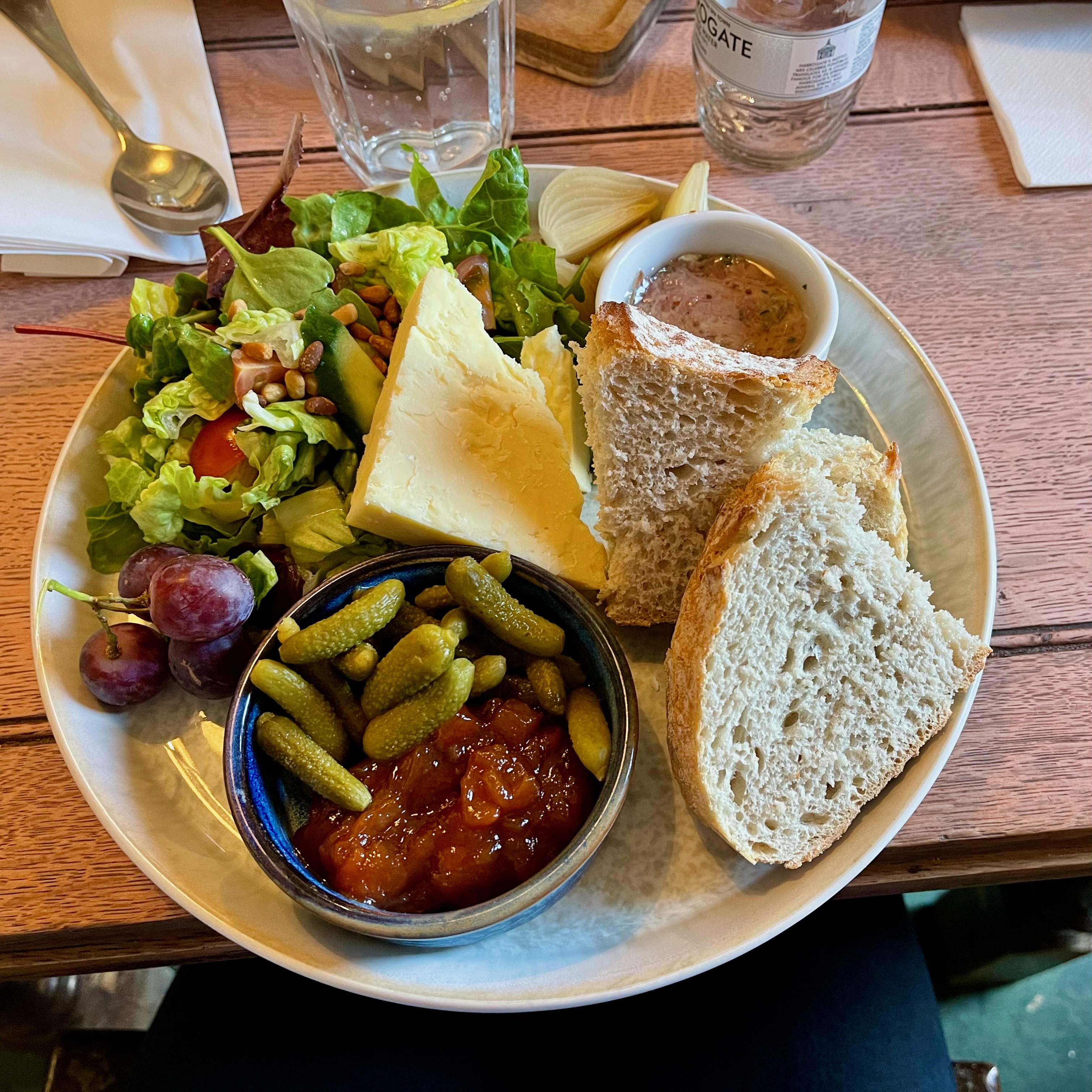
Grant and Mike both chose the topside roast (check out the towering yorkie!), I had the (slightly disappointing) pulled pork (with no crackling), and Shirley isn’t a fan of roasts so opted for a ploughman’s.

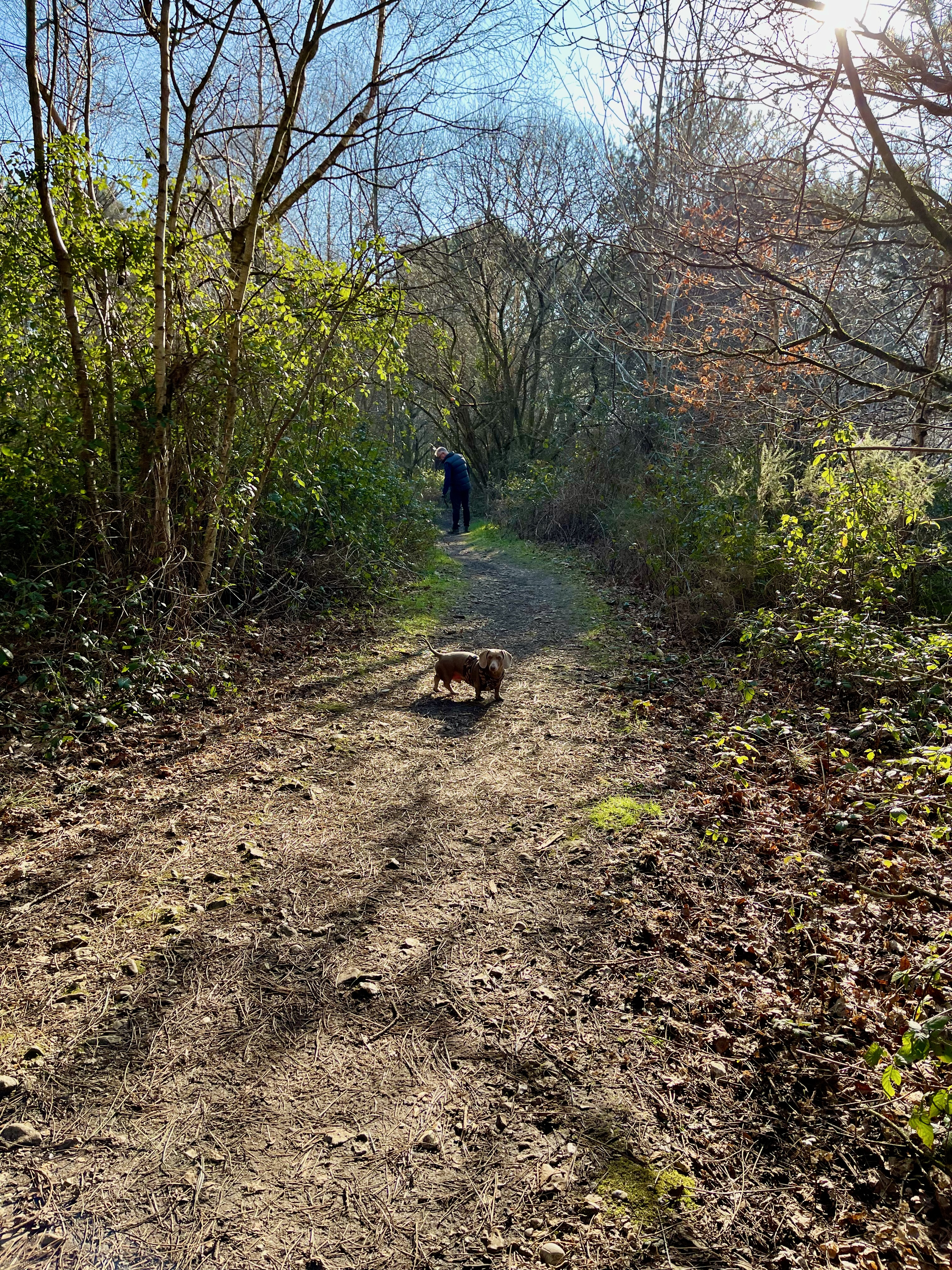
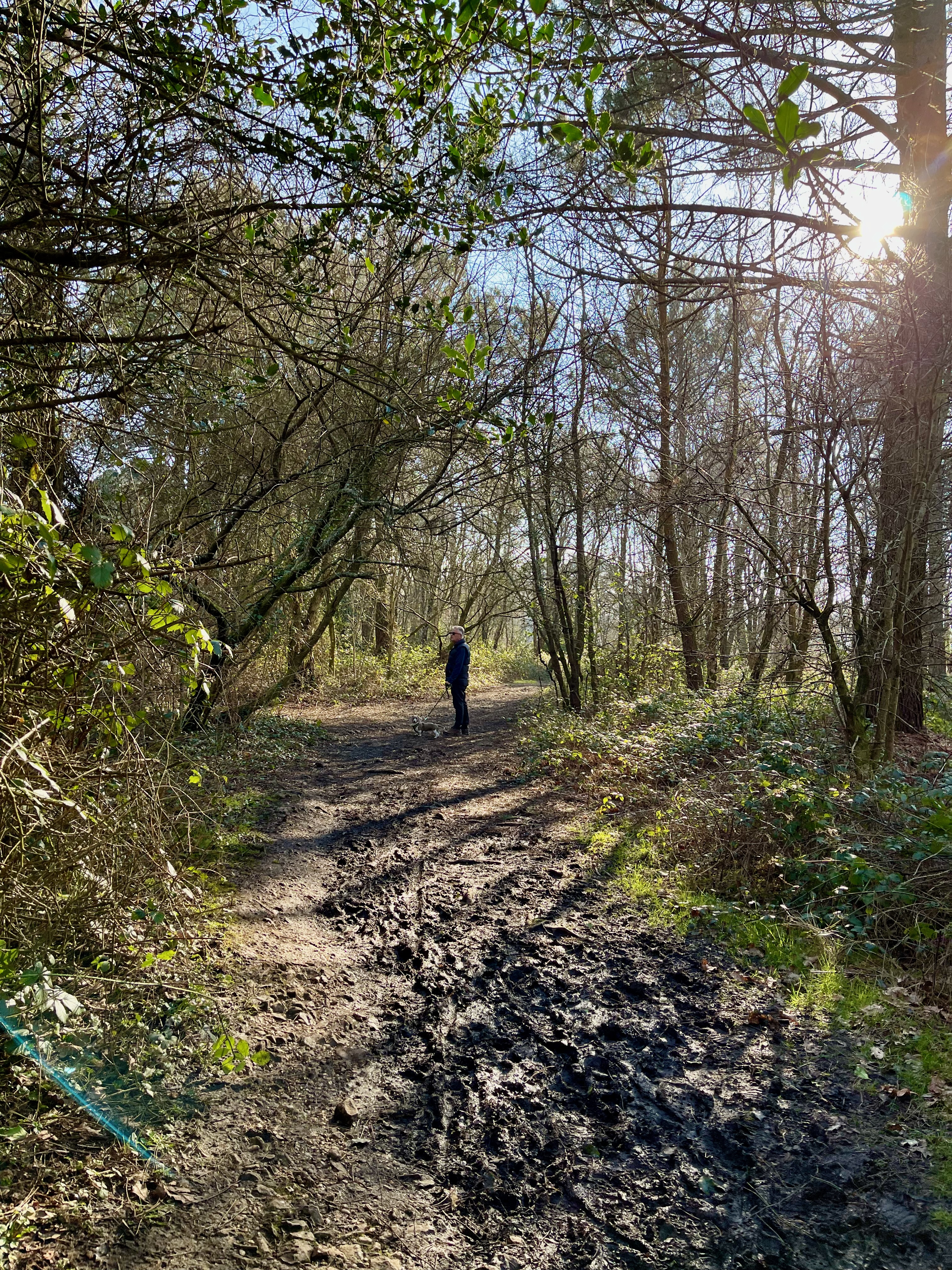
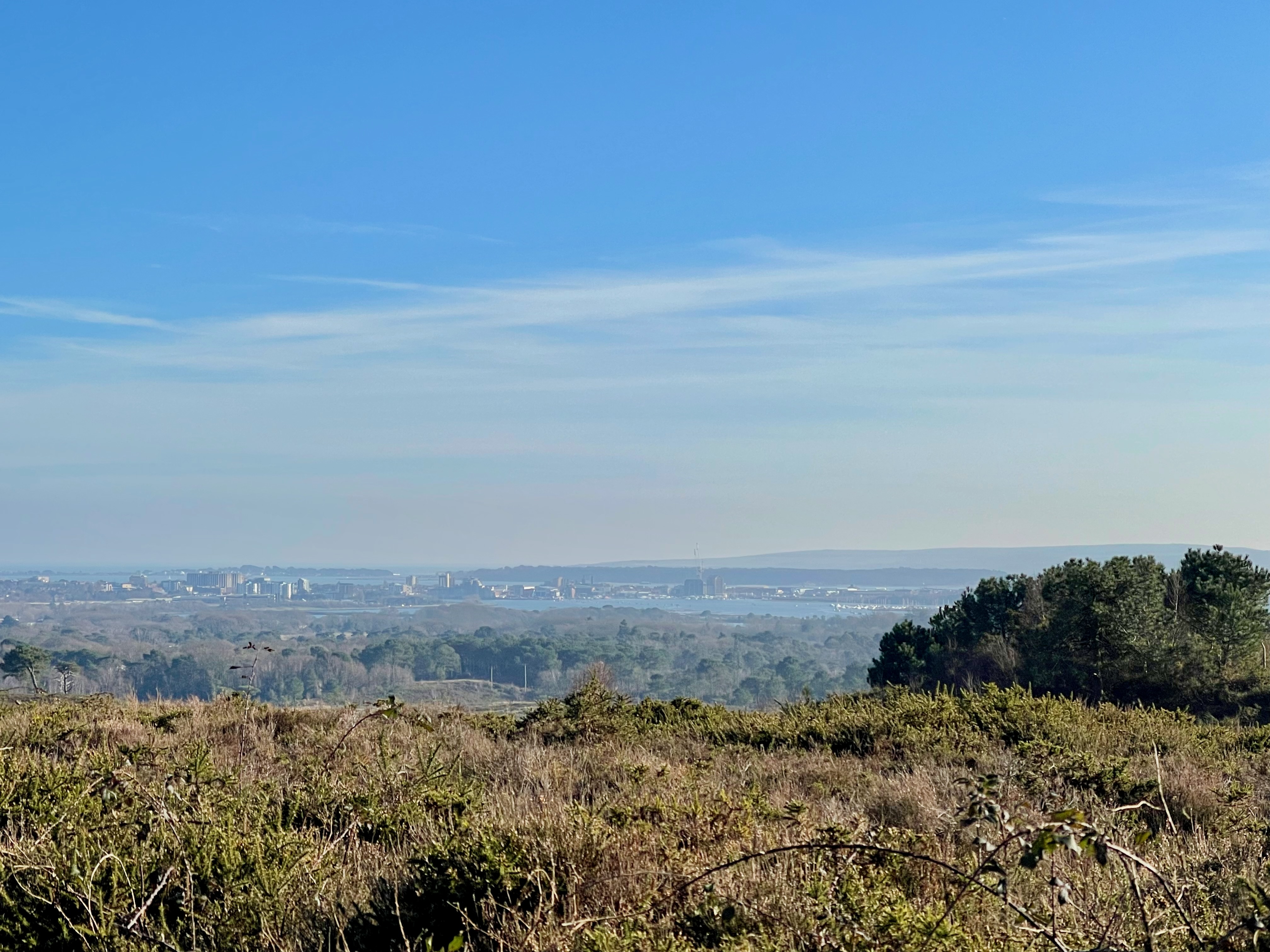
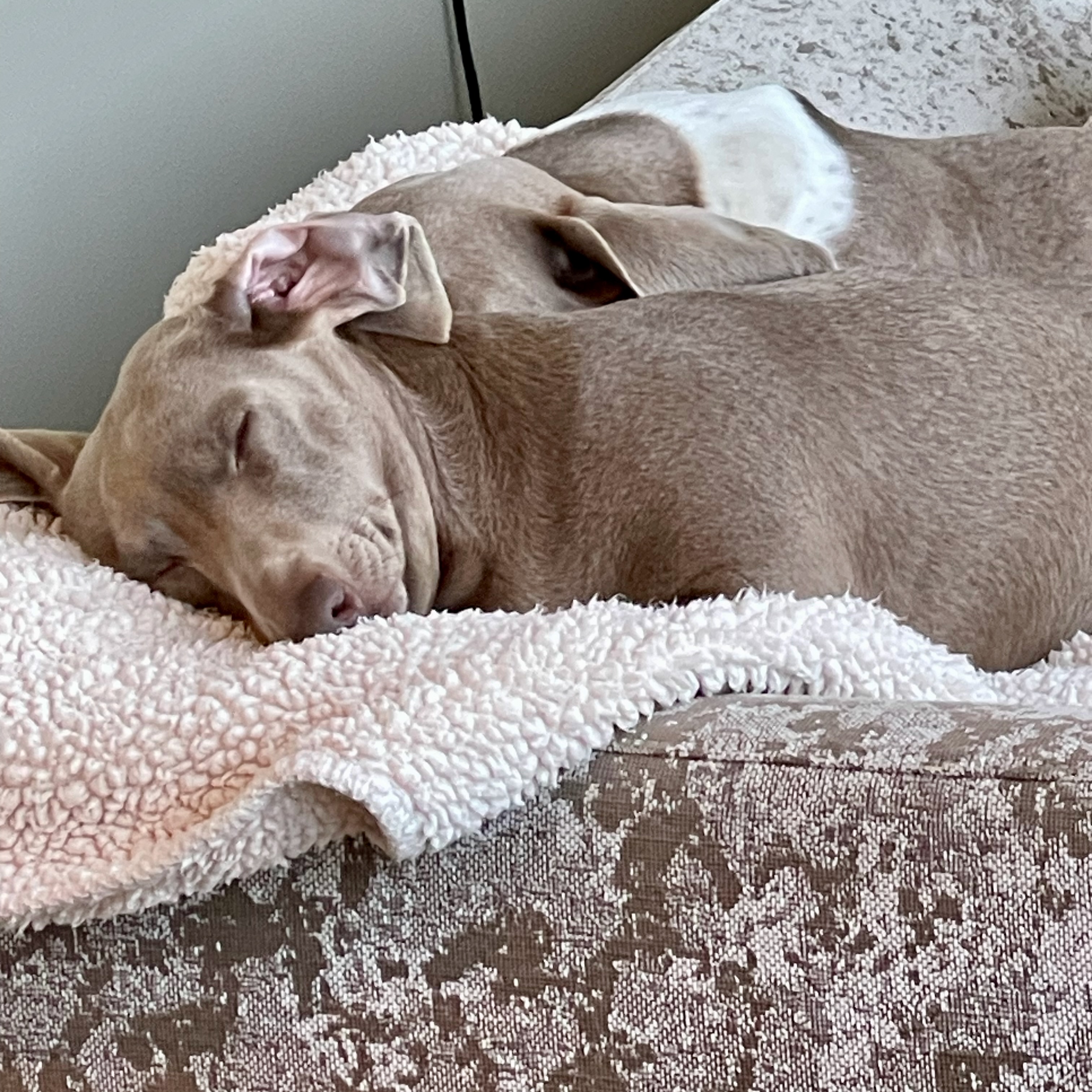
Back at Mike and Shirley’s we collected the dogs and took them for a walk through the woods to the heath. Muddy boots, muddy paws = happy Jo.

Dinner tonight was leftover cheeses and bread matched with a very (very) nice bottle of champagne. A very nice drop indeed.
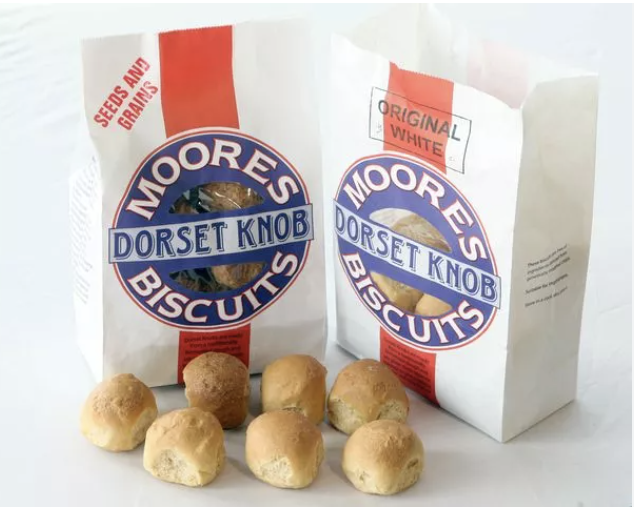
Dorset Knobs and other foodie Bits
Before leaving home I’d researched the must-try foods in Dorset. While we tried (and very much enjoyed) Dorset Blue Vinny cheese, there was one traditional dish I was happy not to sample. The Dorset Knob – a hard dry savoury biscuit that looks like a bread roll. Originally, bakers would mix the leftover dough with butter and sugar to make into small round portions called buttons. They were then left to dry out like rusks in the dying heat of the oven. Sounds delightful.
Thomas Hardy (he of Tess of the D’Urbervilles etc) liked to eat his with cheese but they were also eaten dipped in tea or cider (presumably to soften them). You can also eat them with honey and cream – a treat known as a thunder and lightning.
There’s even a Knobfest (I know, you couldn’t make this stuff up!) where people compete to throw the knobs the furthest – underarm. The organisers, however, stop short of running a knob-eating contest – presumably due to choking concerns.
Apparently there are also Cerne Abbas Biscuits – shortbread cookies with the chalk hill figure on them. The mind boggles.


Anyways, the recipe I’m sharing is a Dorset Apple Cake. You’ll find it here.
Tomorrow we’re off to Devon…
The Stats…
Temperature: -1 – 10C
Miles Travelled: Approx 48 miles*
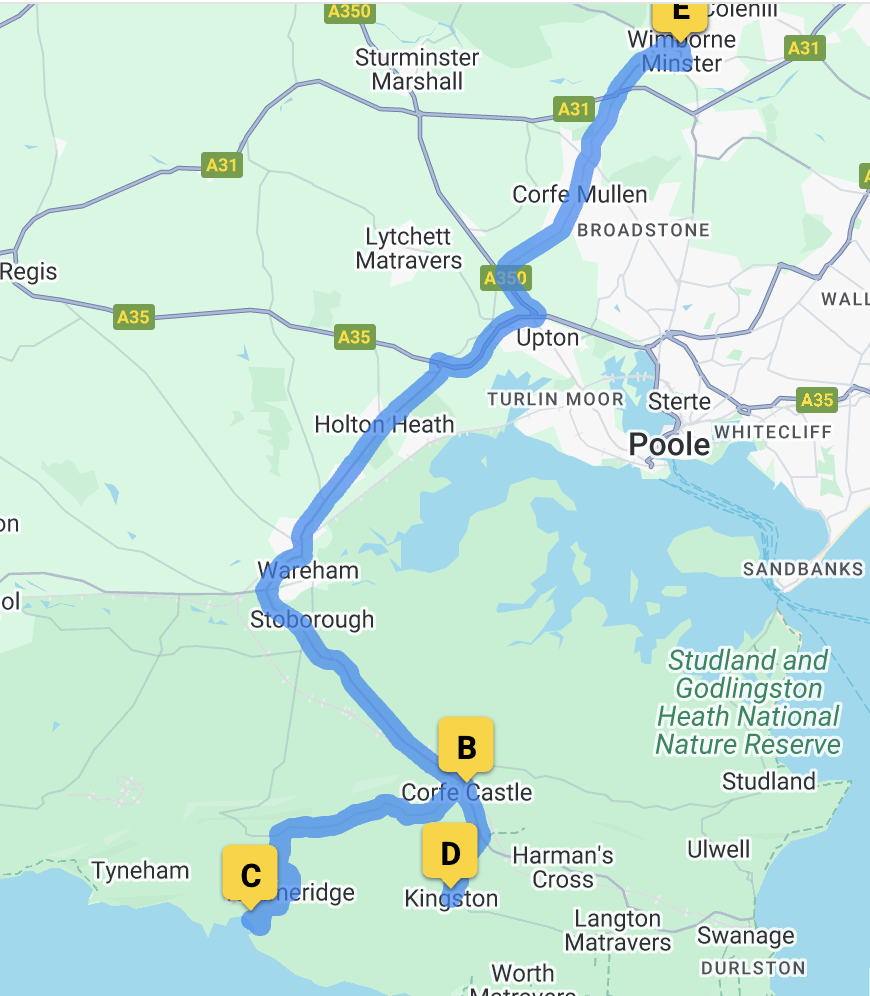
*Even though we work in kms in Australia, all signage in the UK is in miles, so that’s what I’m going with.
These posts are taken directly from my travel journal … you can find the series here.


 And Anyways...
So much history and the scenery is just gorgeous. You certainly lucked out with the weather while you were there – it would have been a huge added bonus I’m sure. 🙂
Get ready to see lots of blue skies… we didn’t need our rain jackets at all.
I love reading your travel diaries, Jo. They bring back so many great memories of the years when we travelled similar to the way you do. Sadly my husband is no longer able to travel, but I can still be happy with the memories. Looking forward to hearing more!
Thanks Kate… That’s a lovely thing to say.
thank you! Thank you ! THANK YOU!
thank you! Thank you ! THANK YOU!
You’re welcome
Dorset is wonderful. I love the castles in England with their colourful histories. I especially love that Enid Blyton used Corfe Castle as the inspiration for Kirrin Castle in her books!
Me too…
Ah lovely. Have been to Corfe Castle twice, the first trip as a 13 year old who, ring a fashion victim, walked around the castle in vertiginous platform shoes.
Looking forward to reading about your travels in Devon, where I grew up.
I’m picturing you in platform shoes on those slippy clay paths.
This is such an amazing trip, Jo — and we’re only at the beginning. I am sad that you didn’t try a Dorsett Knob. You could have taken one for the team! ♡
Yeah…and nah…
fantastic photos. Yes so weird that they use miles for the road signs.
sherry
Interesting, they’re metric in many other ways but distances are miles and yards and meat in butchers is sold by the pound.
Dorset knobs.. likely a miss but those views! I would eat outside on a cool day for those. And I don’t think I could resist a proper English sausage roll!
I can never resist a sausage roll… either here or there!
I’ve never found any good ones here. Thought about making them.
They’re definitely an Aussie and UK thing. Like meat pies – the individual handheld ones that you buy from bakeries and eat in the car and at the footy.