
Thursday March 6, 2025
Another foggy start this morning, but slightly warmer with positive overnight temperatures – positively balmy, it is.
At home they’re now saying Cyclone Alfred will probably hit Friday night – a few days later than originally forecast. Most businesses have been closed for a few days and Sarah said she’s working from home and doing telehealth for her clients. Kym, the friend who’s staying at our house, said she’s managed to source bottled water even though the supermarket shelves are empty and will fill the bath in need, just in case the electricity is cut and the water is too. Here’s hoping it comes to not much.
It’s tough being here when it’s all happening at home. It reminds me a bit of when we were here at Christmas in 2019, Australia was burning, and we were worried about family in Tumba, and Becca (and her place) at Conjola. I try not to say anything to Grant as I know he’ll get annoyed with me for worrying about something I can’t do anything about (let alone control), but there you have it. I am, however, enjoying some of the memes.


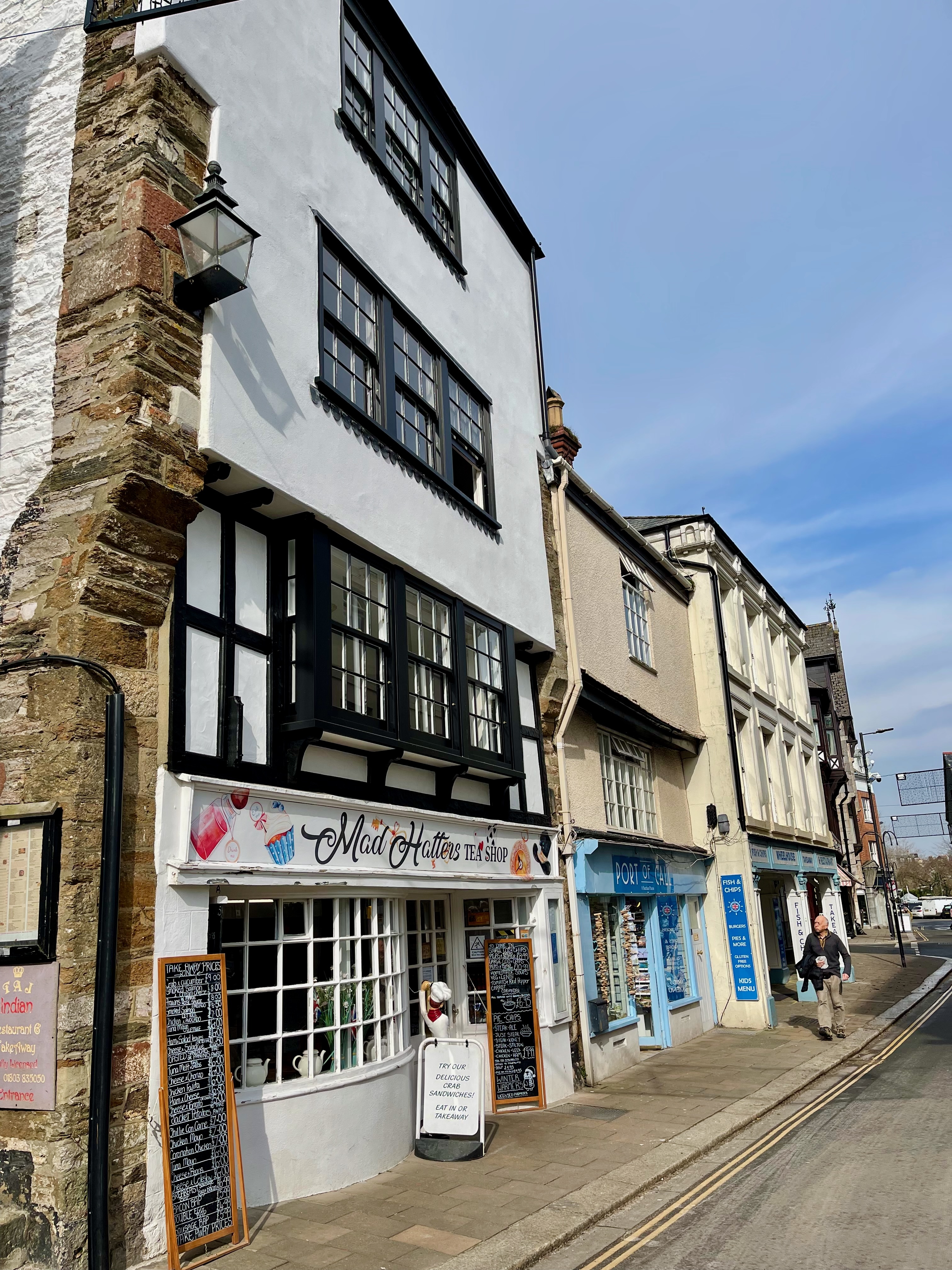
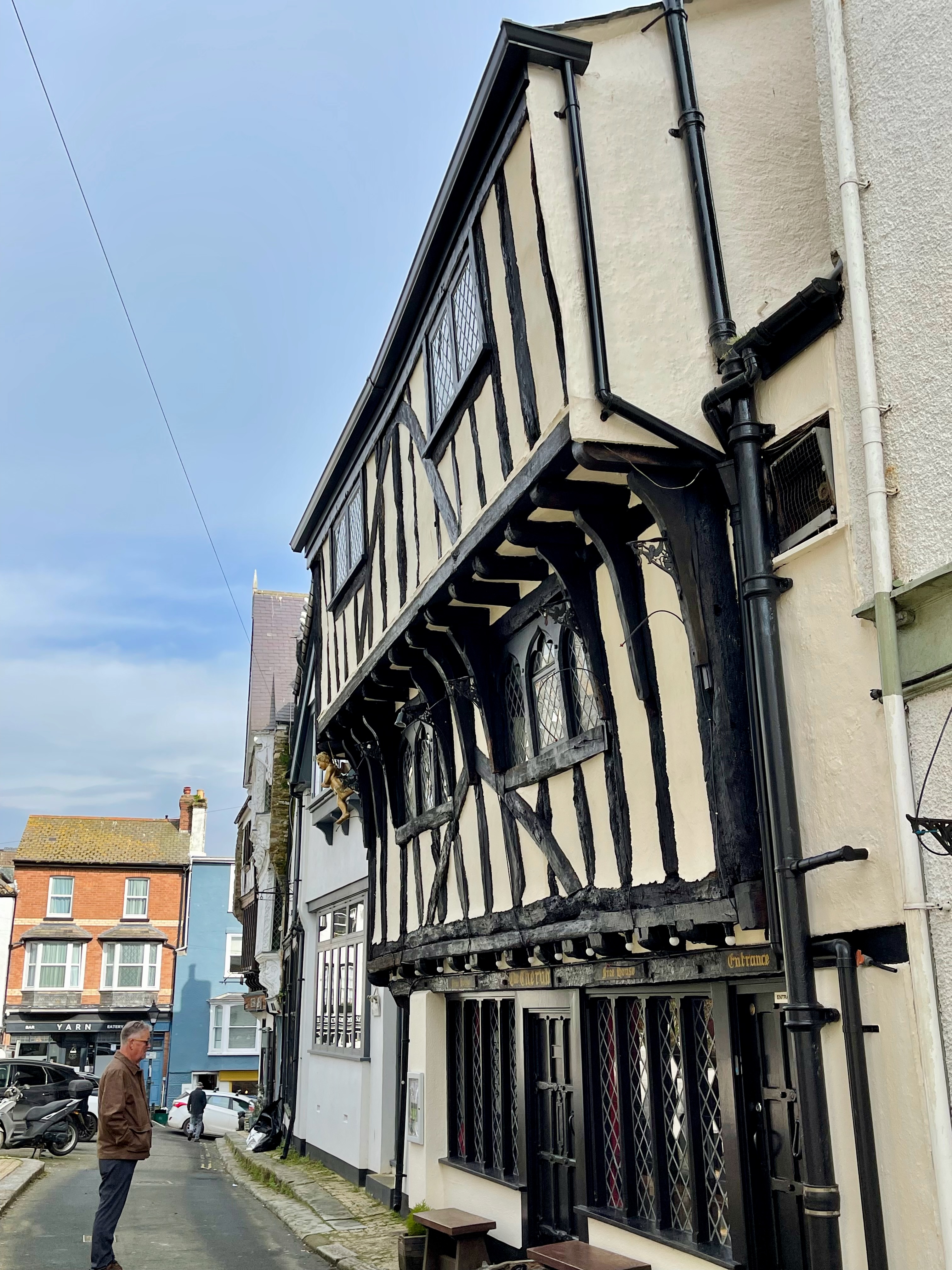
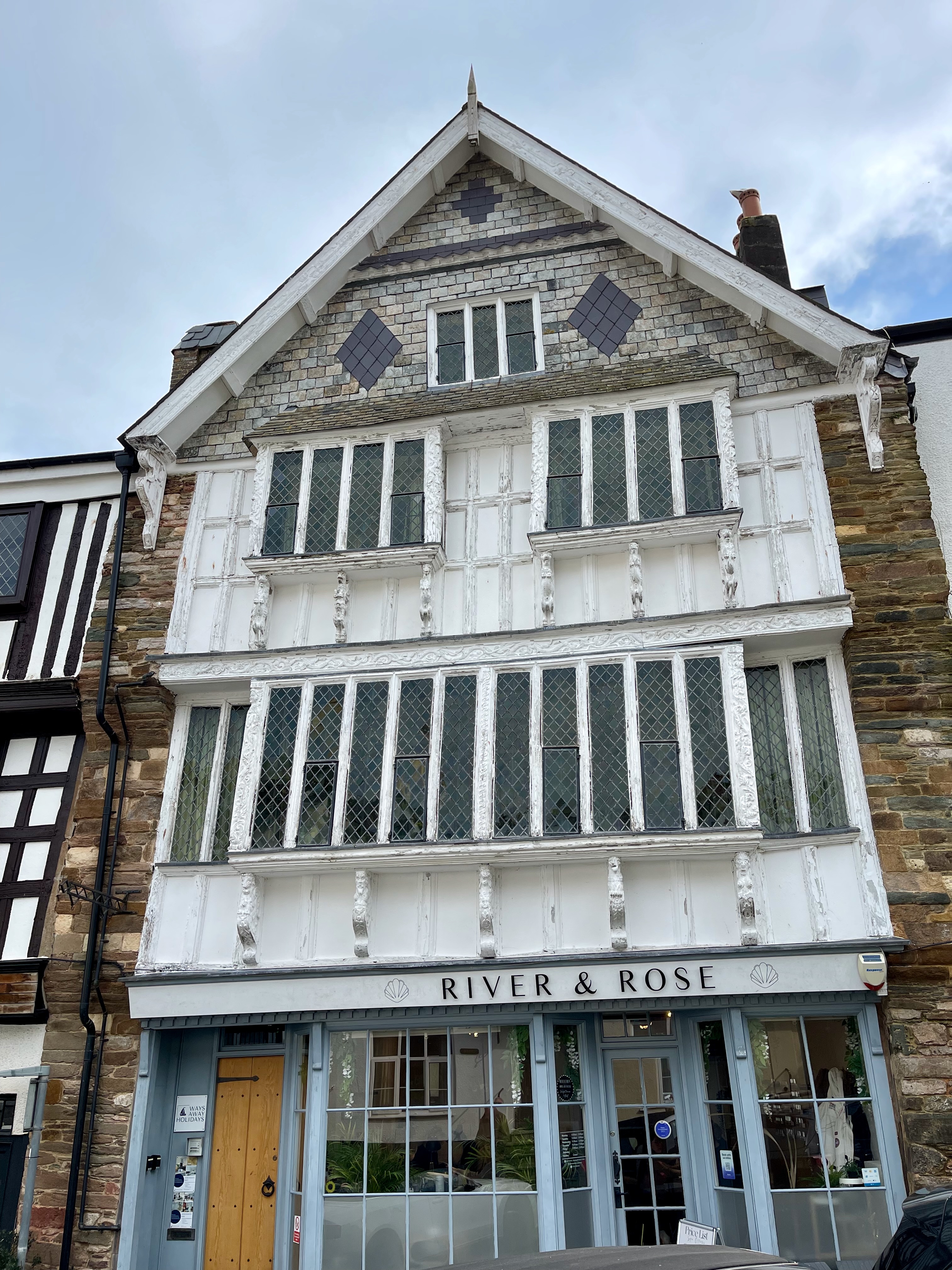
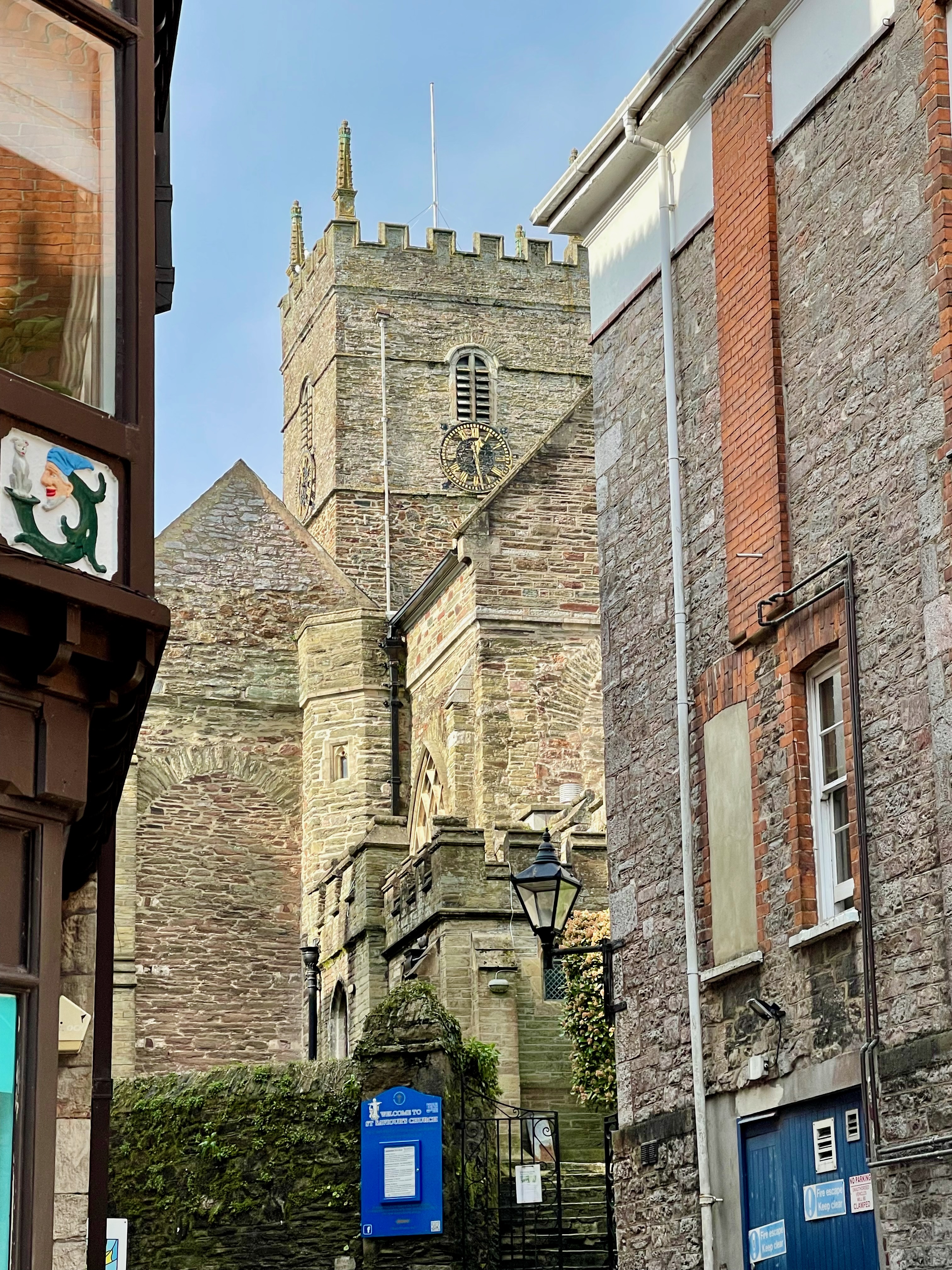
We drove down to Dartmouth today. Neither of us had any expectations, but Dartmouth exceeded them all. (Update – when asked about his highlight for the whole trip, Grant says Dartmouth… #bigcall).
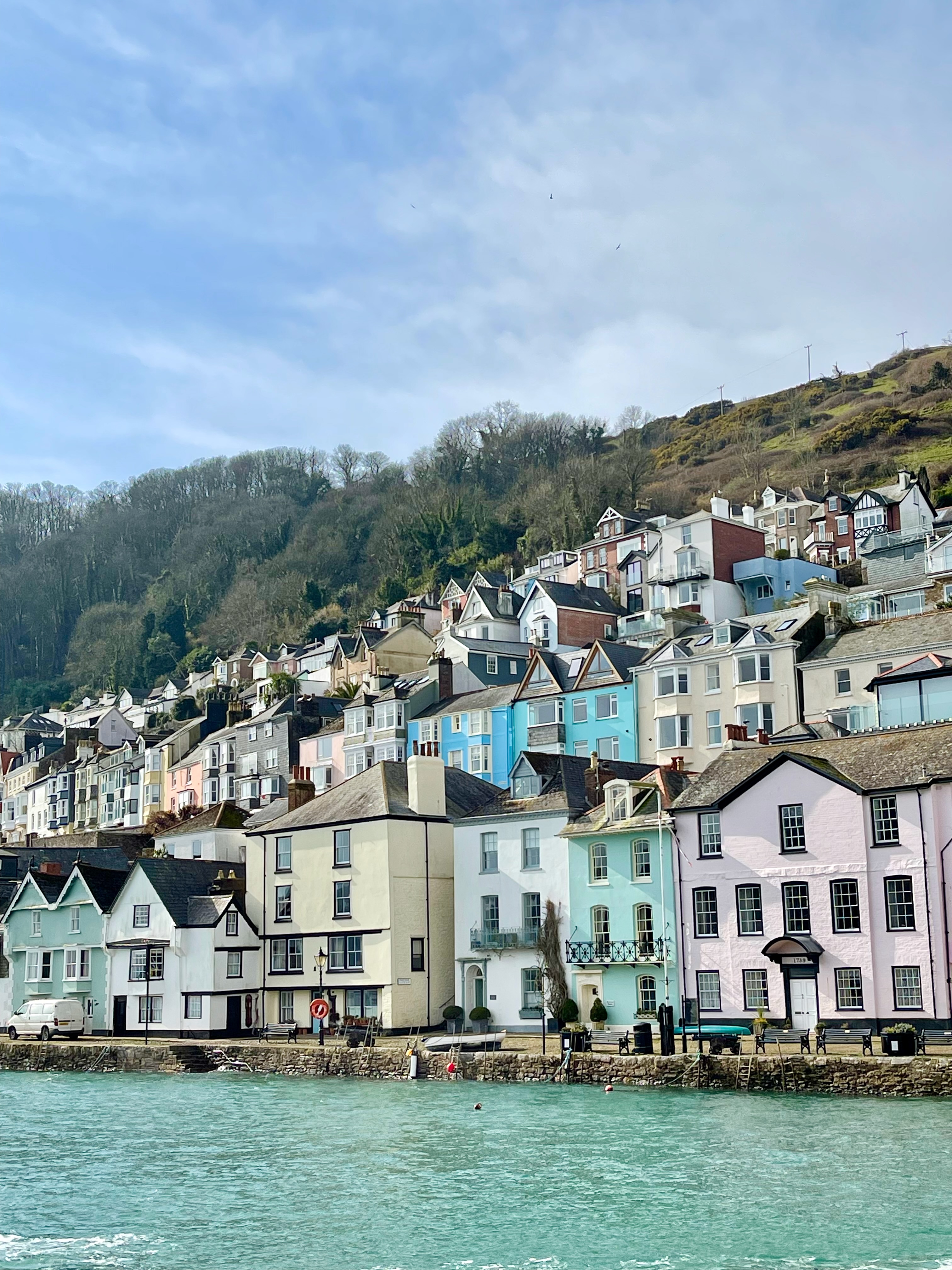
The town is a jumble of medieval, Tudor, Elizabethan periods, stone stairs and narrow lanes and has a rich maritime history. In many ways it feels like you’re stepping into (or out of) a painting by J.M.W. Turner and the great artist himself is holed up in one of those rooms overlooking the harbour painting one of his masterpieces. Fanciful, I know, but that’s the vibe.
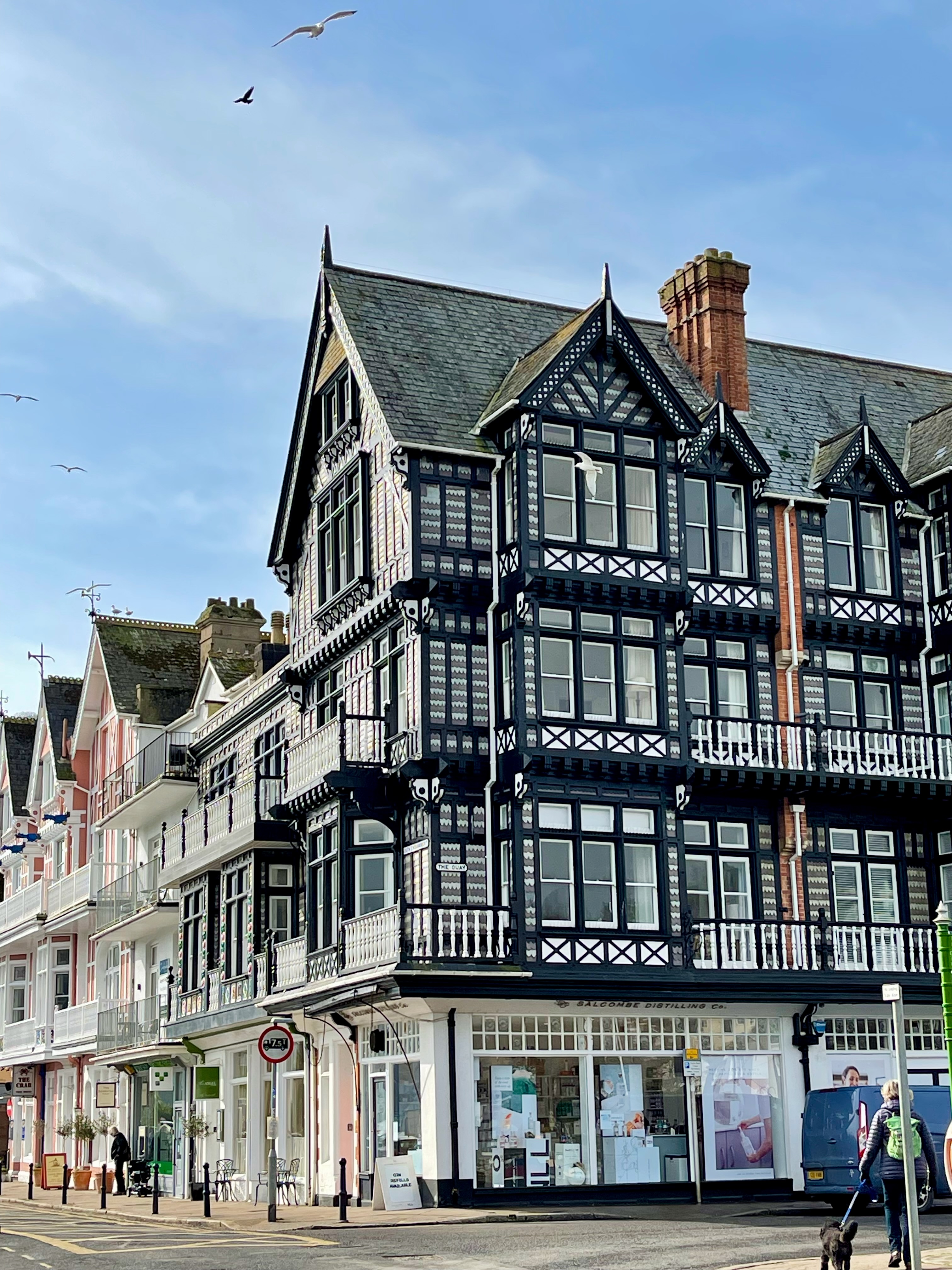
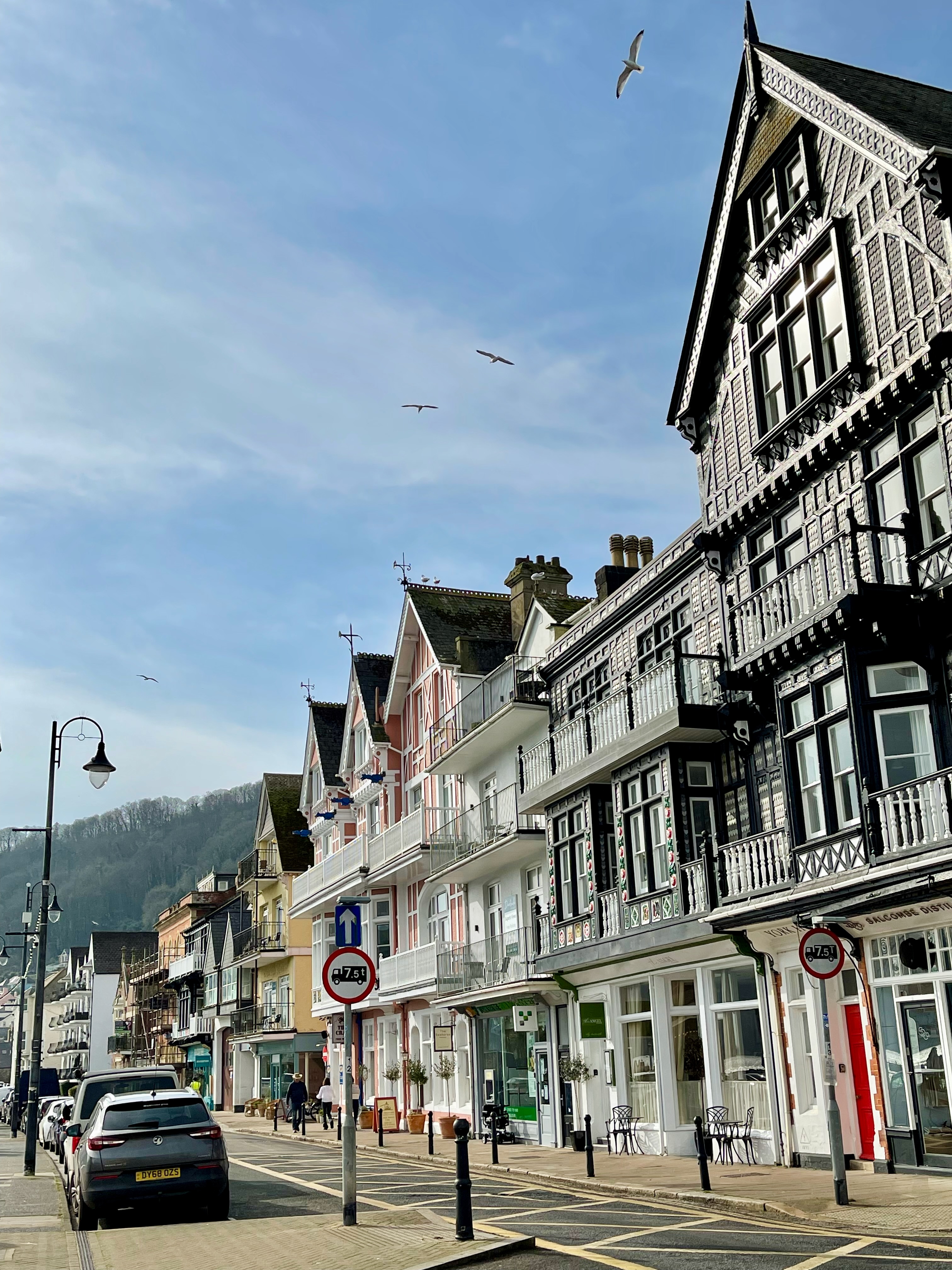
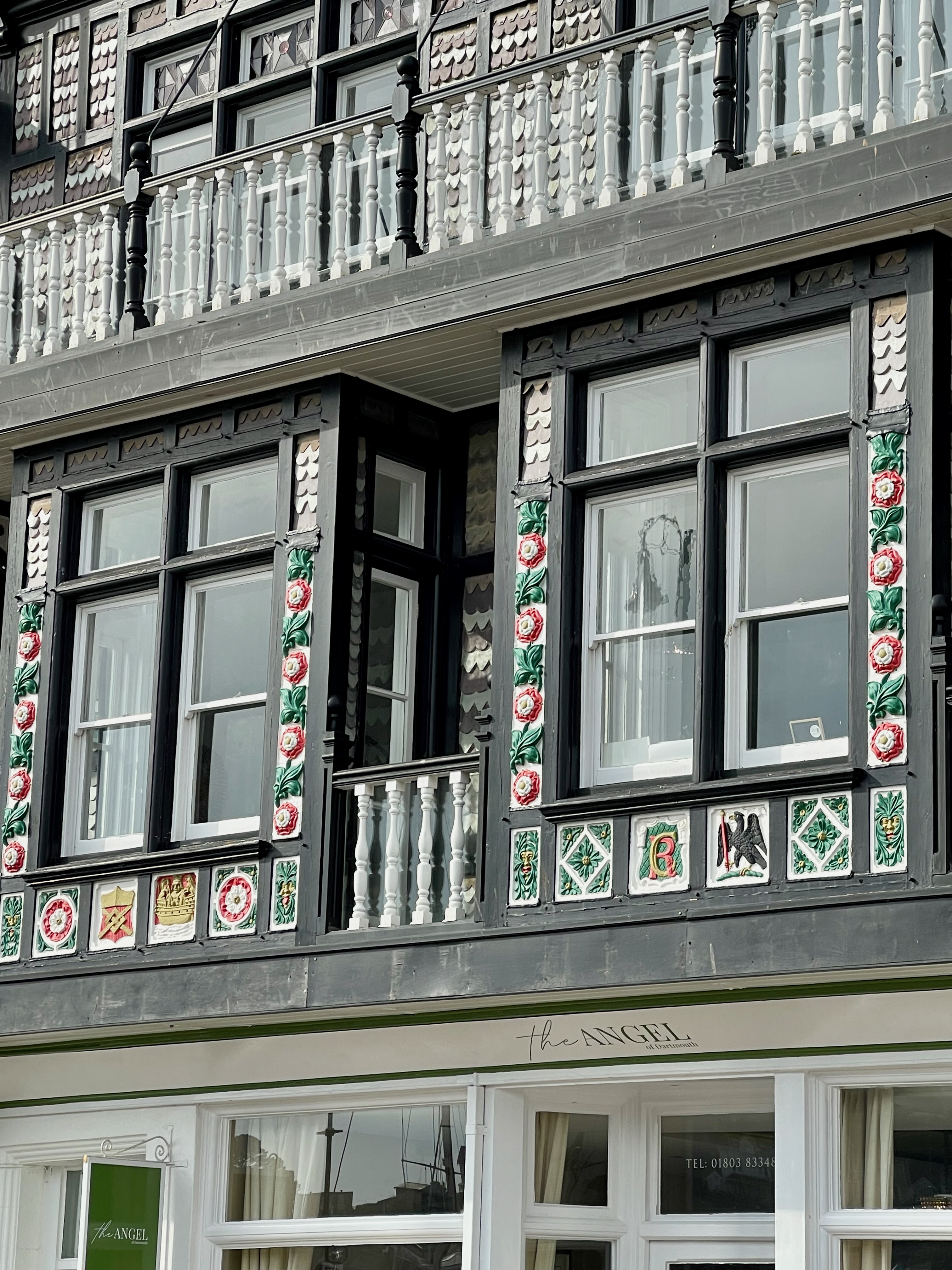


Dartmouth was an important deep-water port for sailing vessels and used as the sailing point for the Crusades of 1147 and 1190. It was the home of the Royal Navy from the reign of Edward III (the Britannia Royal Navy College sits high on a hill overlooking the port) and the Mayflower pulled in here for repairs after leaving Southampton on its famous voyage.
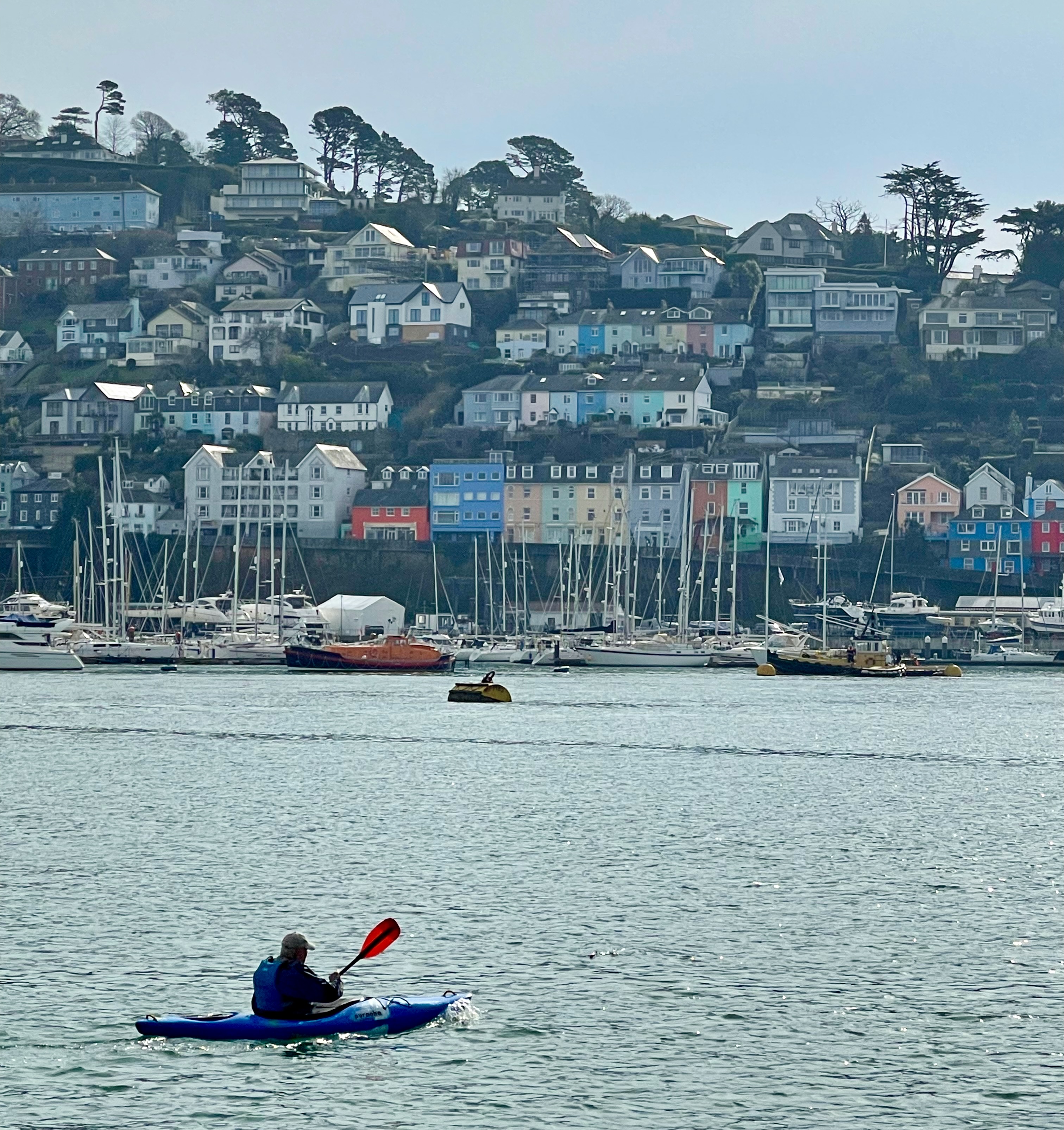
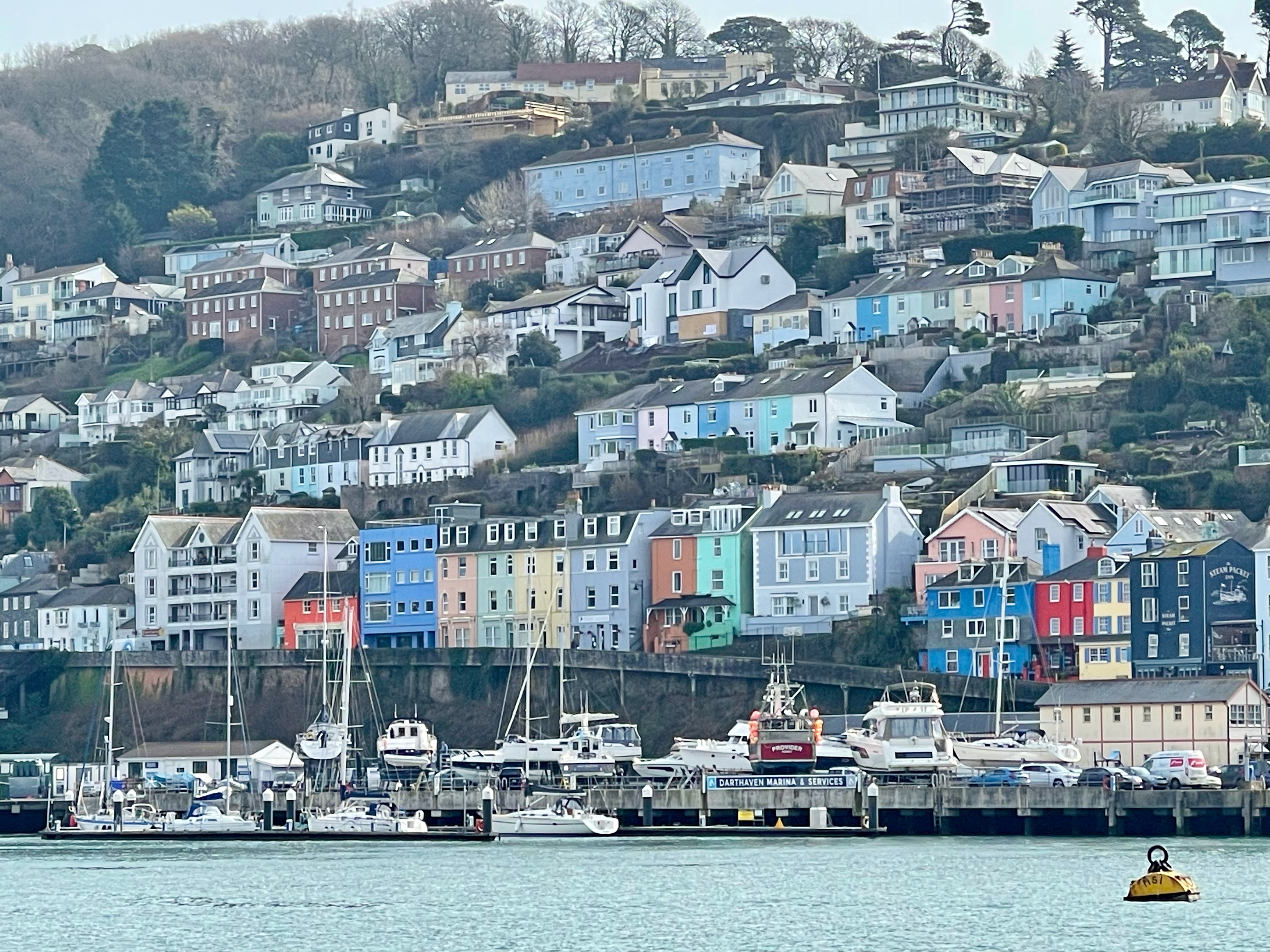
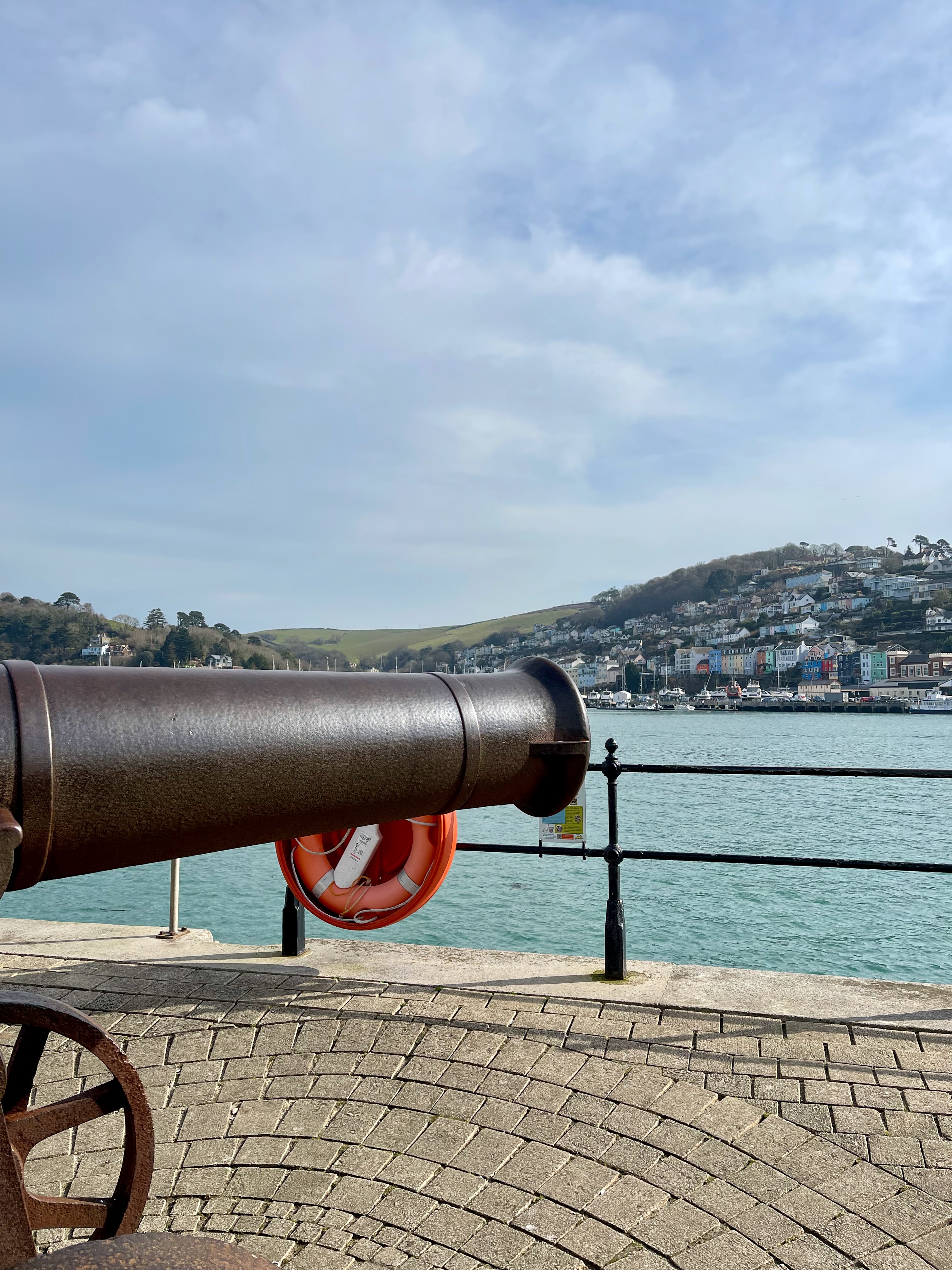
Despite the narrow mouth of the Dart being protected by two castles – Dartmouth and Kingswear Castle – Dartmouth was twice surprised and sacked during the Hundred Years War between England and France, after which the mouth of the estuary was closed every night with a great chain. That ought to do the job.


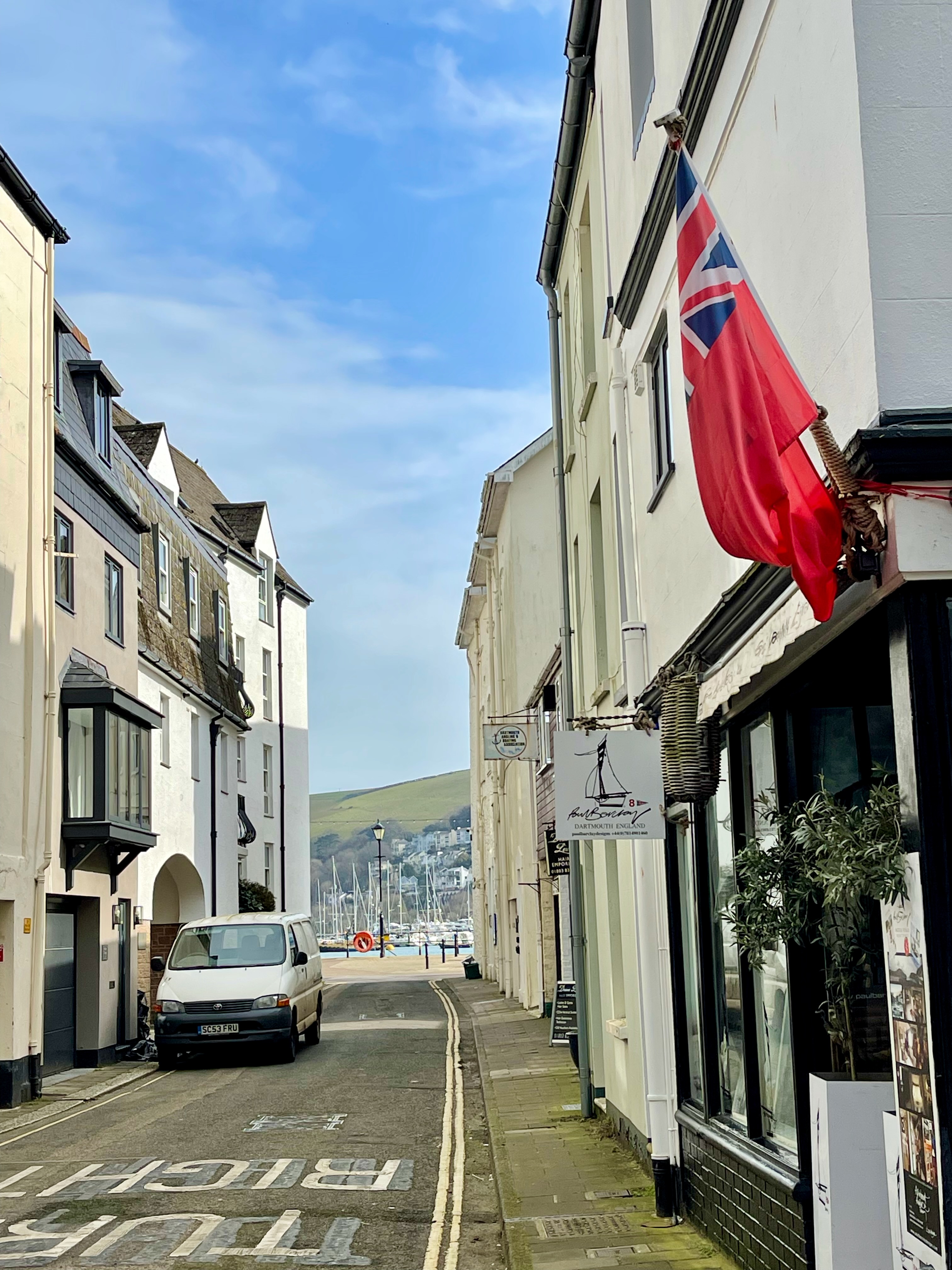
Some lovely shops in town and galleries I could have spent ages in.






We shared a cream tea ice cream – clotted cream, jam, with bits of scone. It had won a Taste West silver medal, but while the ice cream was lovely, neither of us was sure how we felt about the bits of scone.

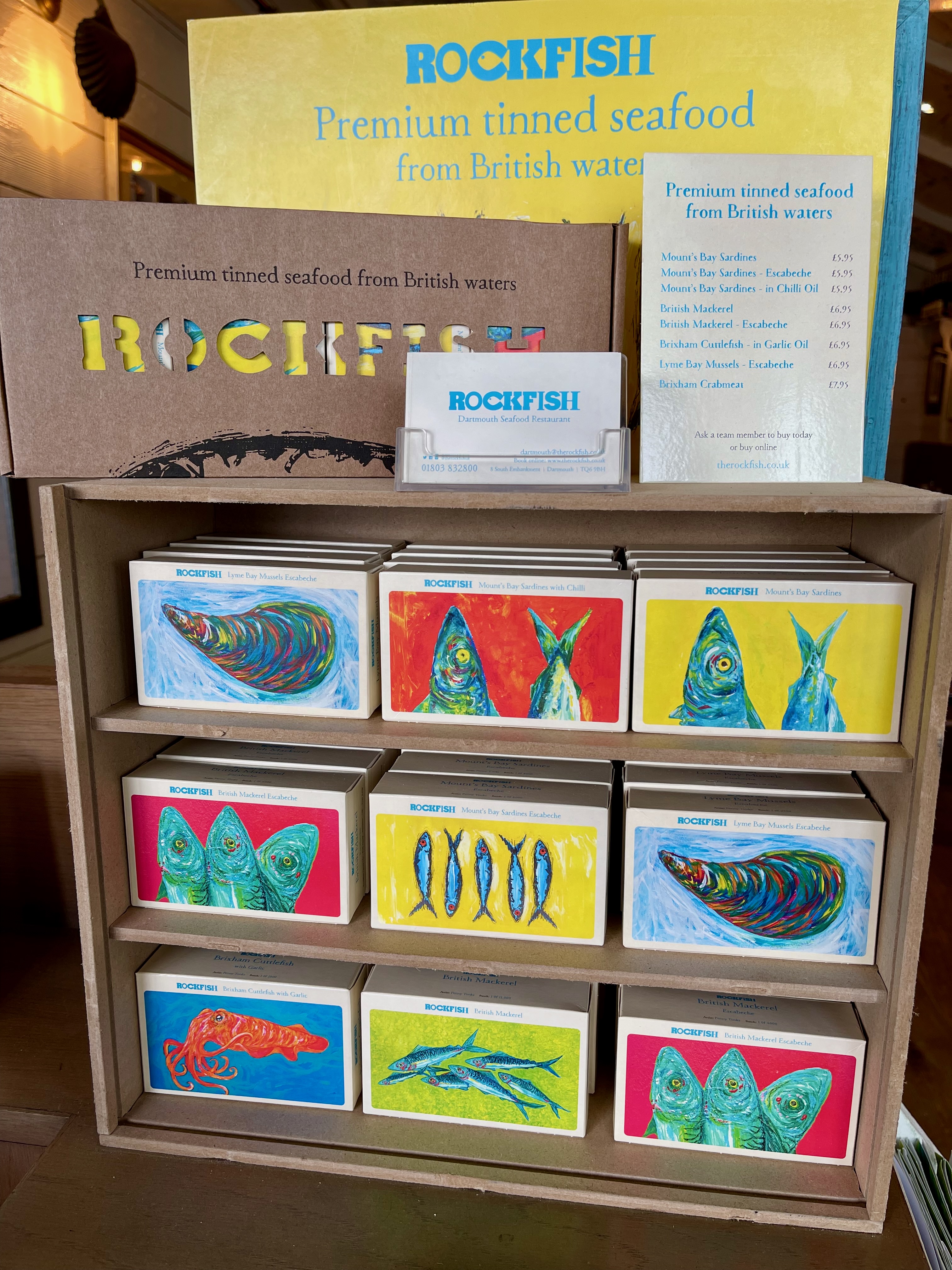
Lunch was at Rockfish – and it was good. (Update – one of the best meals of the trip).

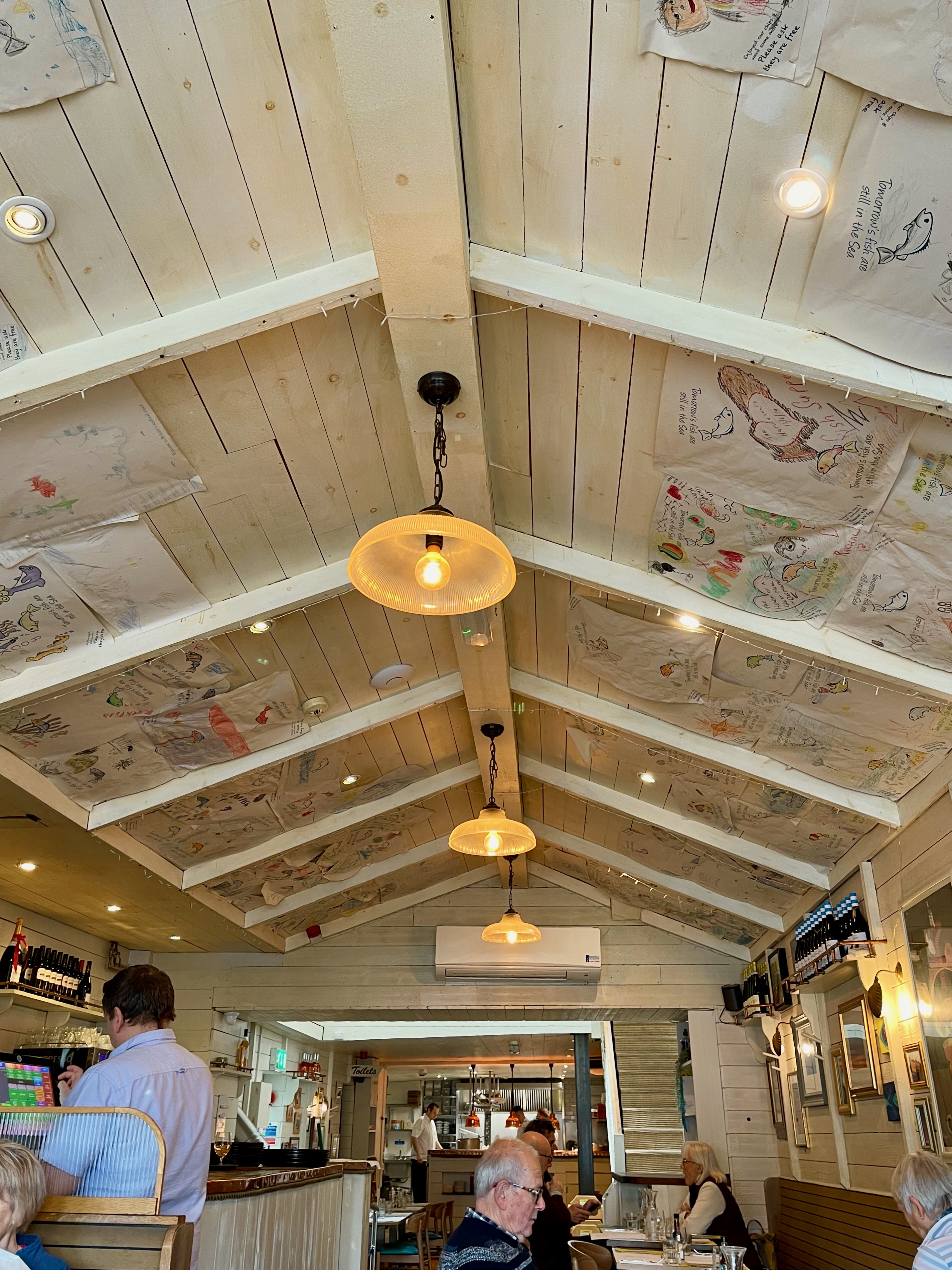
Their mantra is “tomorrow’s fish are still in the sea”, and I love how it’s everywhere – on the plates and on the ceiling in kids’ drawings.

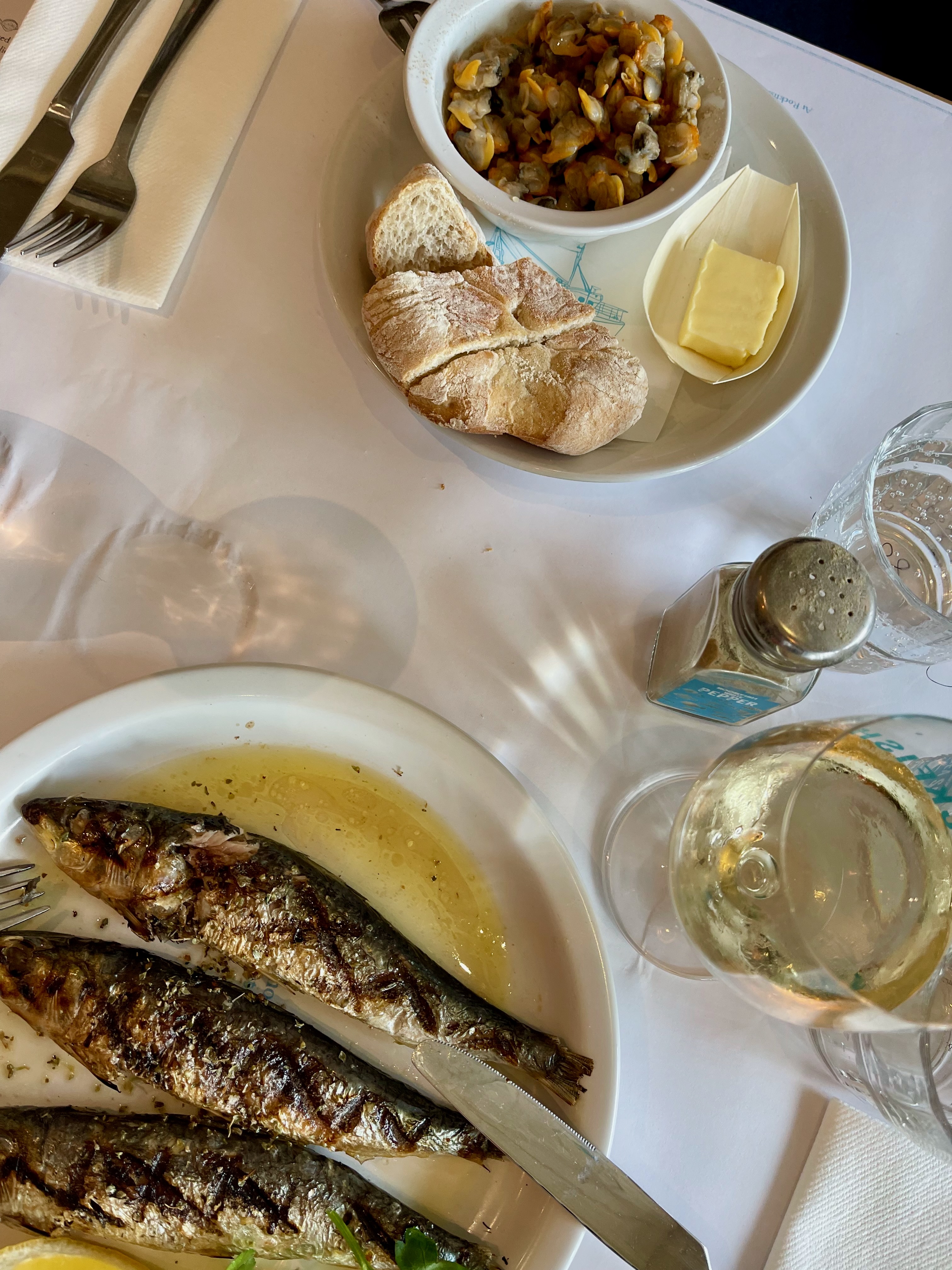
I had the grilled sardines to start and they were the best sardines I’ve had. End of. Grant had the very unphotogenic cockles.
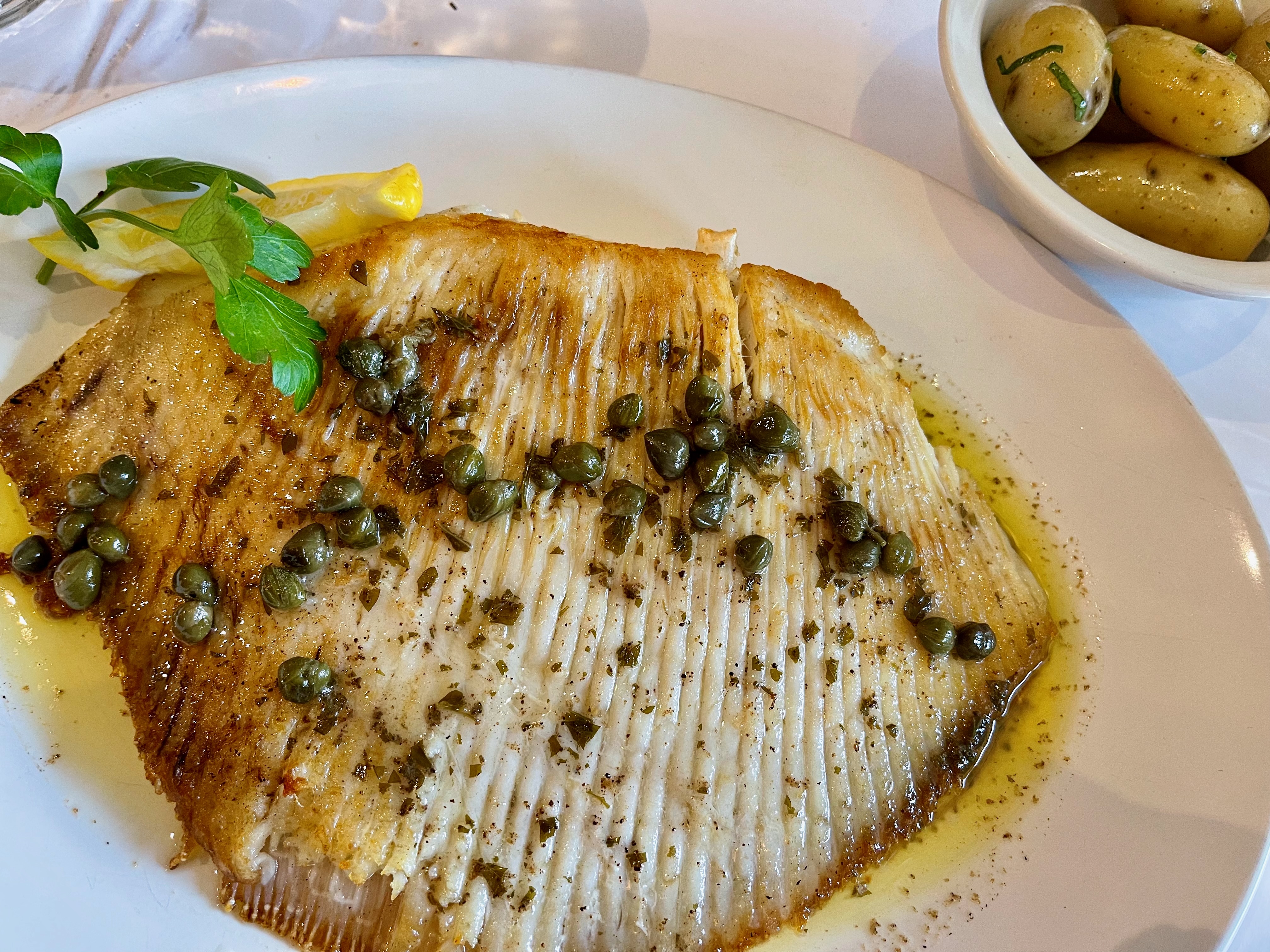
After that we shared a main course – ray wing with butter, capers and lemon and a side of new potatoes.
Another day of stupidly narrow roads, we came across the stupidest this afternoon when a tractor (which was the width of the road) was coming towards us, a small red car reversing back. Grant reversed back into a farm gate to allow the red car to get past us and into the passing bay just beyond, but she pulled up in front of us and refused to go any further. When I got out and tapped on her window, she folded her arms and said, ‘I’ve reversed back a mile, now it’s your turn.’ Words were exchanged.

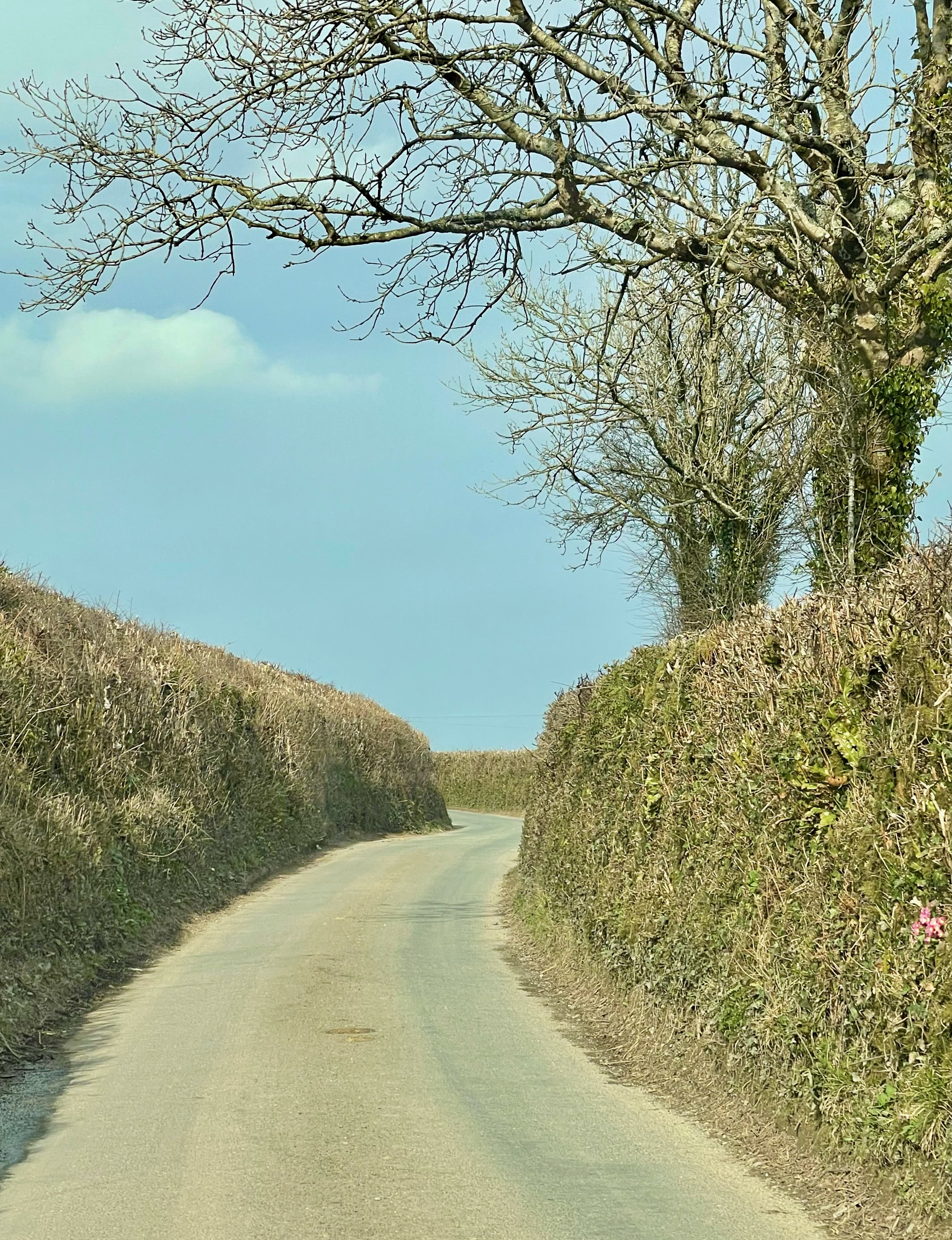
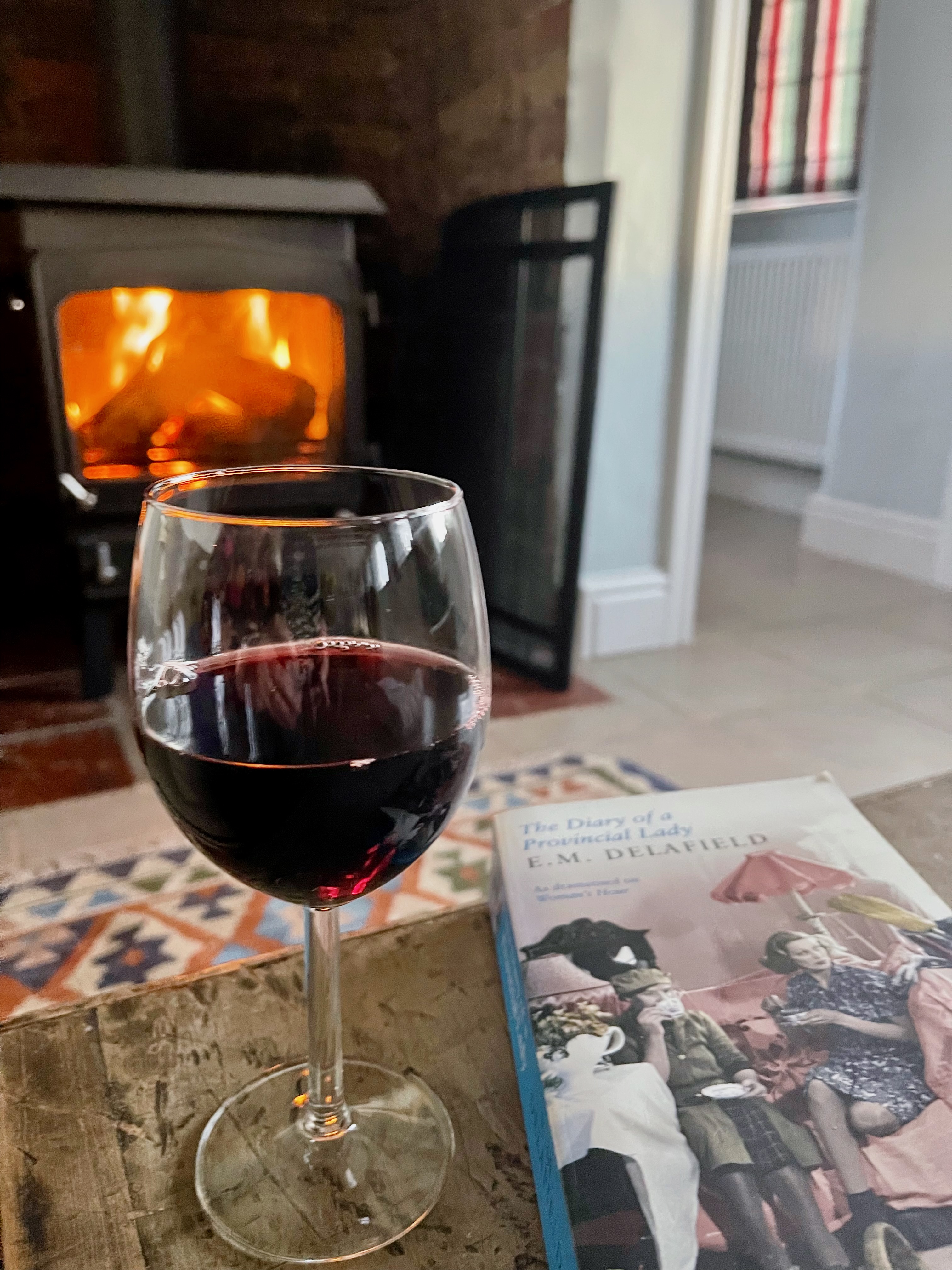
While we won’t be sad to say goodbye to the narrow roads, many of which seem to have sunk lower than the fields beside them, we will be sorry to say foodbye to Fursdon Cottage. It’s been such a comfortable stay and one of those rare holiday cottages where there are proper knives, proper pans, and proper kitchen kit. If we’d wanted to cook a meal, we could have.
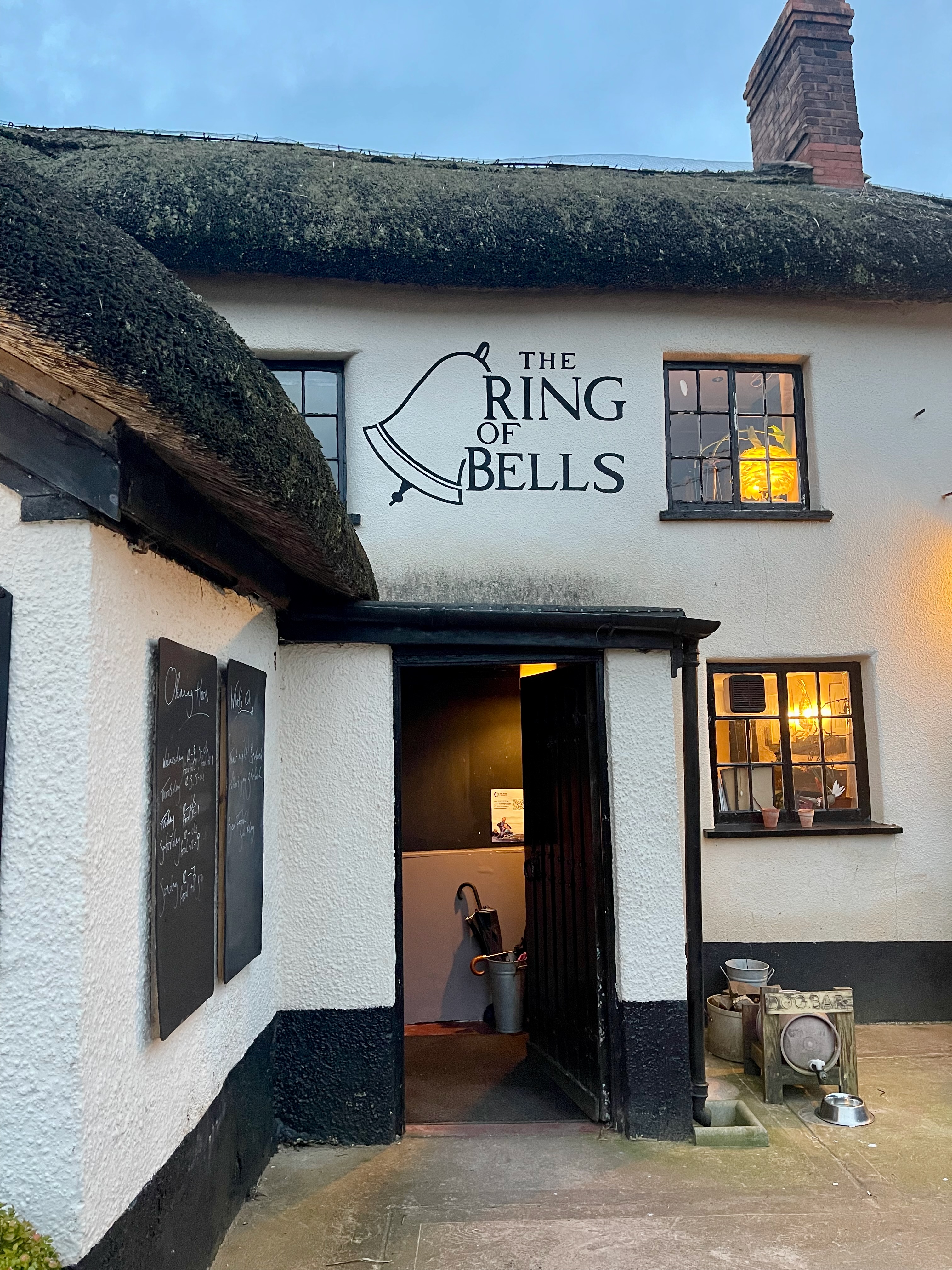
Dinner tonight was at the Ring of Bells in Cheriton Fitzpaine. The name of the village comes from the old English Cheriton, cirice+tun, which means “village with a church”. The Fitzpaine part comes from the Fitzpayn family, who were prominent landholders in the parish in the 13th century. It’s claim to fame is the primary school which is the oldest thatched longhouse in the country.

Dinner tonight is auberge style, ie a fixed three-course meal.
First up was butterbeans with black olives and tahini. While tasty, it was served cool, and I think would have been even better if warmed up a tad. Main course was baked hogget (sheep between one and two years old) and turnip. Encased in filo pastry it was baked in a terrine and served on an aubergine soubise – a white onion sauce flavoured with smoky grilled eggplant. The little side salad was simply dressed with pomegranate molasses. Dessert was caramelised white chocolate mousse on a passionfruit syrup with some toasty crumbs.
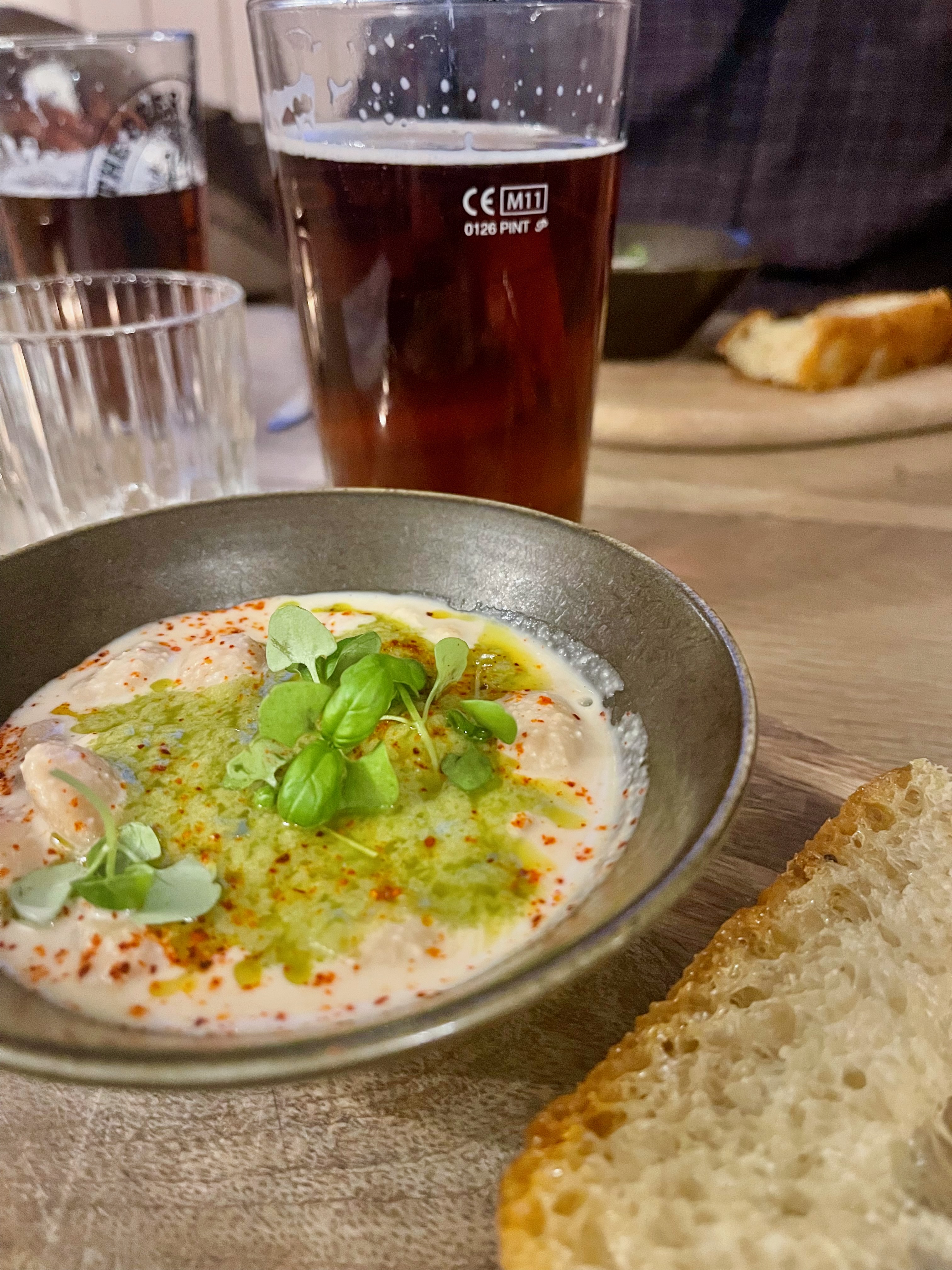

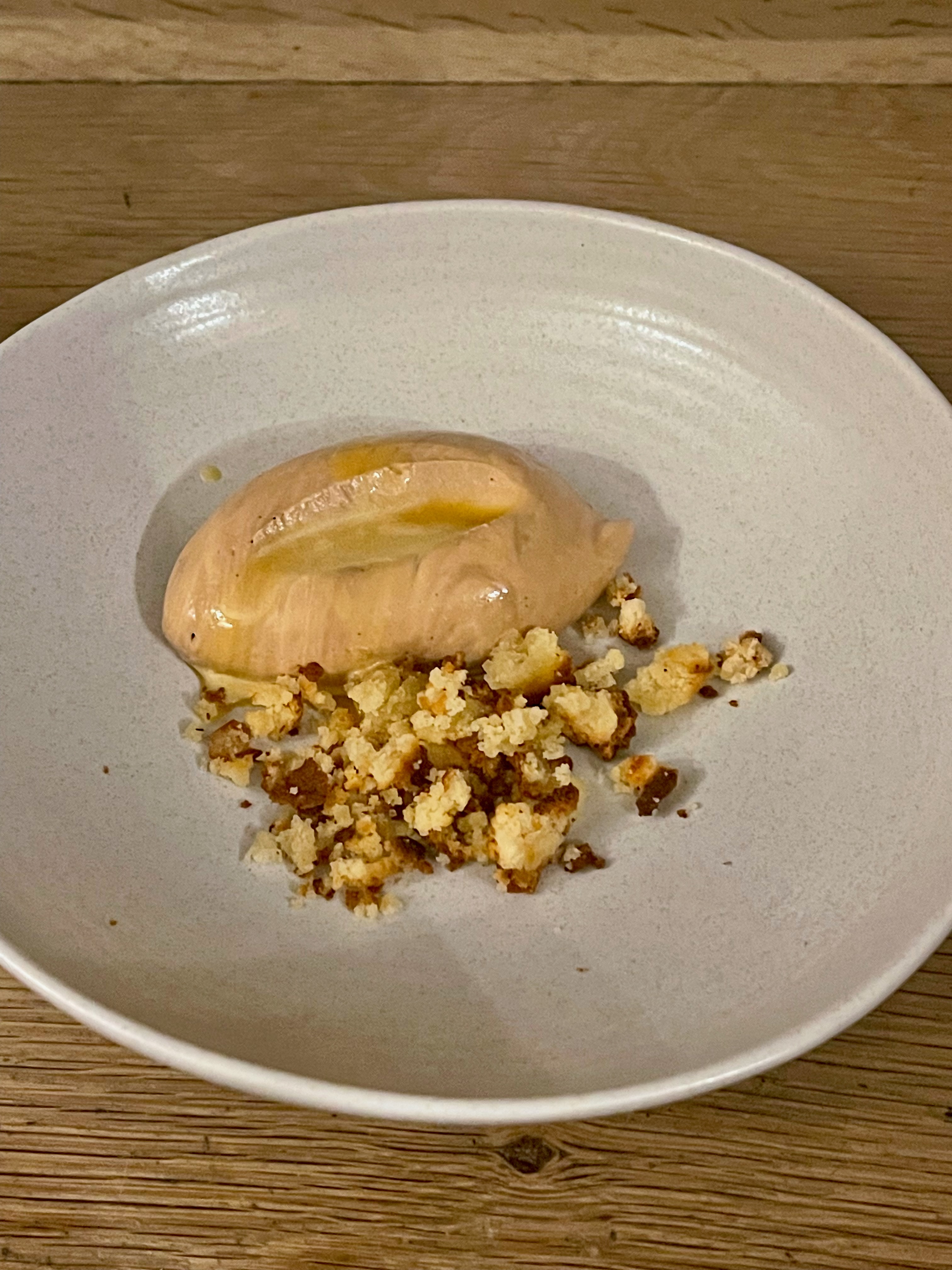
A really memorable dinner and one I’d like to have a shot at recreating when we’re home.
Dartington
On the way down, we drove through a village named Dartington. While we didn’t stop (Vernon Kaye’s Ten To The Top music quiz was on Radio 2 and we were through the village before I had a chance to finish googling), what I found on Google was pretty cool. It has, in fact, given me an idea for the Christmas novel I’d begun to write before we left.
Dartington Hall, is a medieval estate dating back to the 14th century. It was bought in 1925 by Dorothy and Leonard Elmhirst, who transformed it into a centre for innovation in the arts, education and social enterprise.
American-born Dorothy was part of the wealthy Whitney family and at seventeen inherited about $15M (equivalent to about $525M in todays money) when her father died.
Her first marriage to Willard Straight, a philanthropist, ended when he died in the 1918 influenza epidemic in France where he had been serving with the US army. His will requested his wife continue his philanthropic work in support of Cornell University and it was through that she met her second husband, Leonard Elmhirst, from a Yorkshire landowning family.
Although he’d already completed a degree at Cambridge, after the war Leonard enrolled in an agronomy degree at Cornell (completing the four-year degree in two). Along the way he’d been elected president of Cornell’s Cosmopolitan Club, which was mostly for foreign students, and found that it had large debts and depended on the philanthropy of its alumni and others. Money-raising activities brought him in contact with Dorothy.
In between meeting her and marrying her in 1925, he went to India and set up for Rabindranath Tagore (1913 Nobel Laureate for Literature) an Institute of Rural Reconstruction. Between 1923 and 1925, Leonard travelled twice around the globe, lecturing and supporting Tagore’s missions to Europe, Asia and South America.
It was this experience plus Dorothy’s money that led the pair to buy Dartington Hall with the intent on conducting an experiment in rural reconstruction. Yeah, I’m not sure what that means either. Anyways, what they created was a school, a tweed mill, and glass studio, along the way becoming a magnet for artists, architects, writers, philosophers and musicians from around the world – a creative collective of sorts. The whole village seems to be involved with the trust in some way.
Keep an eye out for it in this year’s Christmas novel… (if I ever finish writing it, that is…).
Recipe – Pan-fried fish with lemon and parsley

Today’s recipe is inspired by the fantastic ray wing we had at Rockfish and comes from the Fast 800 Cookbook.
Ingredients (Serves one, so multiply as you need)
- 1 whiting fillet, about 175g (or other white fish), skin-on preferably (but don’t stress if it isn’t). This works well with frozen fish too, but obviously thaw the fillets first.
- 15g butter
- 1 tbsp extra virgin olive oil.
- 1 tbsp fresh lemon juice
- About 2 tbsp chopped parsley
- Steamed broccolini (or other greens) to serve
Method
Season the fish on the skinless side with salt and black pepper
Melt the butter with the oil in a large non-stick frypan and place the fish skin side down and cook for three minutes. Carefully turn it over and cook the other side for 1-2 minutes (depending on the thickness of the fish).
Lift the fish onto your plate and add the lemon juice and parsley, simmering for a minute or so. Pour the juices over the fish to serve.
The stats…
Temperature: 4-12
Miles travelled: Approx 110 miles*
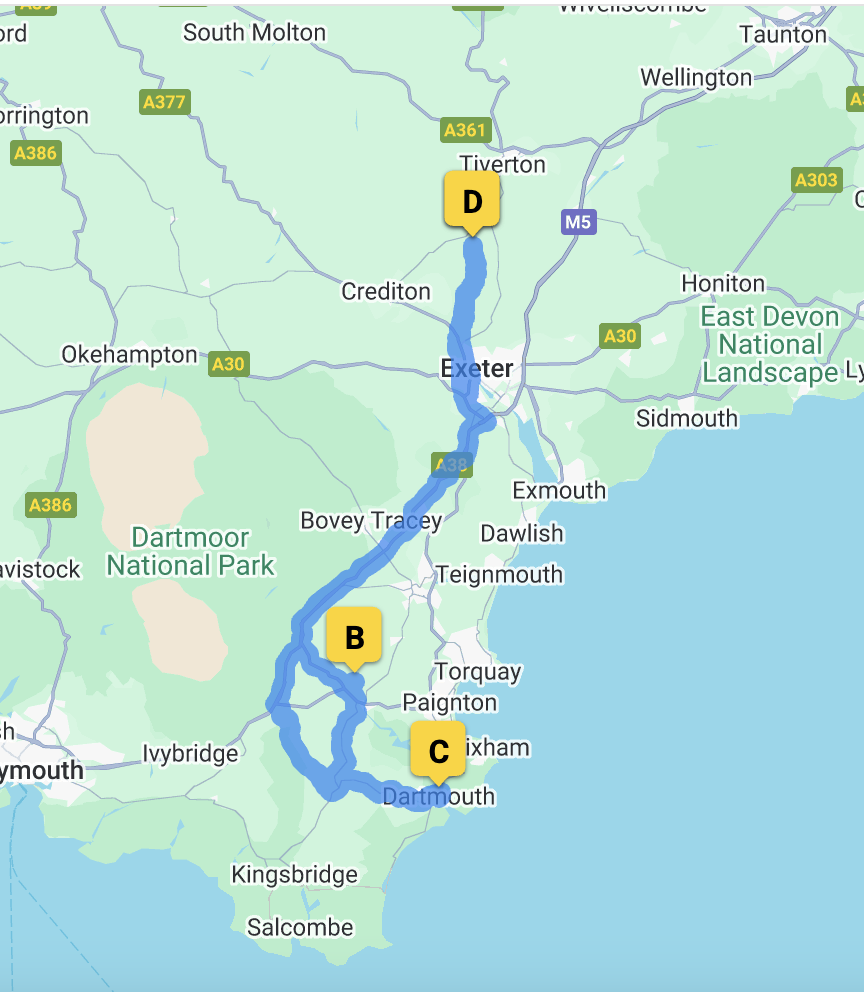
*Even though we work in kms in Australia, all signage in the UK is in miles, so that’s what I’m going with.
These posts are taken directly from my travel journal … you can find the series here.


 And Anyways...
Those sardines look excellent!
One of the yummiest plates of food I’ve eaten.
Dartmouth looks so pretty! I love all the colored buildings along the water.
Every thing on your trip looks and sounds amazing, Jo — the food, the scenery, the food, the buidlings…and did I mention the food?
Dartmouth was fantastic.
Another lovely dip into English living, eating and exploring.
The author Tom Cox has some great essays on his substack about his time living on the Darlington Estate if you need some more info for your story.
We haven’t been to Darmouth. It looks worth a trip over on those narrow roads, which we adore! It’s fun navigating on them and we’ve encountered tractors but never rude locals! Interesting history you’ve included in both villages and then there is the food! Wow. The only sardines I’ve ever had were in Portugal and they were so good so I get why they rated so high. Nothing like the tins of them my dad ate! And now the lat fish dish is becoming another menu item for this week so thanks!
That photo of Dartmouth is so lovely. The buildings are like blocks in a patchwork quilt. So many colors, textures, bits of decoration and architectural styles. Just beautiful. Beautiful. As always, your photos of your plates leave me hungry. Looks like a lovely time. Always enjoy your travel posts.
Dartmouth looks lovely… and the food! I’m not a big fan of sardines but they do photograph nicely, don’t they? 🙂
They sure do.