Thursday, September 3, 2026
I was out like a light last night, but awake for an hour or so at about two am – my back is so sore. All that hard work to prepare it for this trip was undone by four hours of standing on concrete in immigration. Hey ho.
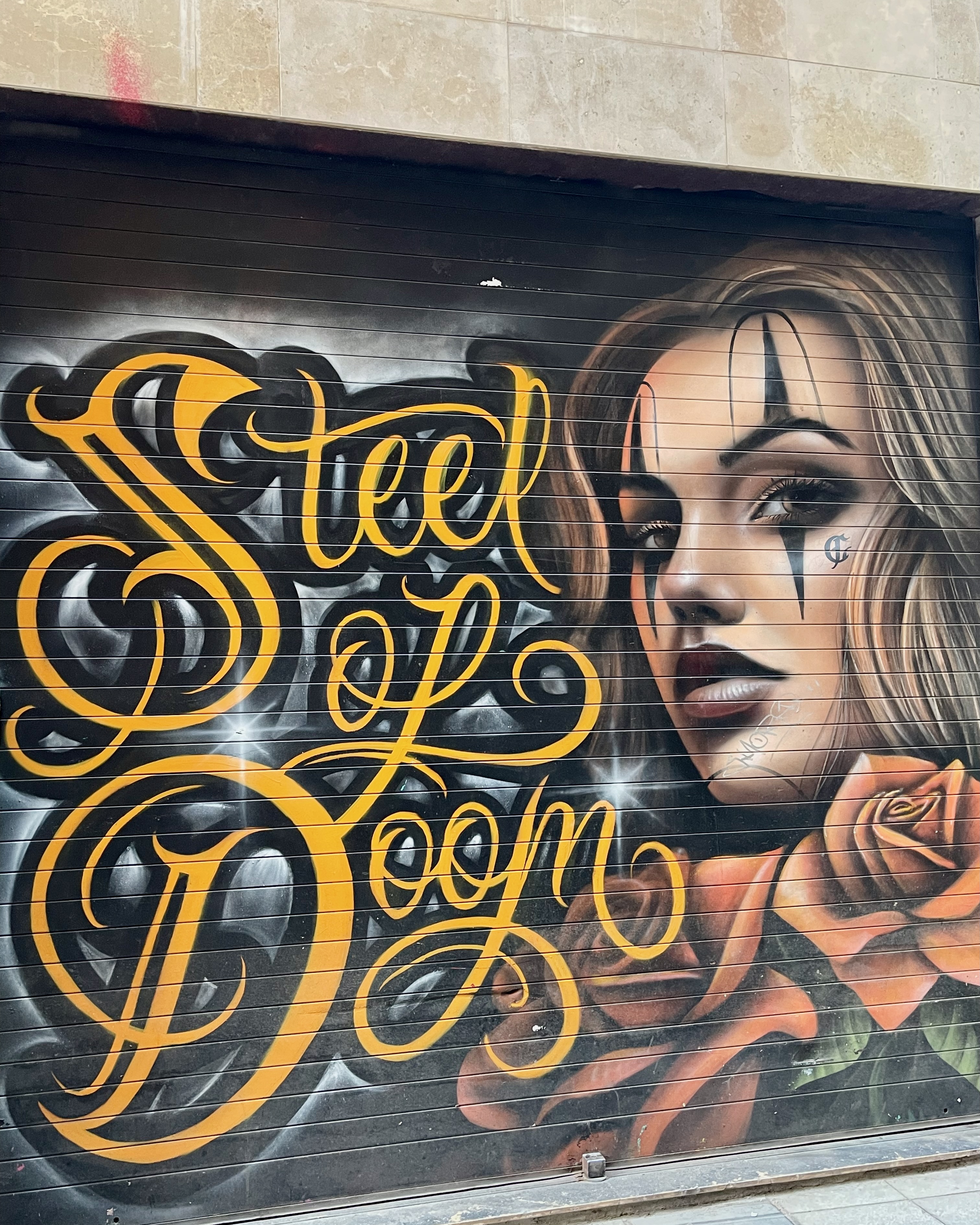
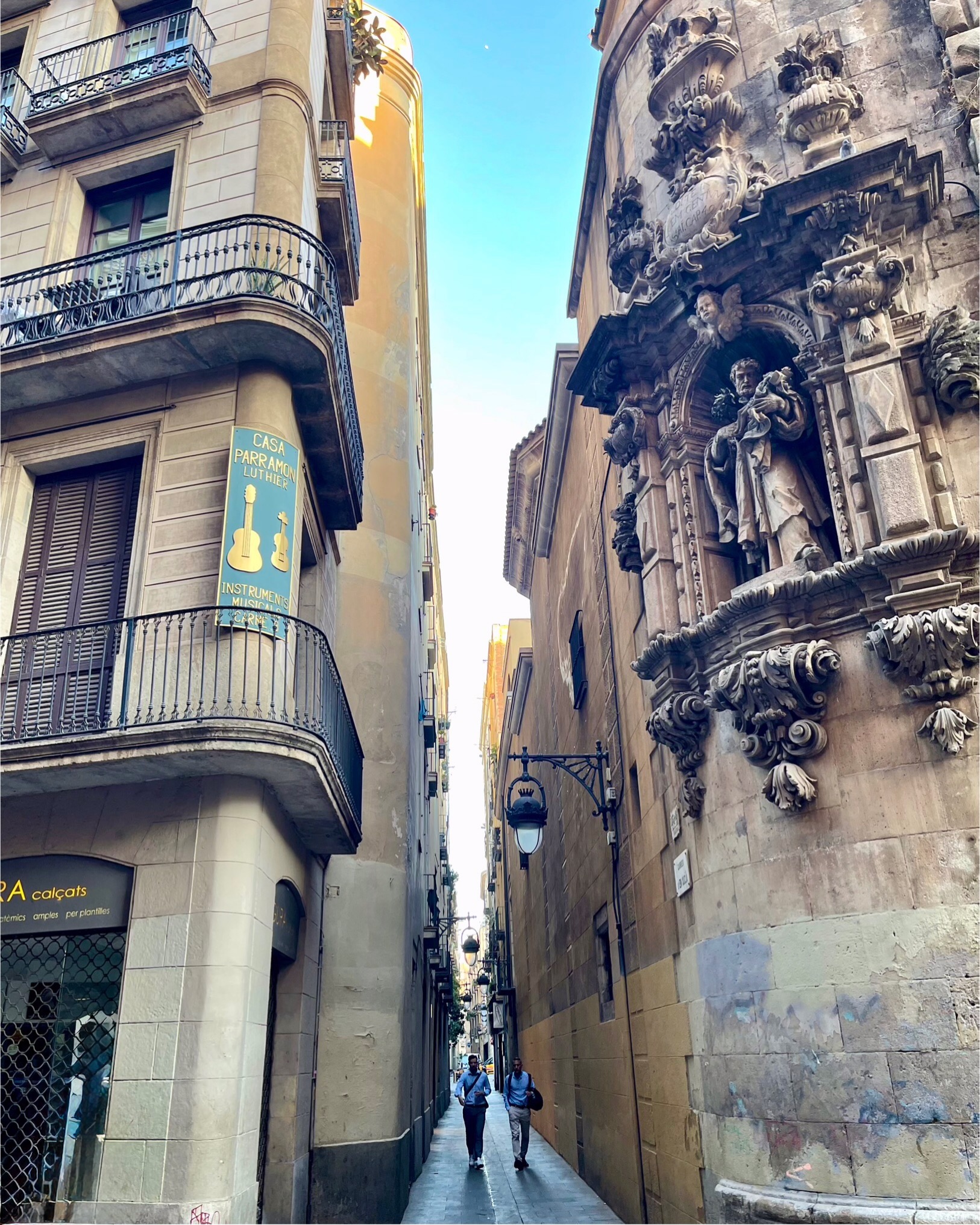
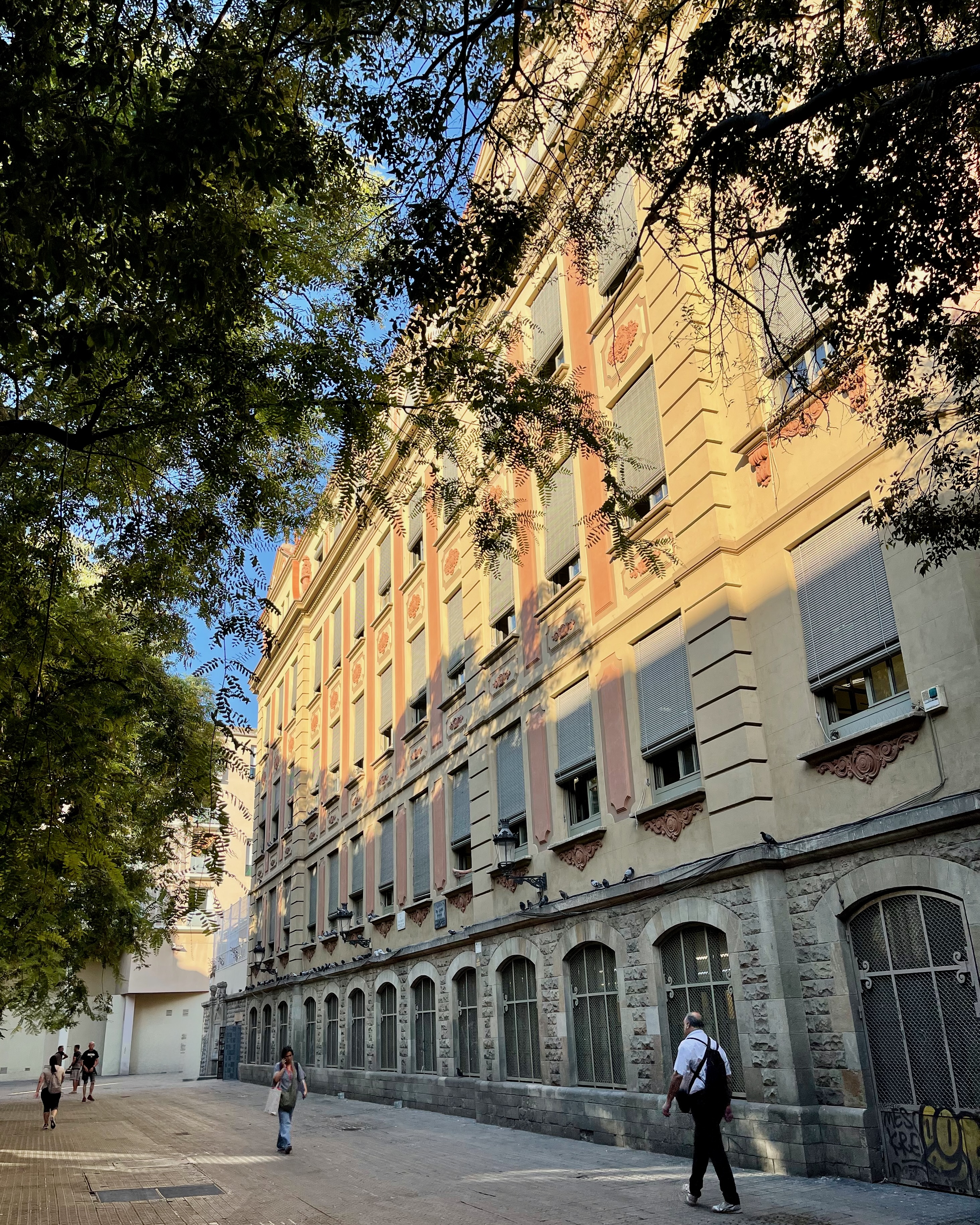
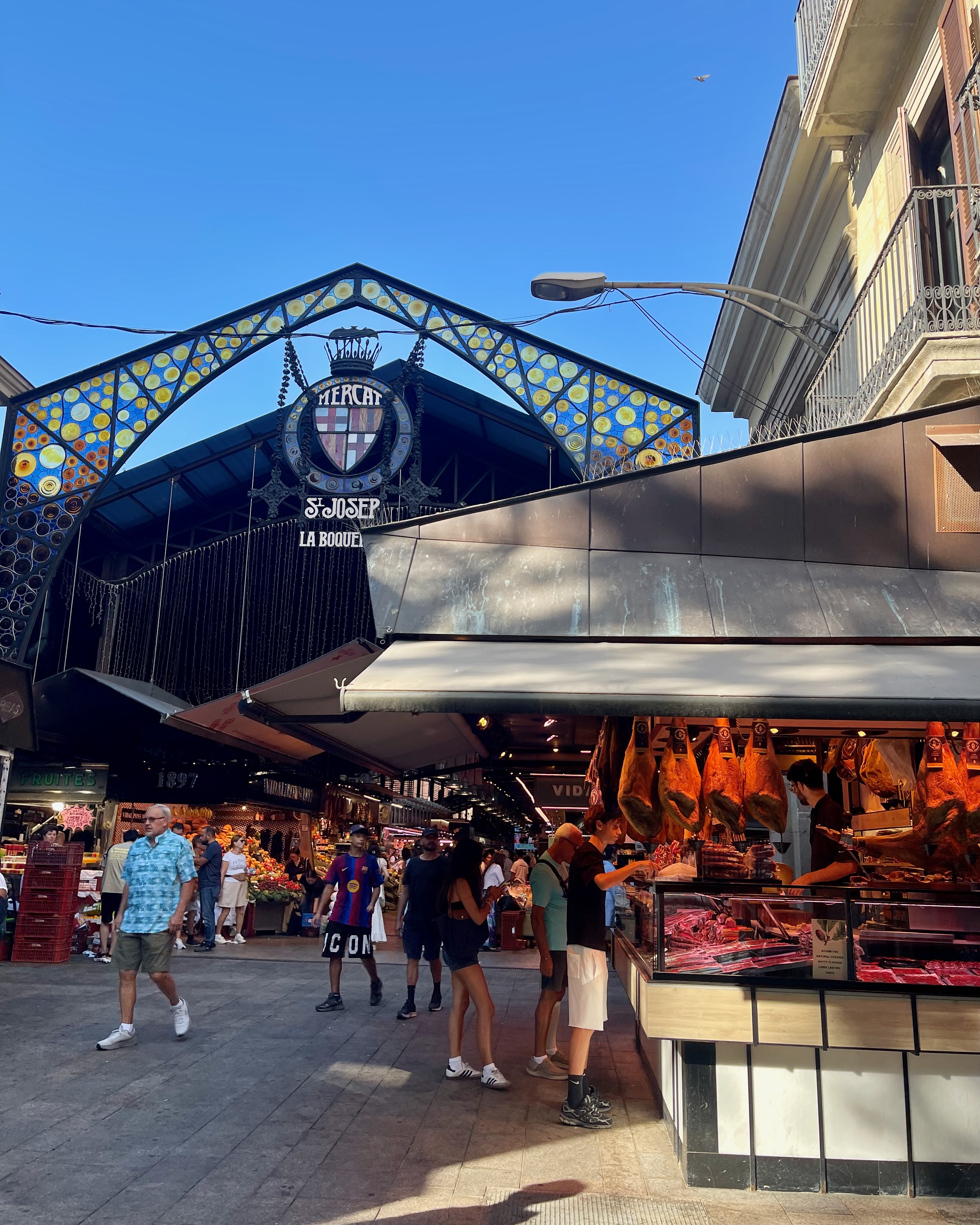
We begin the day with a walk through the old quarter where we’re staying. First stop is, of course, the market, or meercat as Sarah likes to call it. Mercat de la Boqueria.
It’s still early so the stalls are still opening and there’s not many people around. It’s a good opportunity to snap some pics without getting in anyone’s way. We buy a bag of candied nuts but will be back later for the foodie bits.
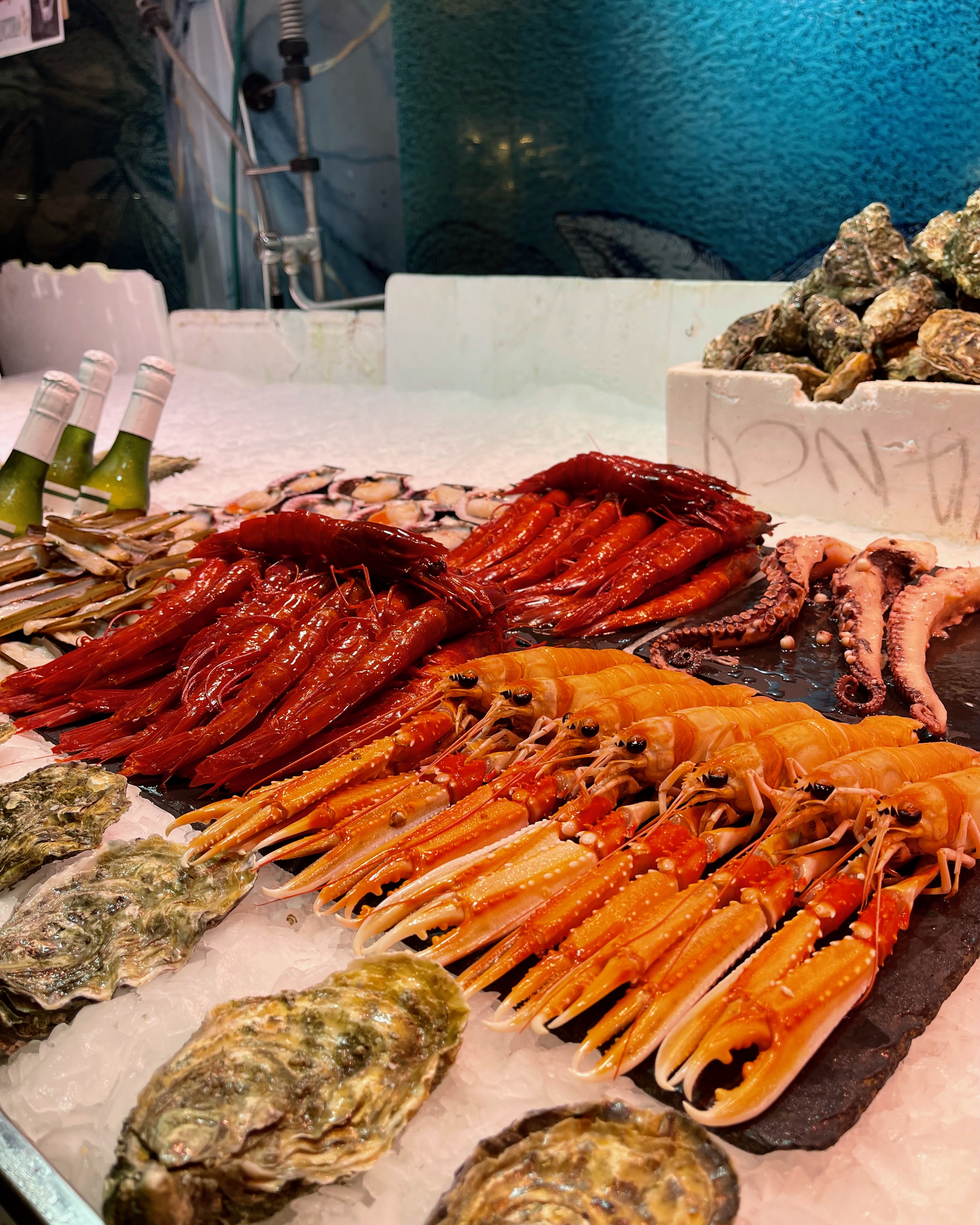
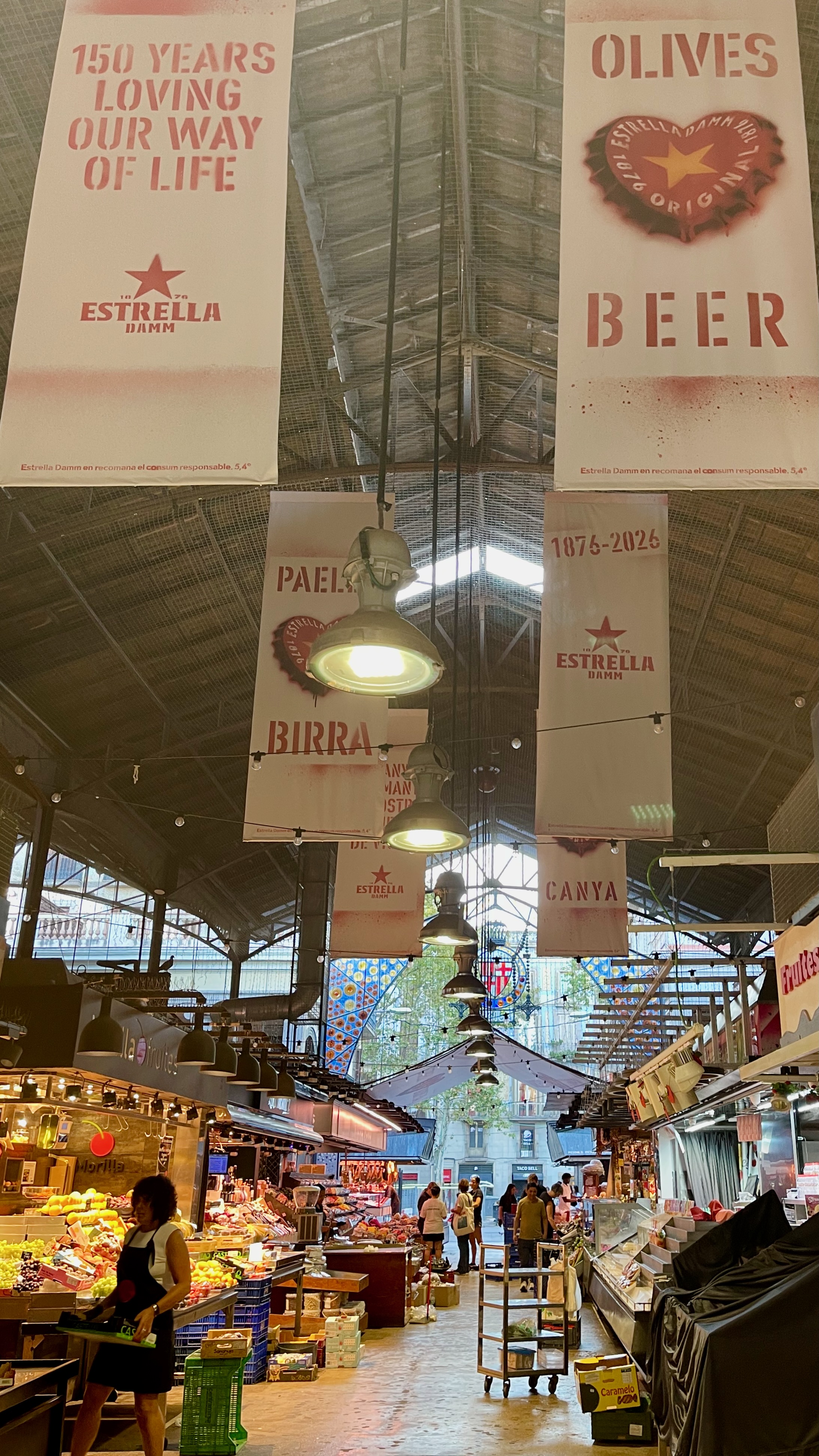
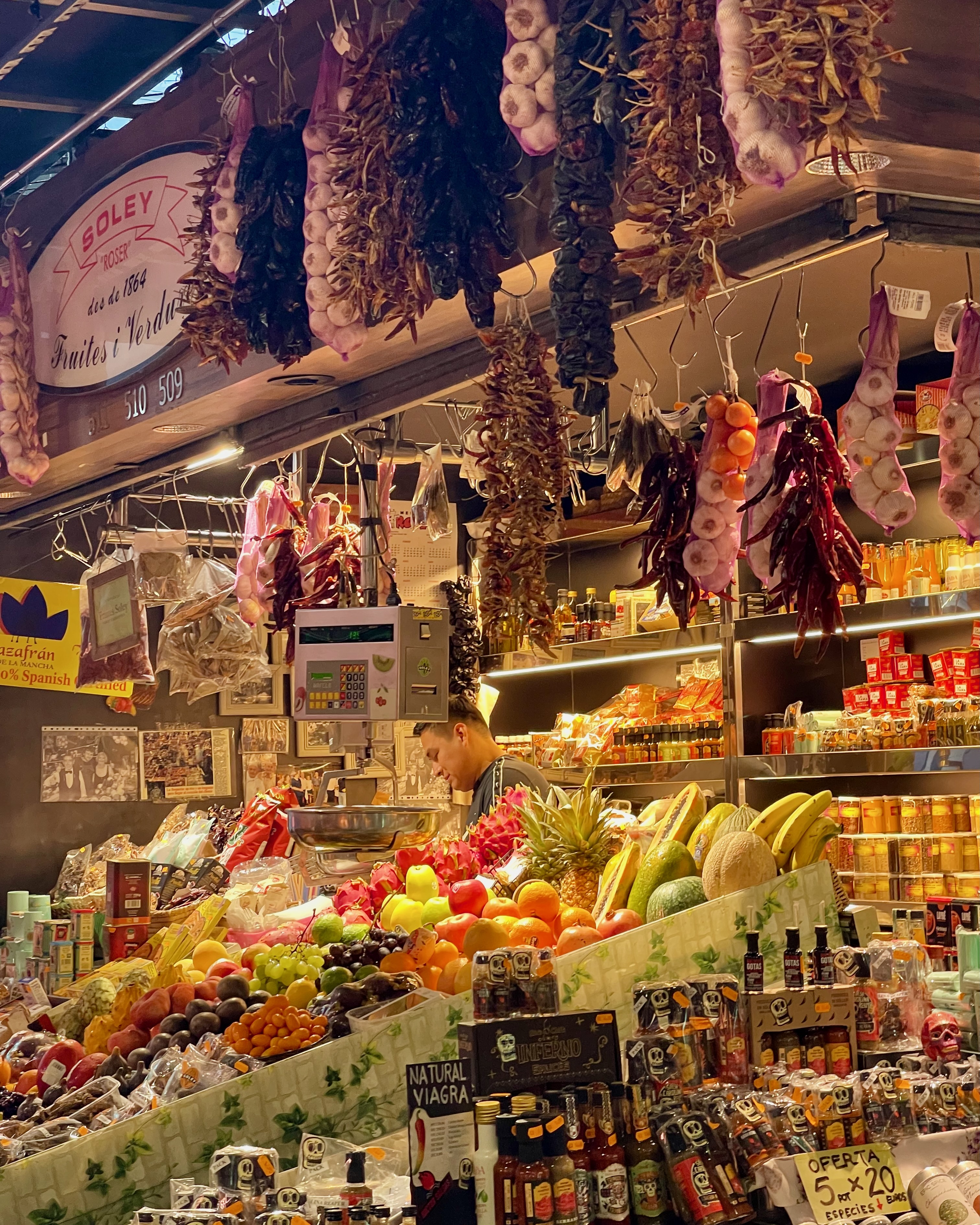
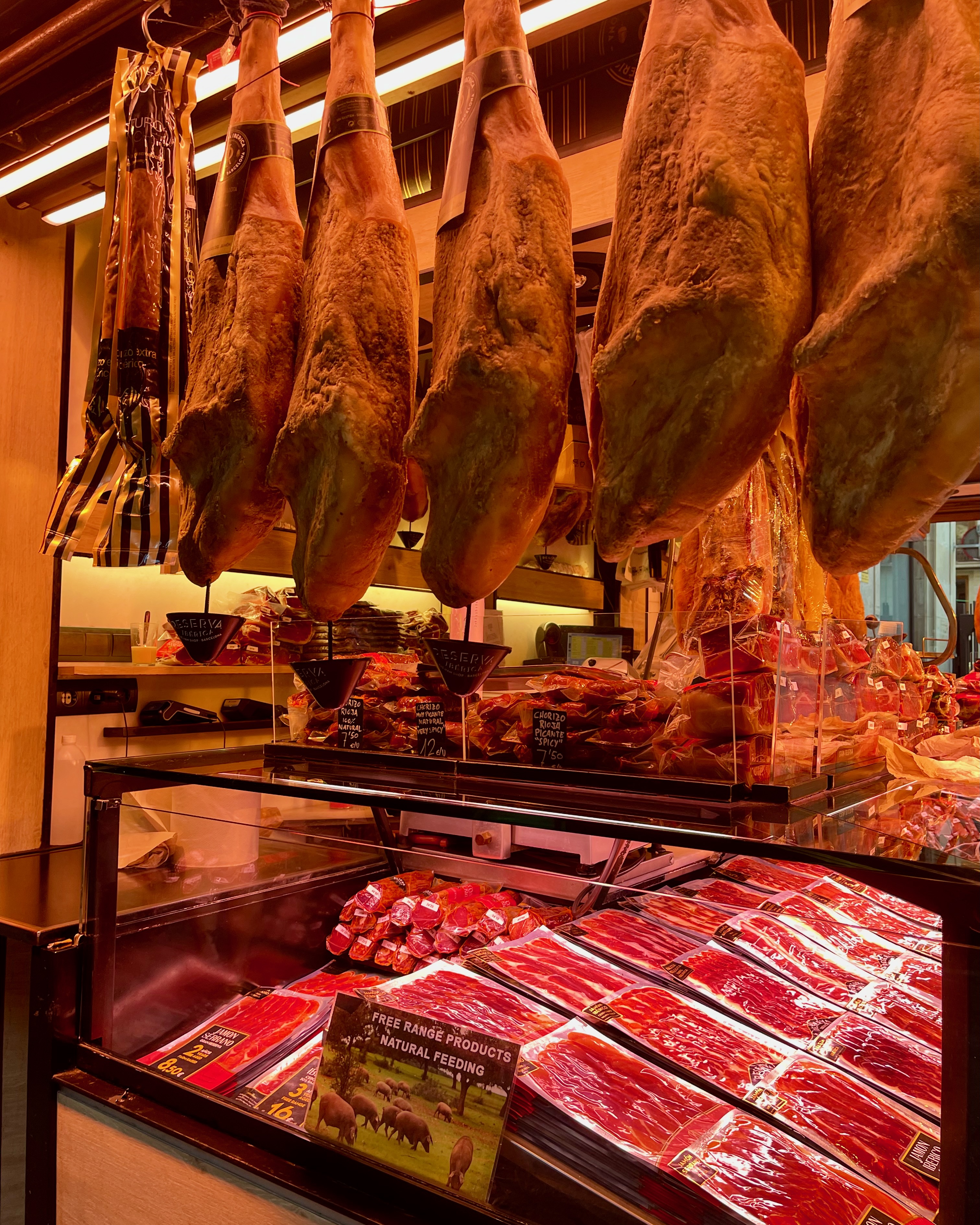
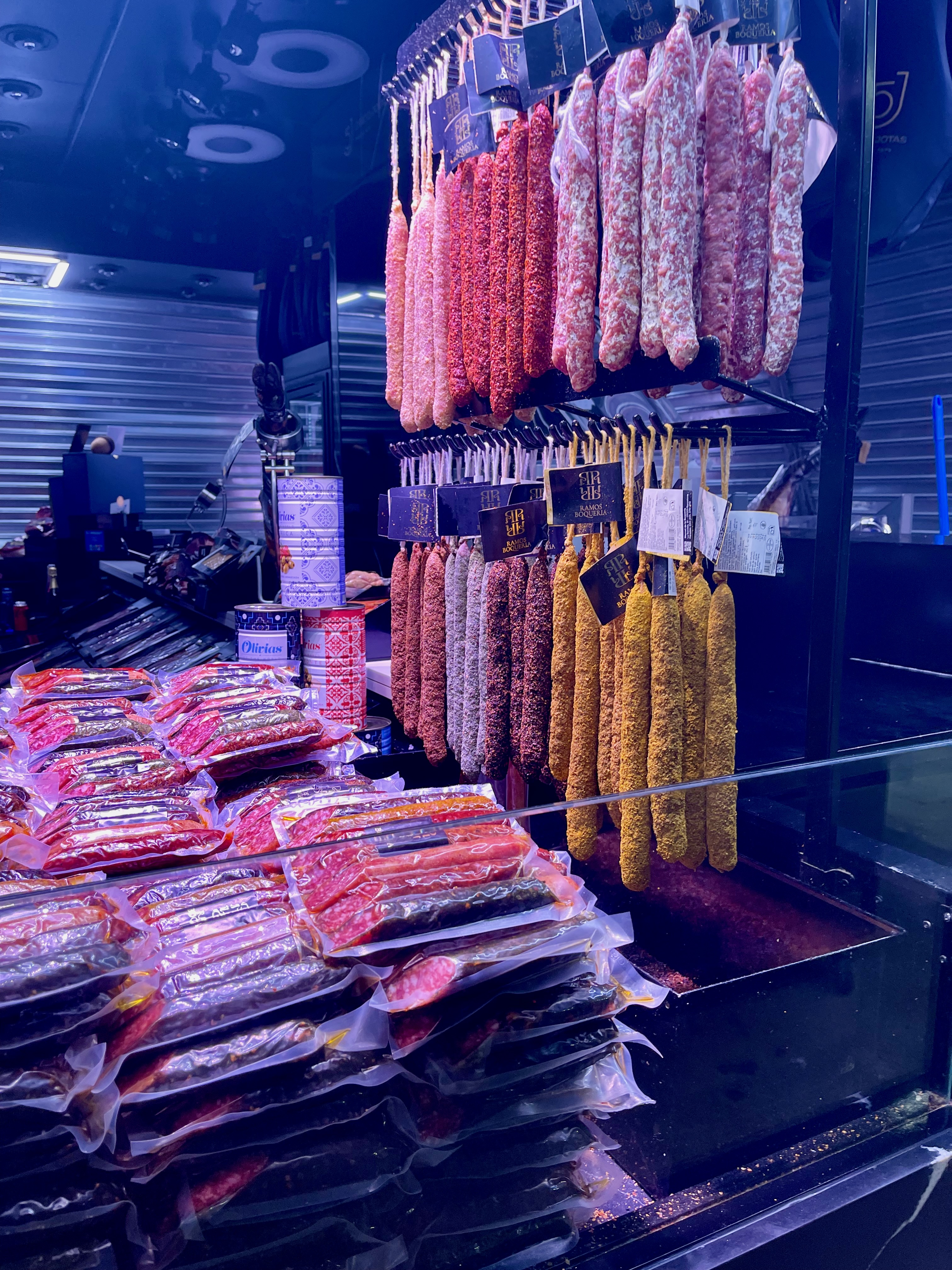
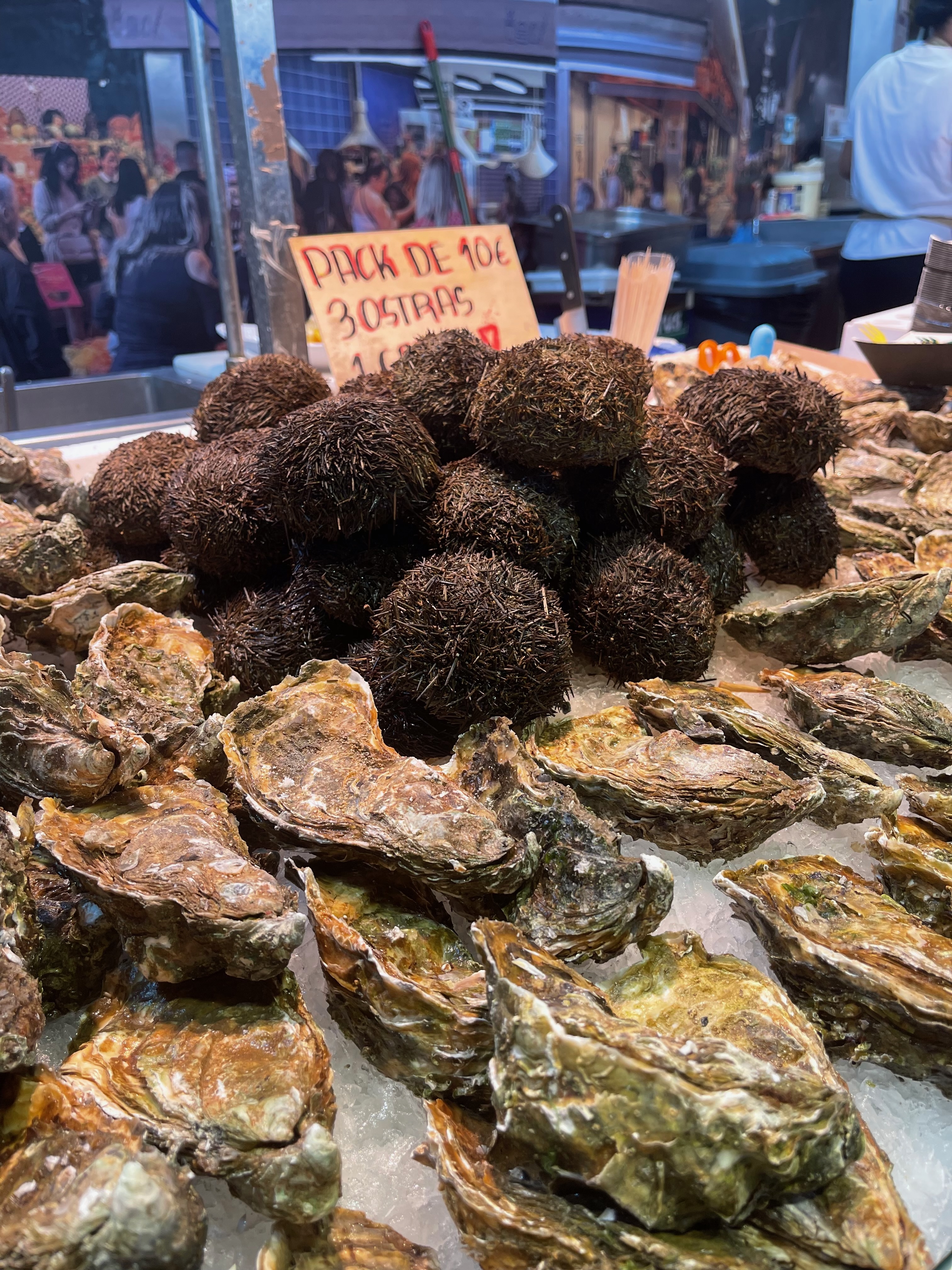
The market’s name is thought to come from boc the Catalan name for male goat, so a boqueria was a place where goat meat was sold.
The first recorded mention of market activity in this spot was in 1217 with meat sellers setting up on this side of La Rambla to avoid city taxes. Back then the city walls were erected along what is now La Rambla, so this side, the western side, was outside the city.
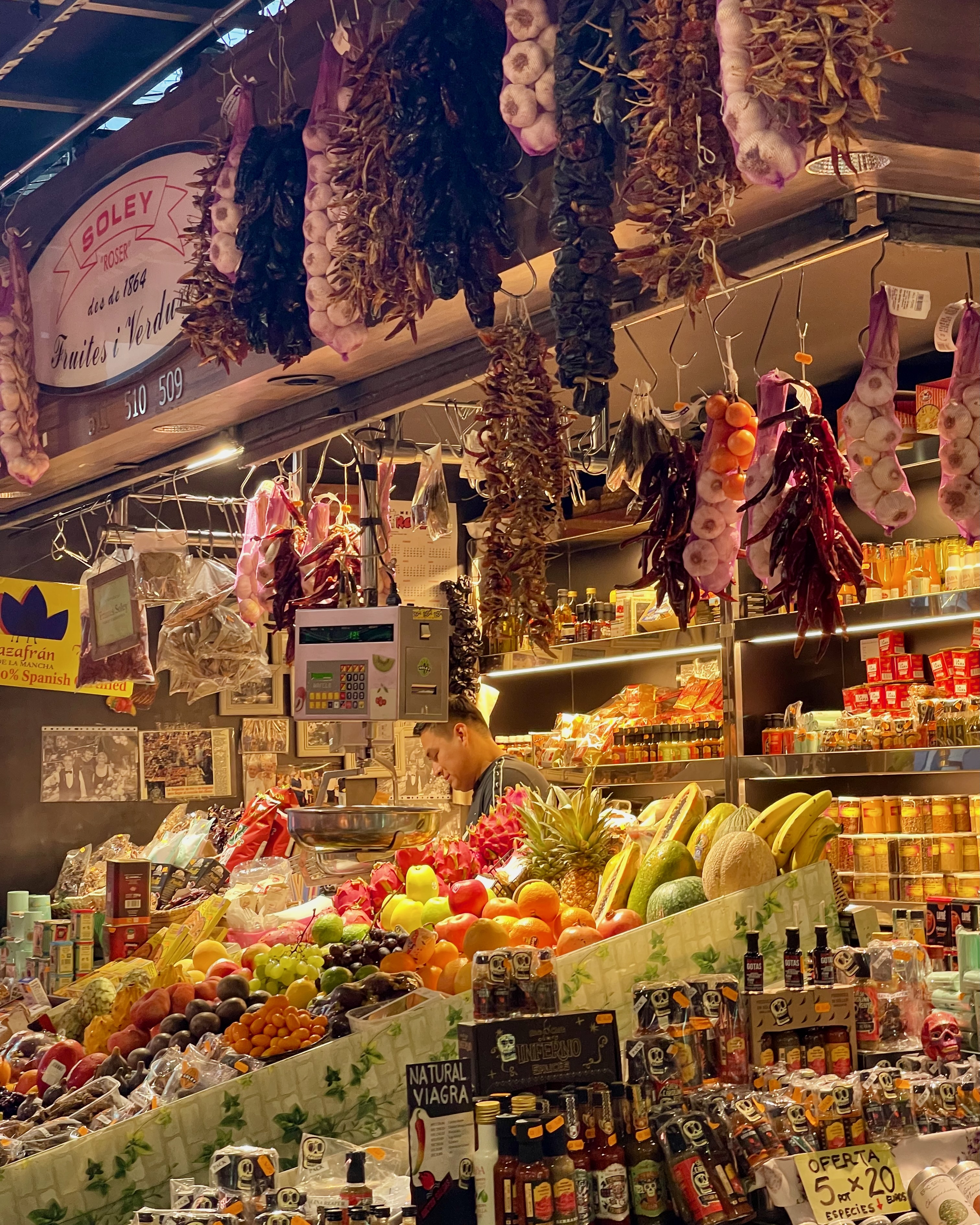
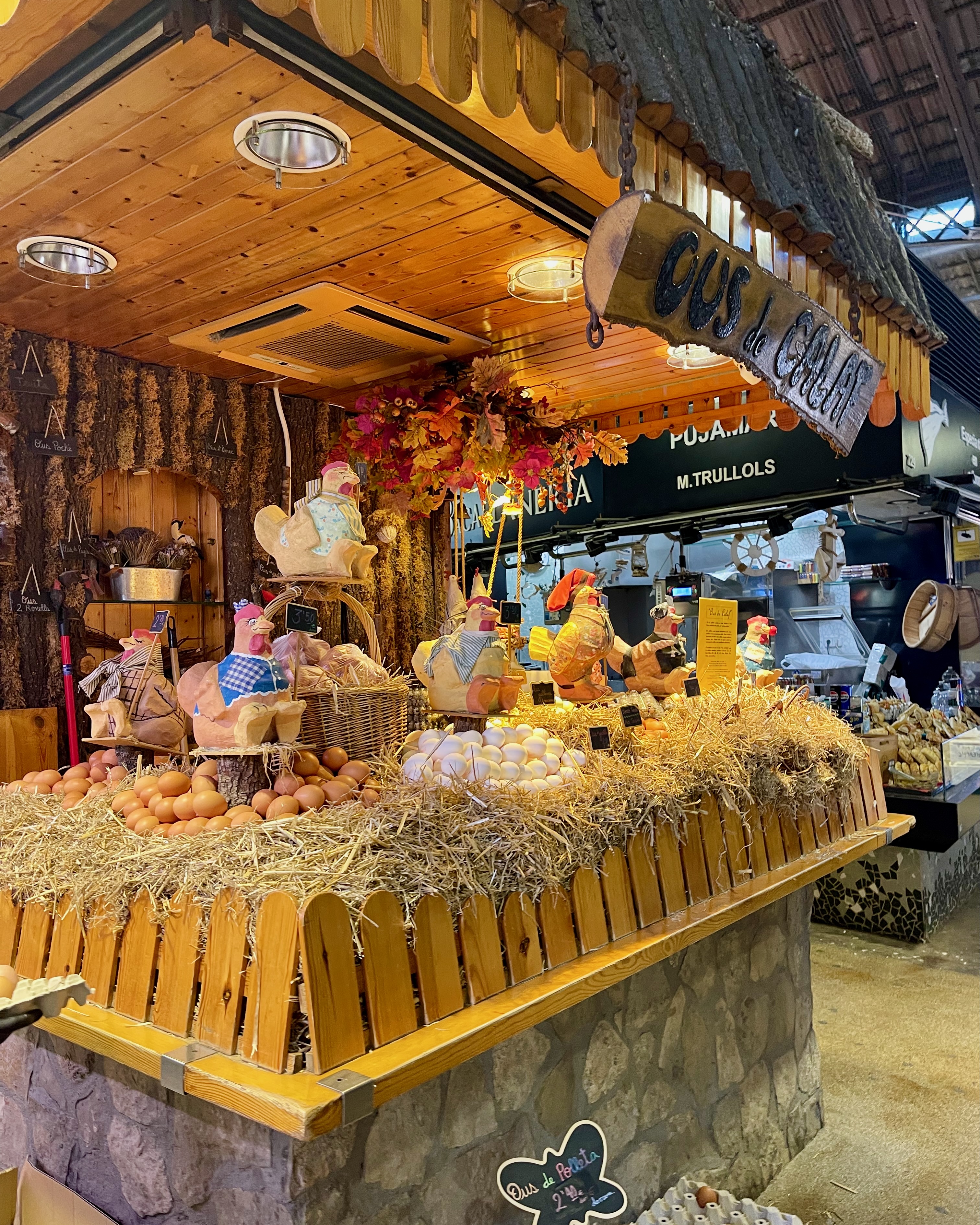
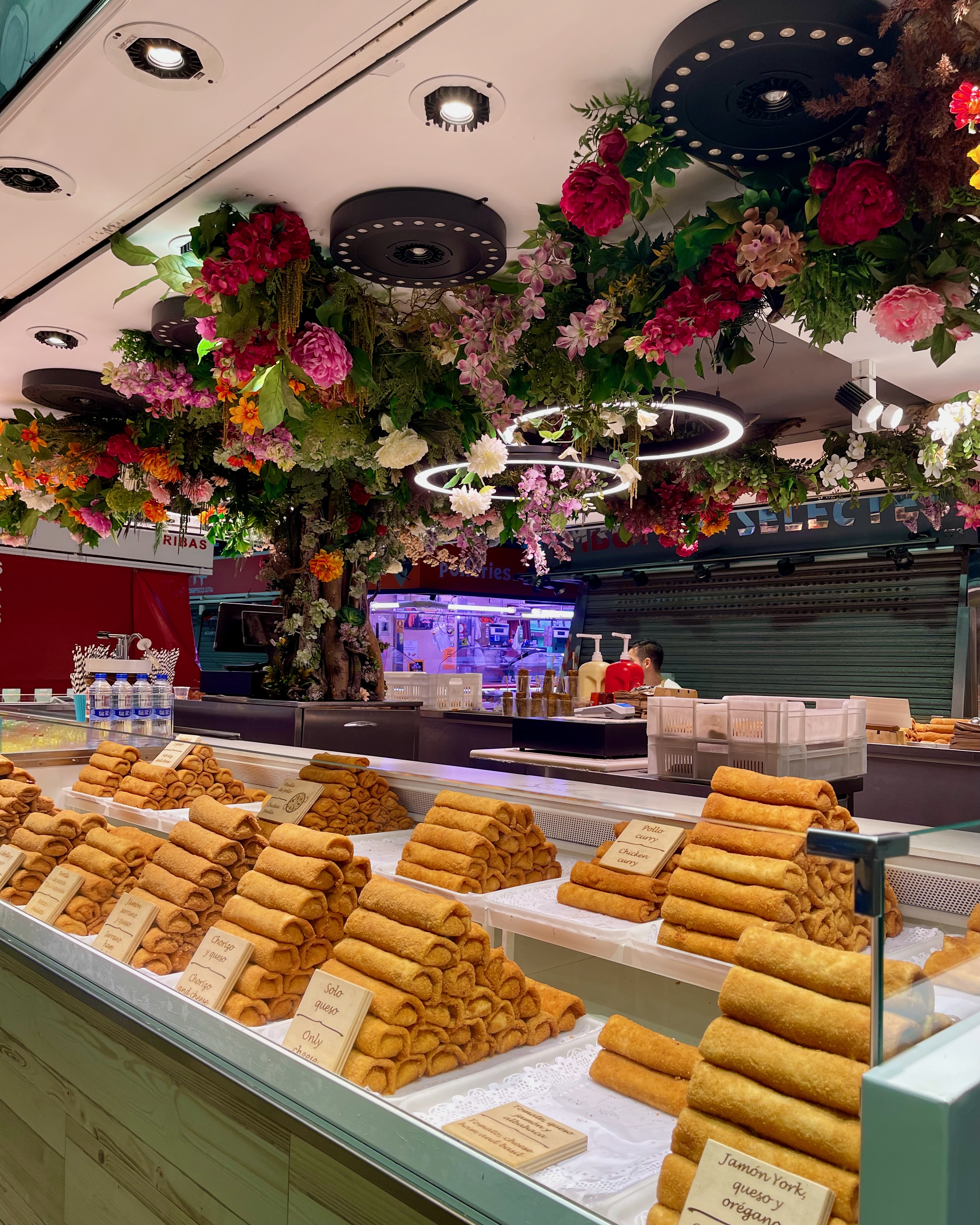
By 1470 a dedicated pig market had been established, and this later grew to include other local farm produce and street vendors. Hey presto, a market is born.
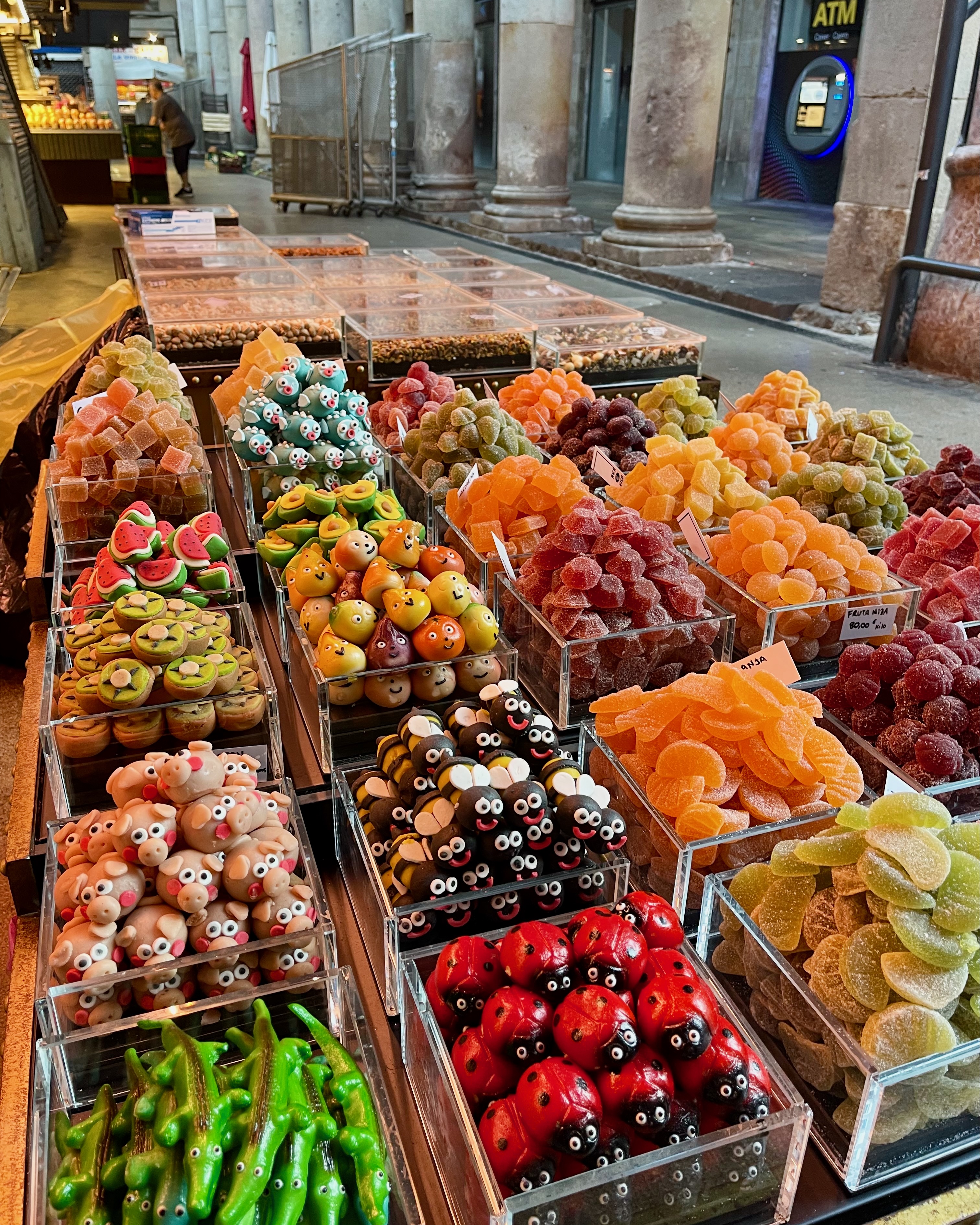
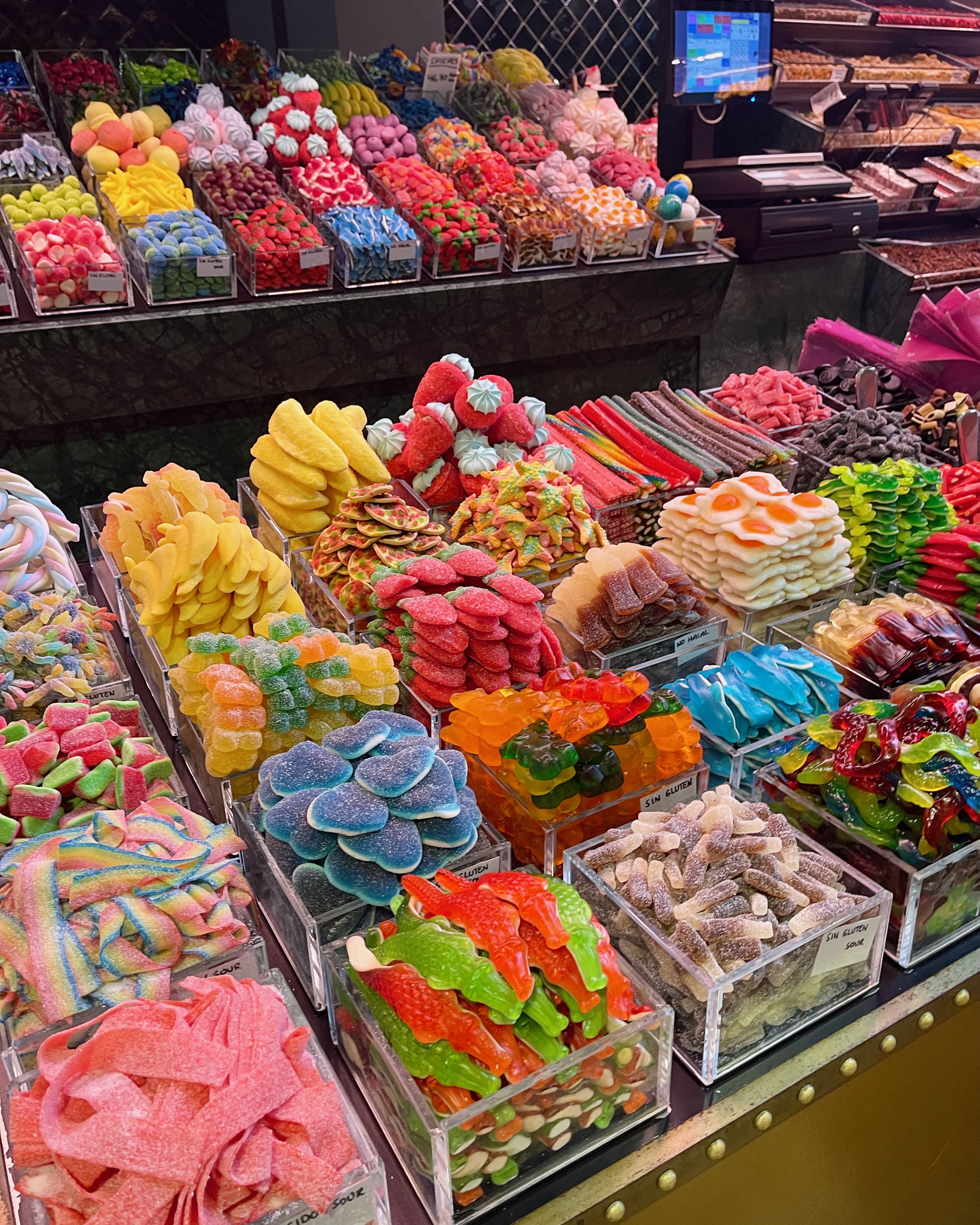
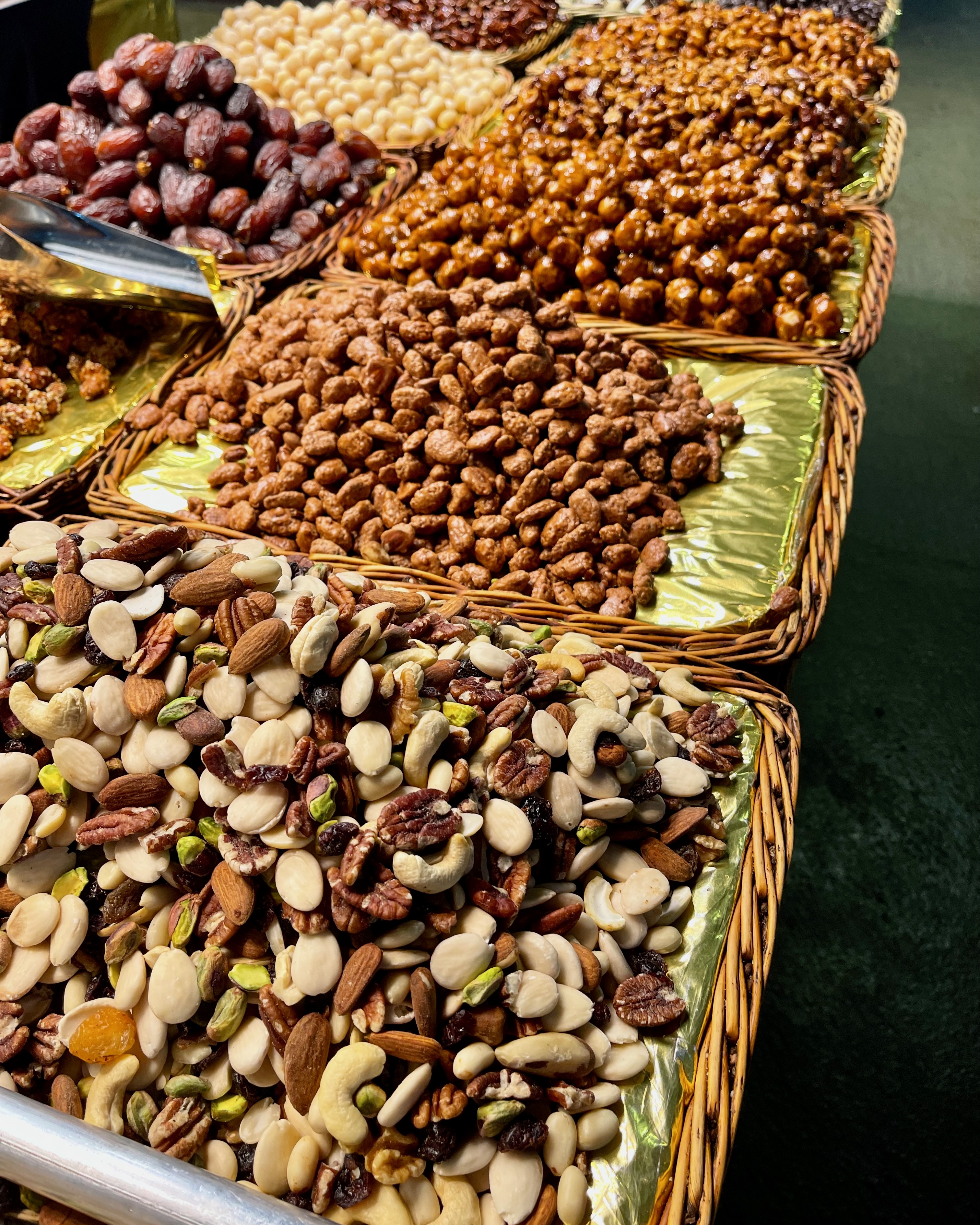
In 1835 the former convent of Saint Josep was destroyed by a fire during civil riots, clearing the large block of land which the city then took back. An open-arcaded permanent market framed by columns was built. The metal and glass canopy roof was added in 1914.
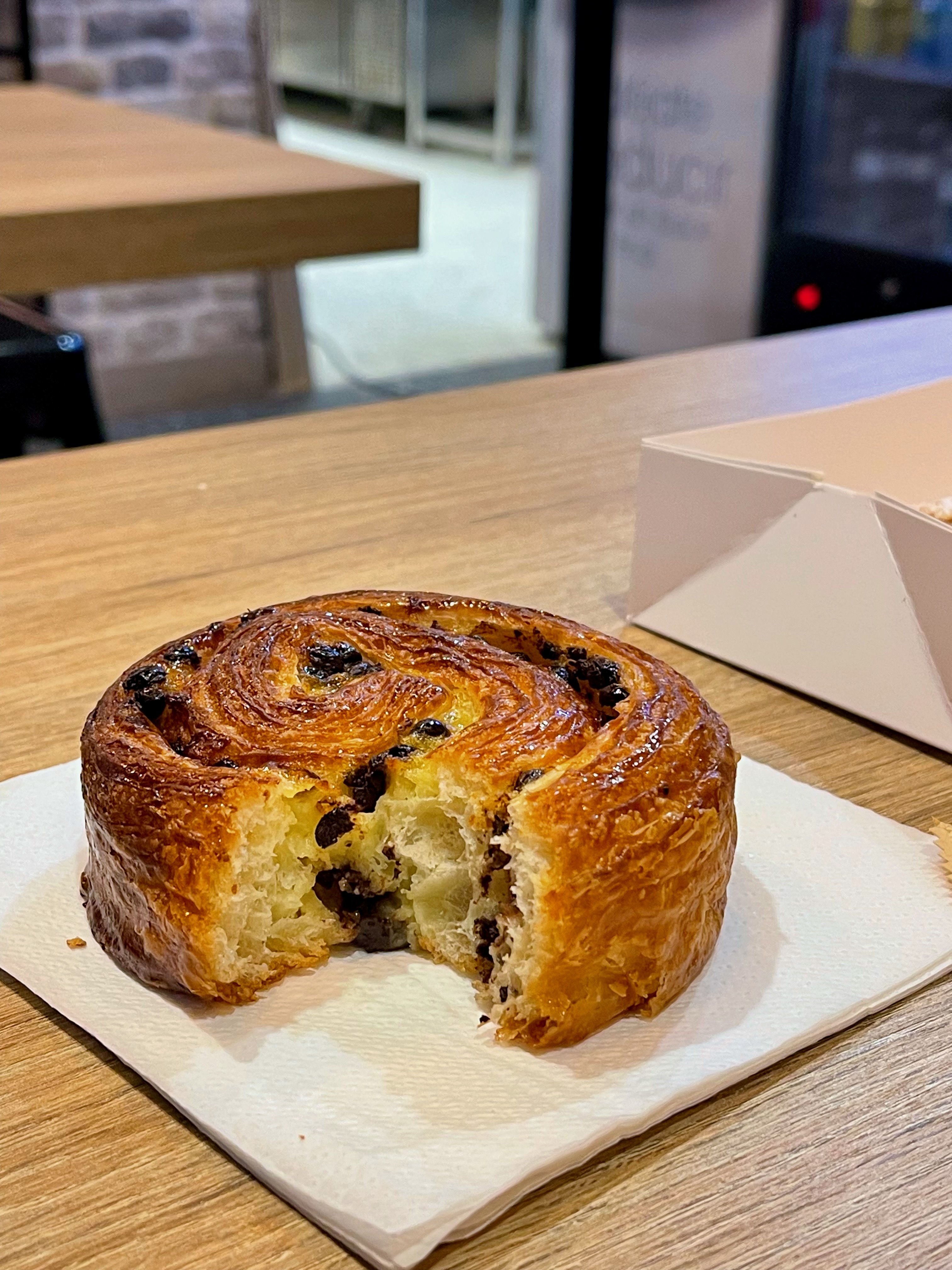
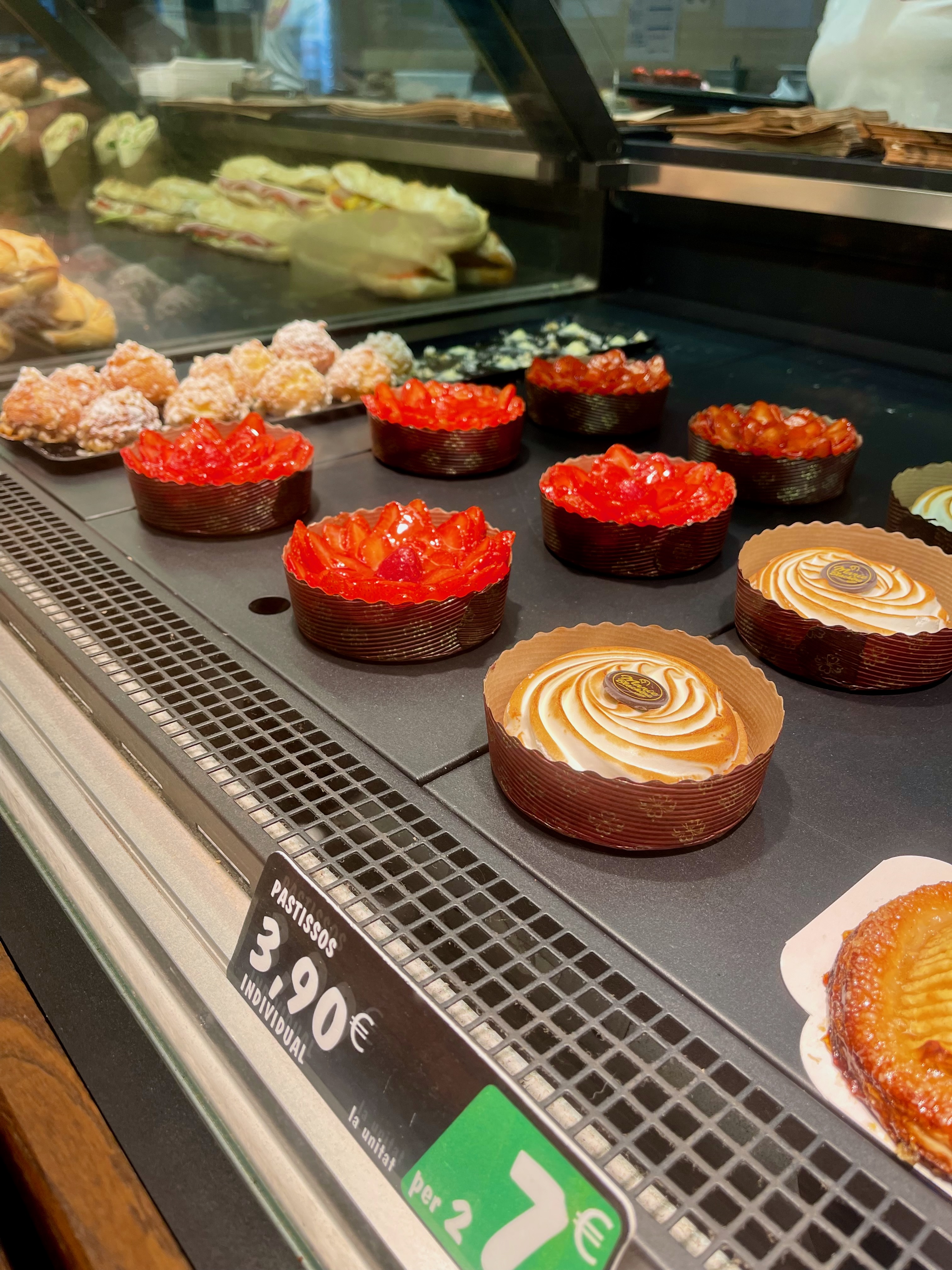
We stop for brekky at a bakery just around the corner. Sarah and I had Iberian jamon mini sandwiches (two for €5.90) and Grant had a Danish. He also bought some mini custard-filled profiteroles. The coffee was crap. Really crap. Undrinkable crap.
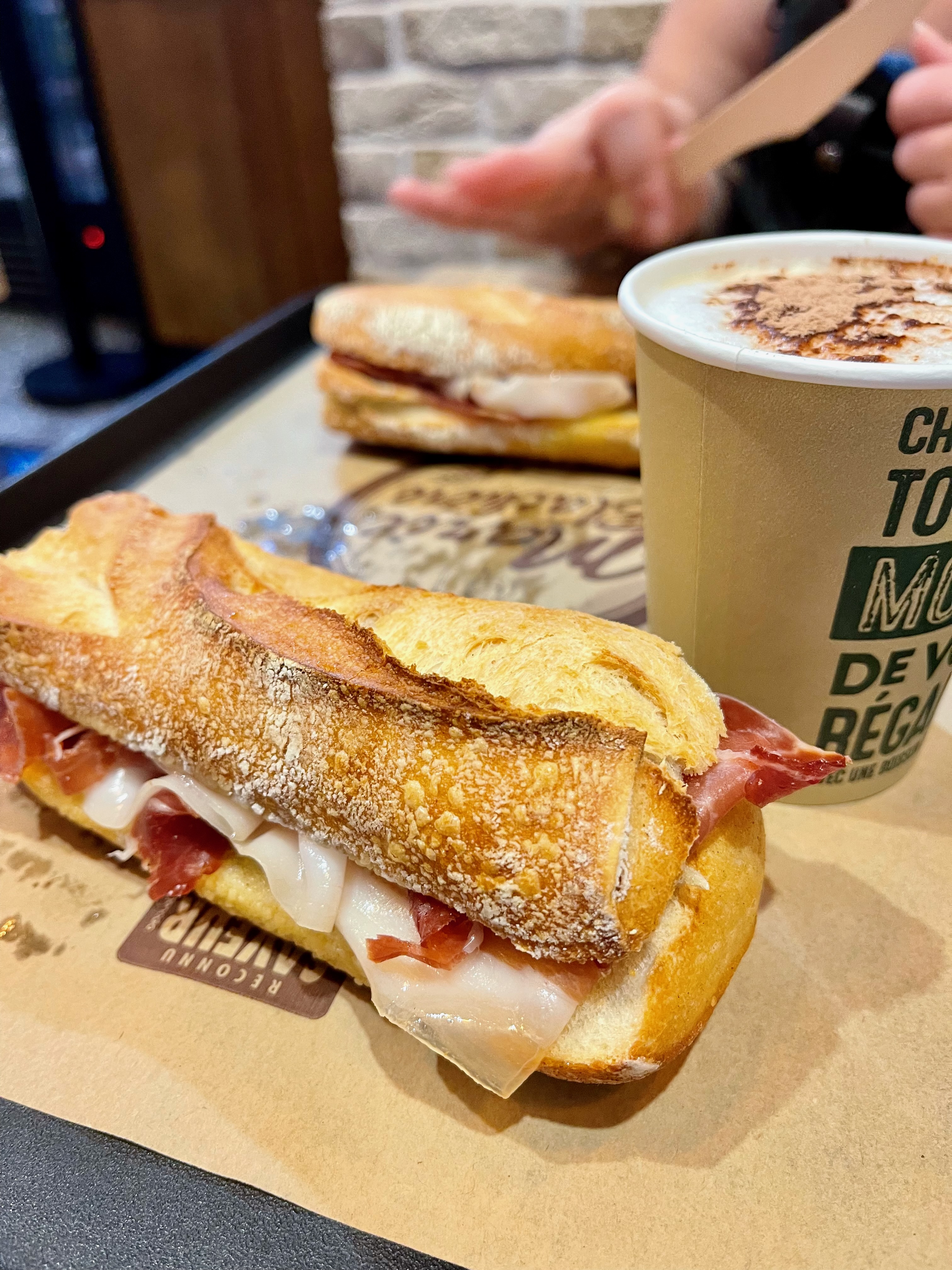
The ham and cheese mini sandwiches are known as bikinis. Why? I’m glad you asked. Apparently they were popularised by Sala Bikini, a famous nightclub from the 1950s.
During Franco’s dictatorship the term croque monsieur was banned so people began ordering “that sandwich from the Bikini”. The name stuck.
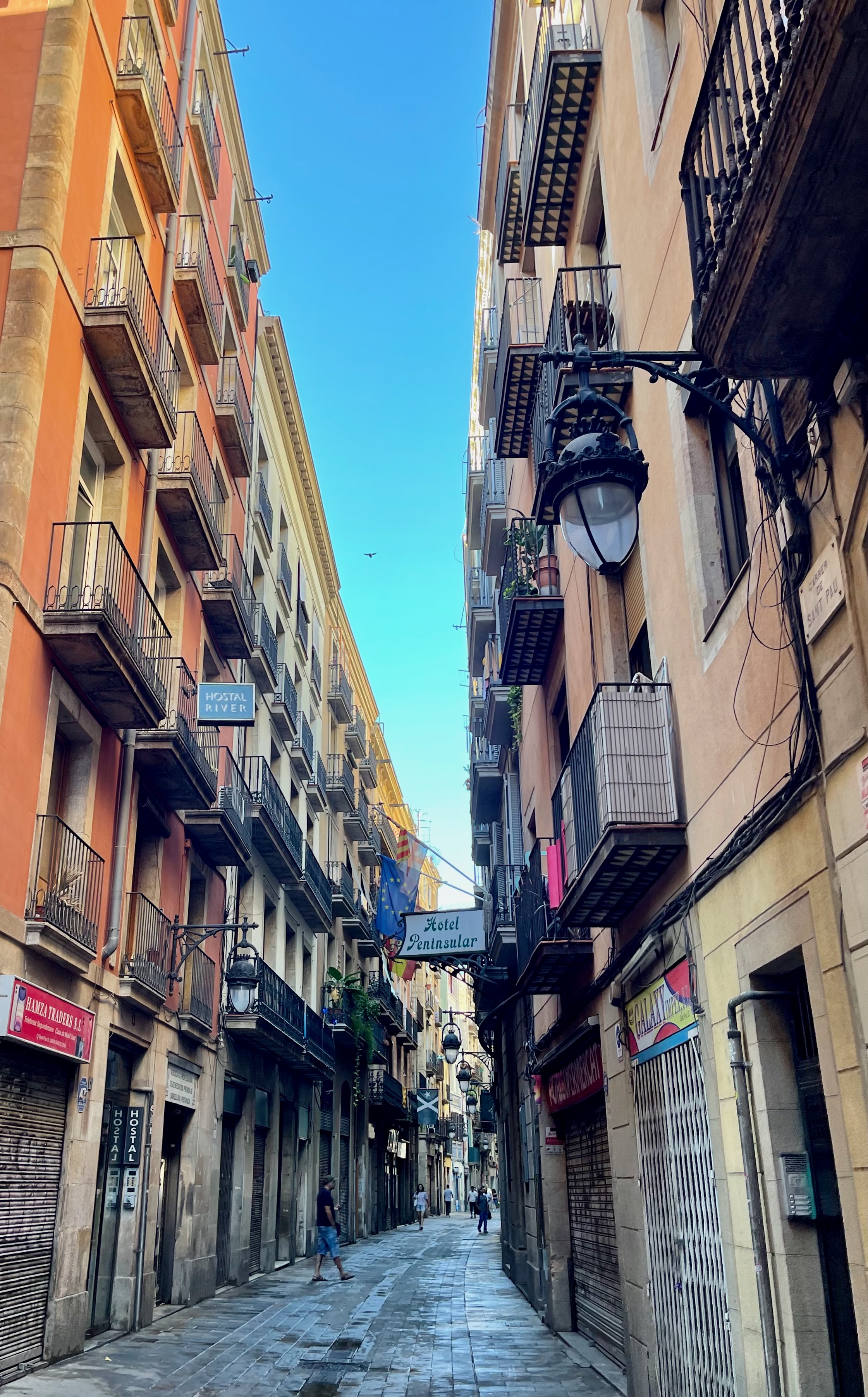
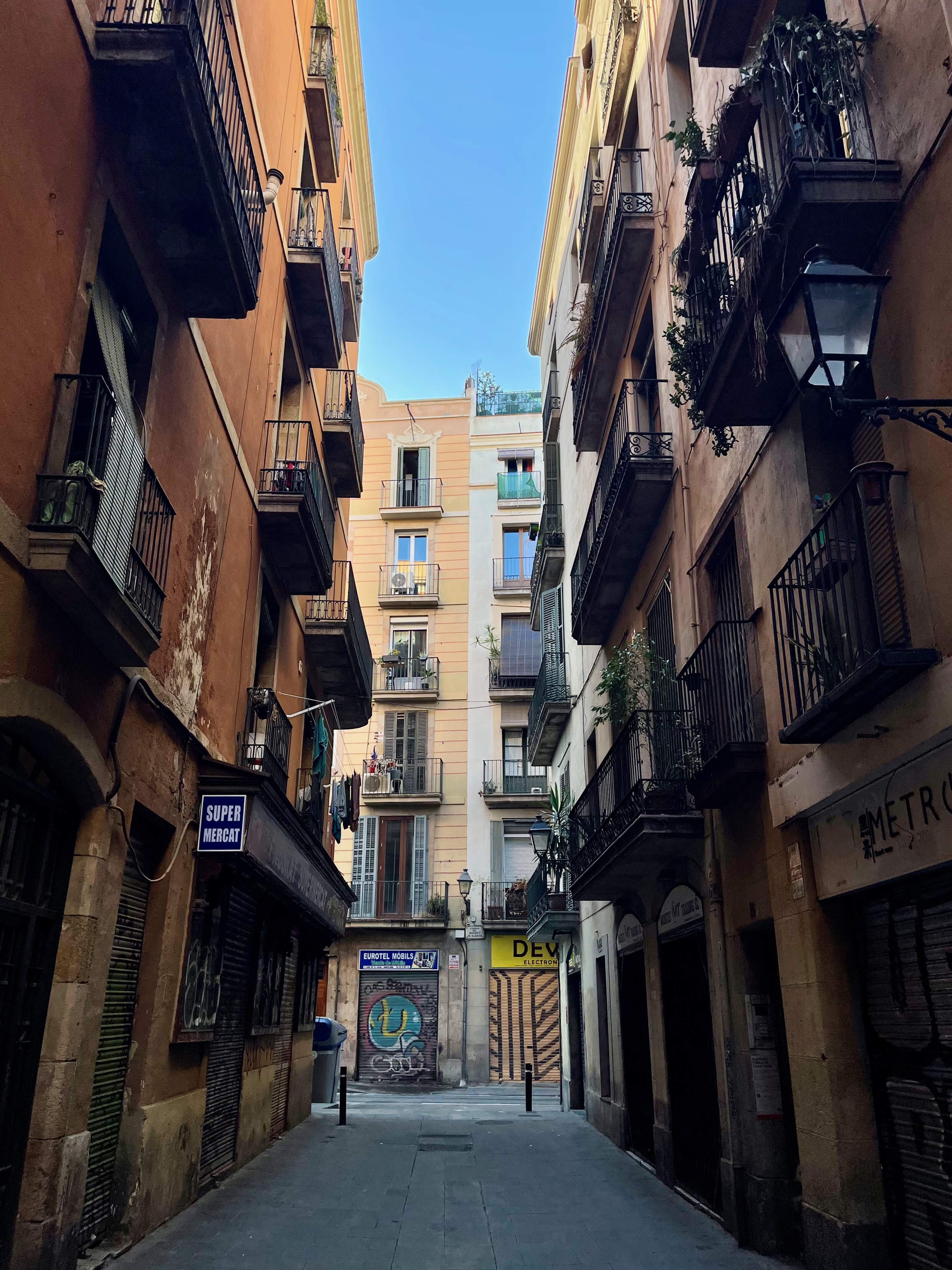
After some more wandering of the lanes behind our hotel we all voted on an hour or so of downtime. The idea was to spend it by the pool, but it’s a glorified plunge pool and everyone up there today is beautiful and wearing white swimsuits. Sarah tells me I’m imagining it, but trust me, our Queensland cozzies are the only prints up there. I decide I don’t care and go for a dunk. Other than Sarah, I’m also the only woman who’s got her hair wet. Whatever.
Back to the markets for lunch, where it’s now super busy. I was reading how the market has become such a tourist spot that locals were being pushed out. It’s estimated that over 23 million visitors turned up here in 2023.
Rather than being somewhere locals could do their weekly shop, the aisles were clogged by tourists who were there to take photos and not spend money. This was threatening the livelihood of the stallholders. To combat this, regulations have been introduced to ban tour groups lager than fifteen people during the busiest times for locals to do their shopping ie Fridays and Saturdays.
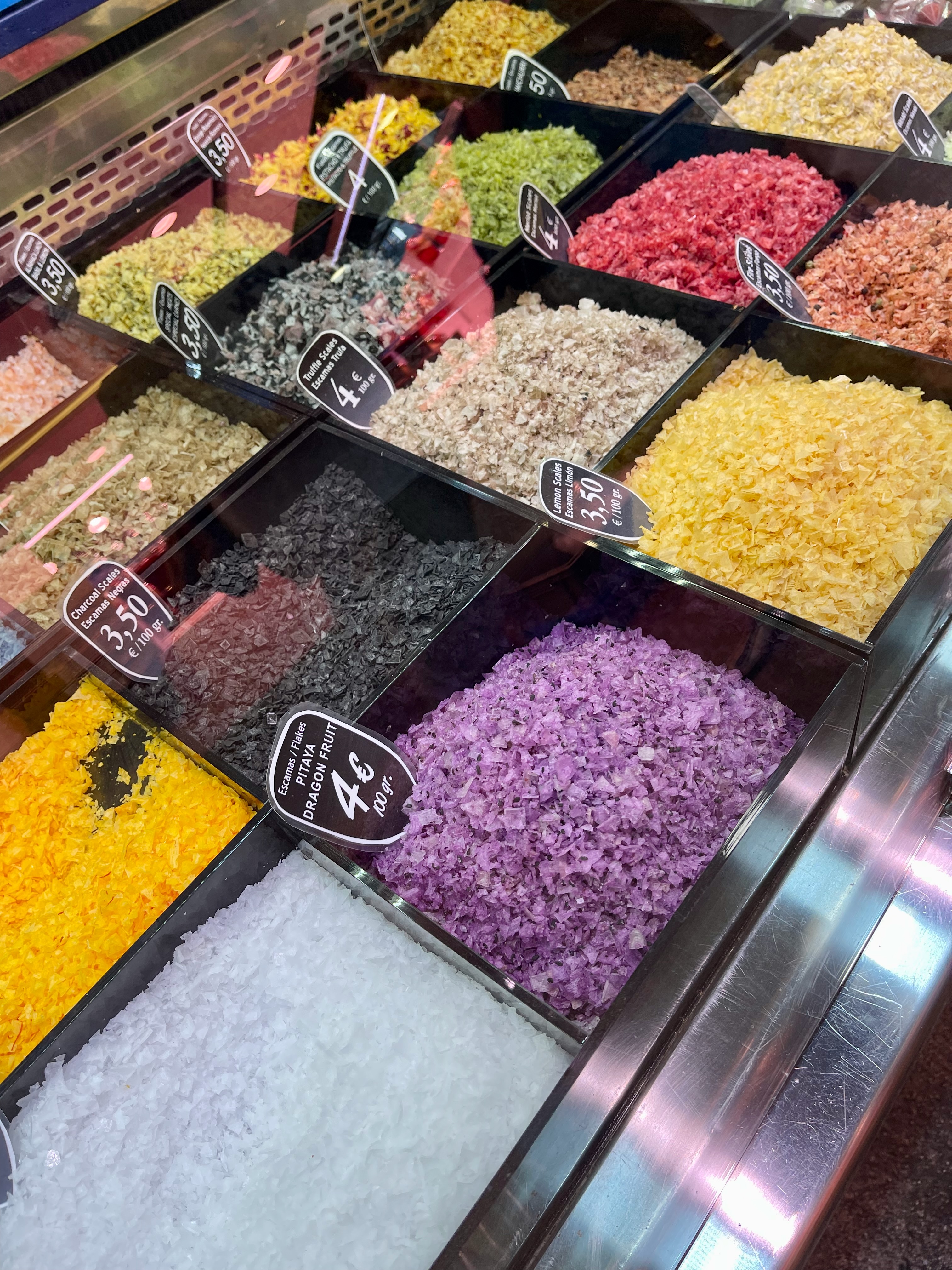
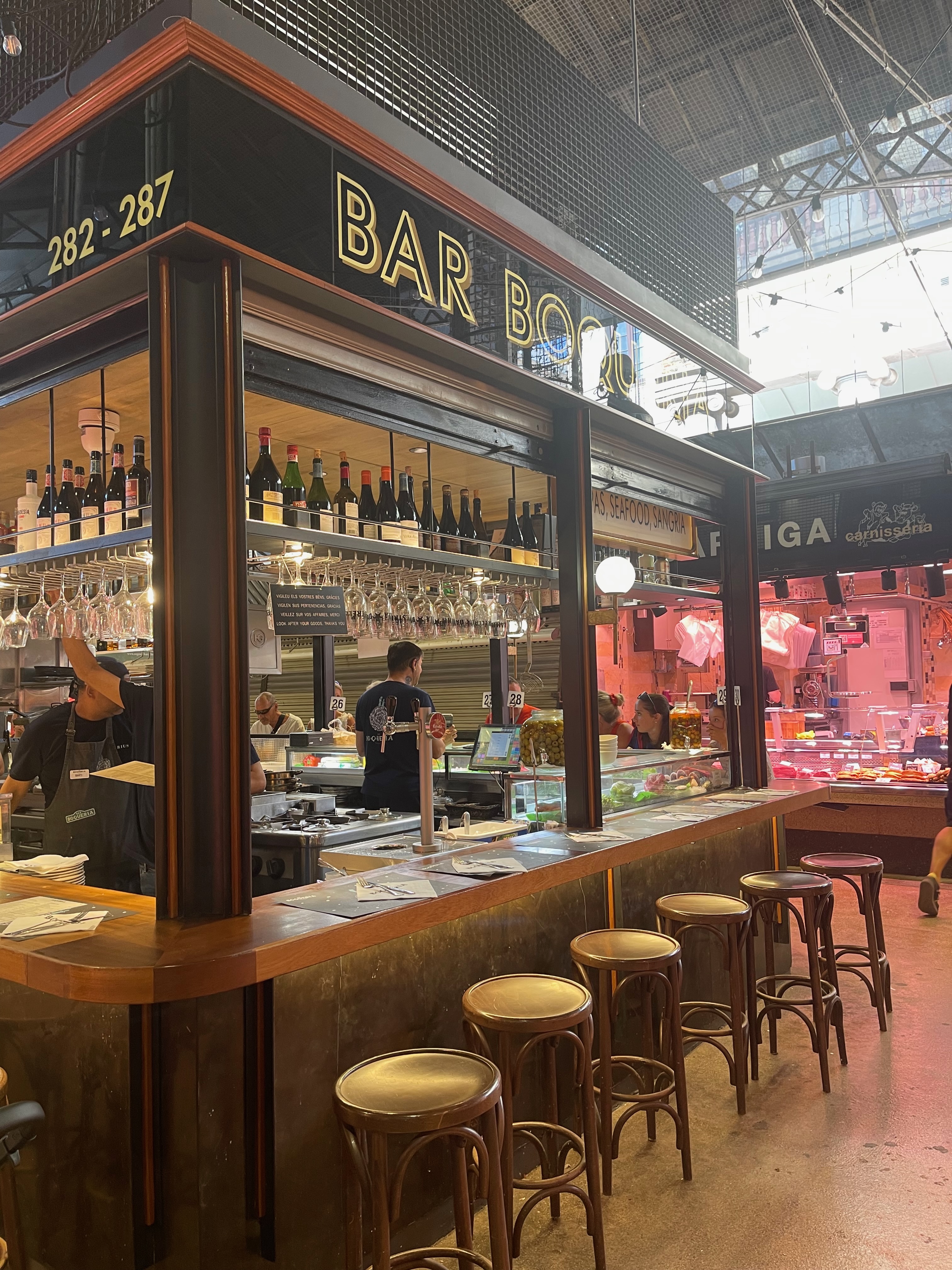
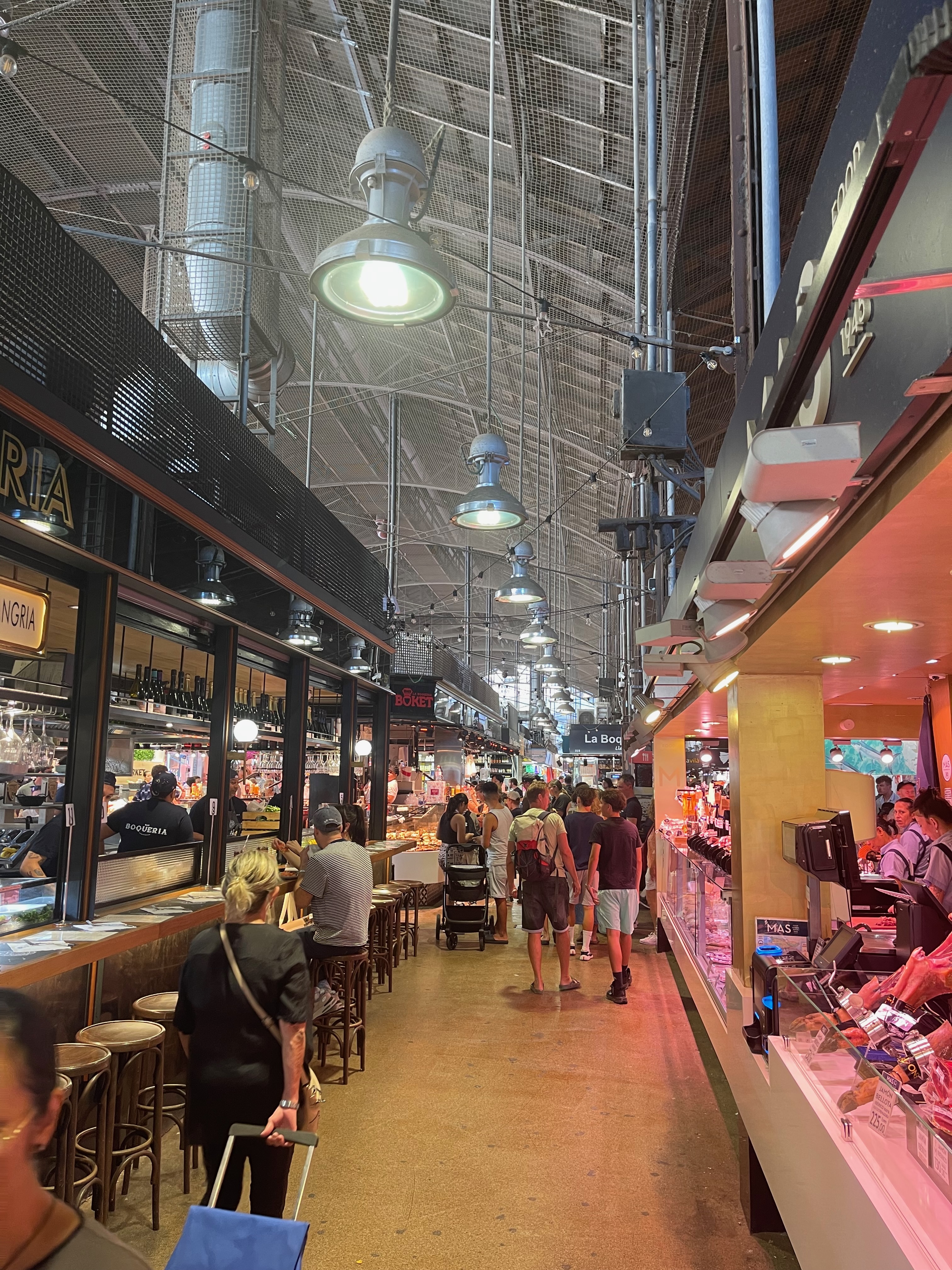
Plus, from next year, stallholders will also be required to ensure that at least 50% of the products they offer are traditional market offerings – things like fresh meat, seafood or fruit and vegetables. Currently, many of the stalls sell ready-made food for tourists.
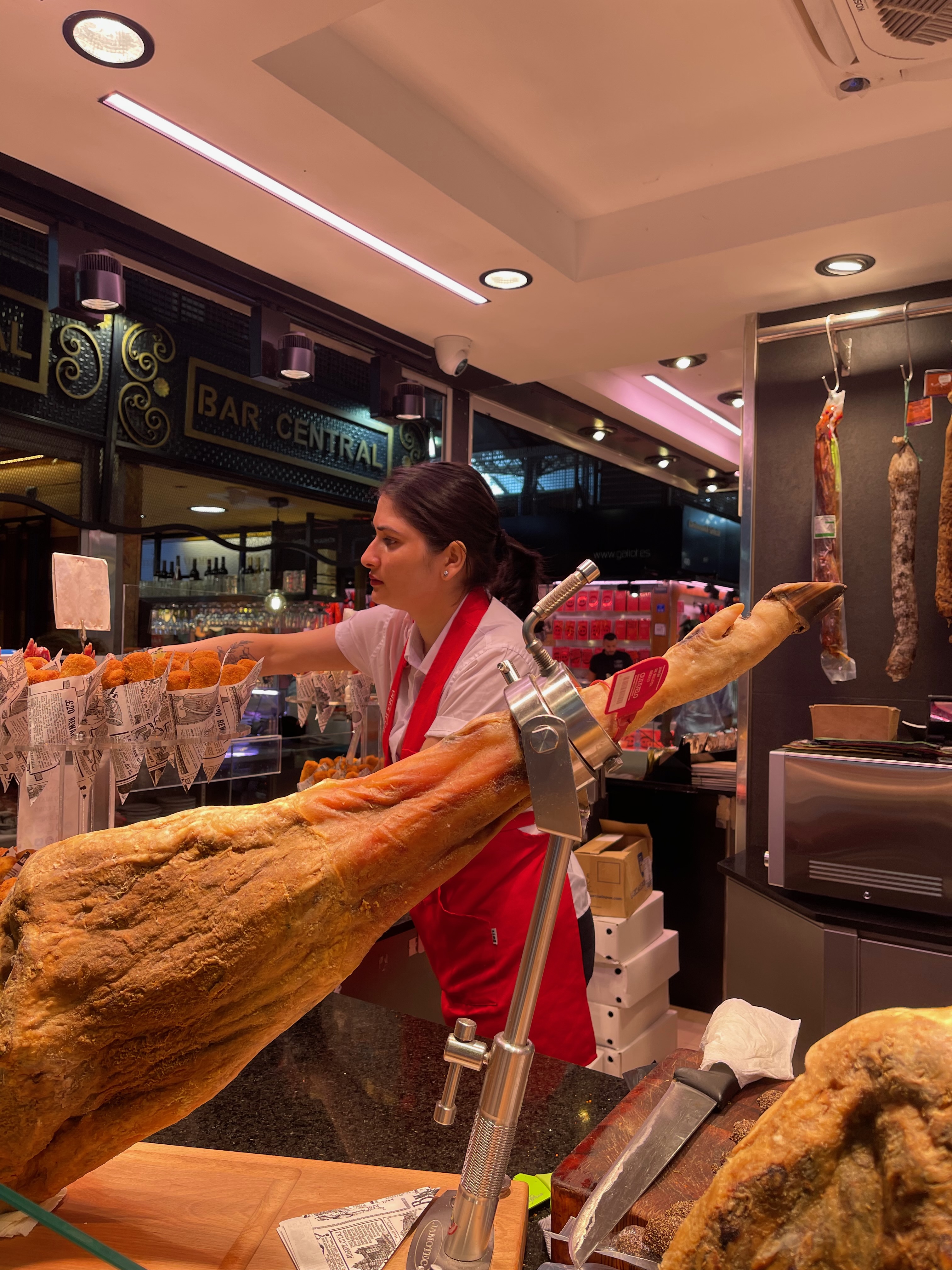
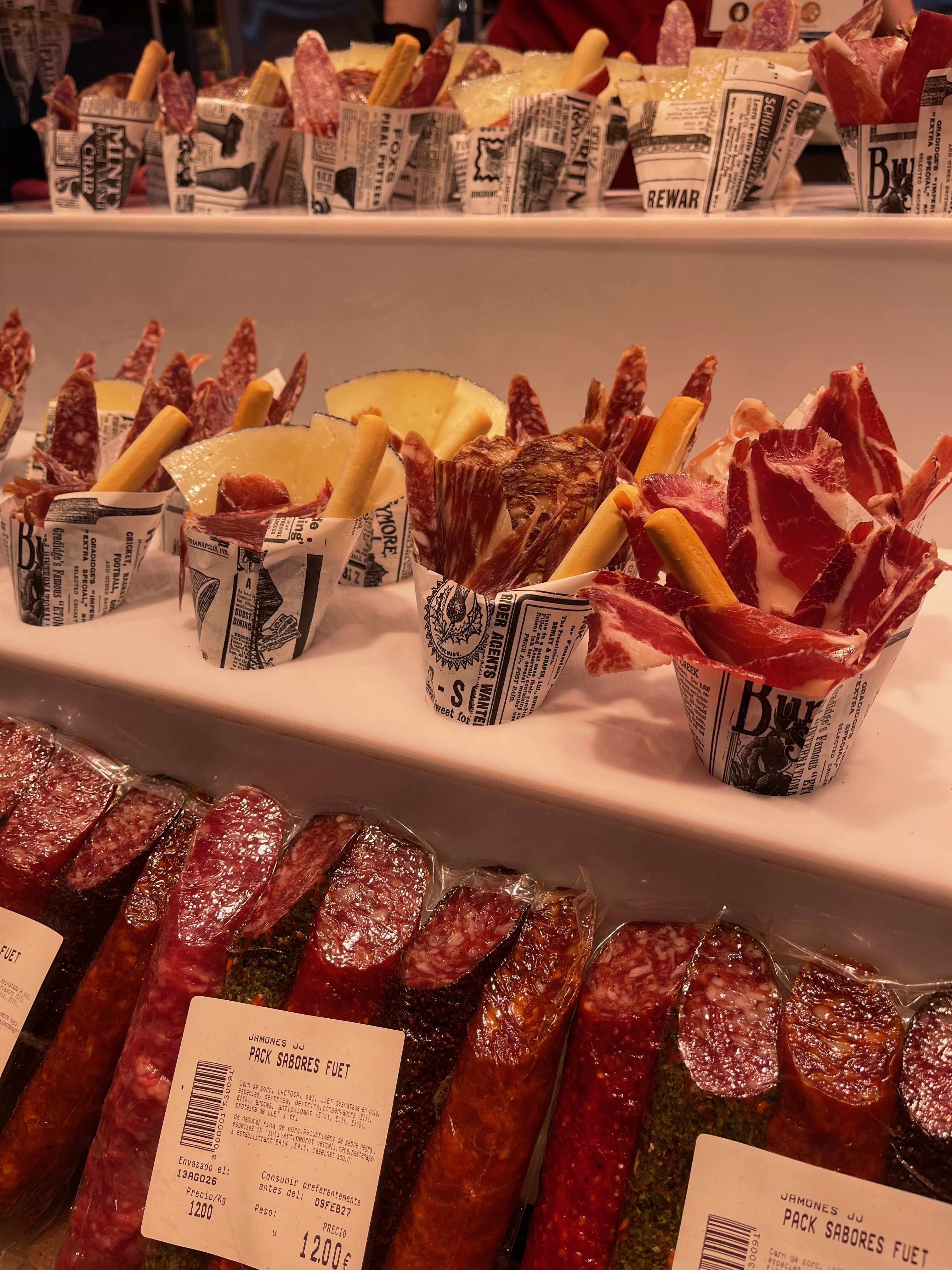
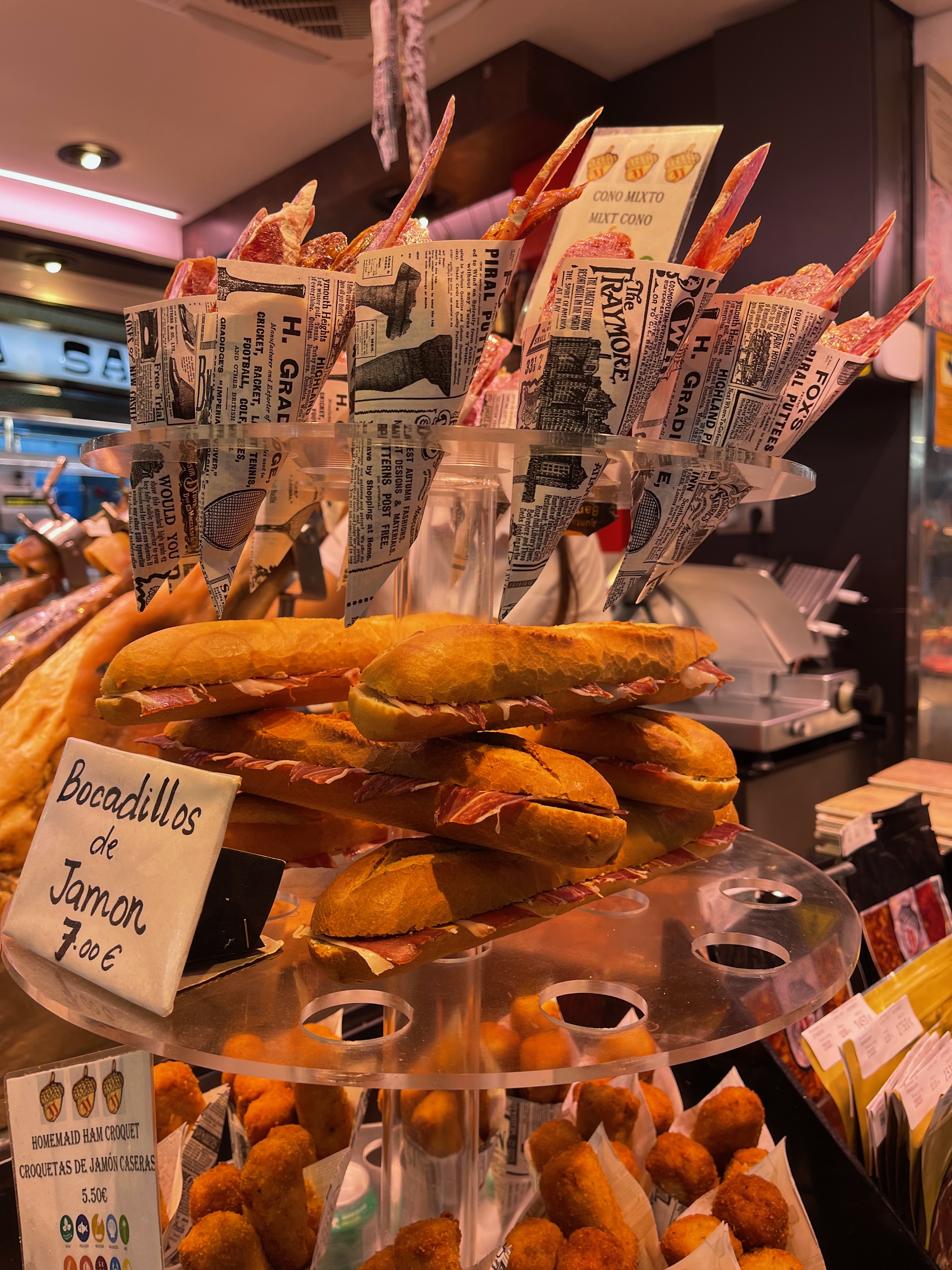
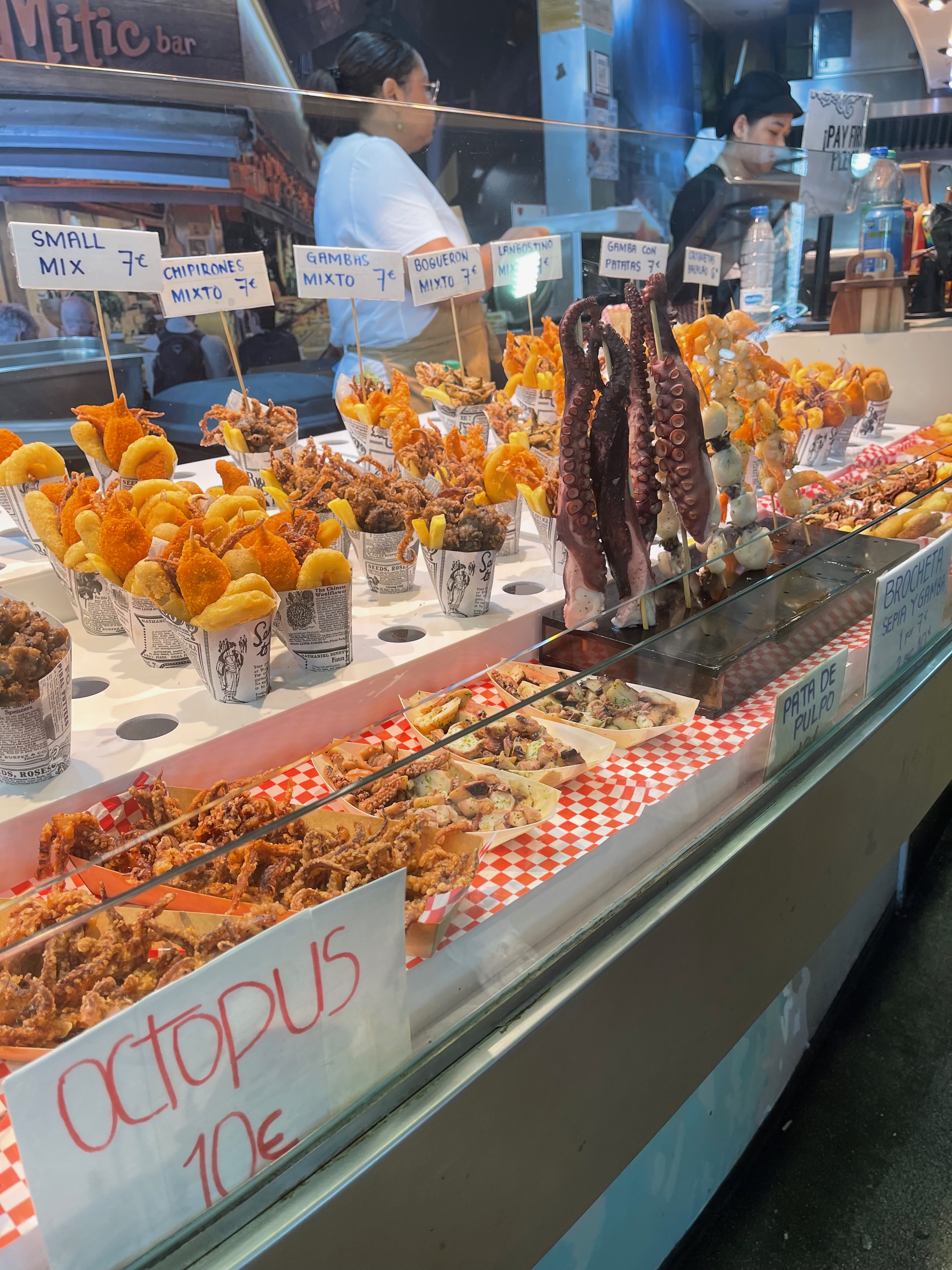
This is just part of Barcelona’s much larger fight against over-tourism. And yes, as I write this, I’m well aware that we’re part of the problem. In saying that, as travellers we should be more considerate, and slowing down as we walk the market, stopping to chat to stallholders, taste a little, buy a little, helps.
Even staying in registered hotels helps; Barcelona has stopped issuing short-term rental licences and has put operators on notice that after 2028 they don’t intend renewing licences as they come due.
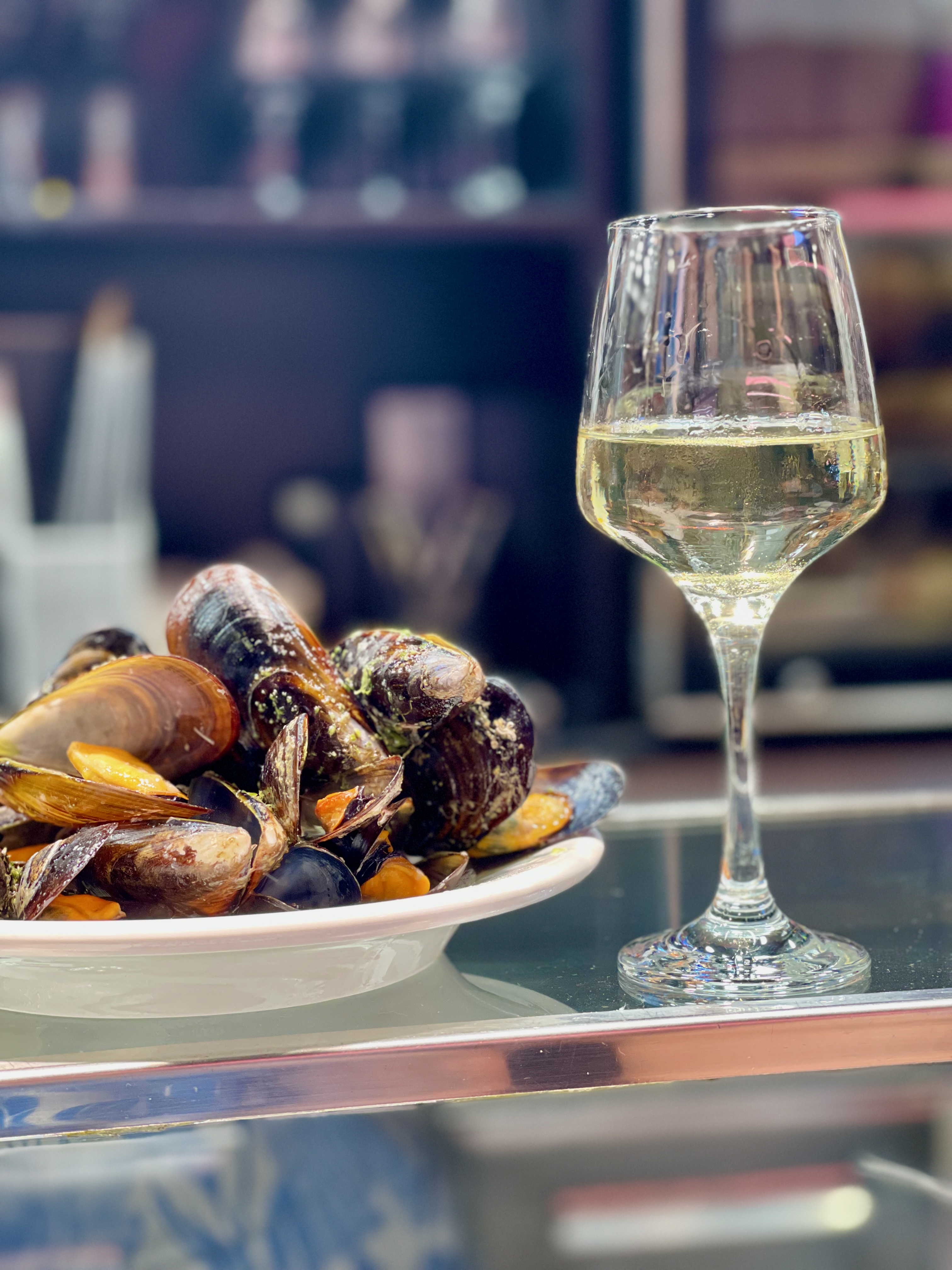
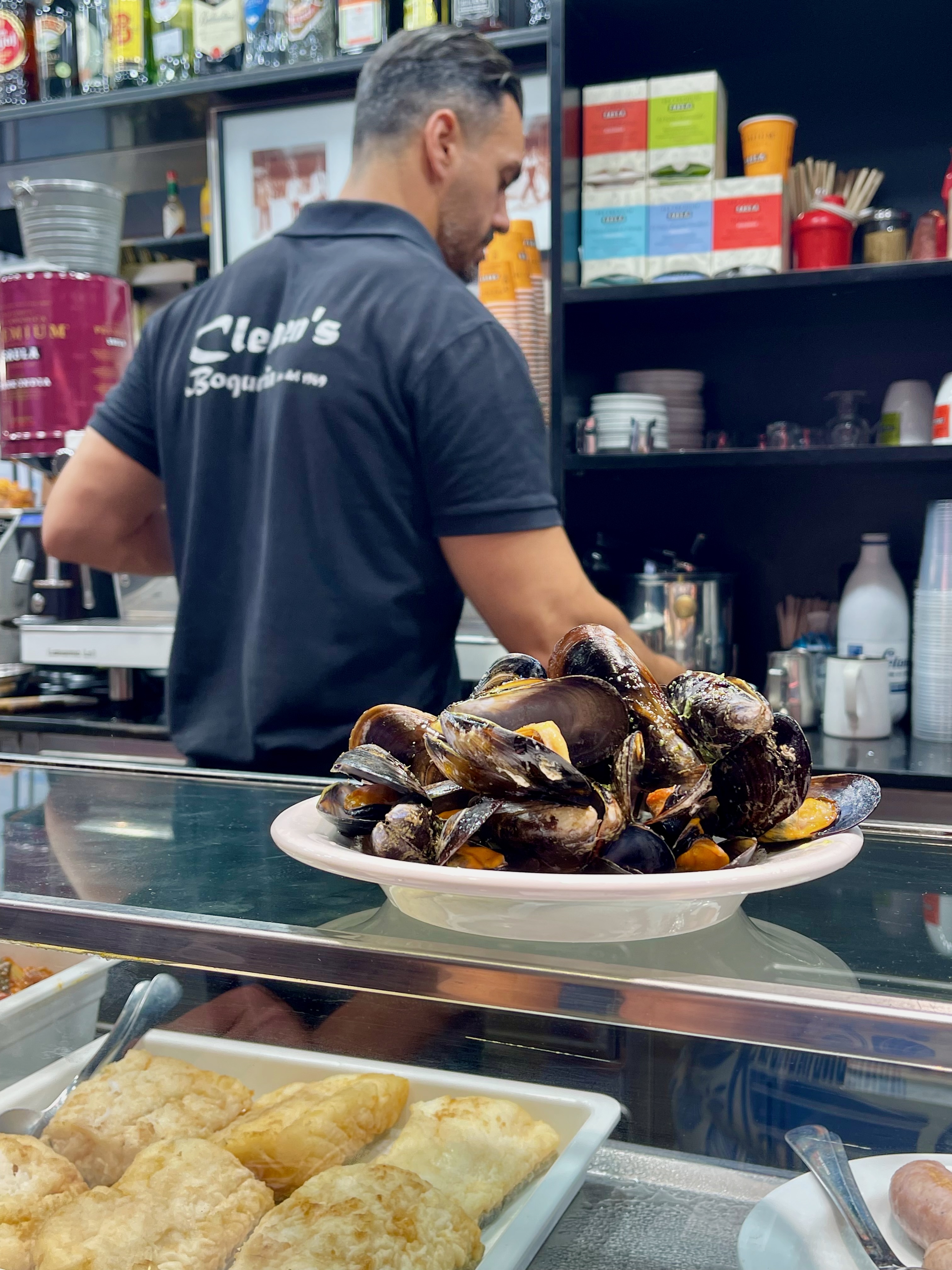
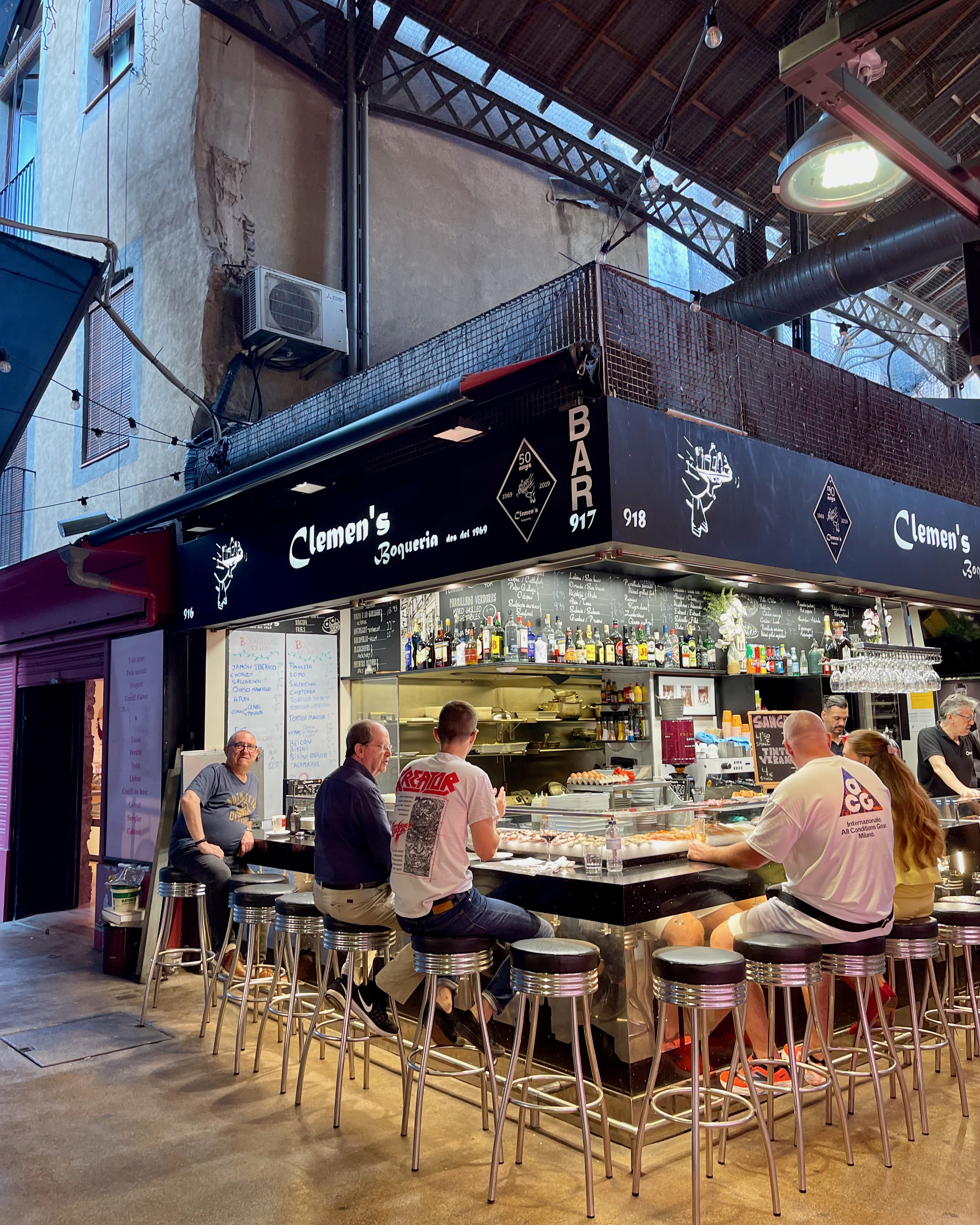
Rant over. We have lunch at Clements, a seafood place with a server Sarah declares to be very photogenic.
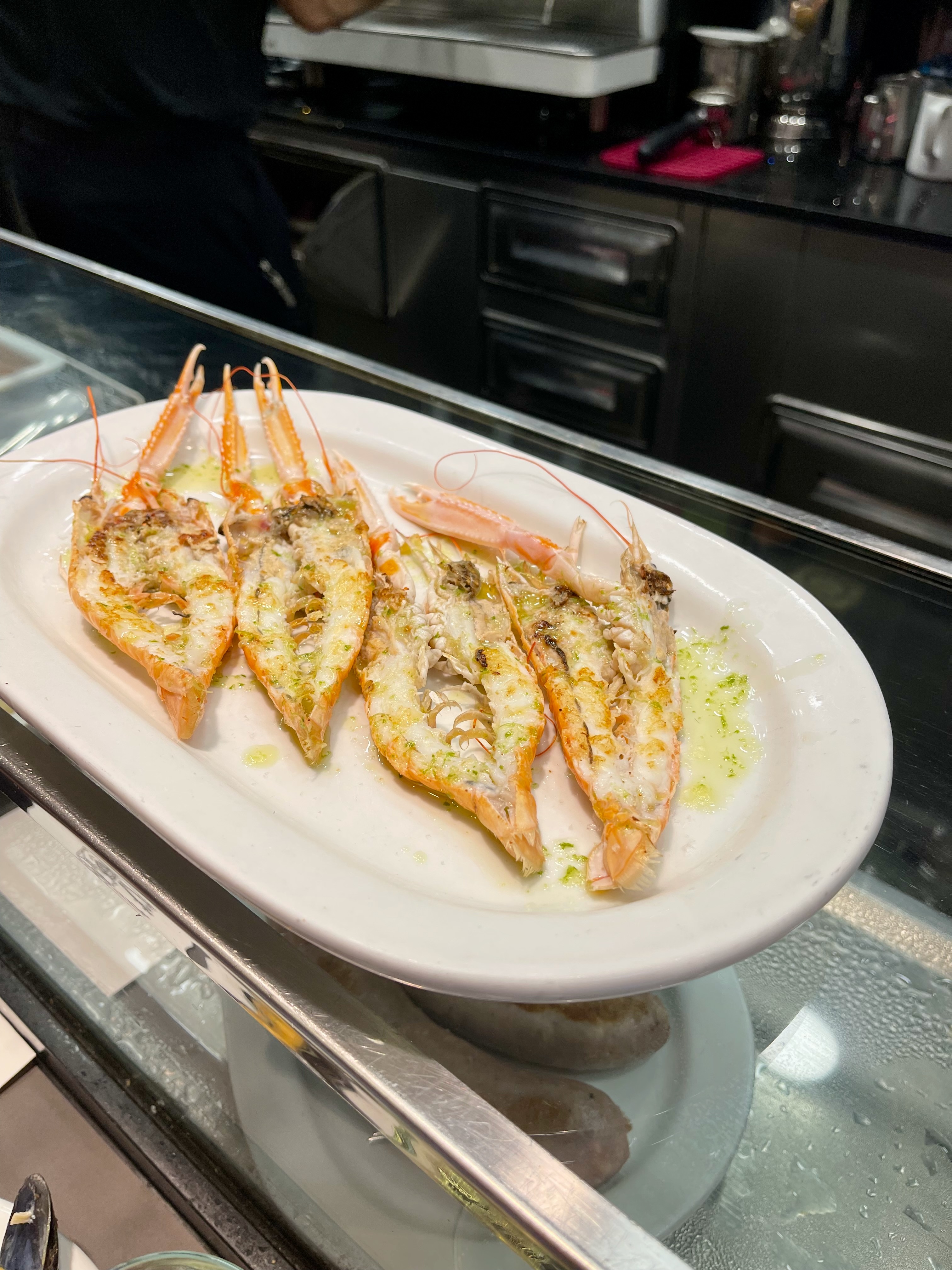
Regular readers might remember that we attempted in vain to have langoustines in Scotland, only to be told that a lot of the catch is sent to Spain, well, today we indulge (and at €22 it is an indulgence) in a plate of Scottish langoustines. We also share a plate of mussels (€9.50) and Sarah and I have a glass of Albarino.
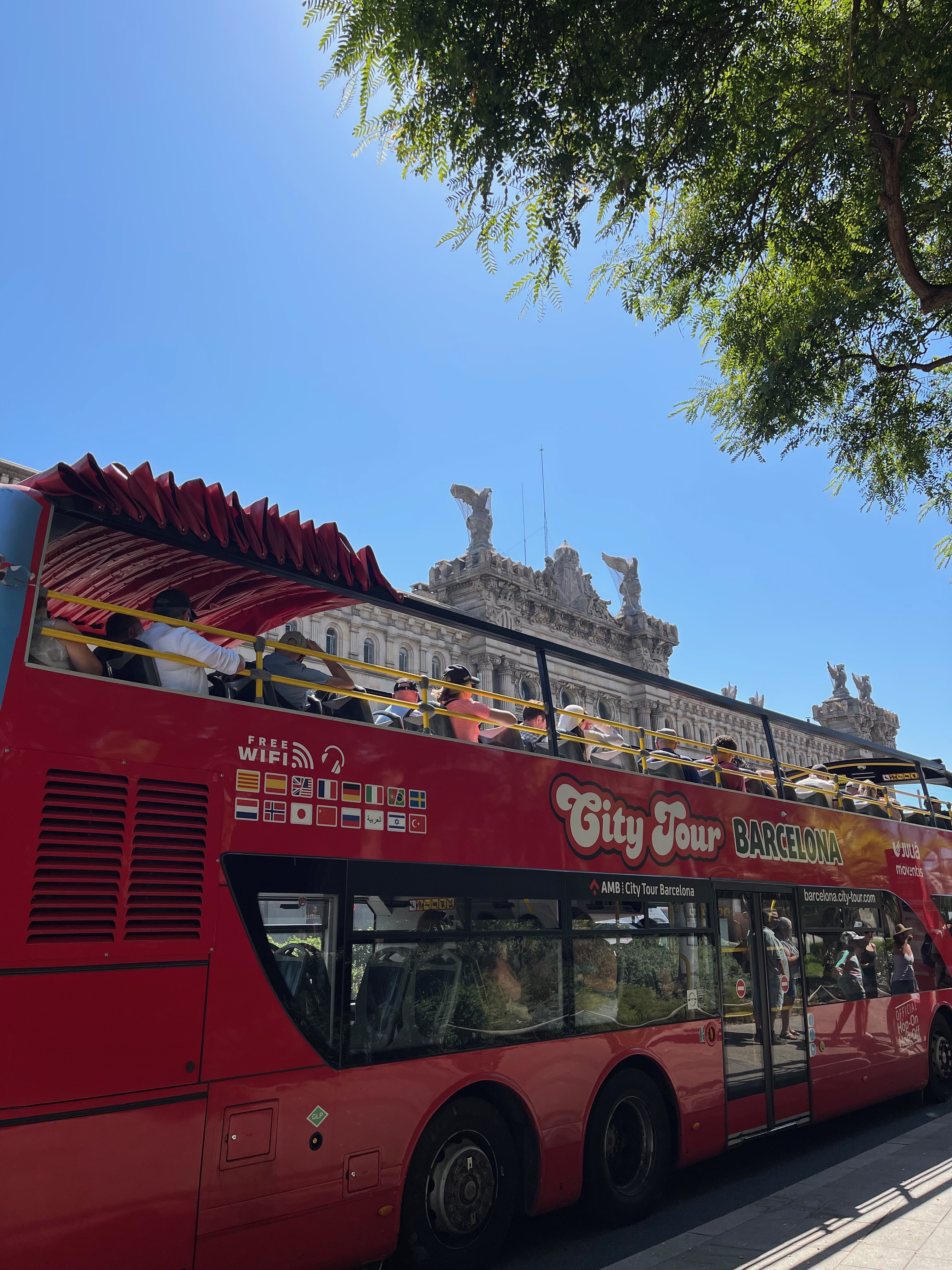
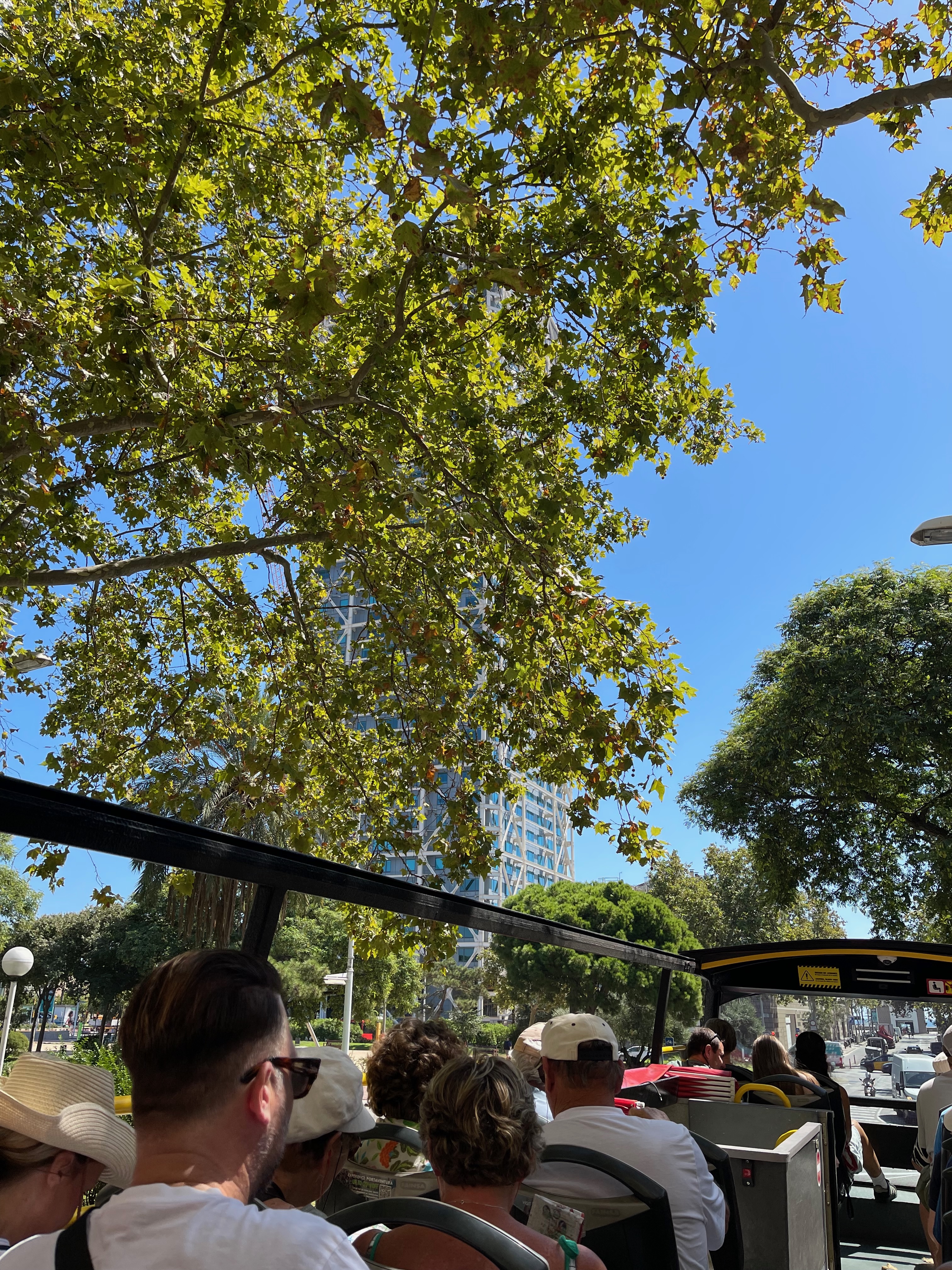
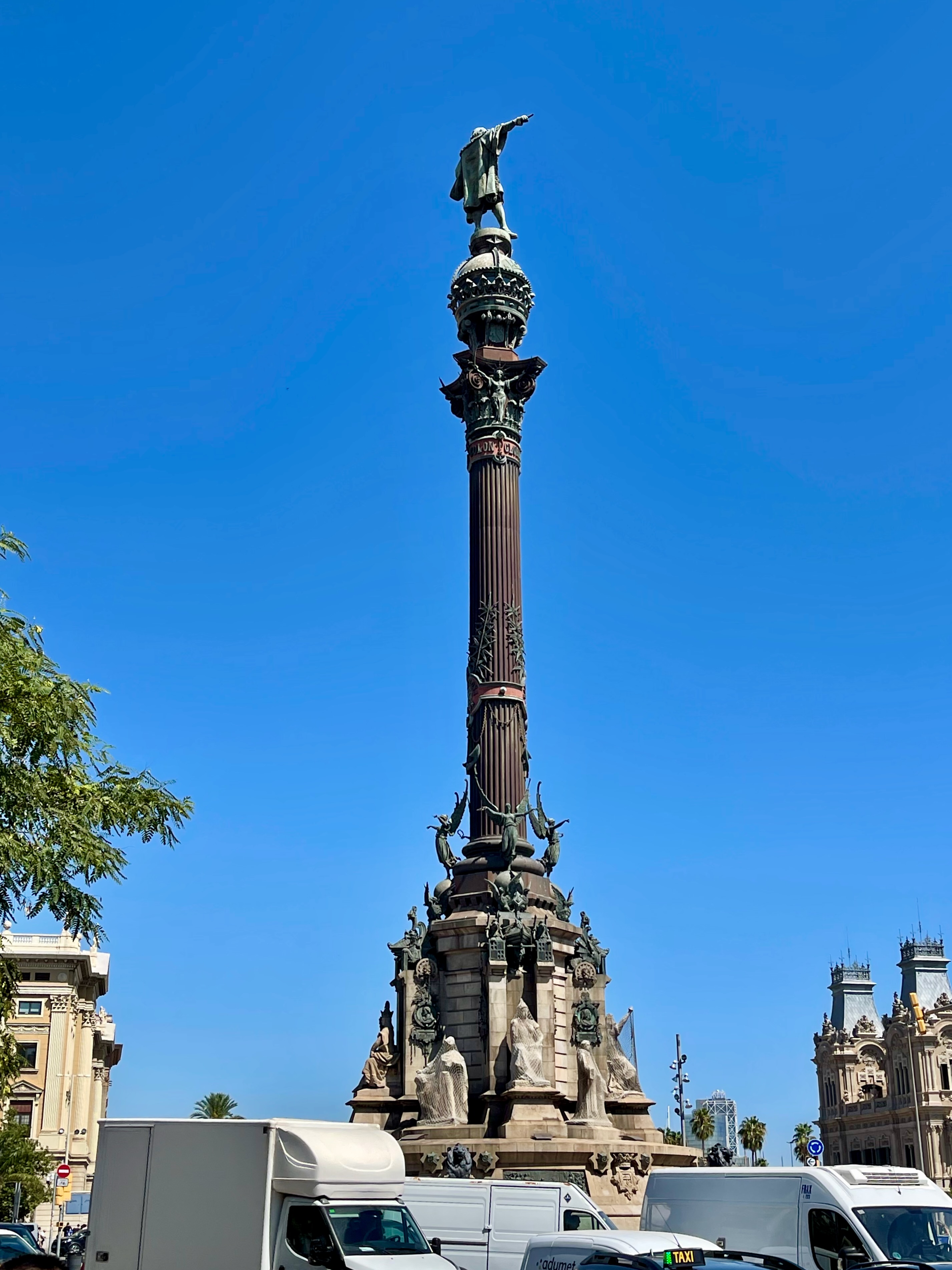
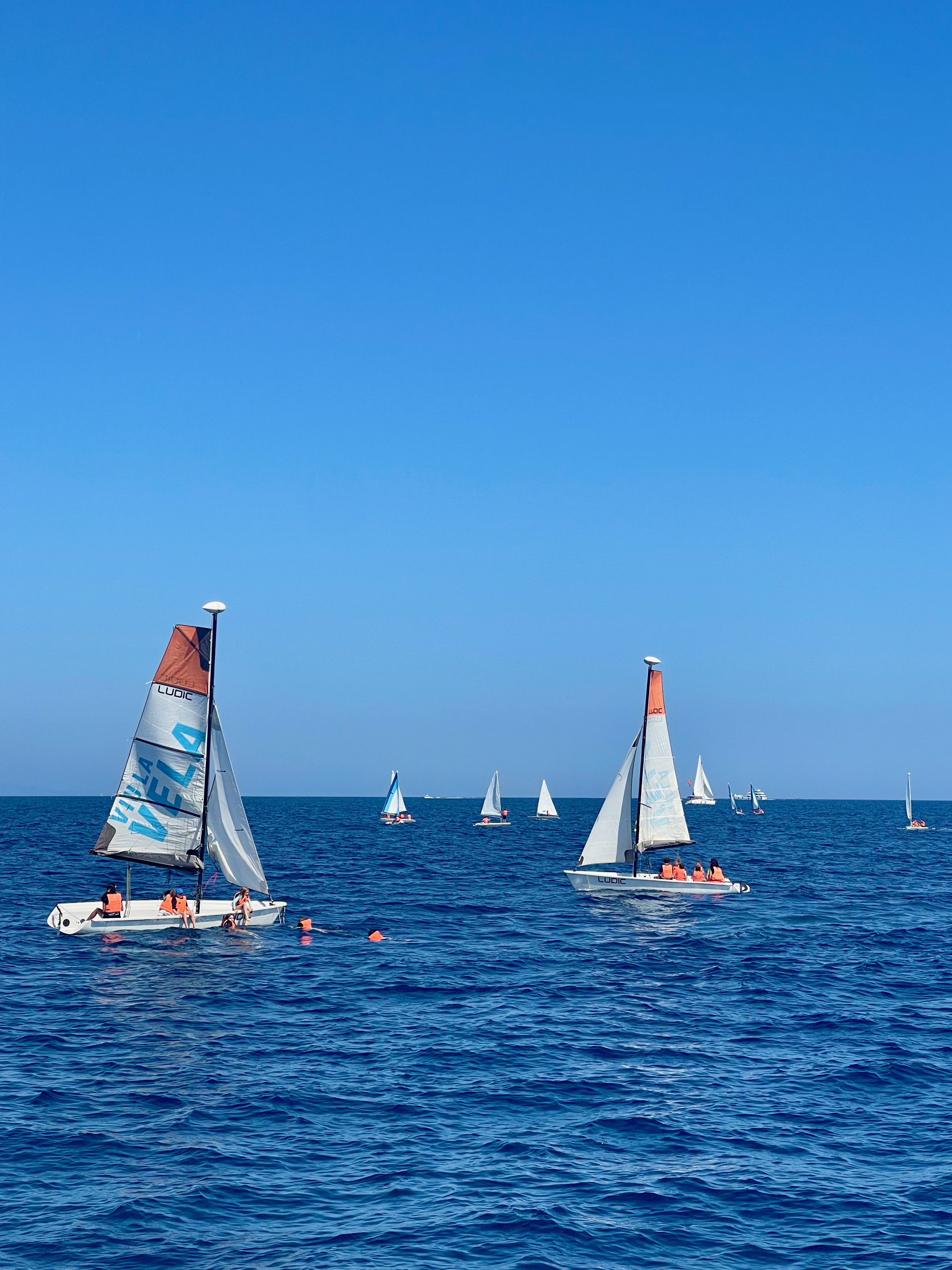
After lunch we walked up to catch the Hop-on-hop-off bus to do the green route, getting off at the pier. We’d booked the catamaran tour as an extra, thinking it would be cooler out on the water.
It wasn’t.
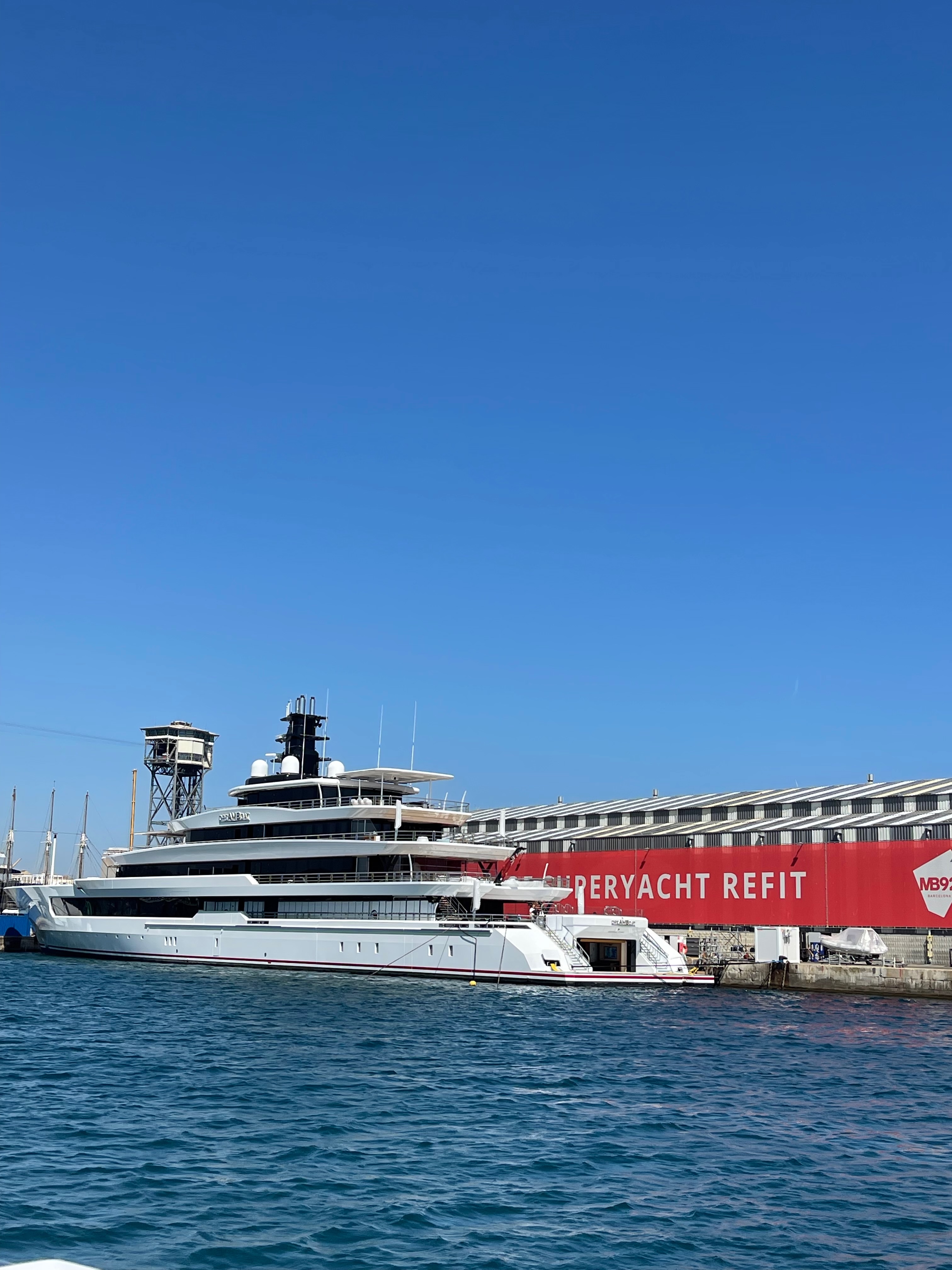
There were, however, plenty of super yachts moored, so Sares and I amused ourselves by googling the owners and how much they were worth. Spoiler alert: ridiculous amounts of money. Obscene amounts of money.
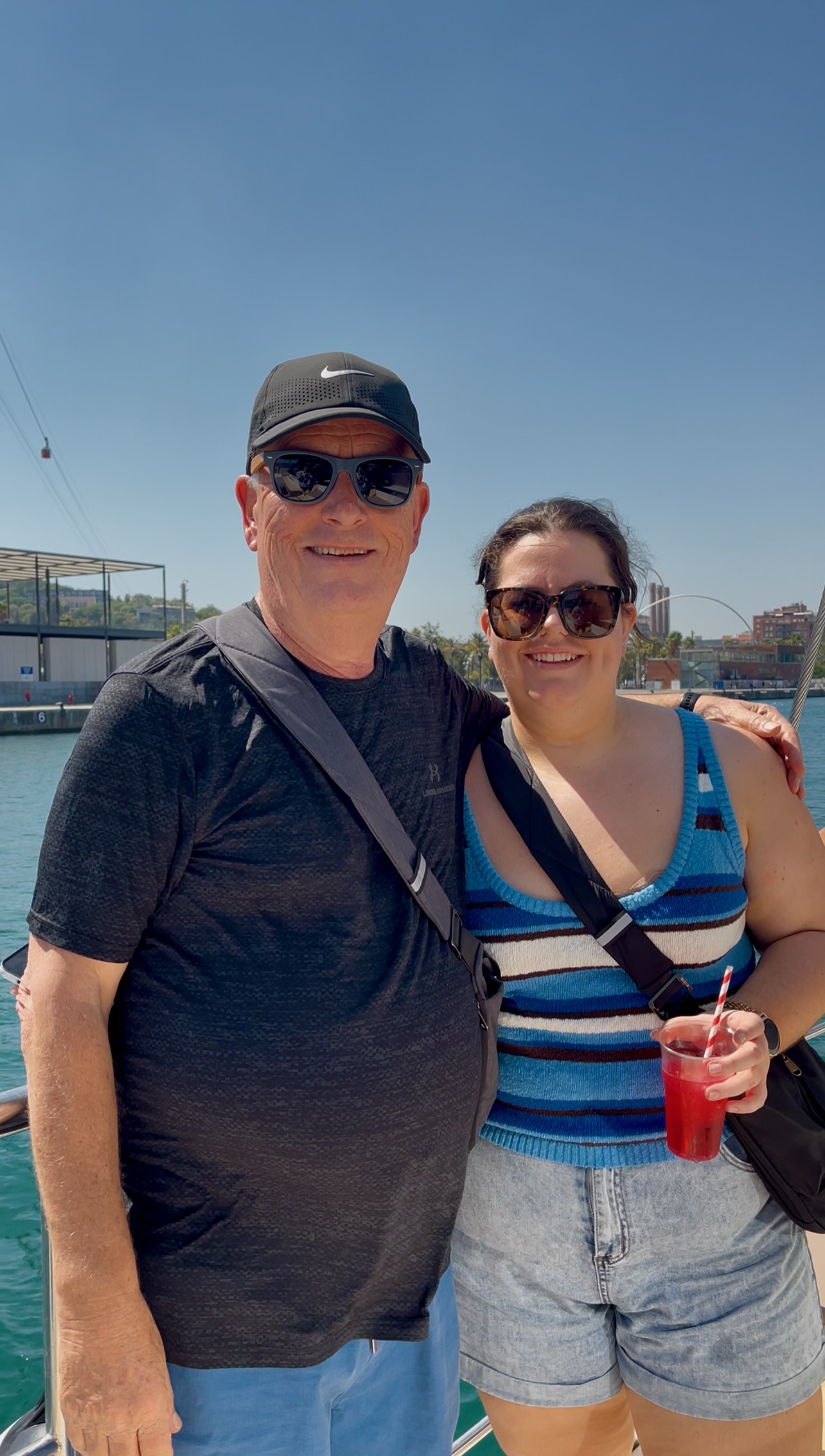
We bought these red tequila-based cocktails that, combined with the sun, gave me a revolting headache. You know what they say, tequila rarely ends well. Sares enjoyed it though.
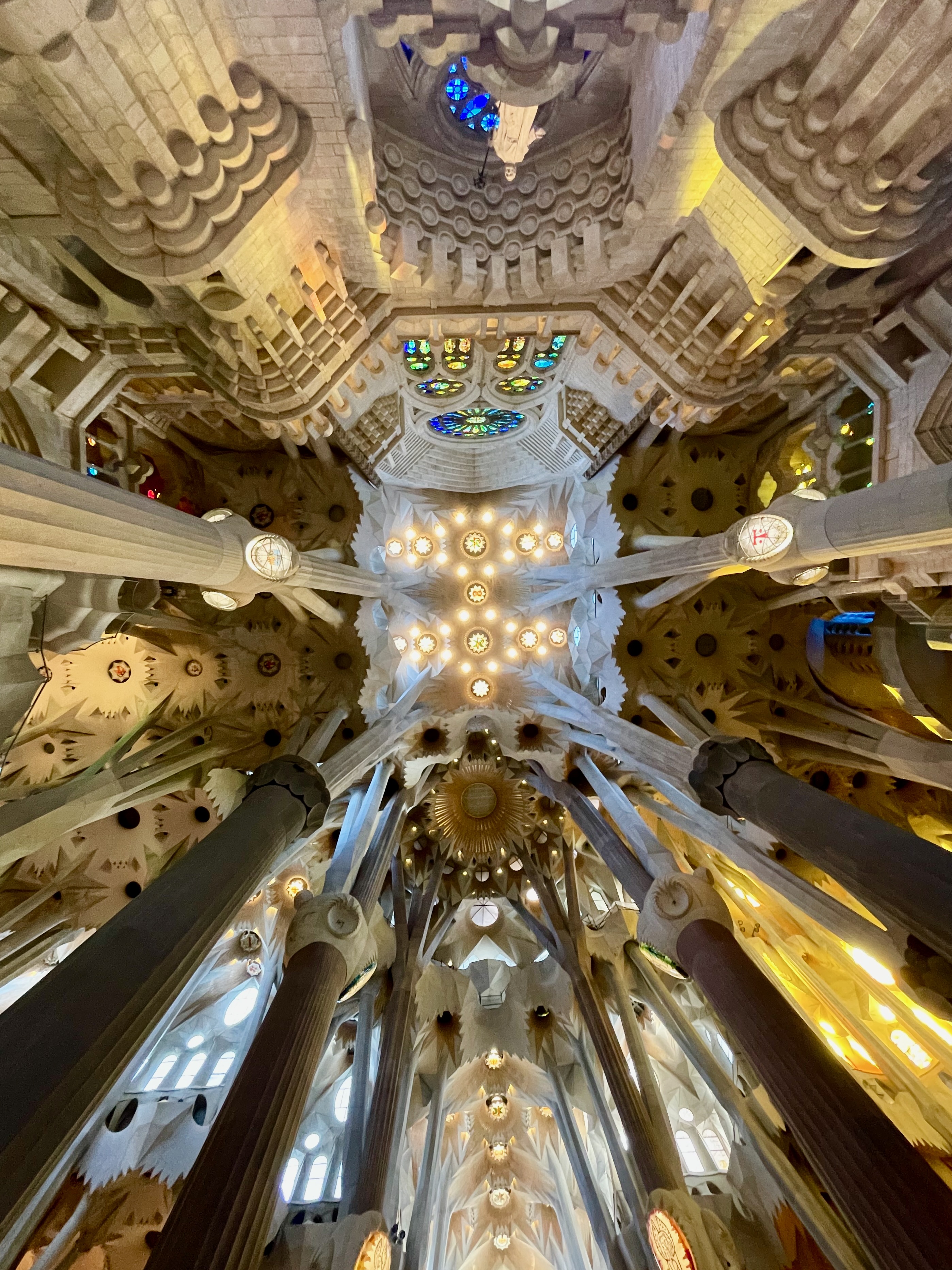
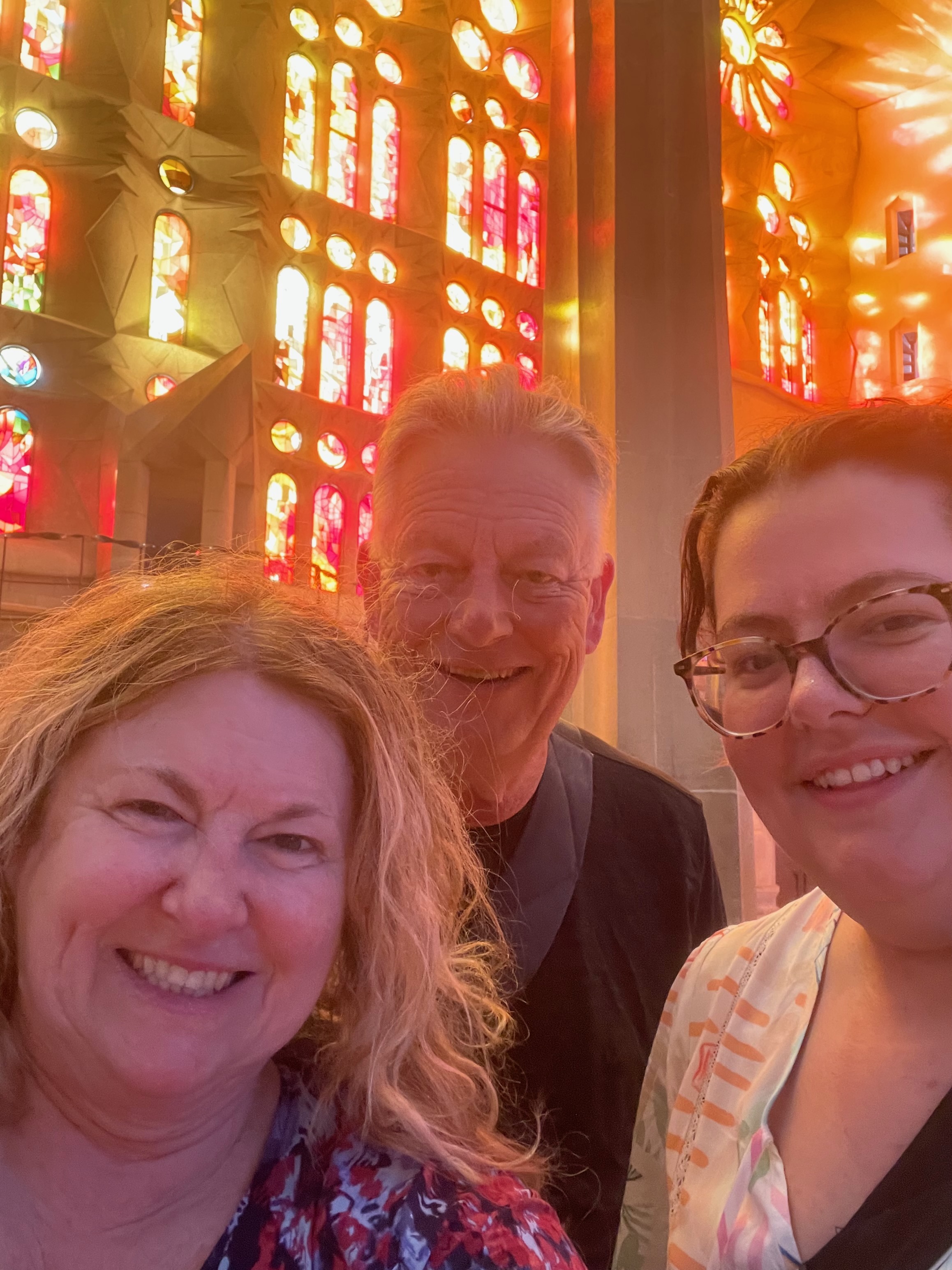
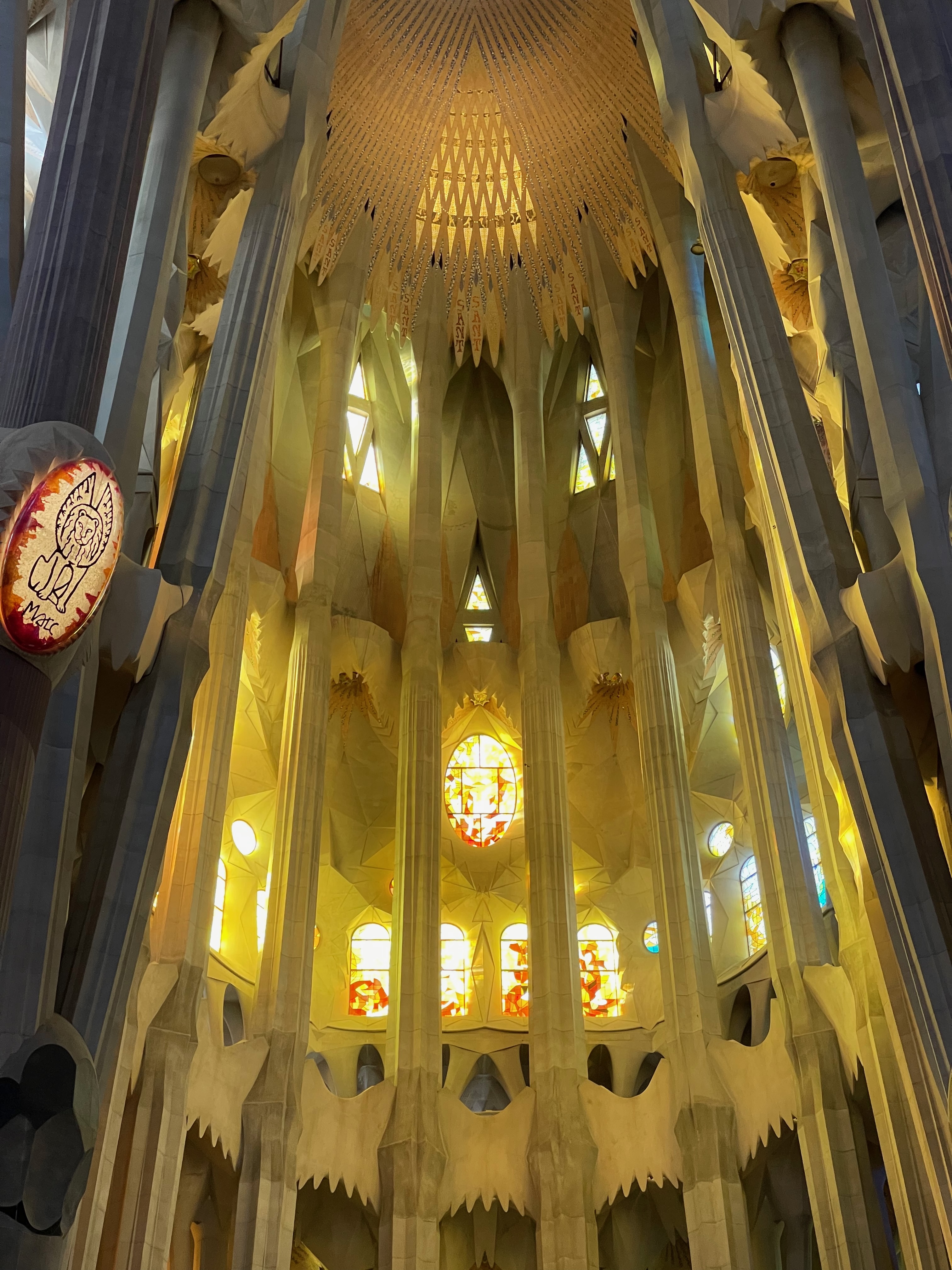
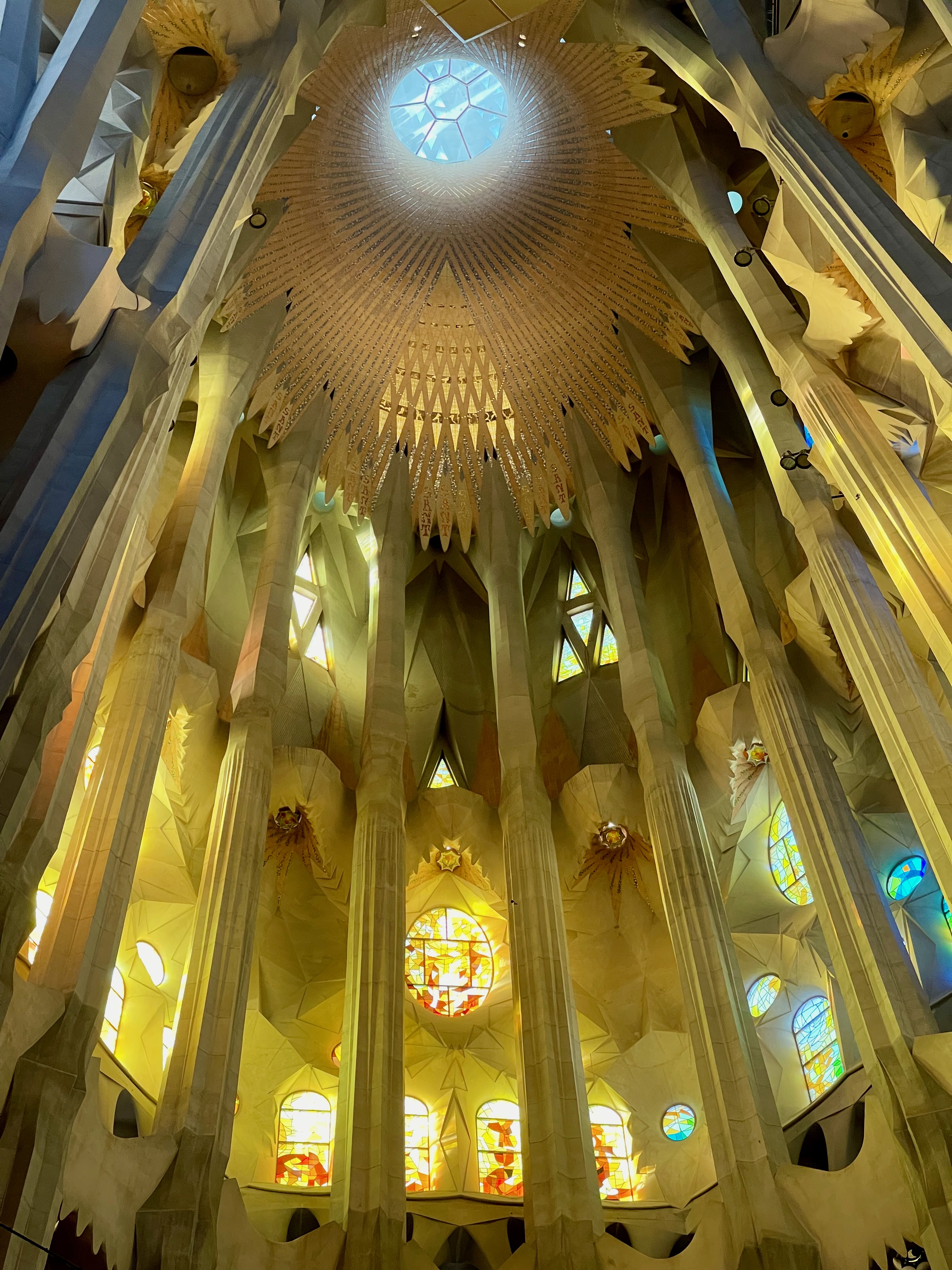
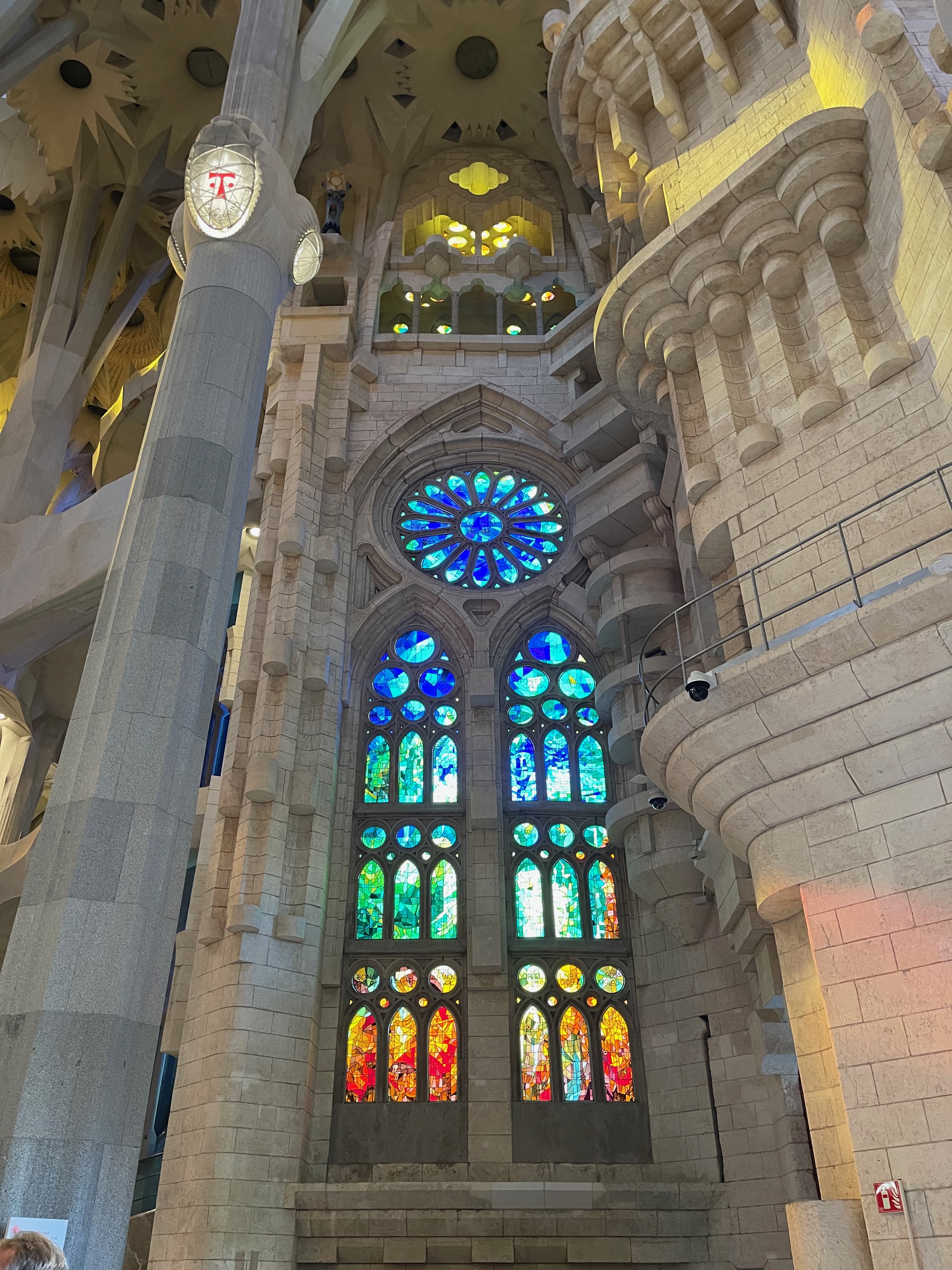
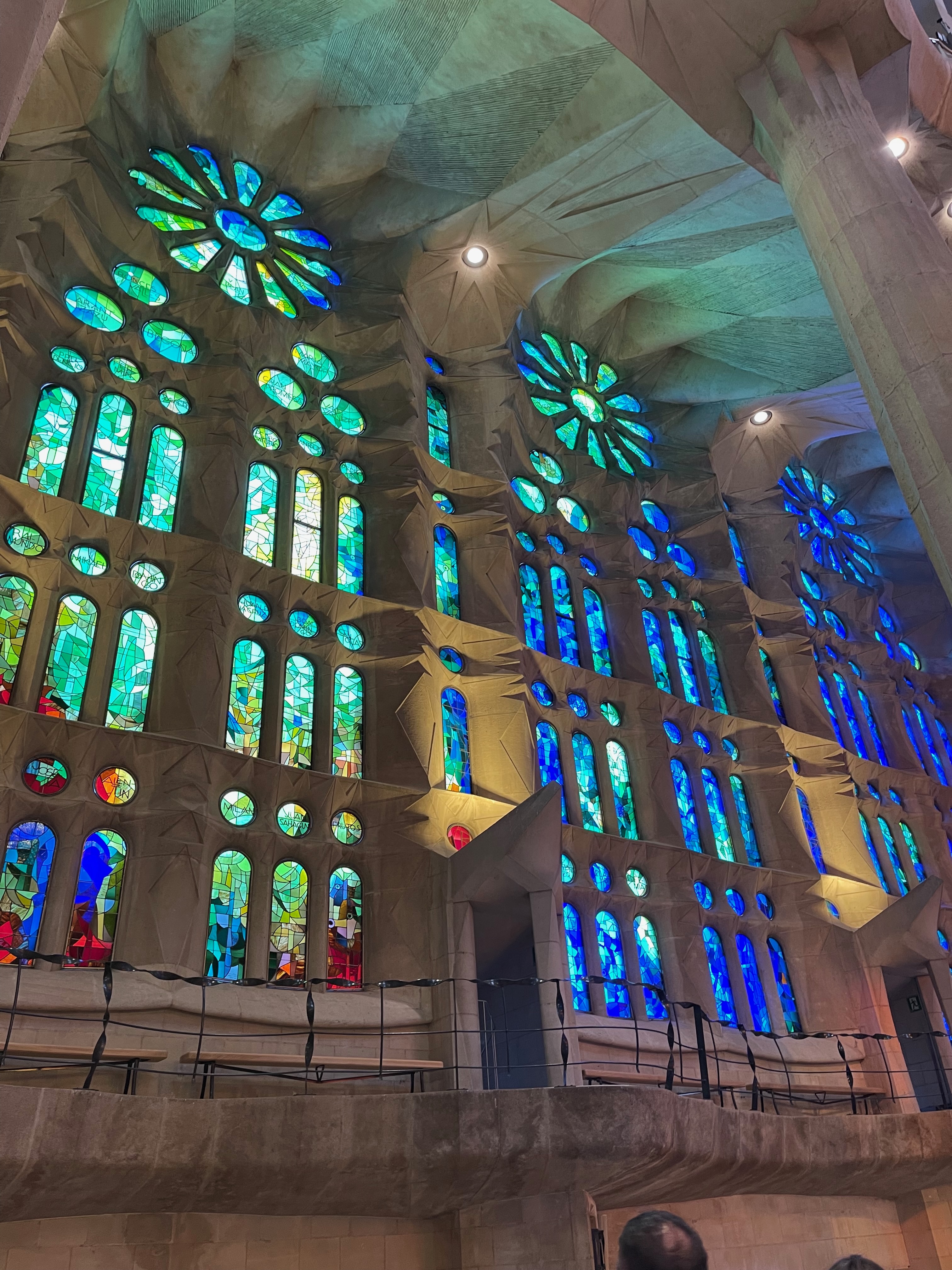
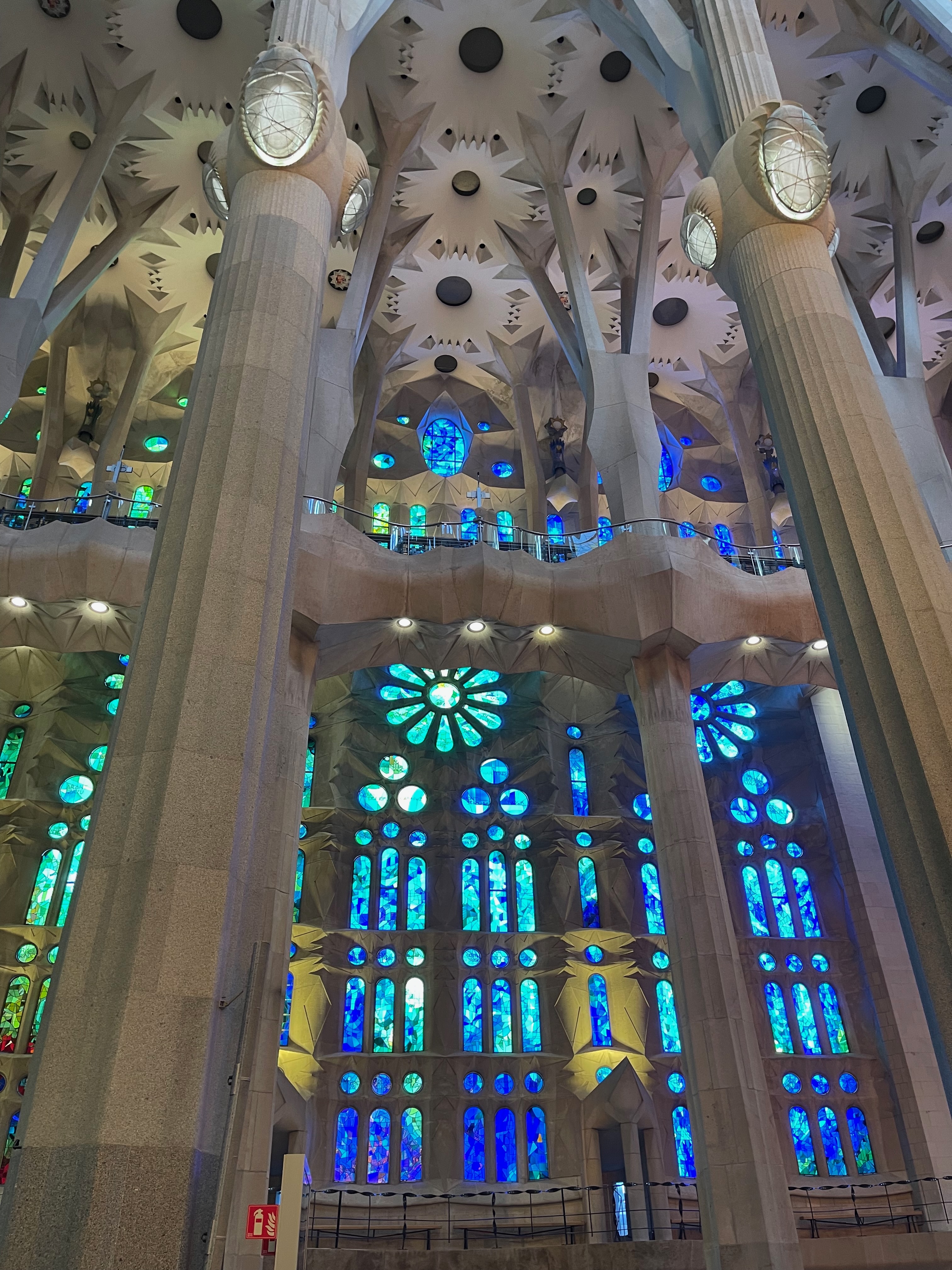
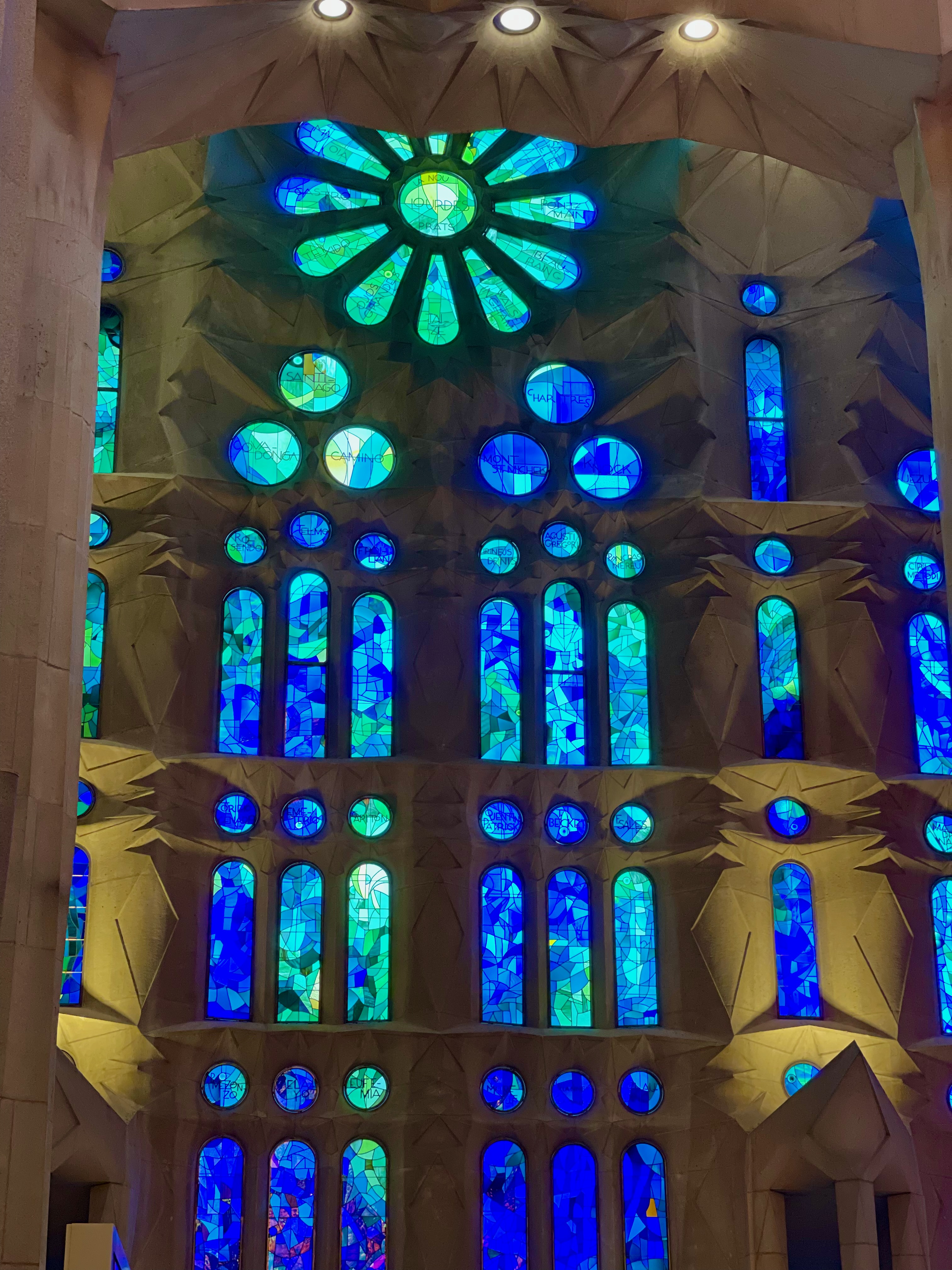
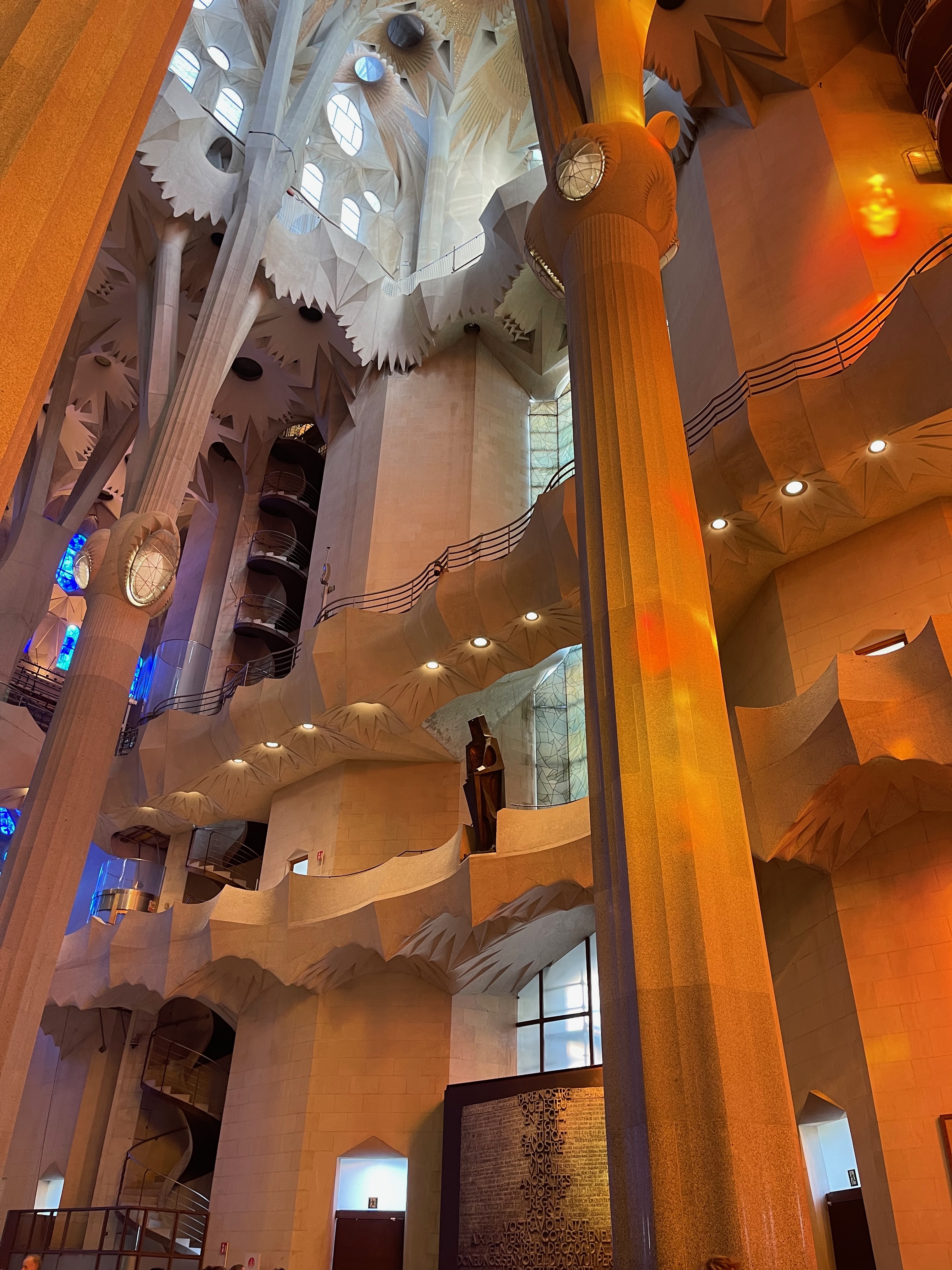
Despite having set myself a reminder a month ago, I didn’t get around to booking a slot to visit Sagrada Familia – or, as Sarah calls it, the Sangria building – until a week or so ago. As such, the only time I could get was six this evening. Sure, it was busy, I suspect it’s always busy, but the way the late afternoon light filtered through the sunset windows was stunning.
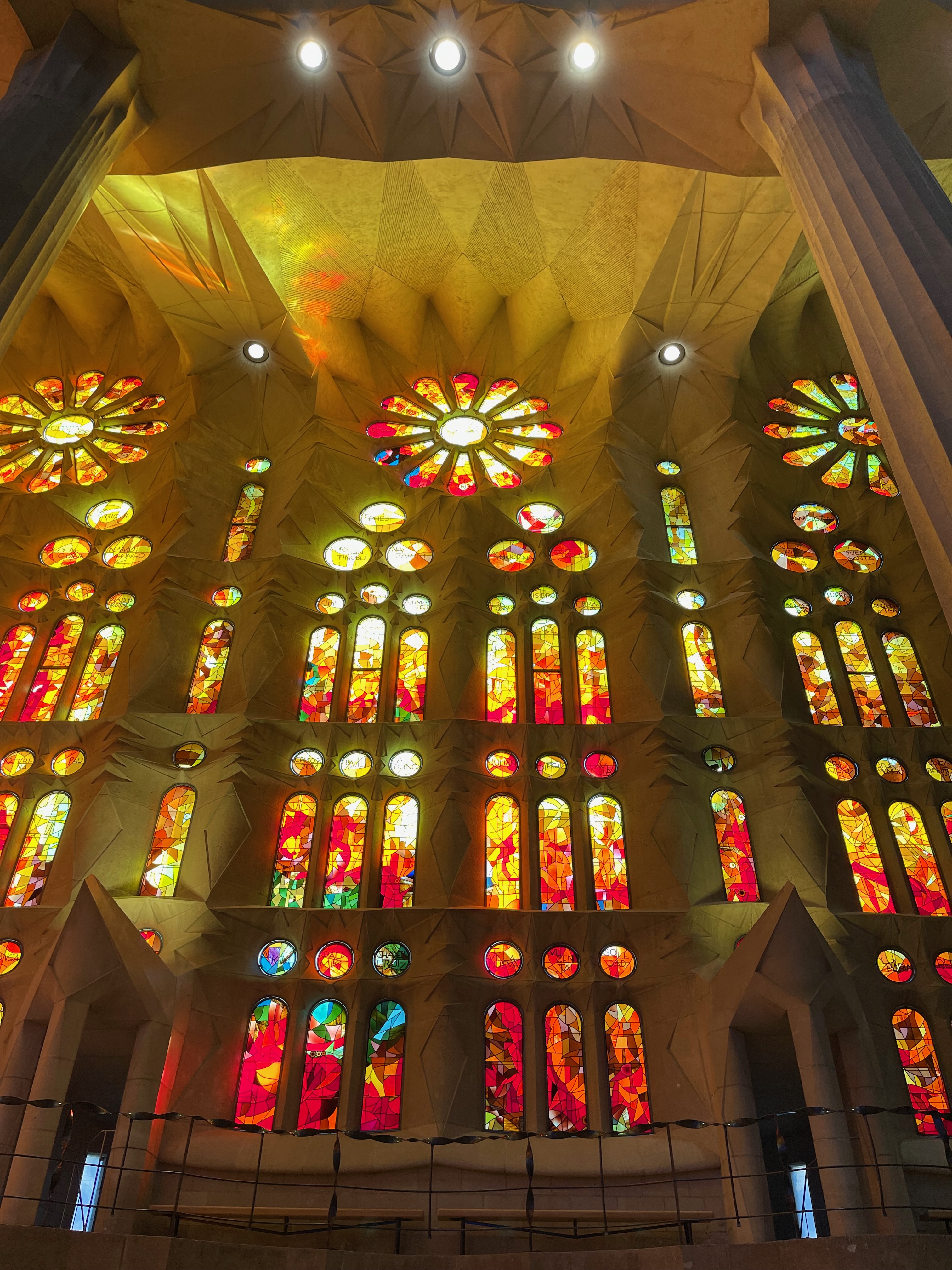
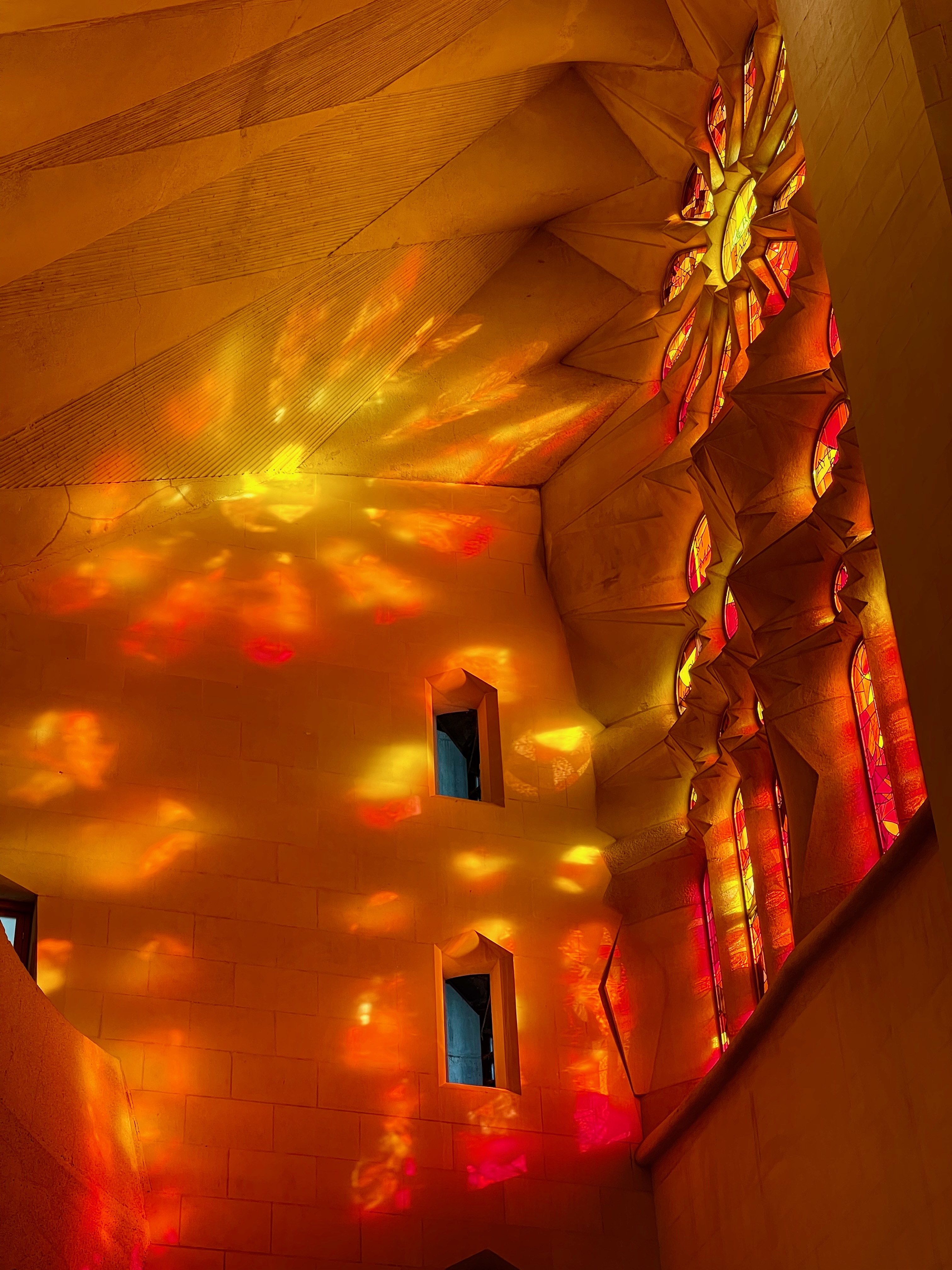
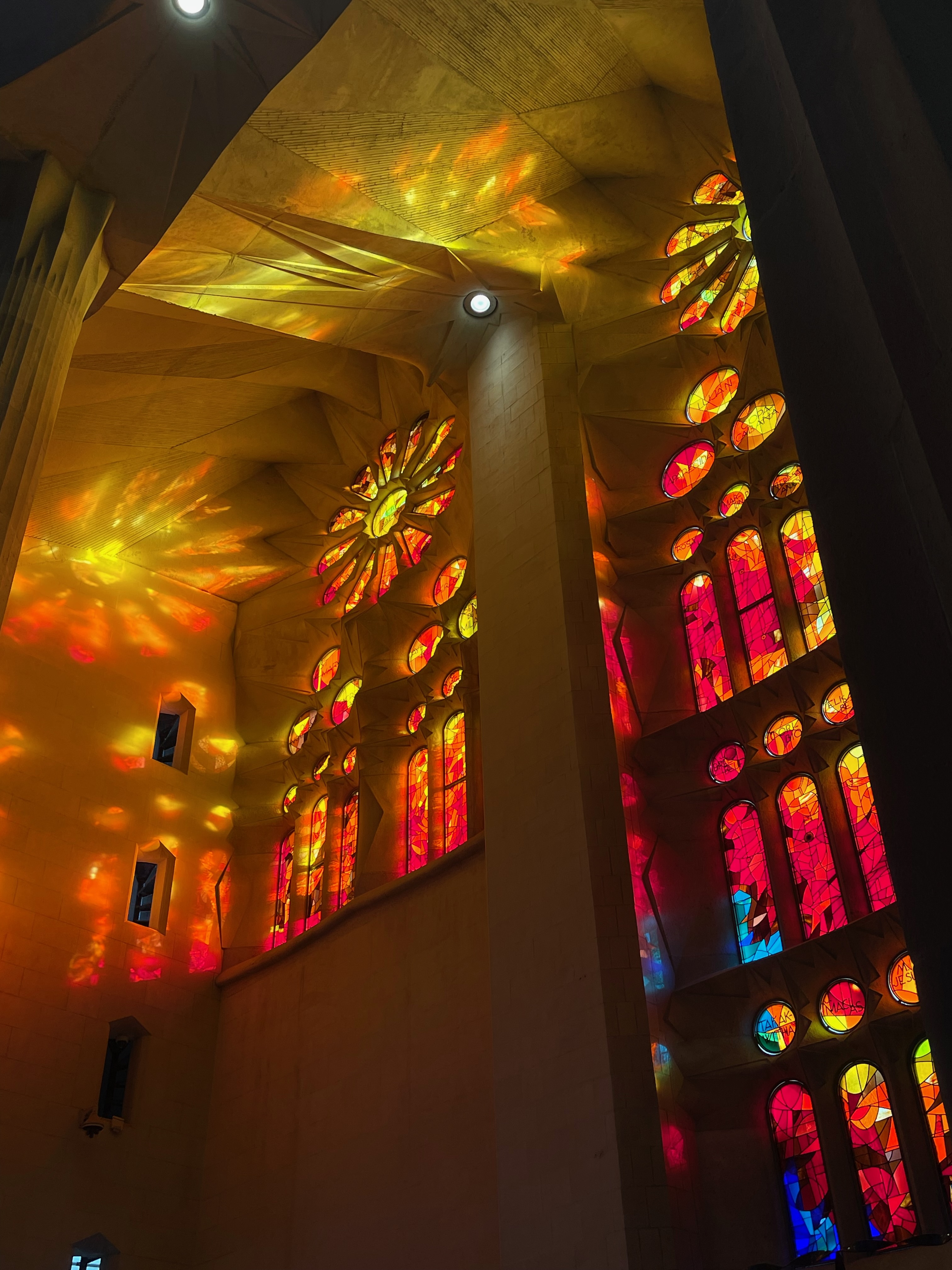
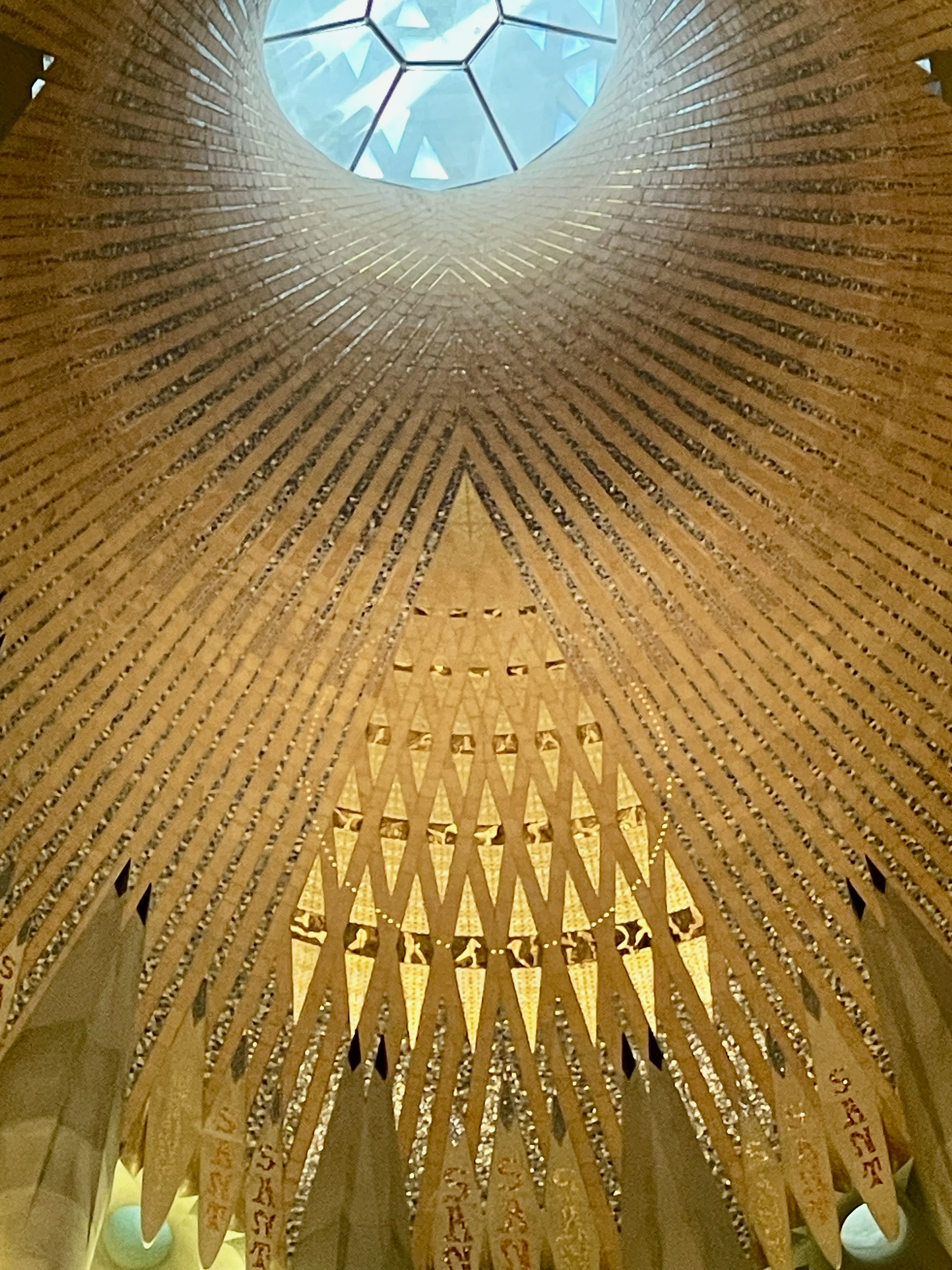
The whole place is stunning. Mind you, I’d hate to have been the project manager who had to deliver it. Late. That’s some breach in timelines. Other than some tweaking, though, it is now finished. Finally.
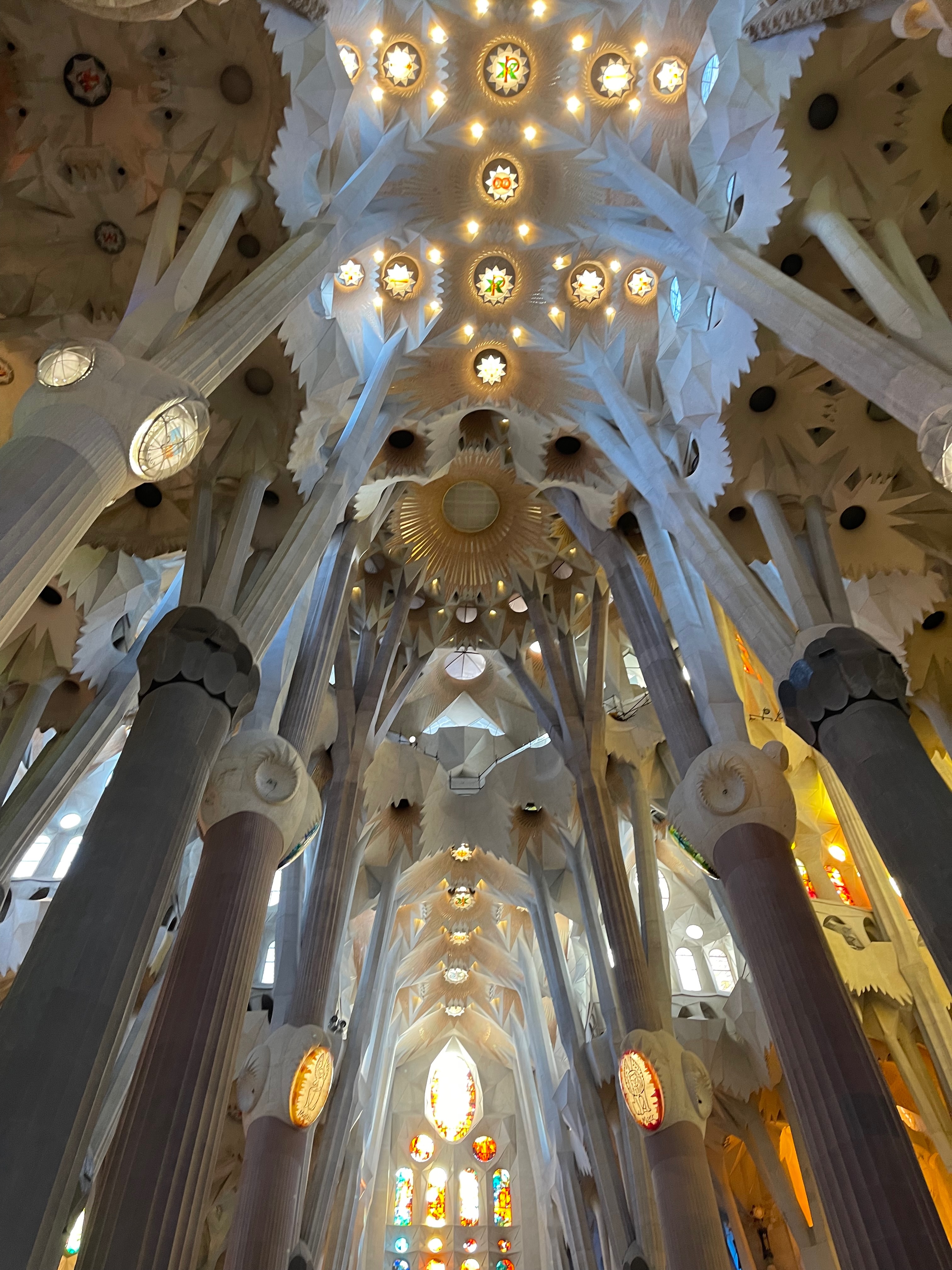
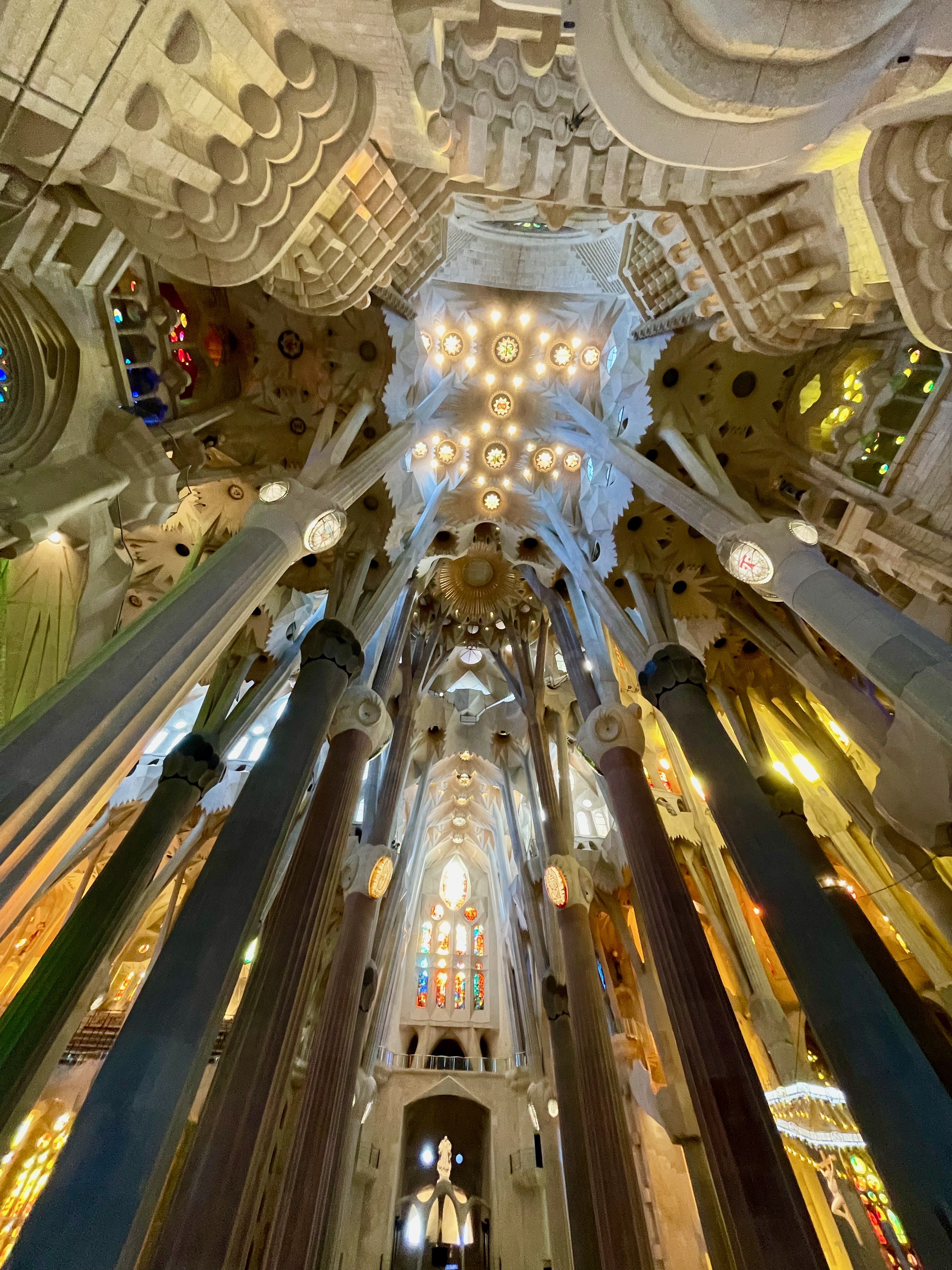
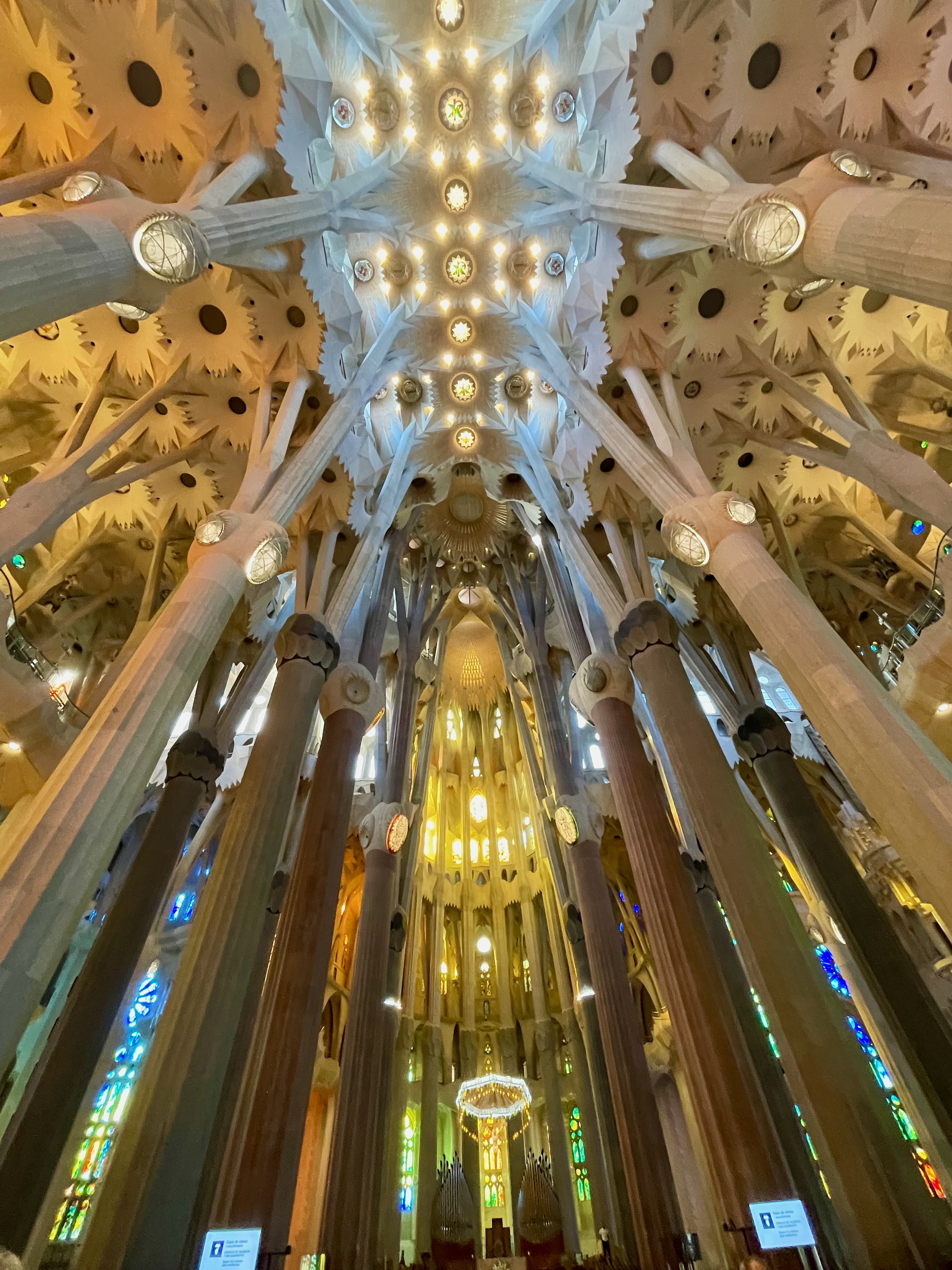
It’s impossible to take the entirety of this building in. There are so many details, each of which is absolutely necessary.
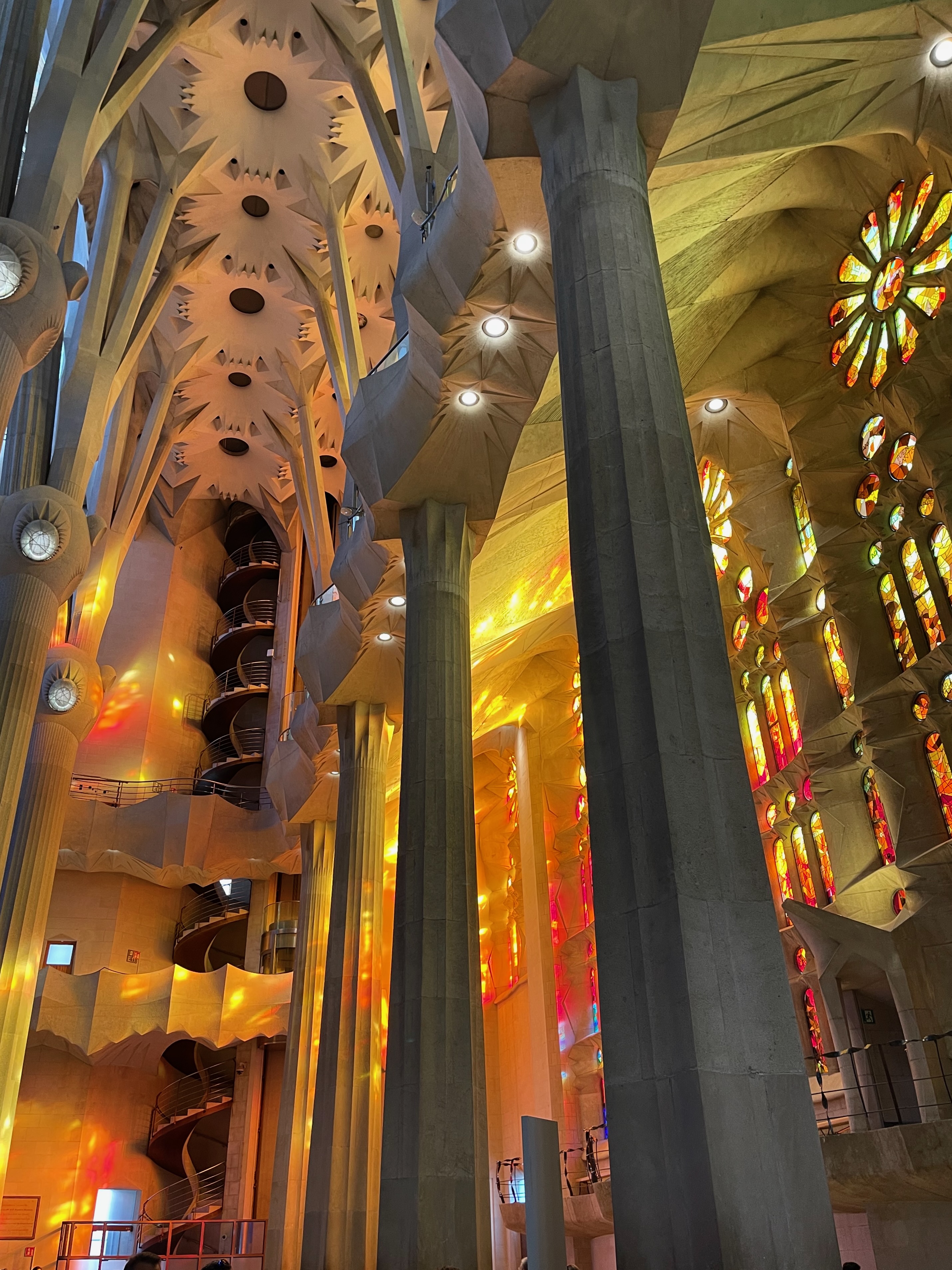
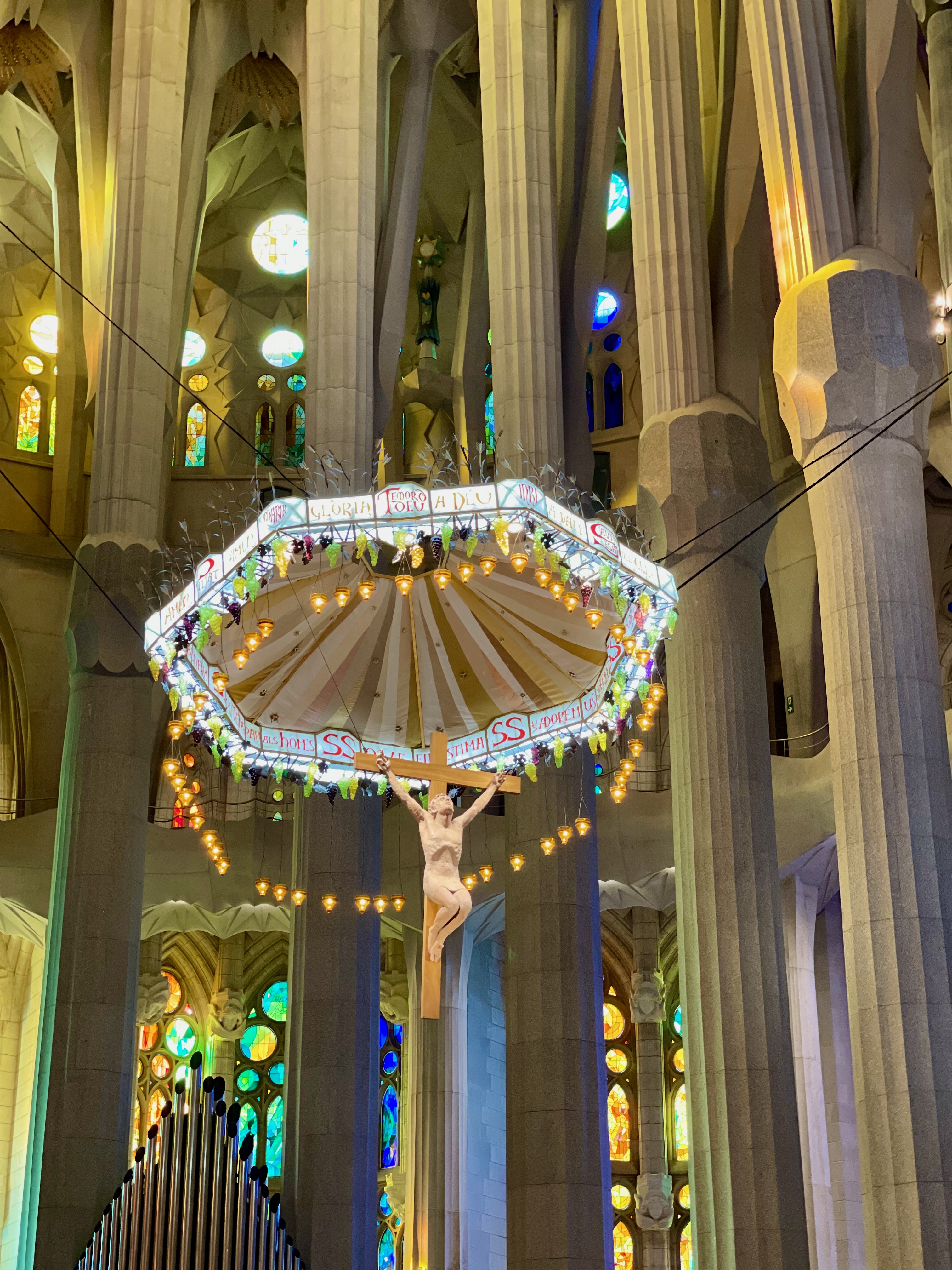
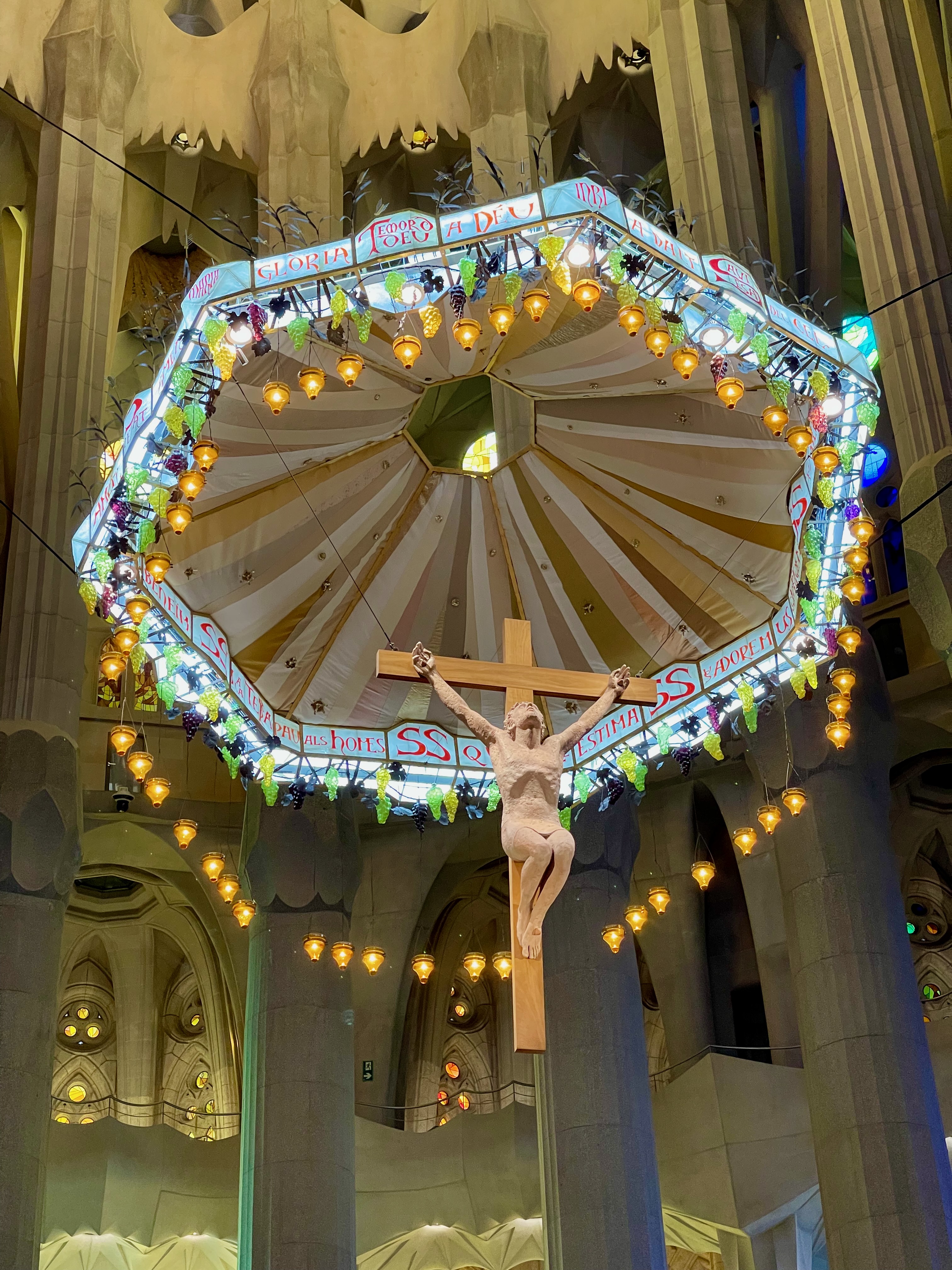
Some fun facts:
- Gaudi wasn’t the first architect commission to build the basilica. Construction originally began in 1882 under Francisco de Paula del Villar. He was building a traditional church in the Golthic Revival style. When he resigned, just a year into the project, Gaudi took over and took it in, shall we say, a more radical direction.
- During the Civil War, revolutionaries set fire to the crypt, destroying many of Gaudi’s plans and plaster models. After which, it took sixteen years to piece back together.
- Each of the eighteen spires represents an important biblical figure – just don’t ask me to tell you which is which. I know the apostles, Jesus, and the Virgin Mary are involved though.
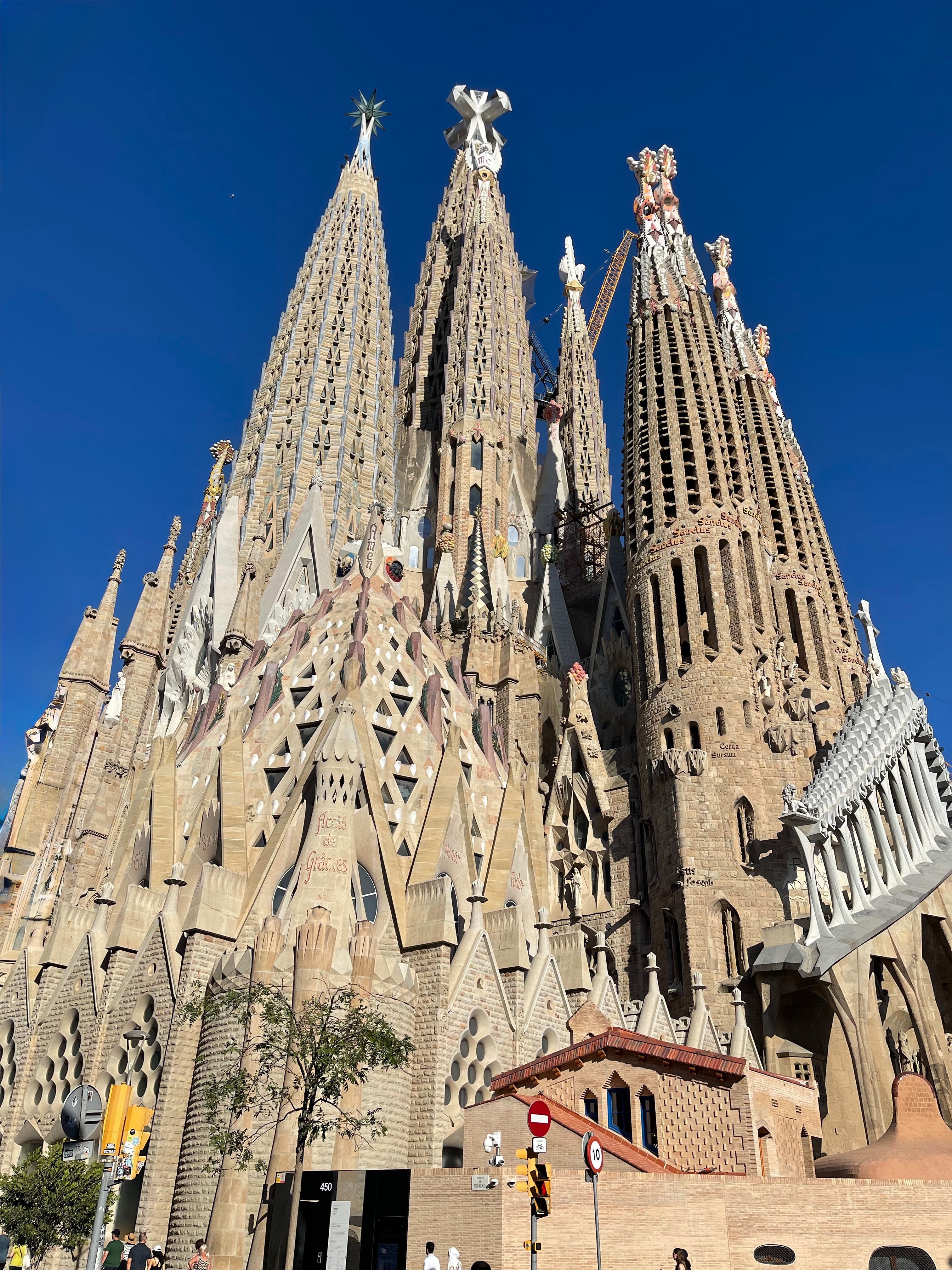
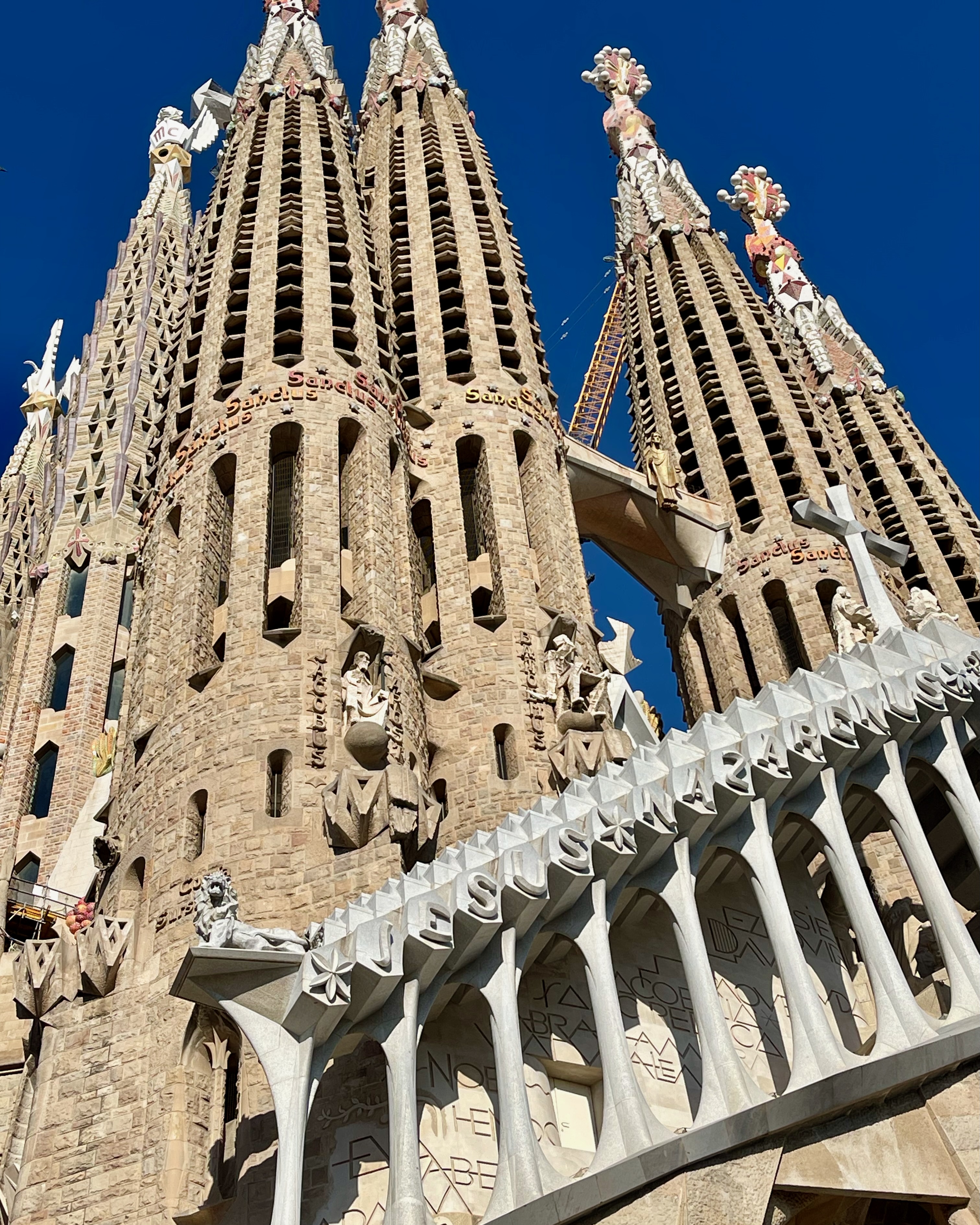
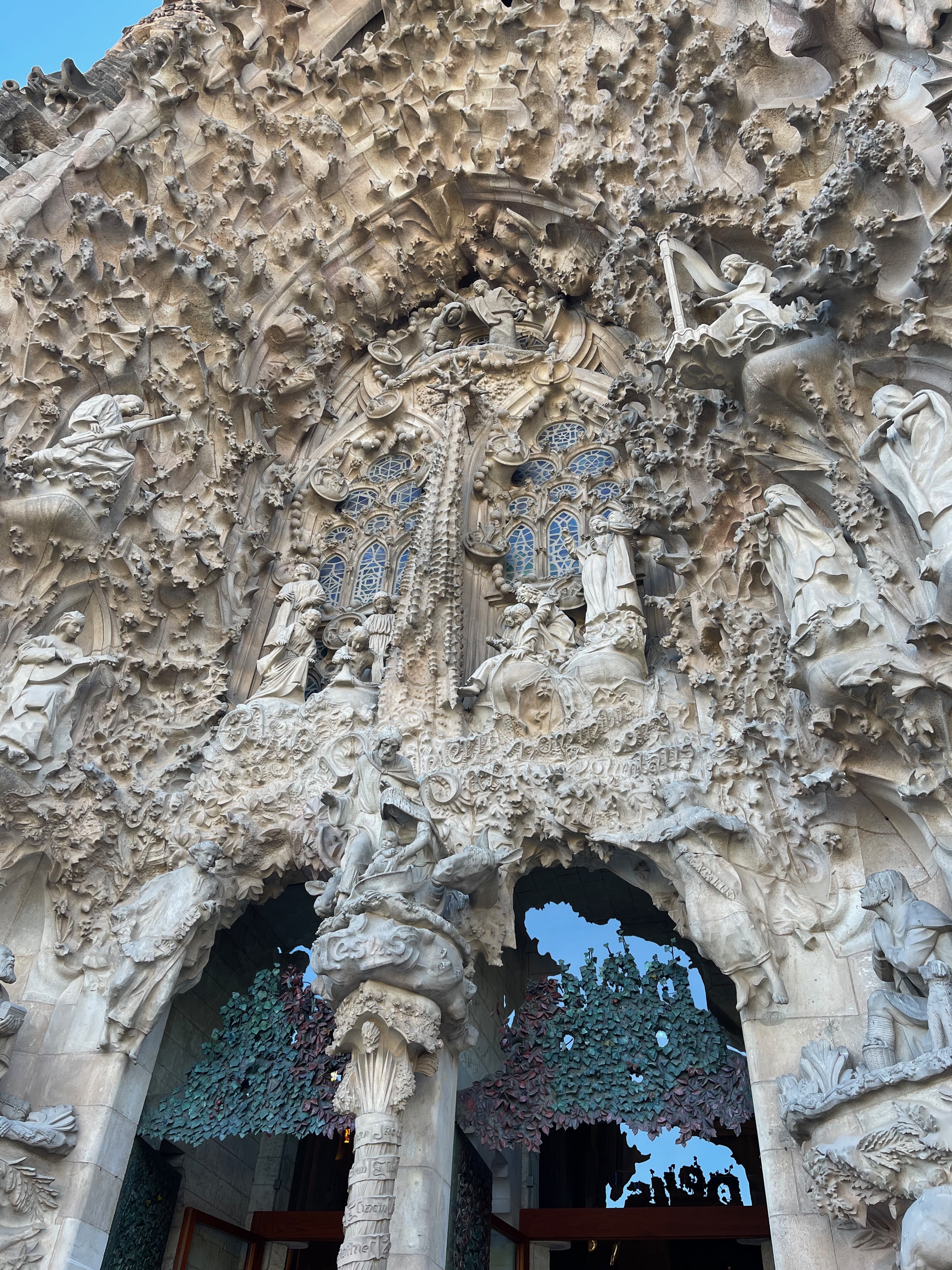
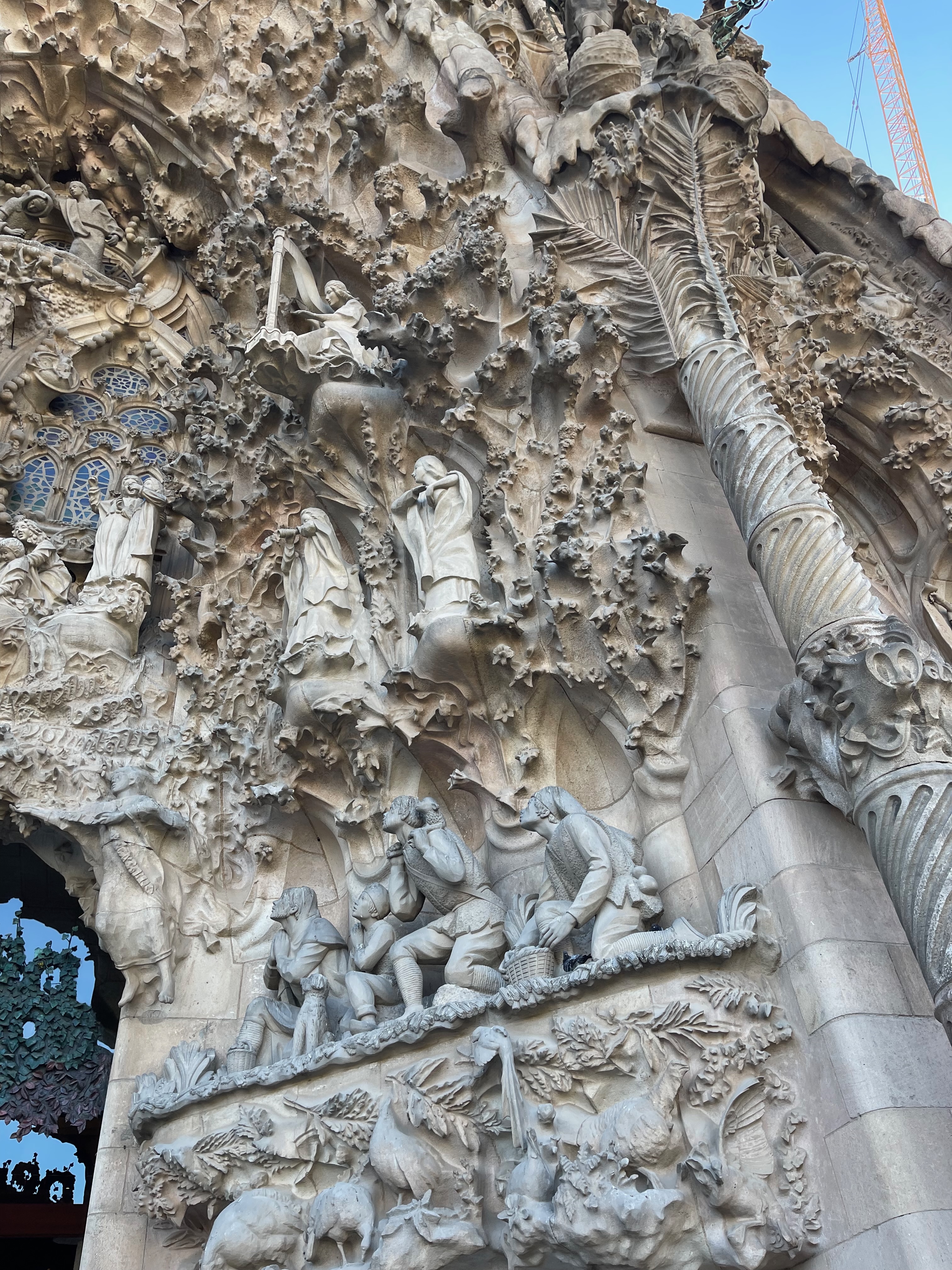
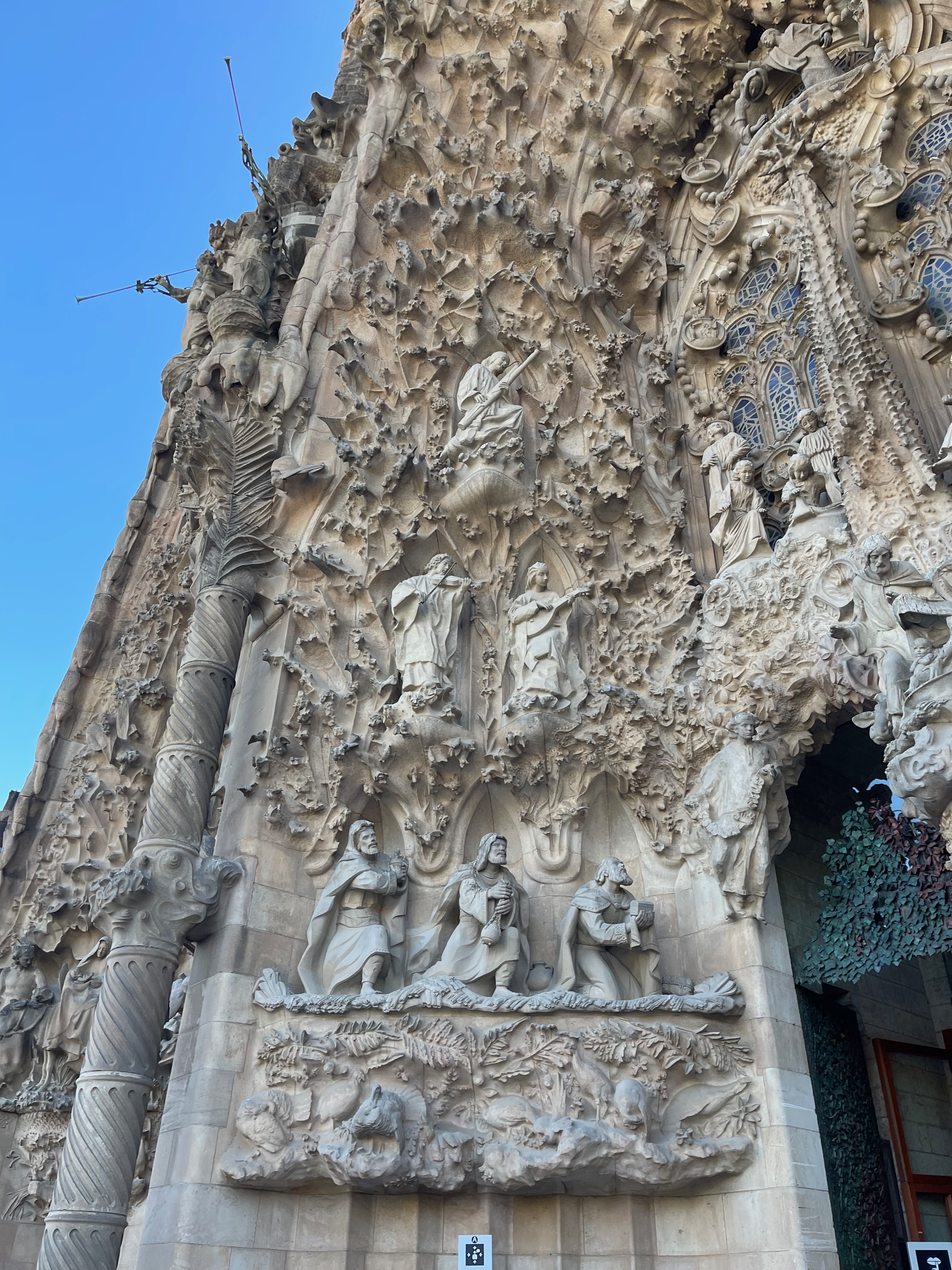
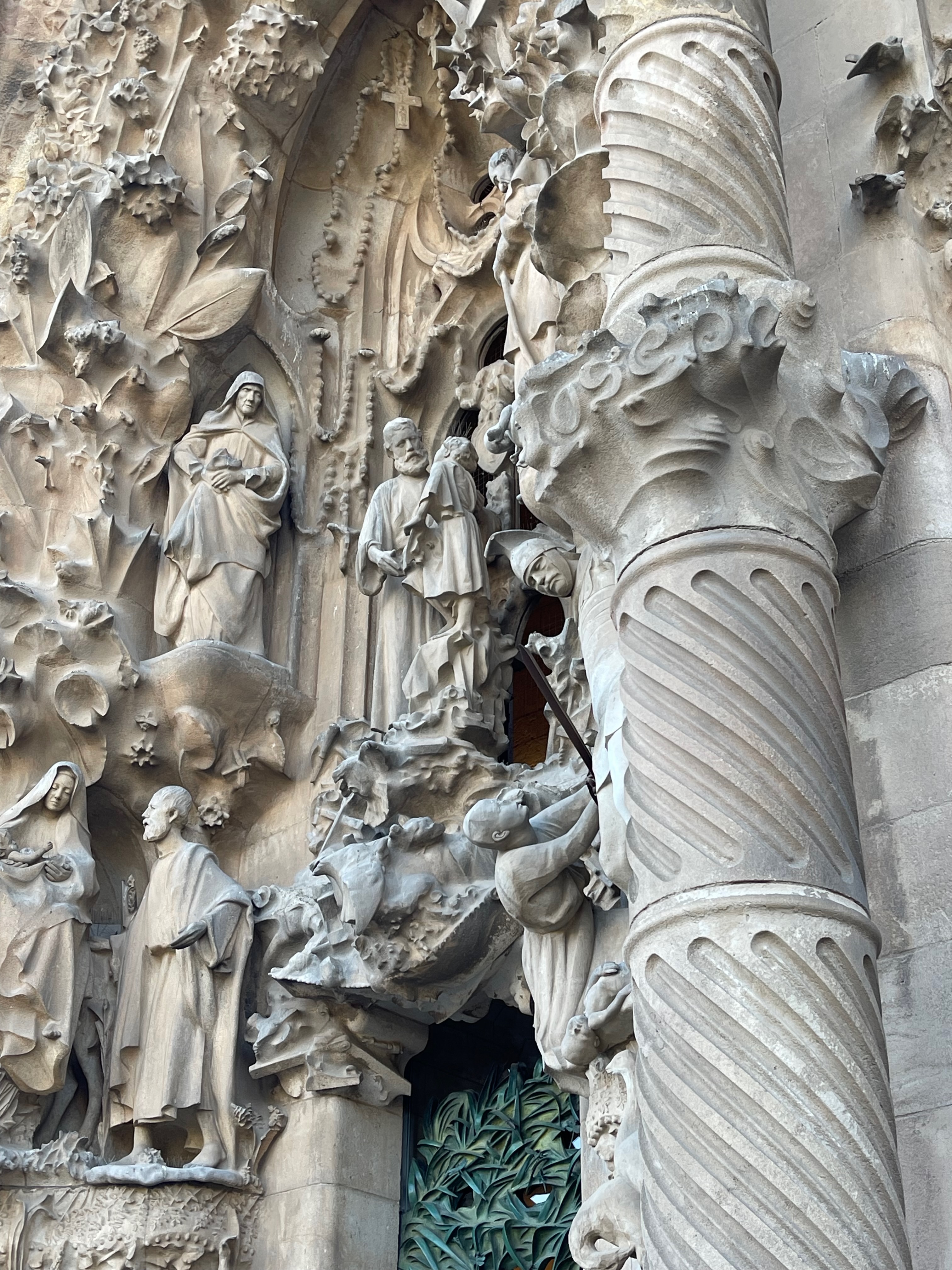
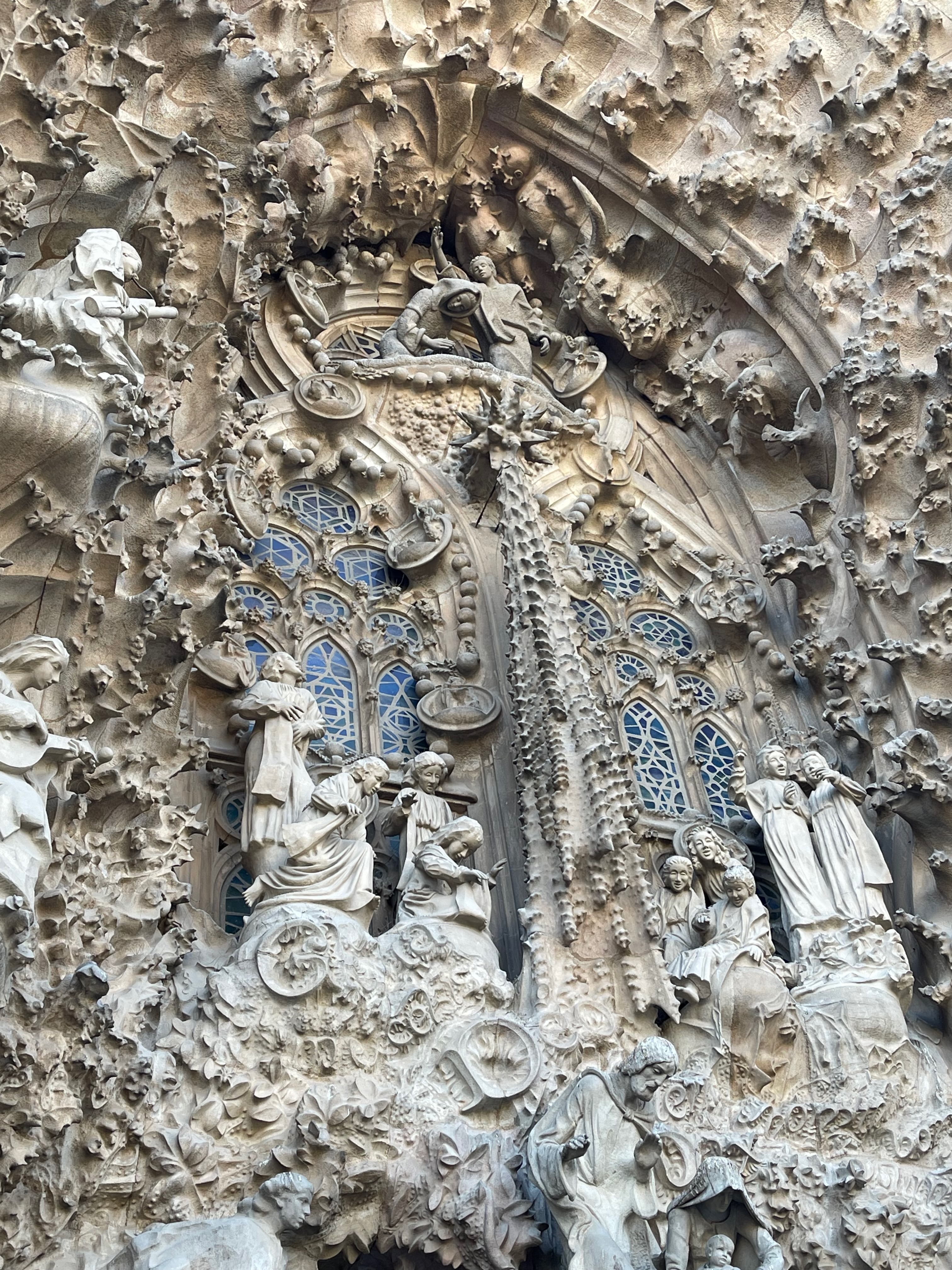
- Originally all the stone structures were hand-carved – no wonder the project ran so far over… there’s a lot of stone! Now they use computer aided milling machines to create the intricate designs offsite. Progress.
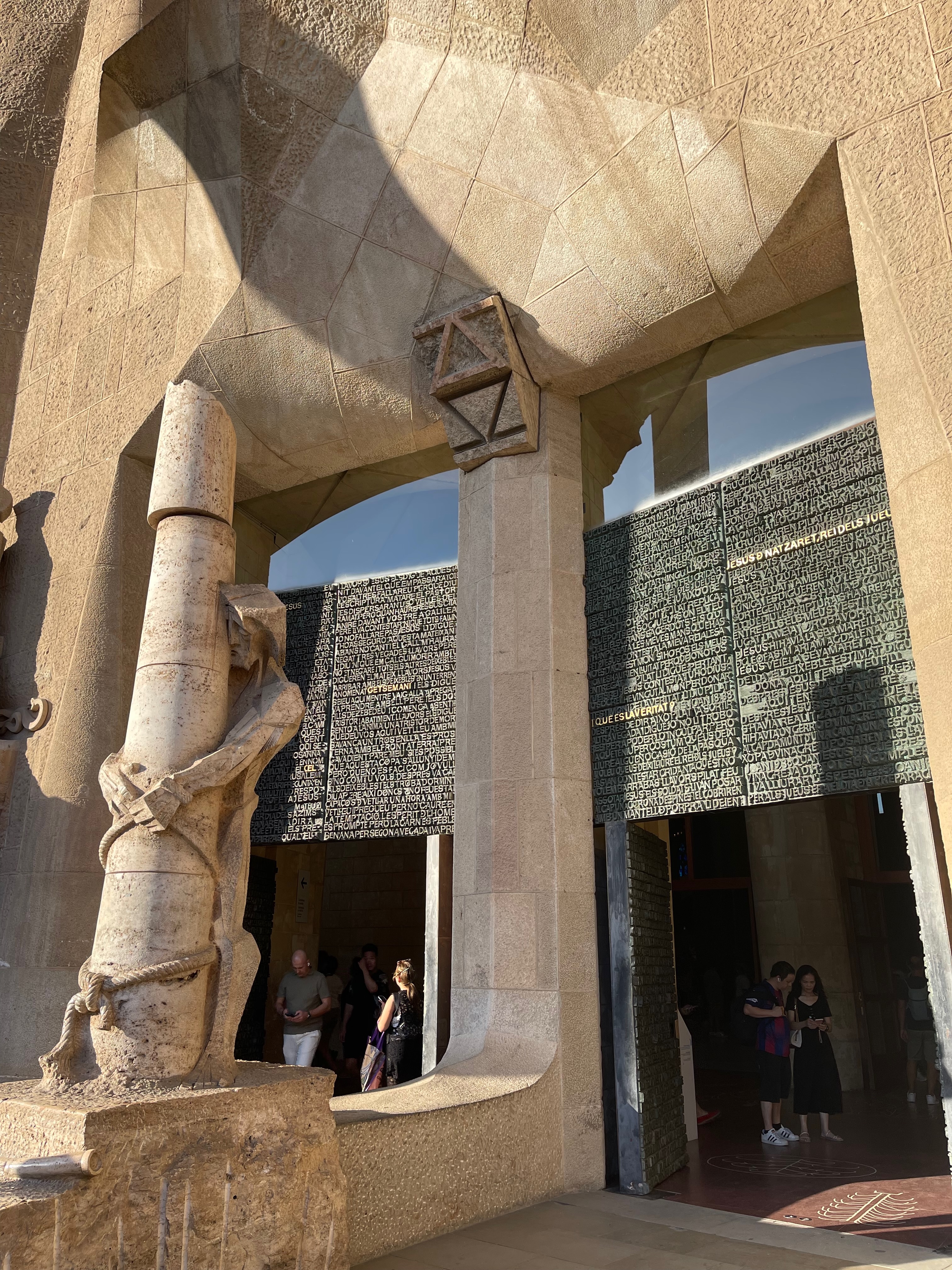
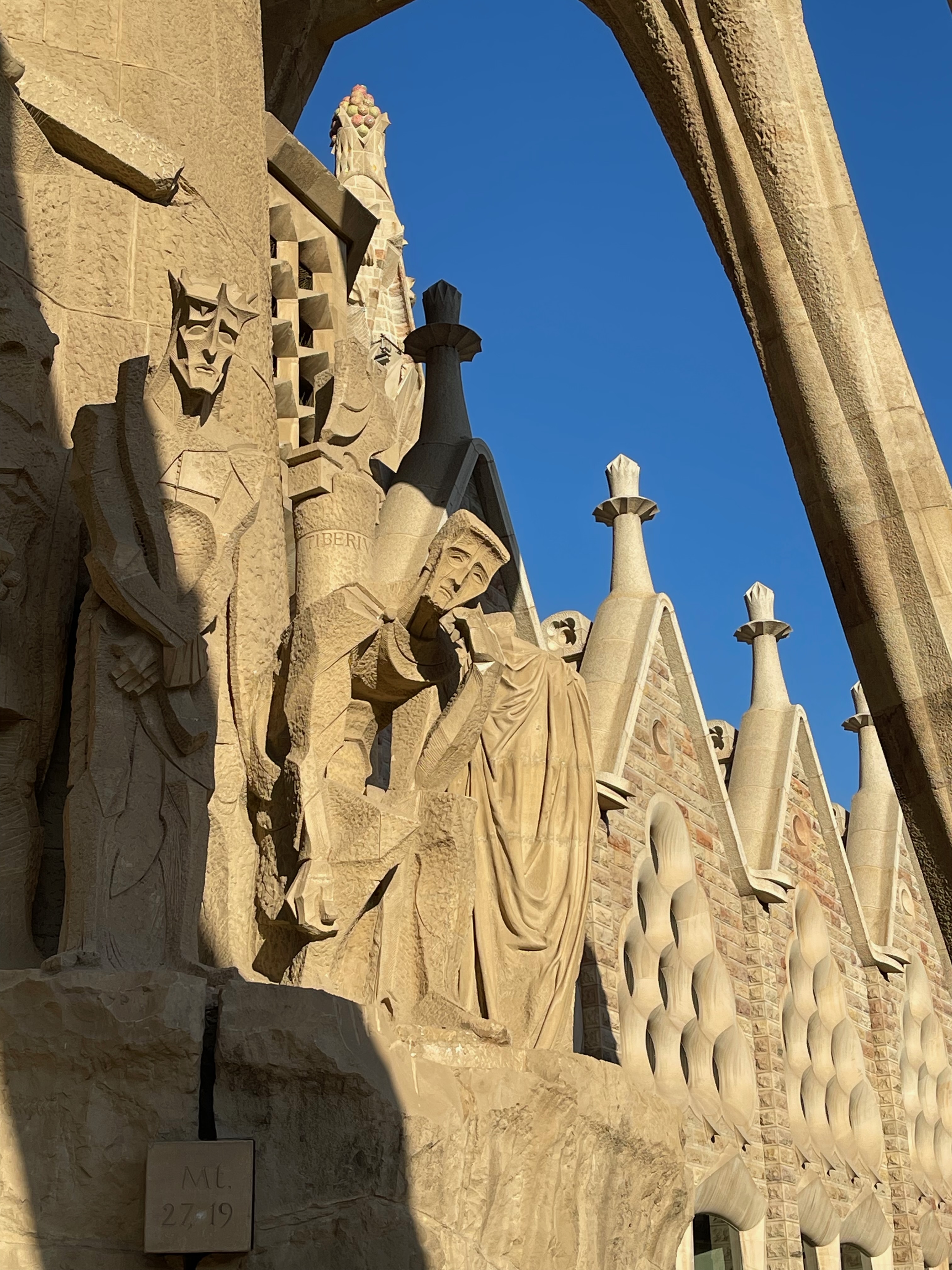
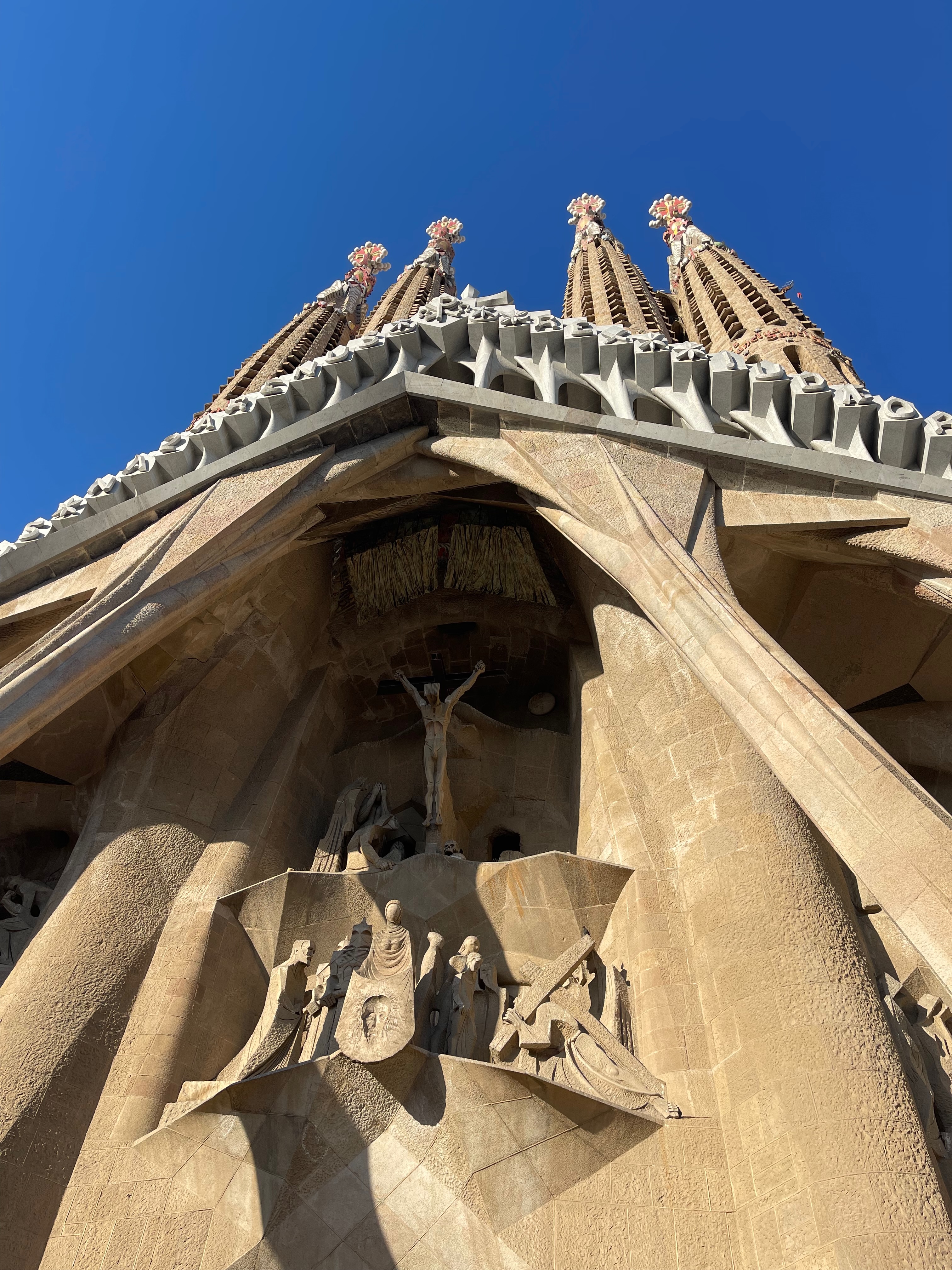
- The building itself represents the life of Christ, with each of the three grand entrances symbolising faith, hope and love. The nativity façade depicts his birth, and the passion façade, his suffering.
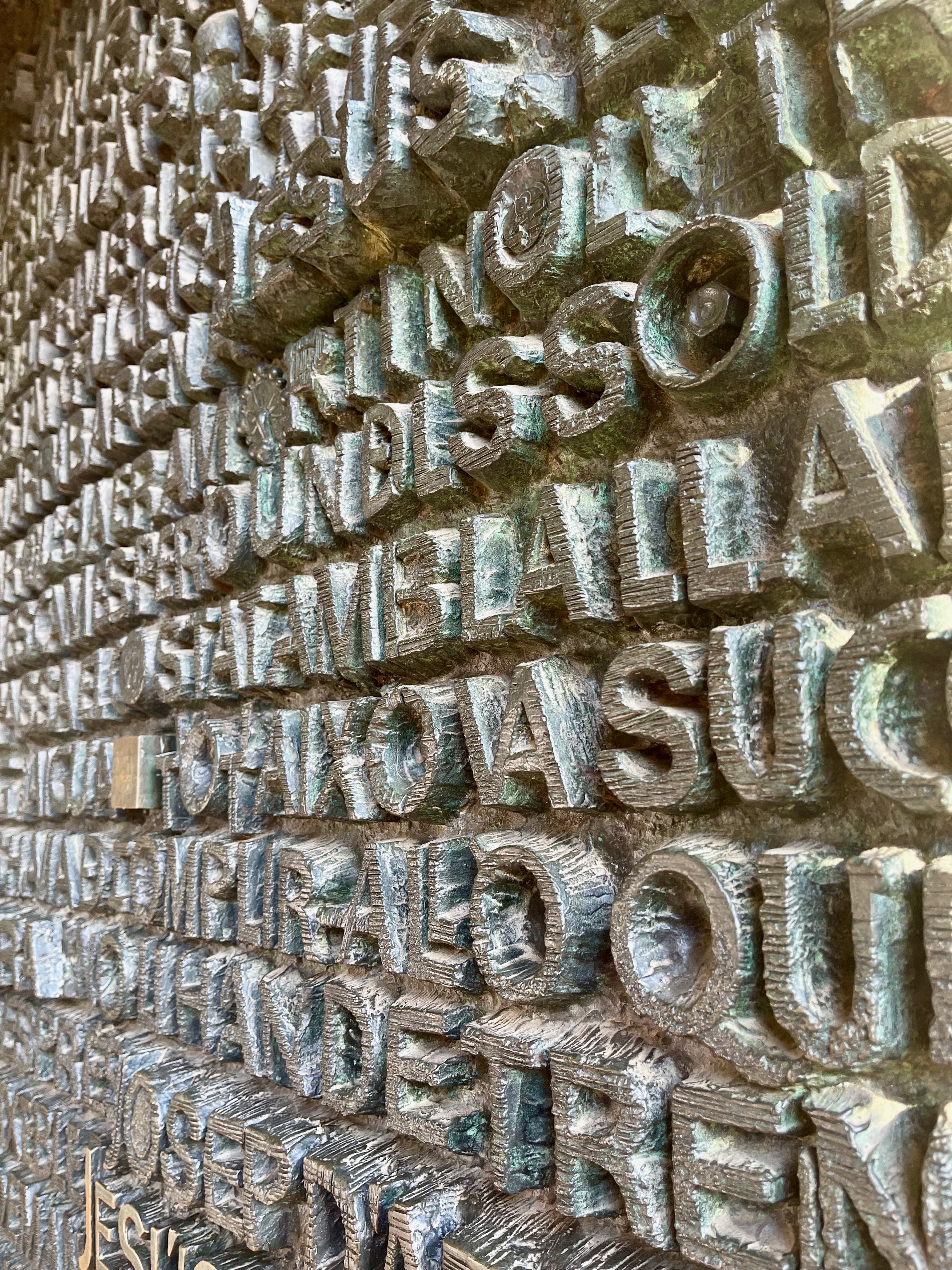
- By the time the organ is finished, it will boast 8000 pipes controlled by one organist. I’d like to hear that in full voice.
- George Orwell thought the building was hideous. Obviously he has no taste.
- Gaudi died early – in a tram accident – and his tomb is in the chapel. This had me wondering whether John Galsworthy modelled the character of architect Philip Bosinney on Gaudi, but I think the timing was wrong.
- The basilica has been funded entirely by private donations and visitor contributions. Impressive.
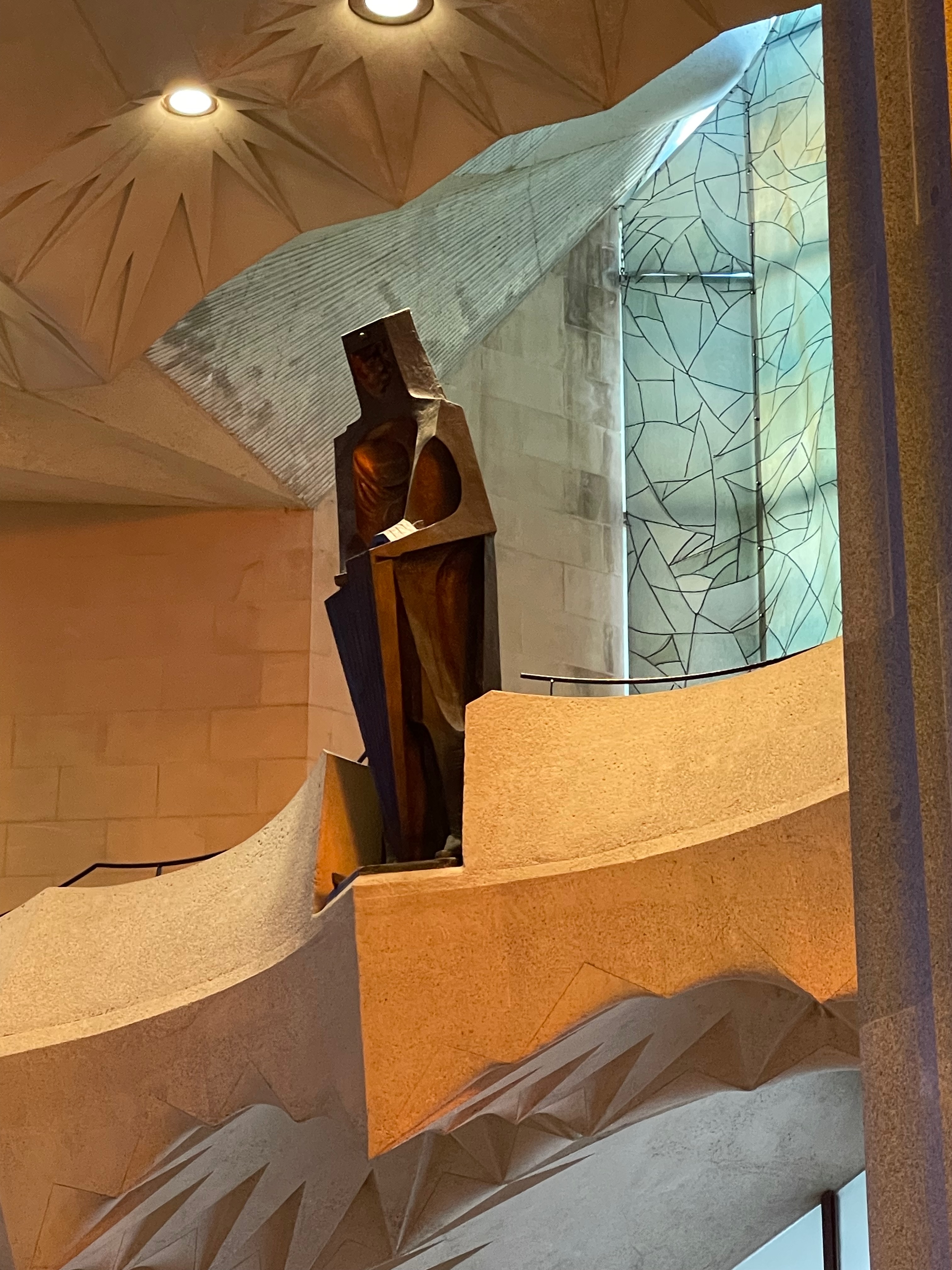
Sarah thought the character below looked like Ned Kelly …but of course it’s not. It’s Saint George – Sant Jordi – the patron saint of Catalonia and any resemblance to a Victorian bushranger is pure coincidence.
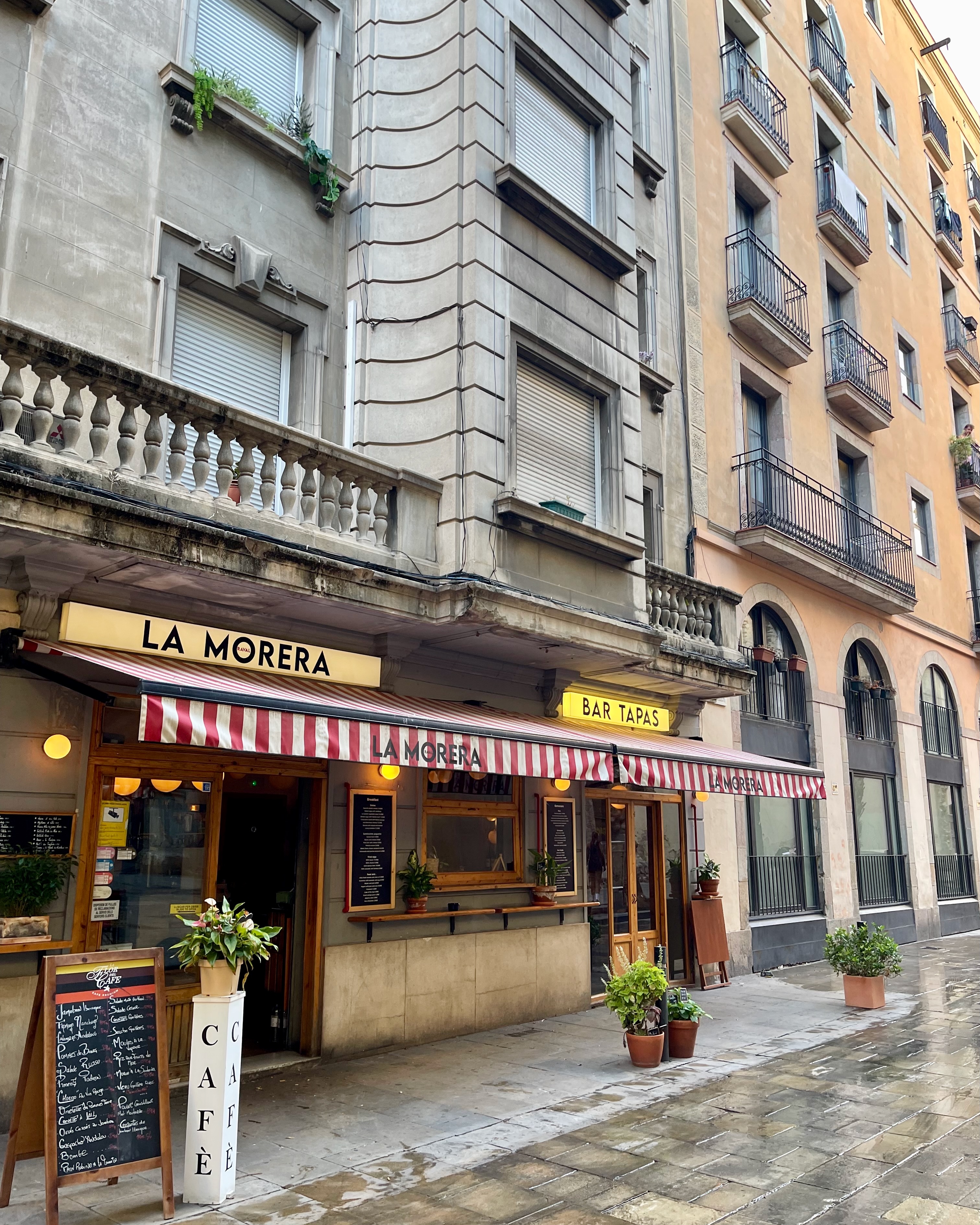
Dinner tonight was just up the road at La Morera where the soundtrack was Bruno Mars and only Bruno Mars. This is not the place to eat if you don’t like Bruno Mars.
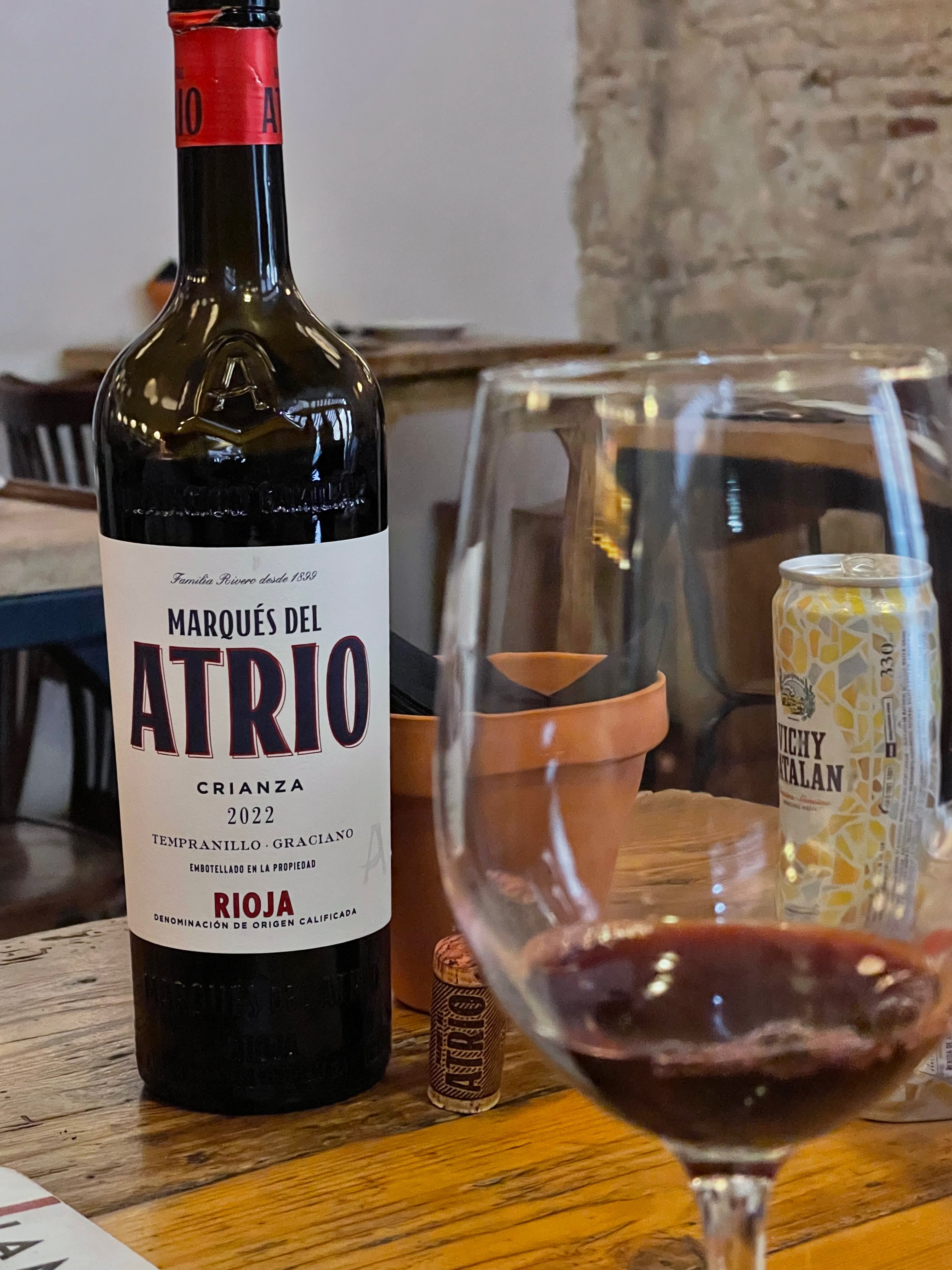
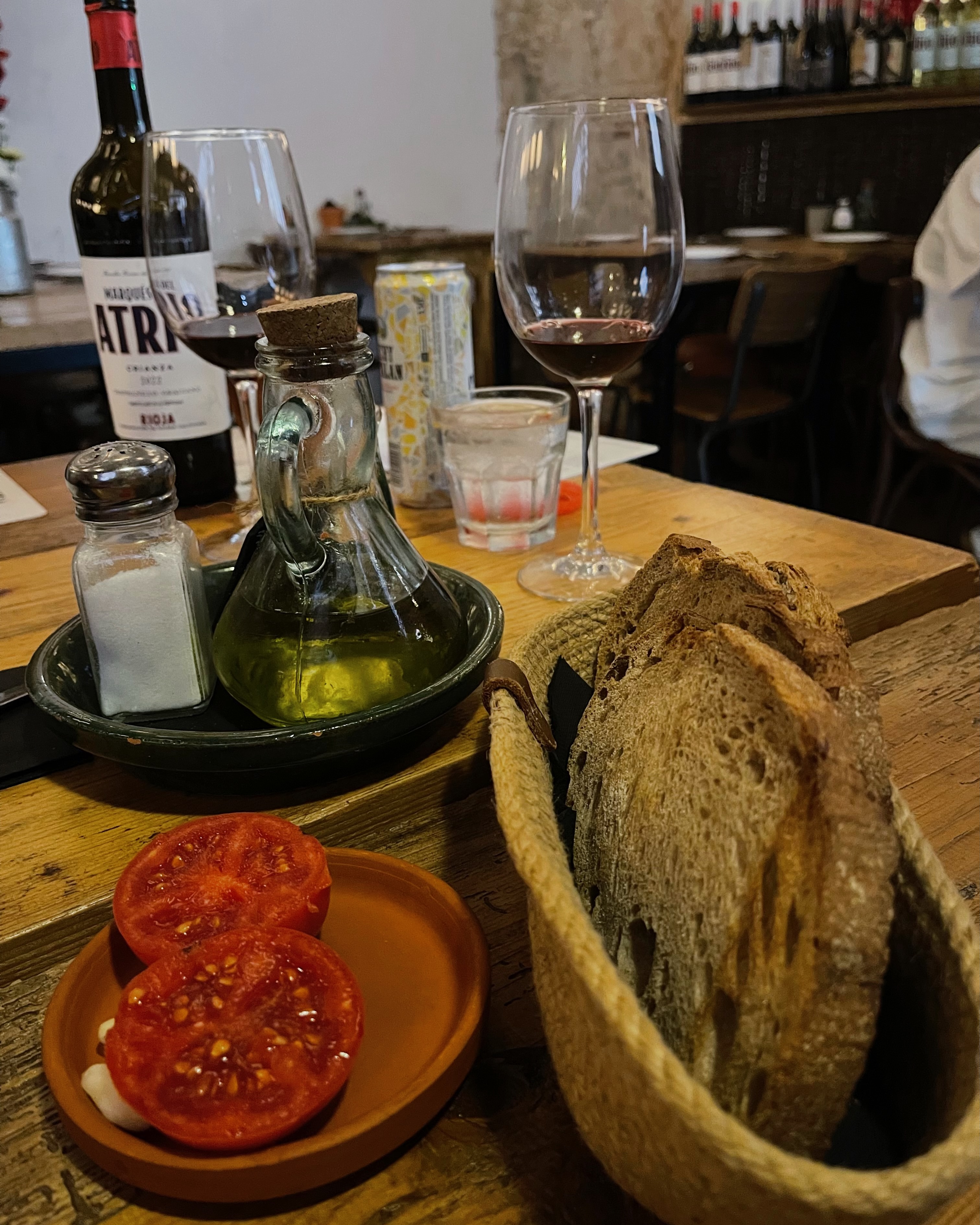
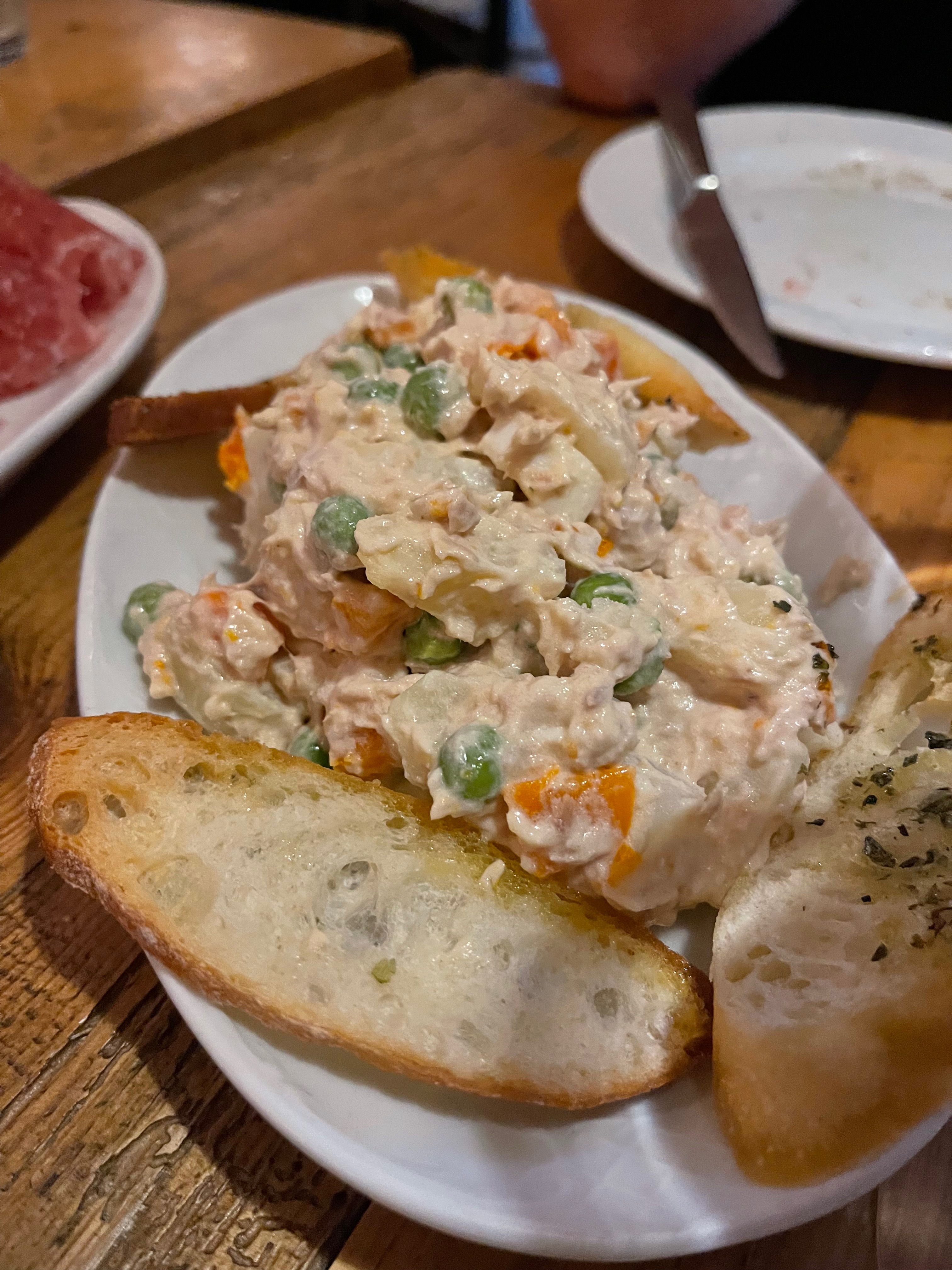
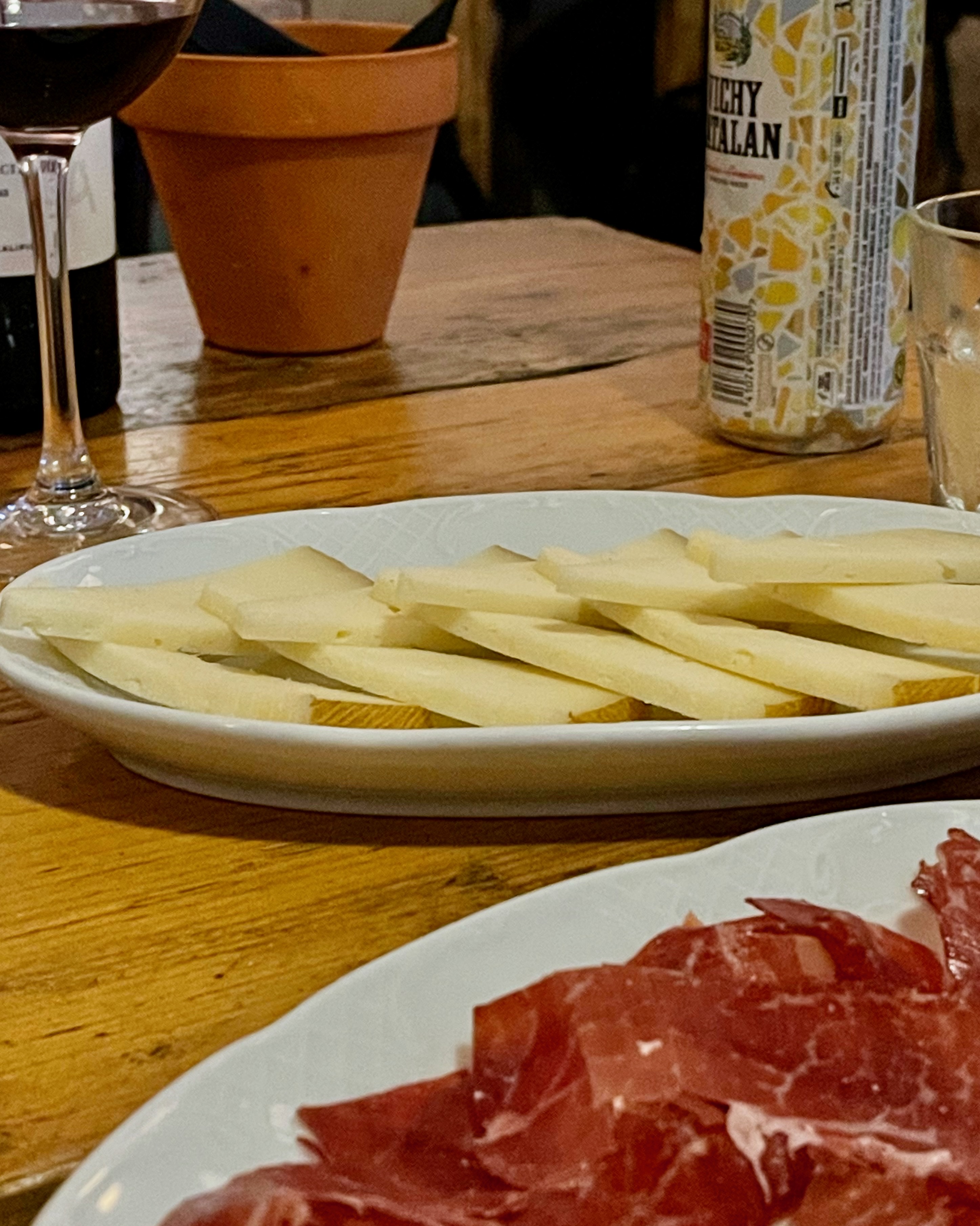
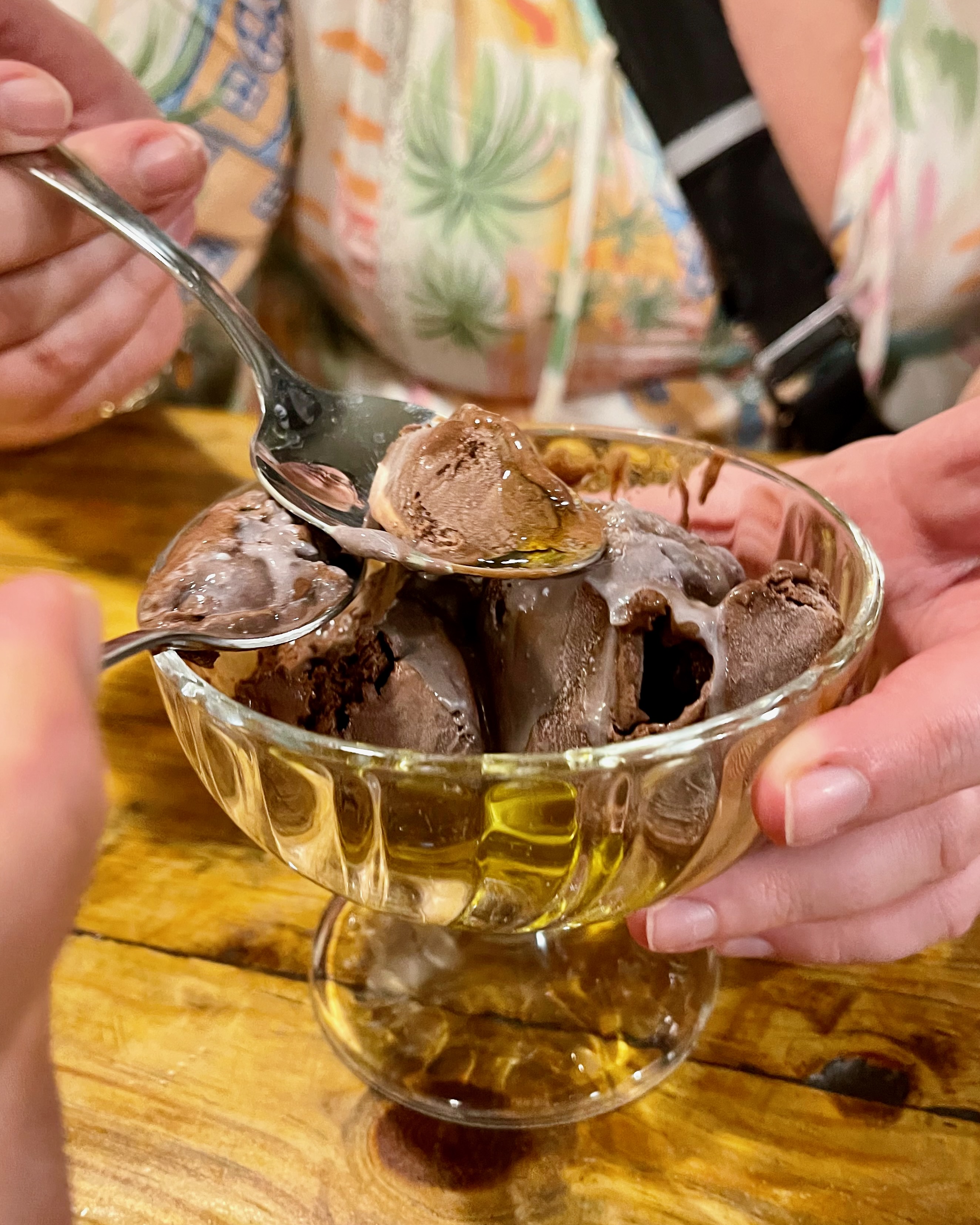
We had DIY tomato bread (where we rubbed the toast with garlic, then tomato, finally drizzling over olive oil), Russian salad (every menu has Russian salad on it), and a plate of ham and Manchego cheese, and a bottle of Rioja … then back to our fave for chocolate ice cream with salt and olive oil. Sarah is addicted.
This series of posts are direct transcripts from my travel journals …


