Friday, September 4, 2026
Grant was up in the middle of the night with an upset stomach, so that meant I was up too.
Then he was up for good at four, which meant I was too.
He, however, went back to sleep, but I didn’t. This all meant we didn’t get moving until quite late this morning and when we did, well, he’s not well. Rather than it being something he’s eaten, I suspect it’s a combination of yesterday’s heat and dehydration. Not that he’ll admit as much.
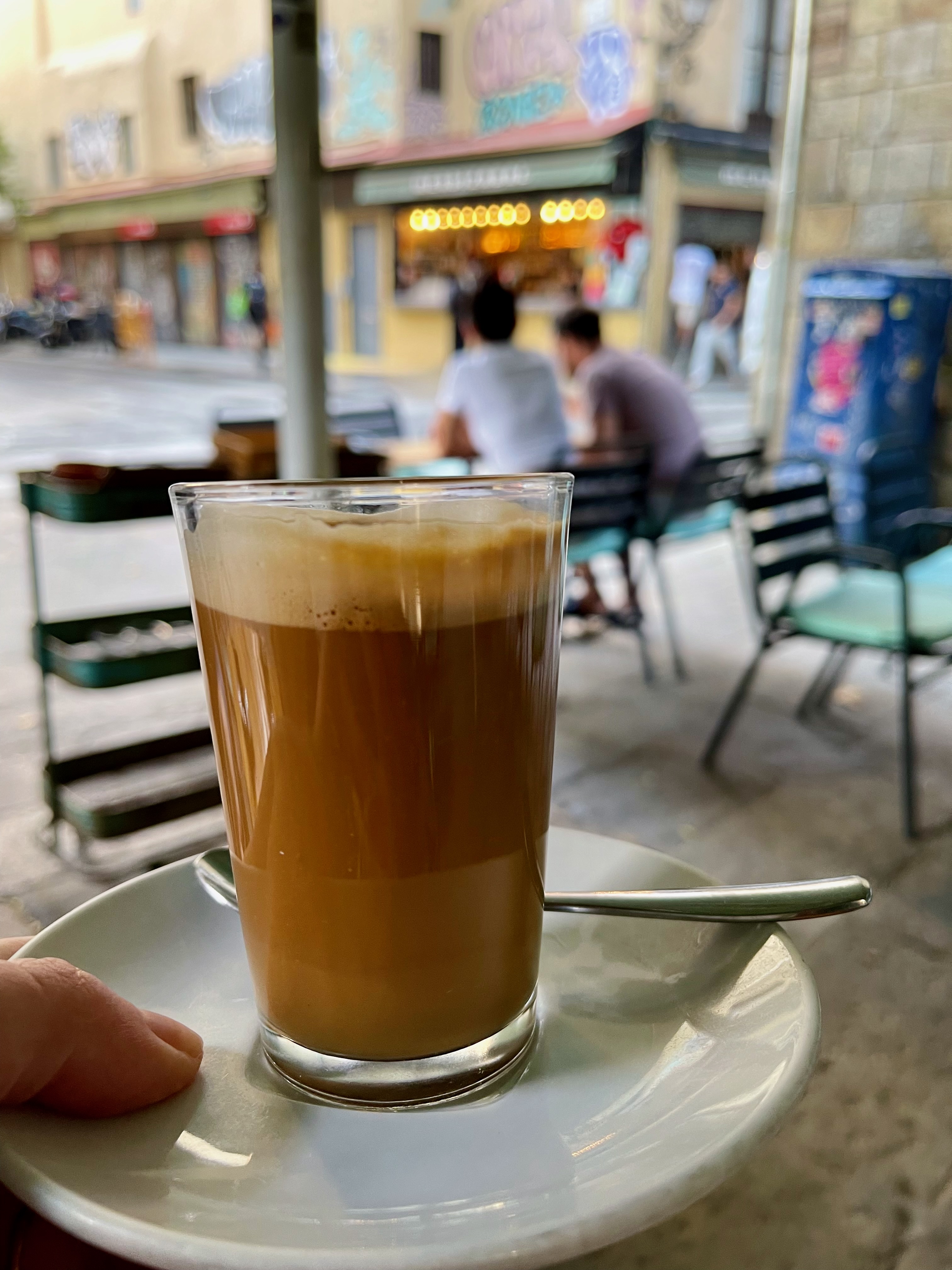
We had coffee at the bar on the corner where I learnt to ask for un americano con poco leche – a little milk. It was actually okay. After yesterday, though, that’s not a high bar.
Tea is so not a thing here that there’s not even a kettle in our hotel room. És un desastre for a tea drinker like me. A disaster. When in Barcelona though …
At the café opposite the one we’d eaten at yesterday, Sarah and I share a baguette (ham and brie) for breakfast, while Grant played it (relatively) stomach safe with a donut. We all opt for water. Today is forecast to be a couple of degrees hotter than yesterday, and I suspect we’re all still a tad dehydrated from the flight.
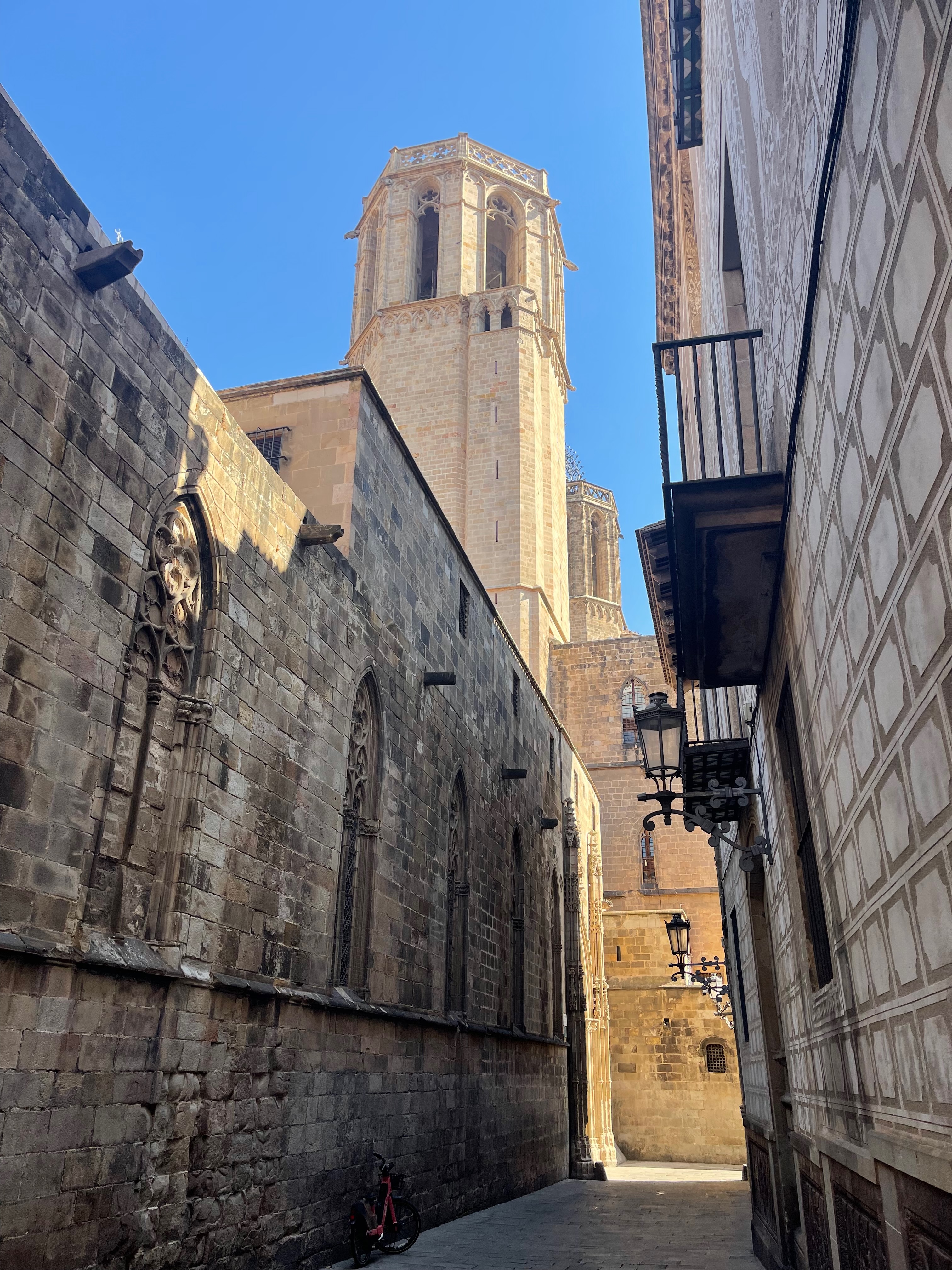
Afterward, we set off across La Rambla for a ramble through the Gothic quarter, Barri Gòtic.
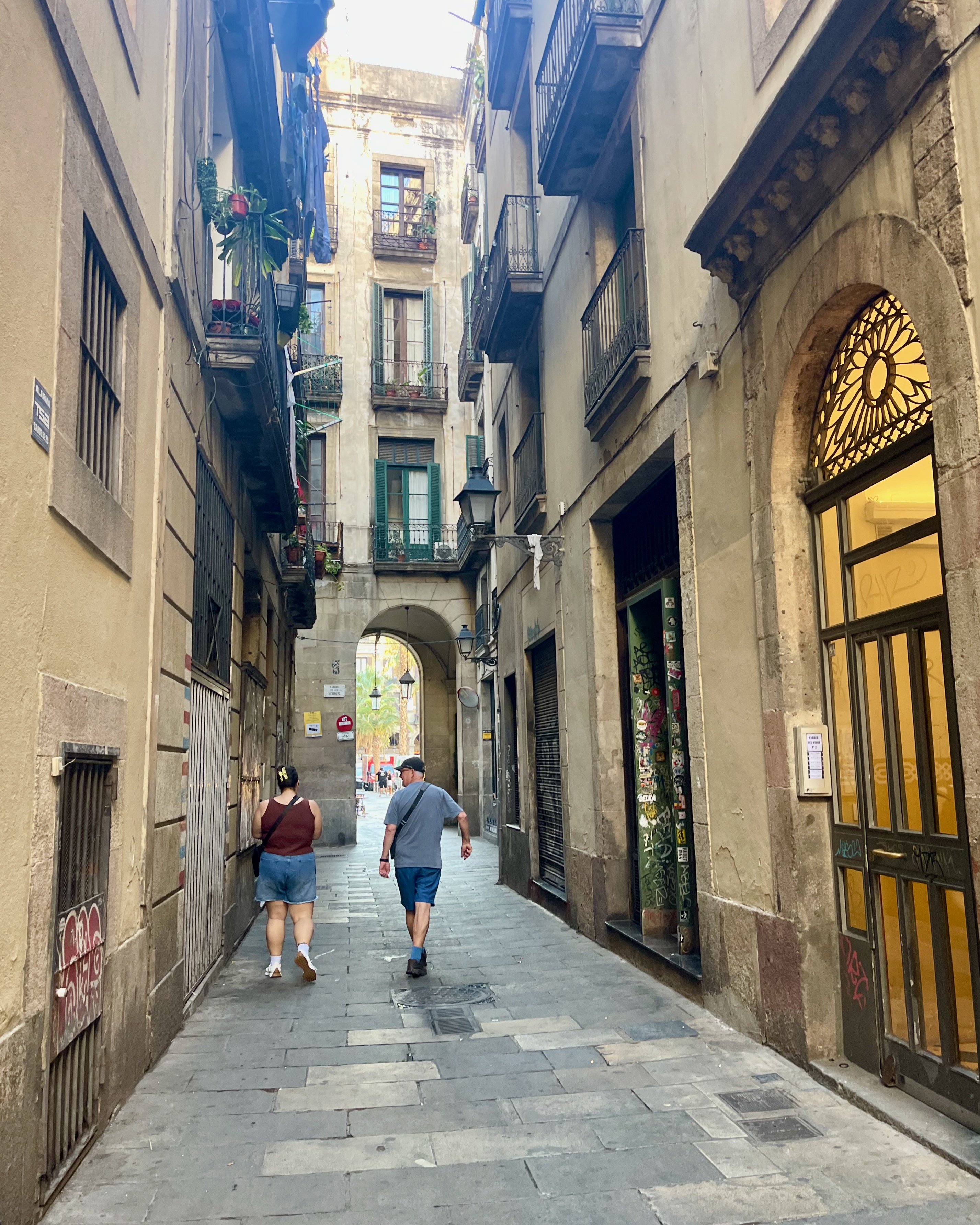
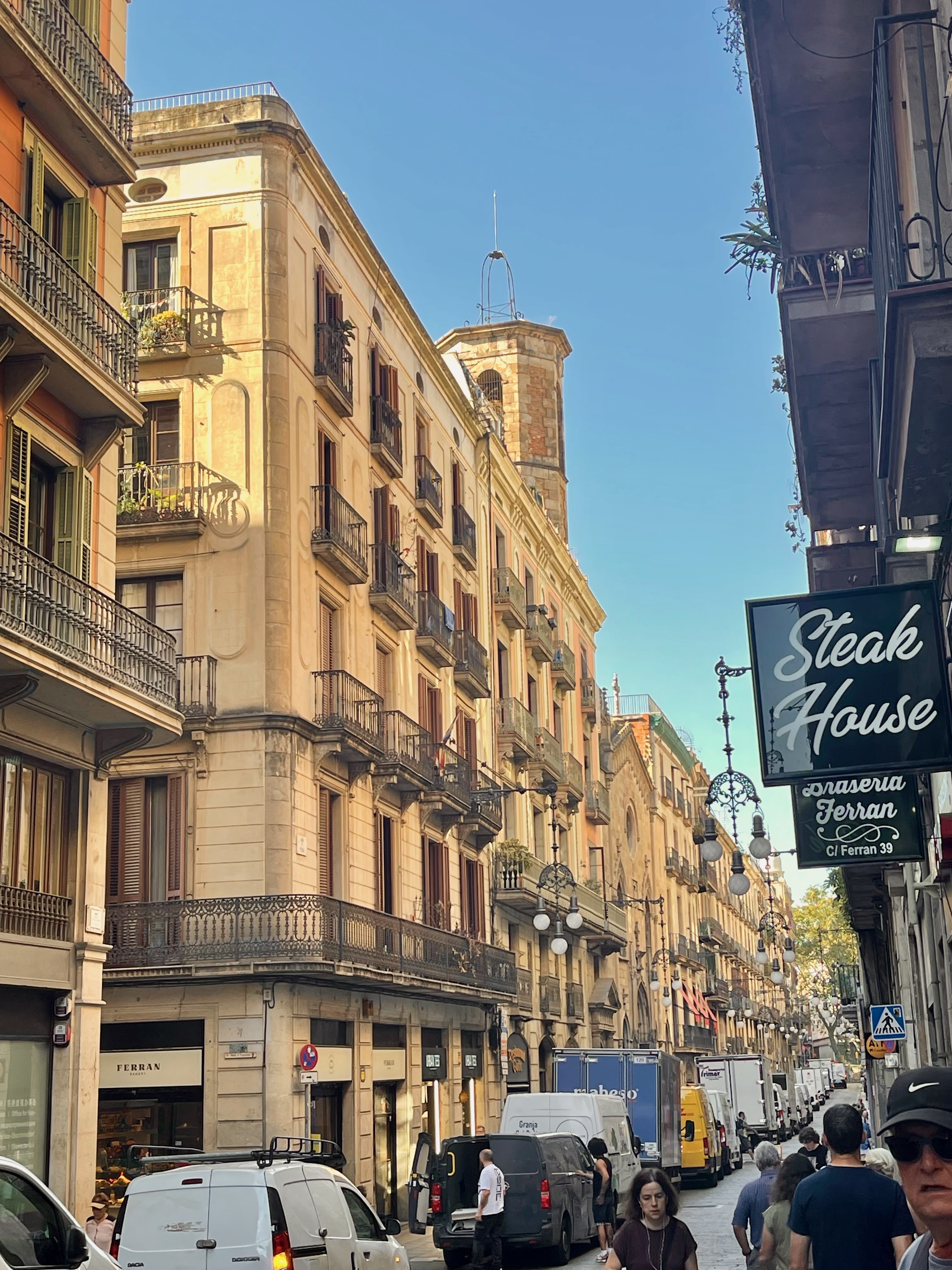
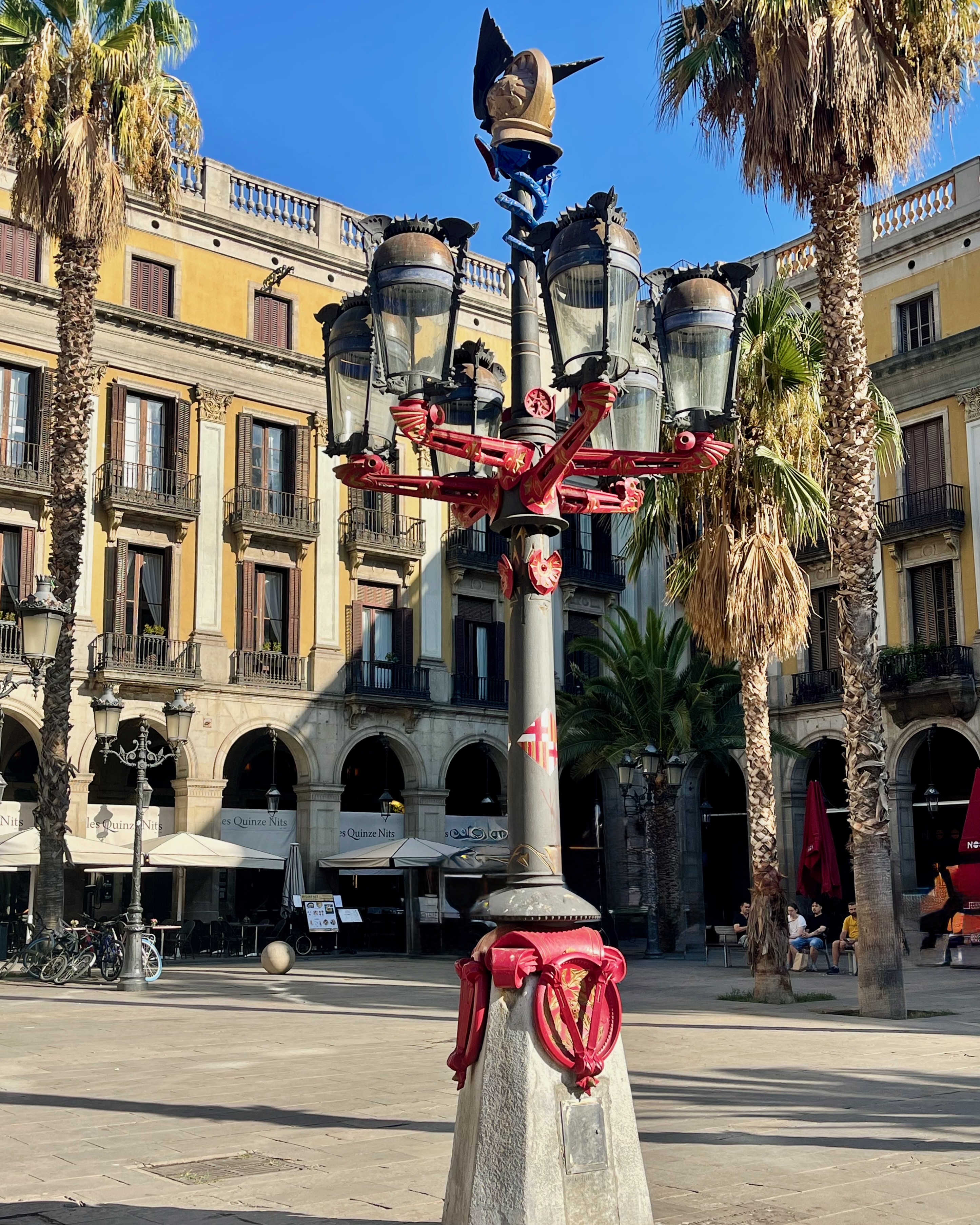
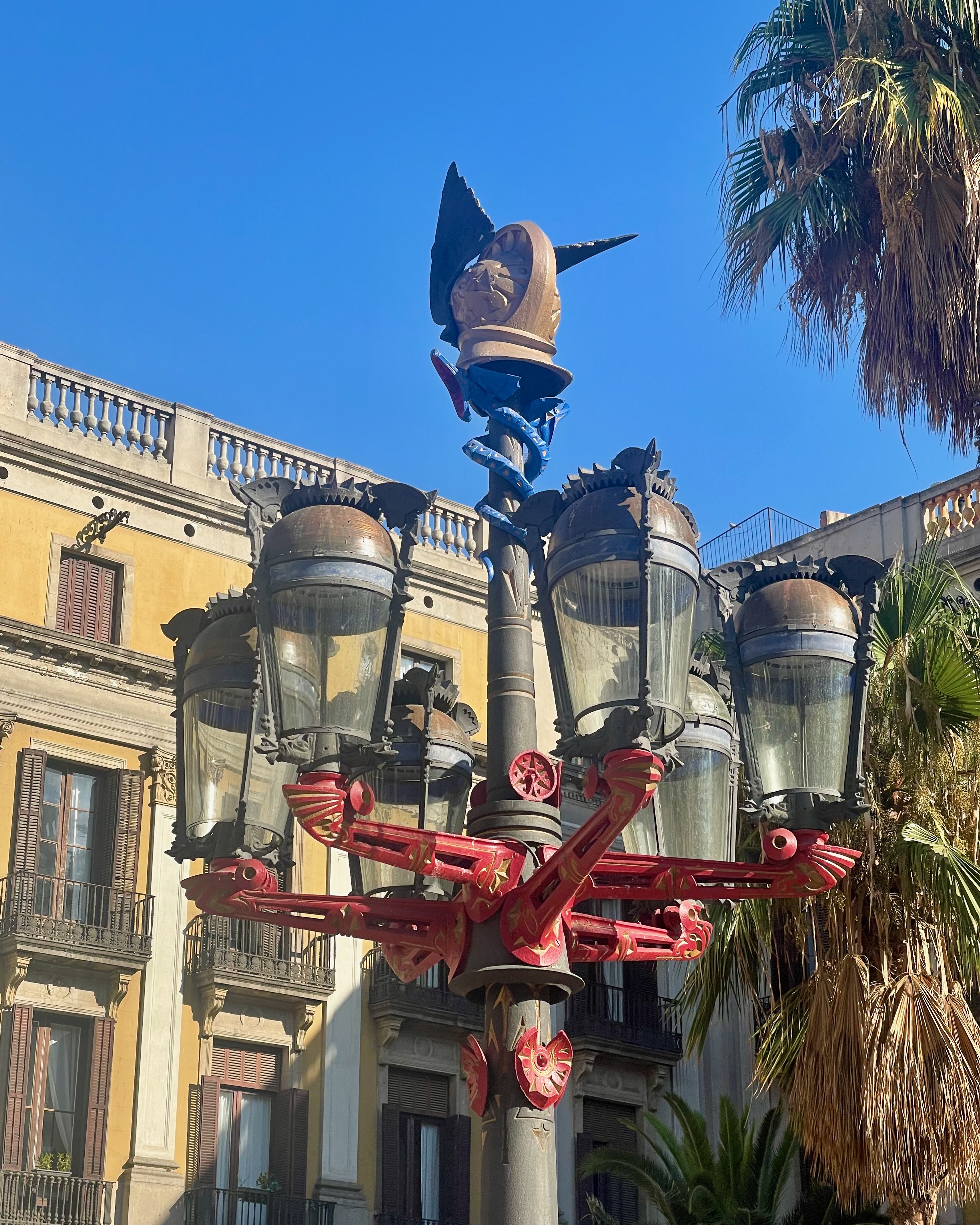
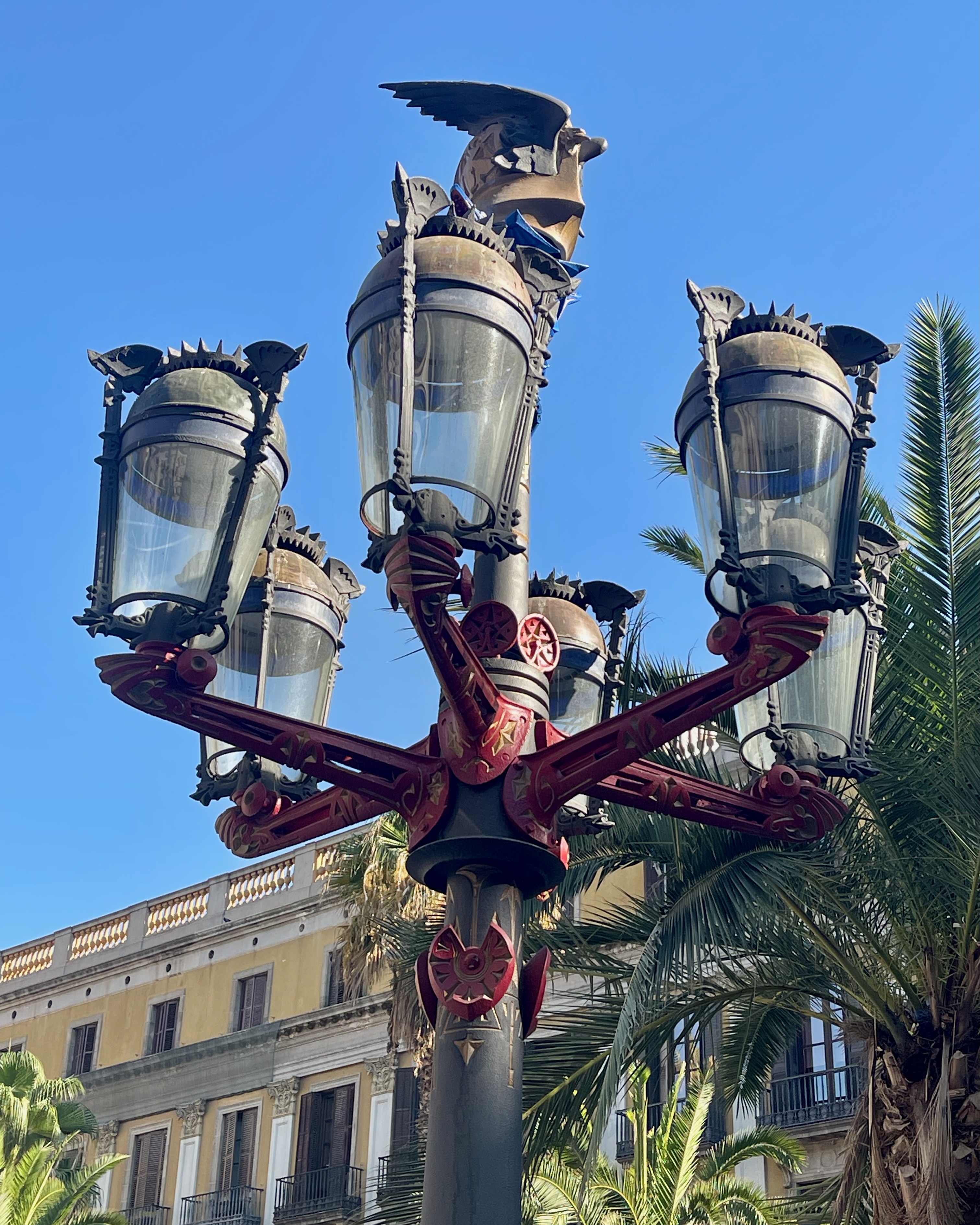
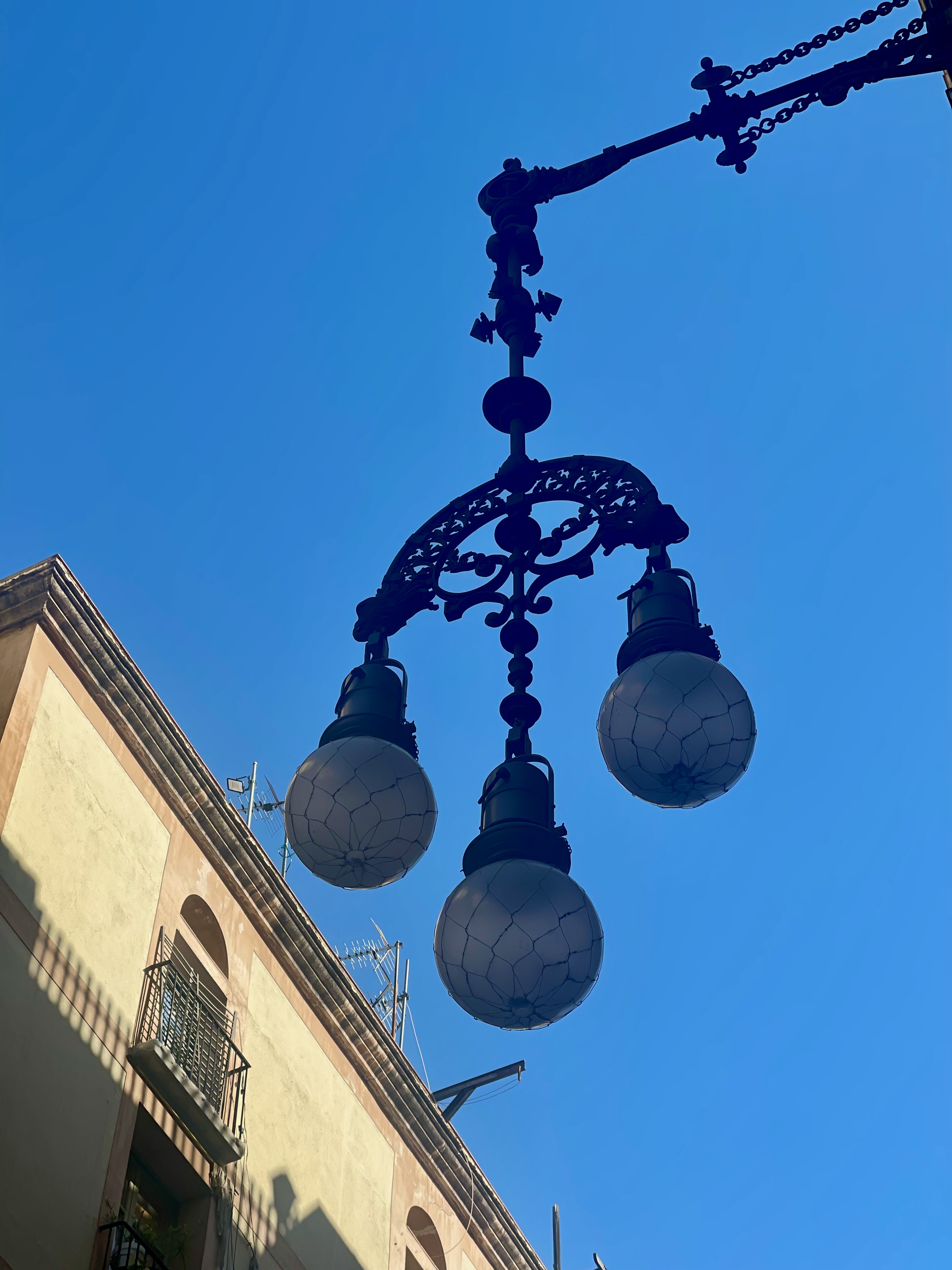
First stop was Plaça Reial, or the Royal Plaza. This palm tree lined square is full of restaurants and nightclubs, but the main point of interest is a couple of streetlights Gaudi designed in 1878. While he’d passed his exams, he hadn’t yet received the title of architect.
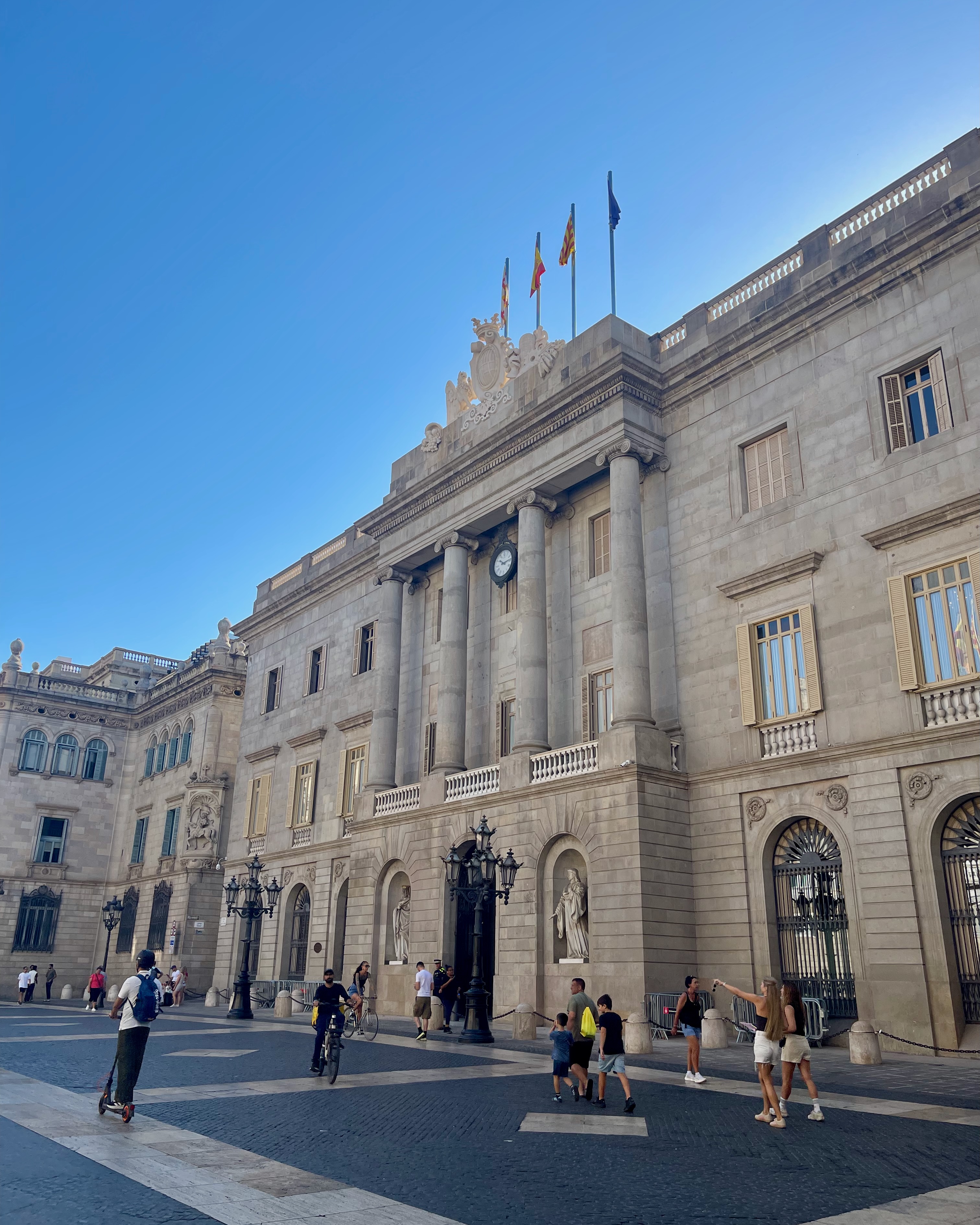
Another couple (three-arm rather than six-arm) are in front of the government building on Pla de Palau.
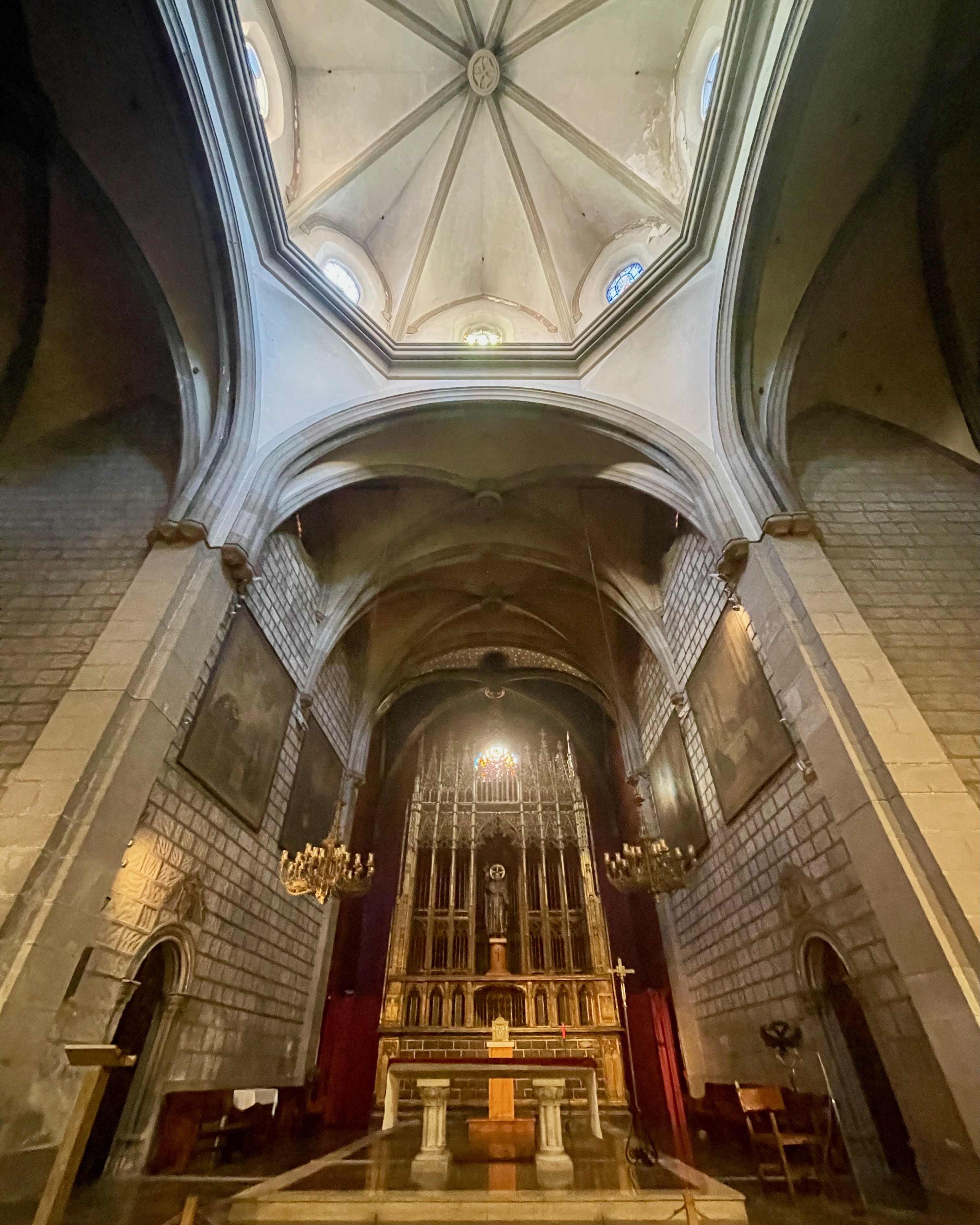
More lanes and we found ourselves at stop no. 2, Plaça Sant Felipe Neri.
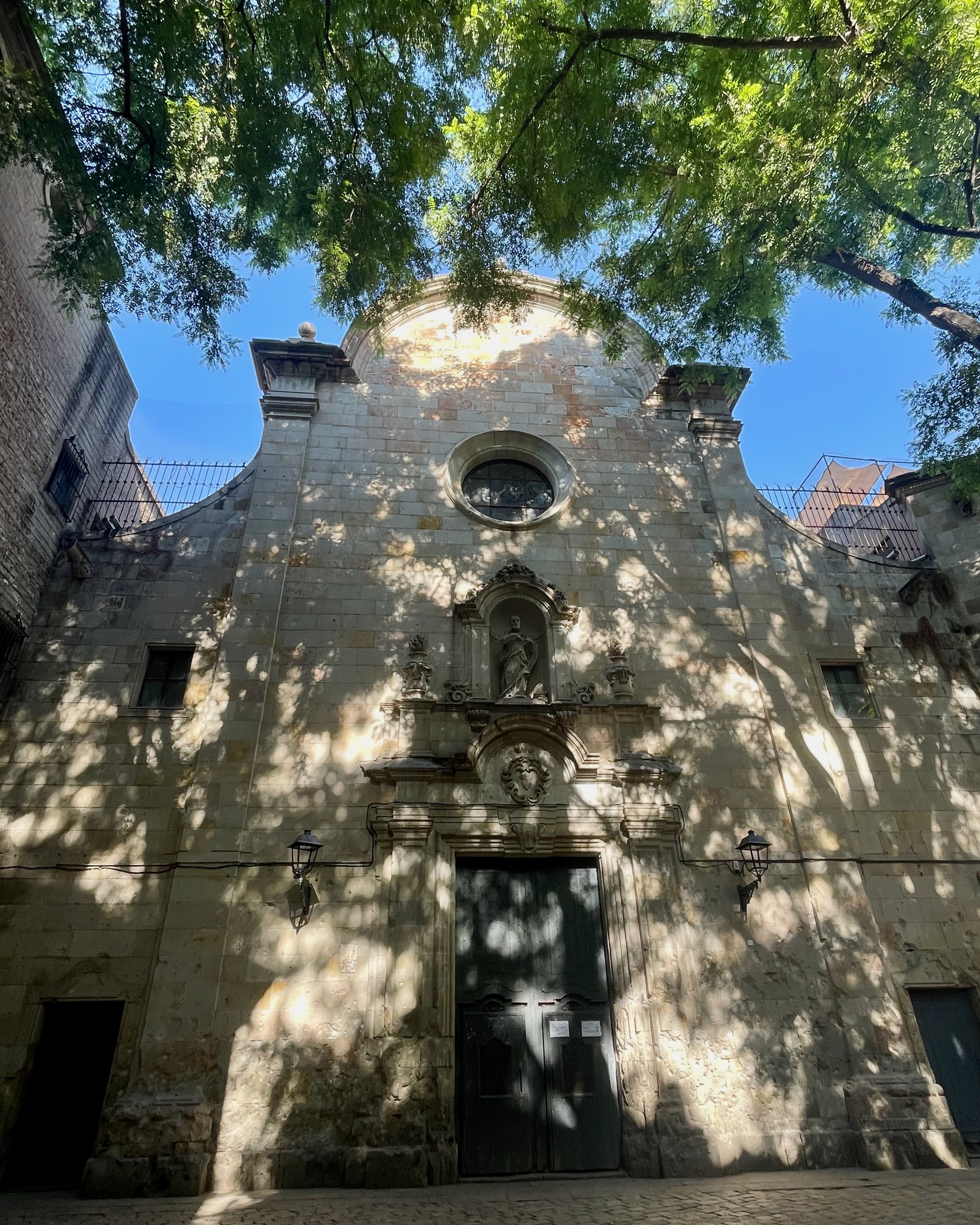
Beside the church – Església de Sant Felip Neri , which was built between 1721 and 1752 – is a school which uses the square as a playground.
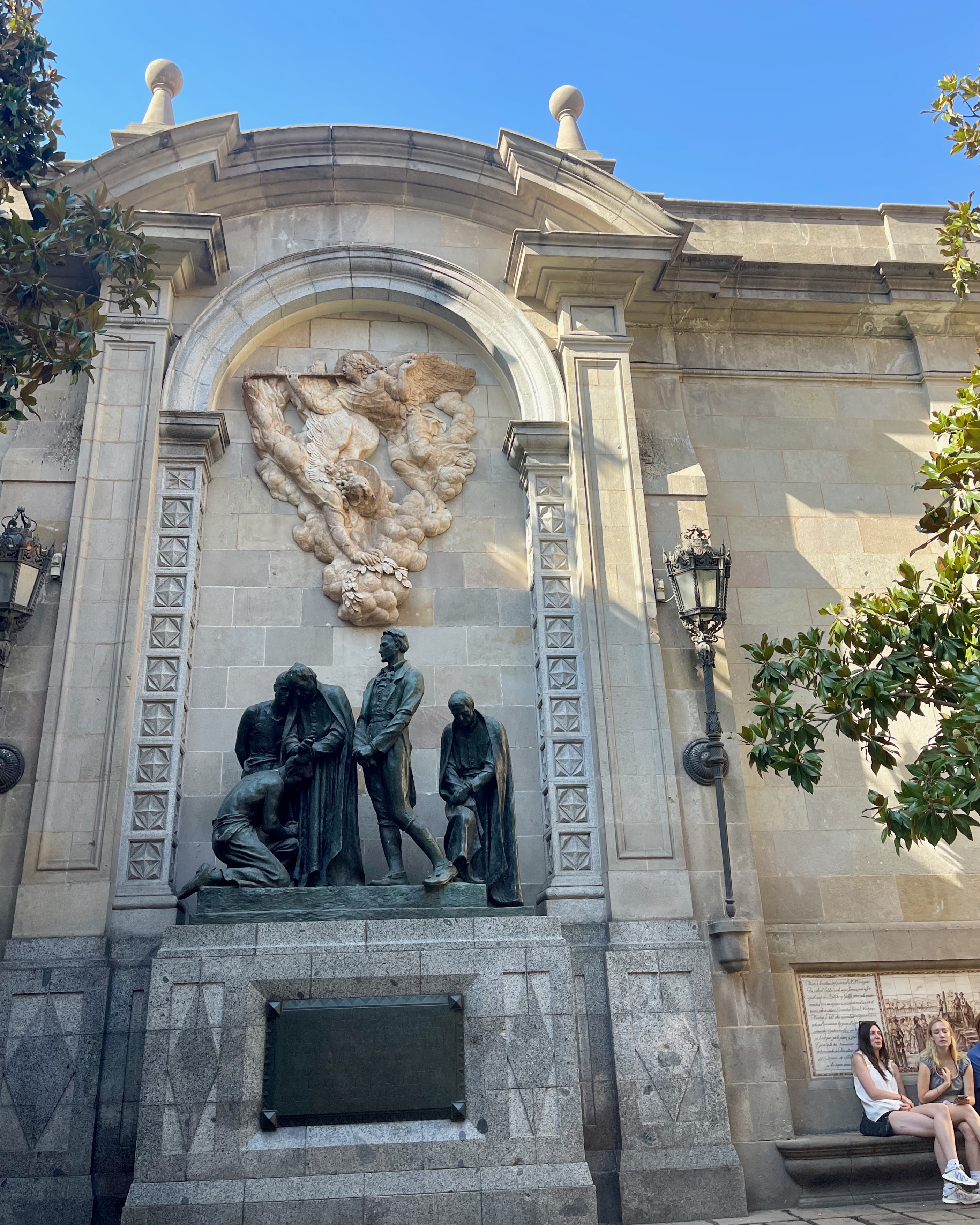
In 1938, however, this peaceful square was the scene of one of the worst bombings in Barcelona during the Civil War.
Franco’s forces, which had laid siege to the city of Barcelona, bombed the church, killing thirty people. Most of the victims were children from the school, although, as the church had been turned into a makeshift orphanage, some were refugee children from Madrid.
As people were pulling survivors from the rubble, a second bomb hit the square. The death toll from the bombing was 42.
You can still see the pockmarks in the stone walls of the church today, although Franco authorities had spread a myth stating that the pockmarks were from bullets of an anarchist execution of church priests. This story was, however started to cover up evidence of the bombings.
By now, Grant was going downhill so we abandoned plans to visit the cathedral and instead make our way back to the hotel, but seeing as we’re here, stop for a look at Pont del Bisbe, the Bishop’s Bridge.
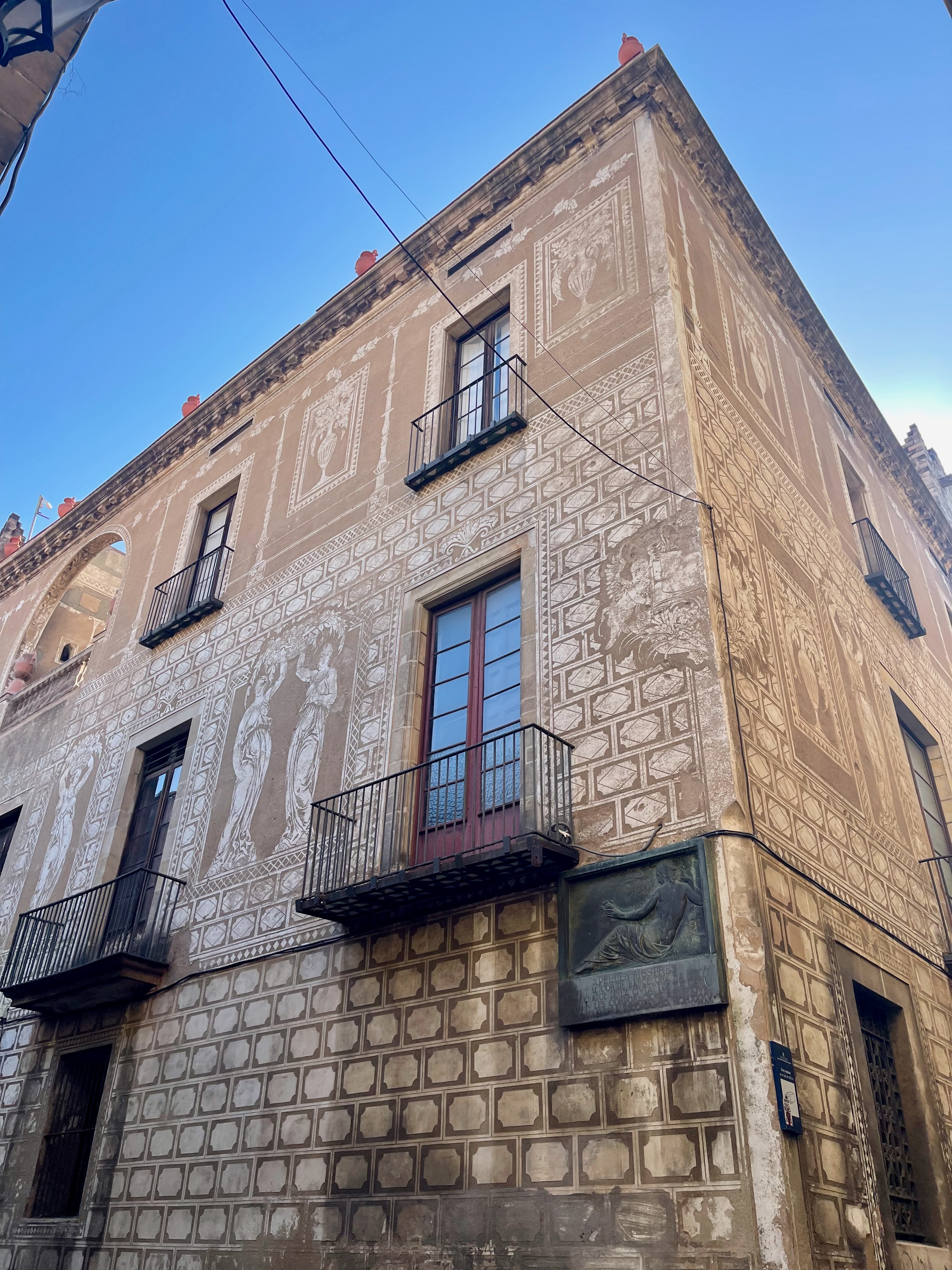
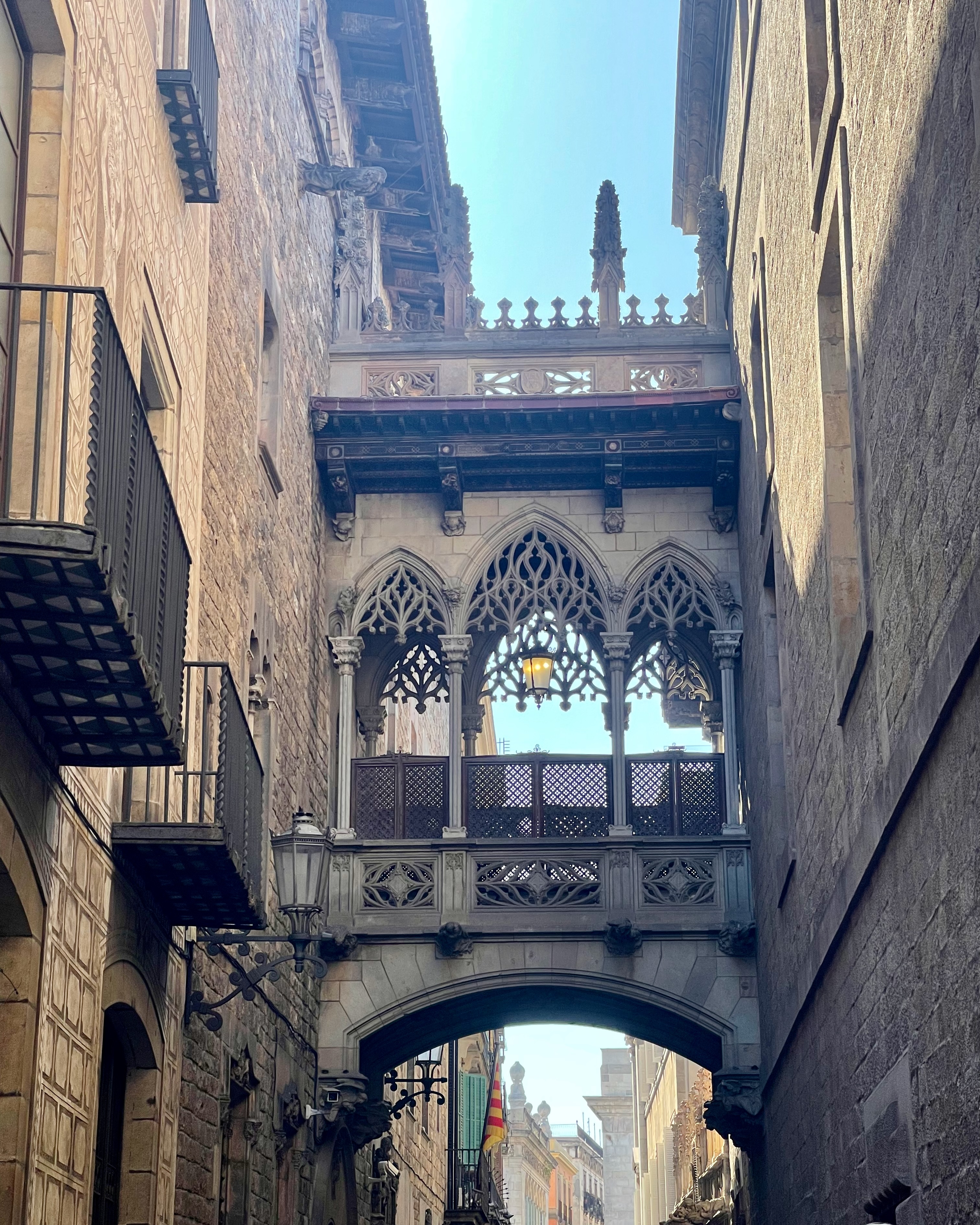
Although this looks as though it could have been built in the middle ages, it’s actually only about a hundred years old.
The builder, Joan Rubio I Bellver, was an apprentice of Gaudi and the bridge was part of the preparation for the Barcelona International Exposition in 1929.
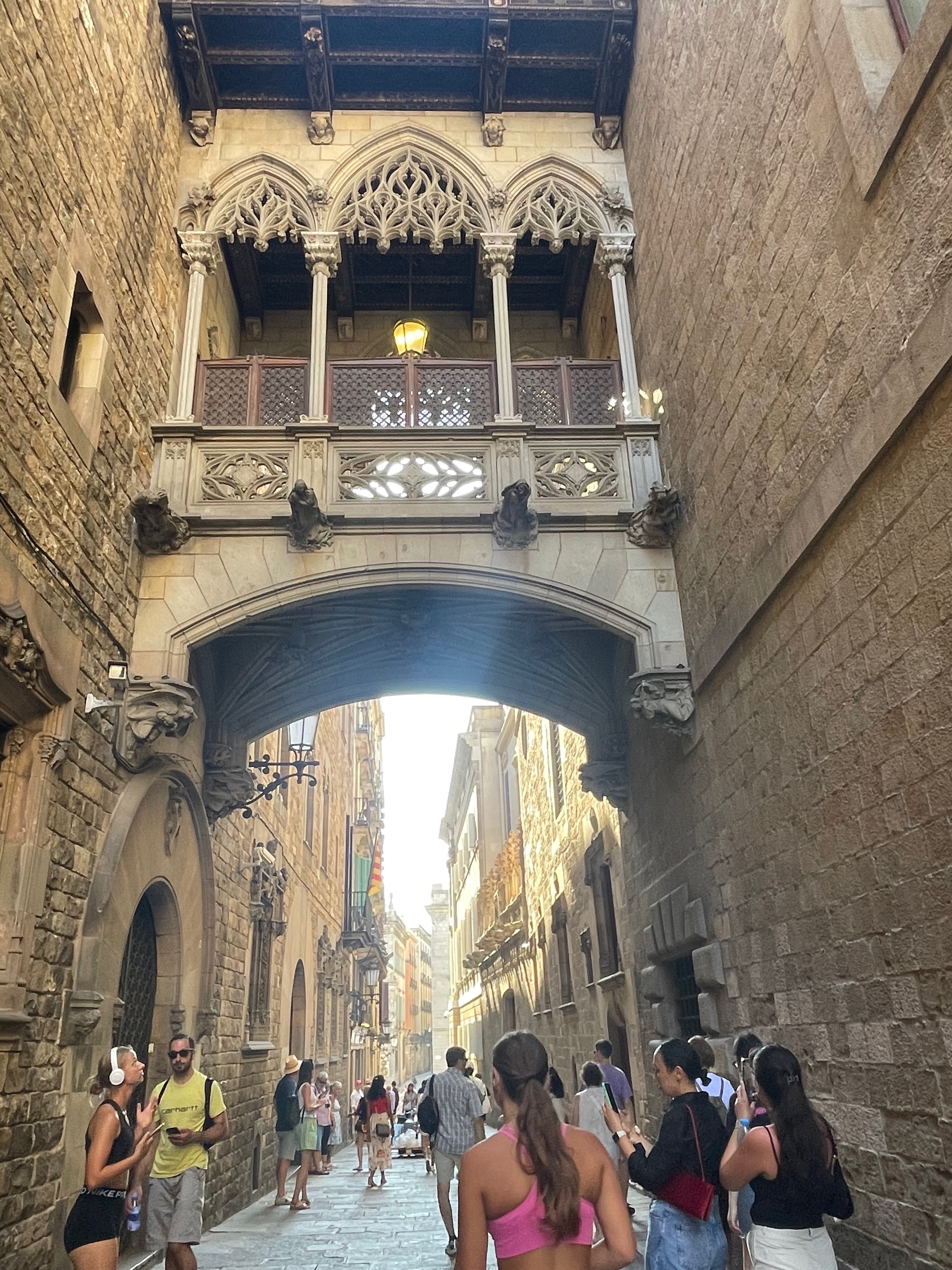
Bellver had a vision for the city that went beyond the bridge he’d been commissioned to build. He wanted to knock down all the modern buildings around the cathedral and rebuild them in a neogothic style.
The council weren’t happy with this and rejected his plans – after all, they just wanted a bridge.
Bellver, however, wasn’t one to take rejection lightly and carved a skull pierced with a dagger underneath as a curse. It’s said that whoever gazes on the skull will be cursed with bad luck – although you can reverse the curse by walking backwards under the bridge while simultaneously looking up and making a wish.
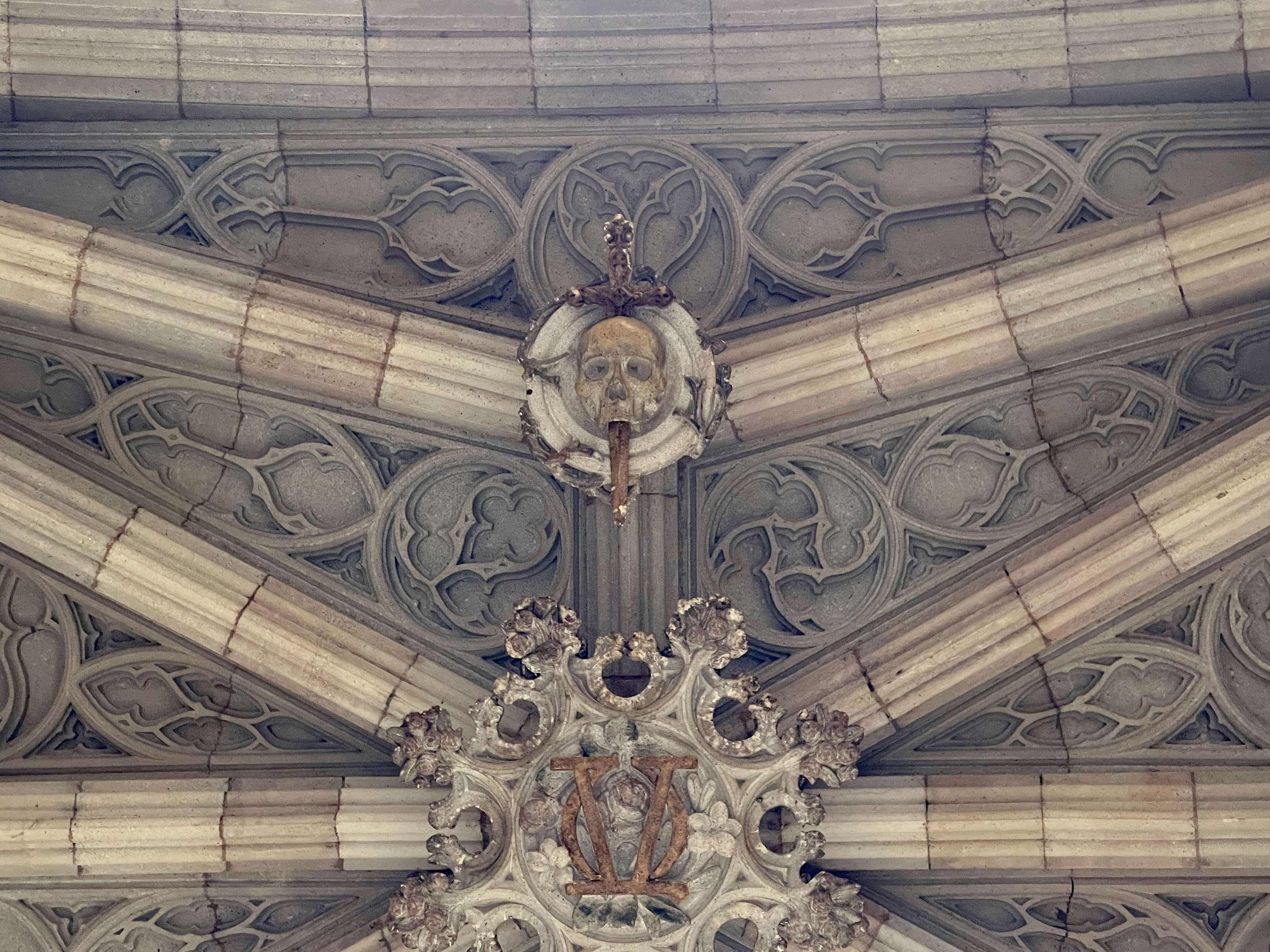
There’s another legend, though, that says if the dagger were ever to be removed from the skull, the city of Barcelona would fall and be destroyed. Let this be a warning.
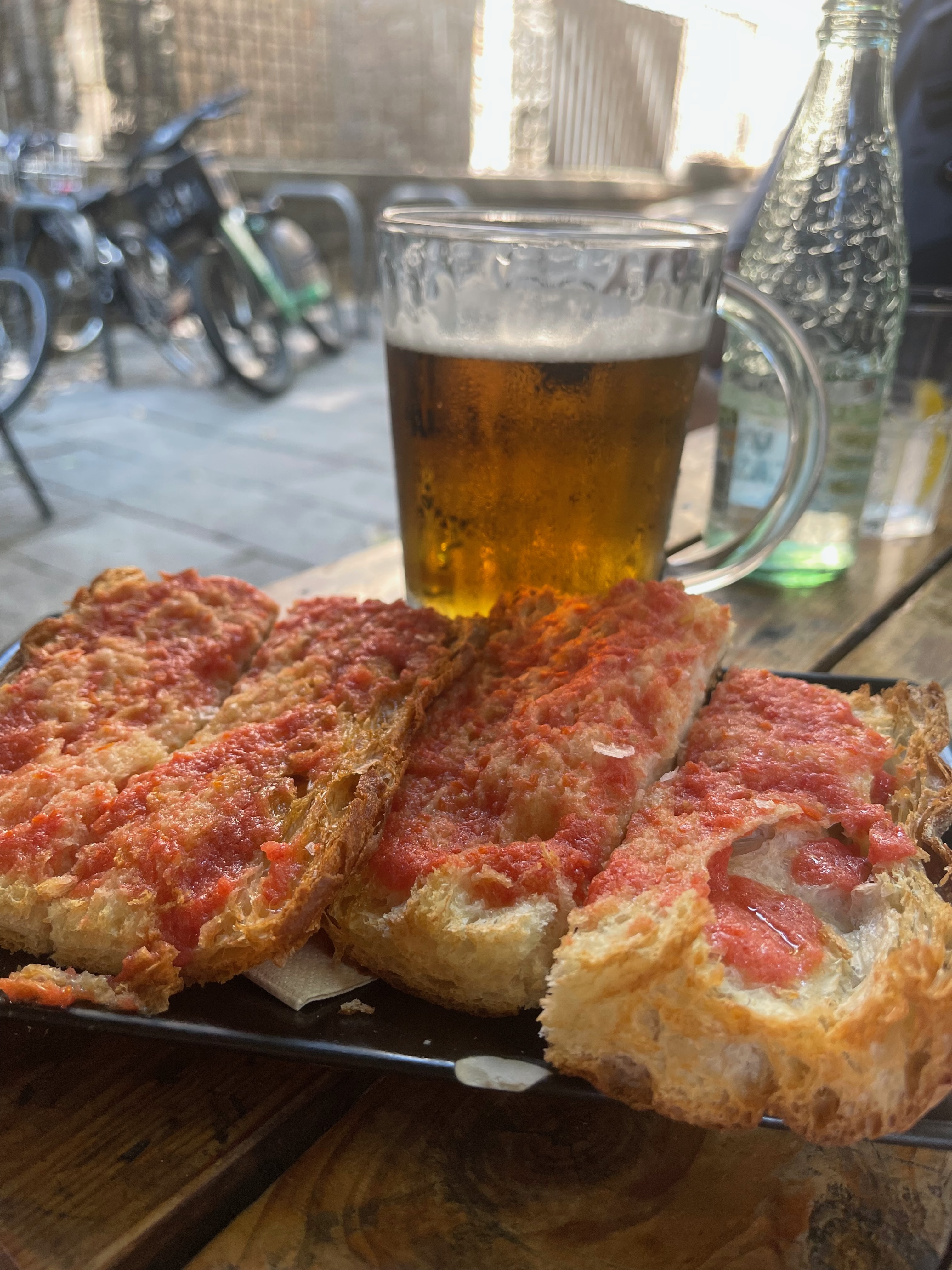
We stop at our corner tapas bar for tomato bread, but as Grant can’t manage more than a few nibbles, Sarah and I leave him at the hotel and head back to Clements at the market for more seafood.
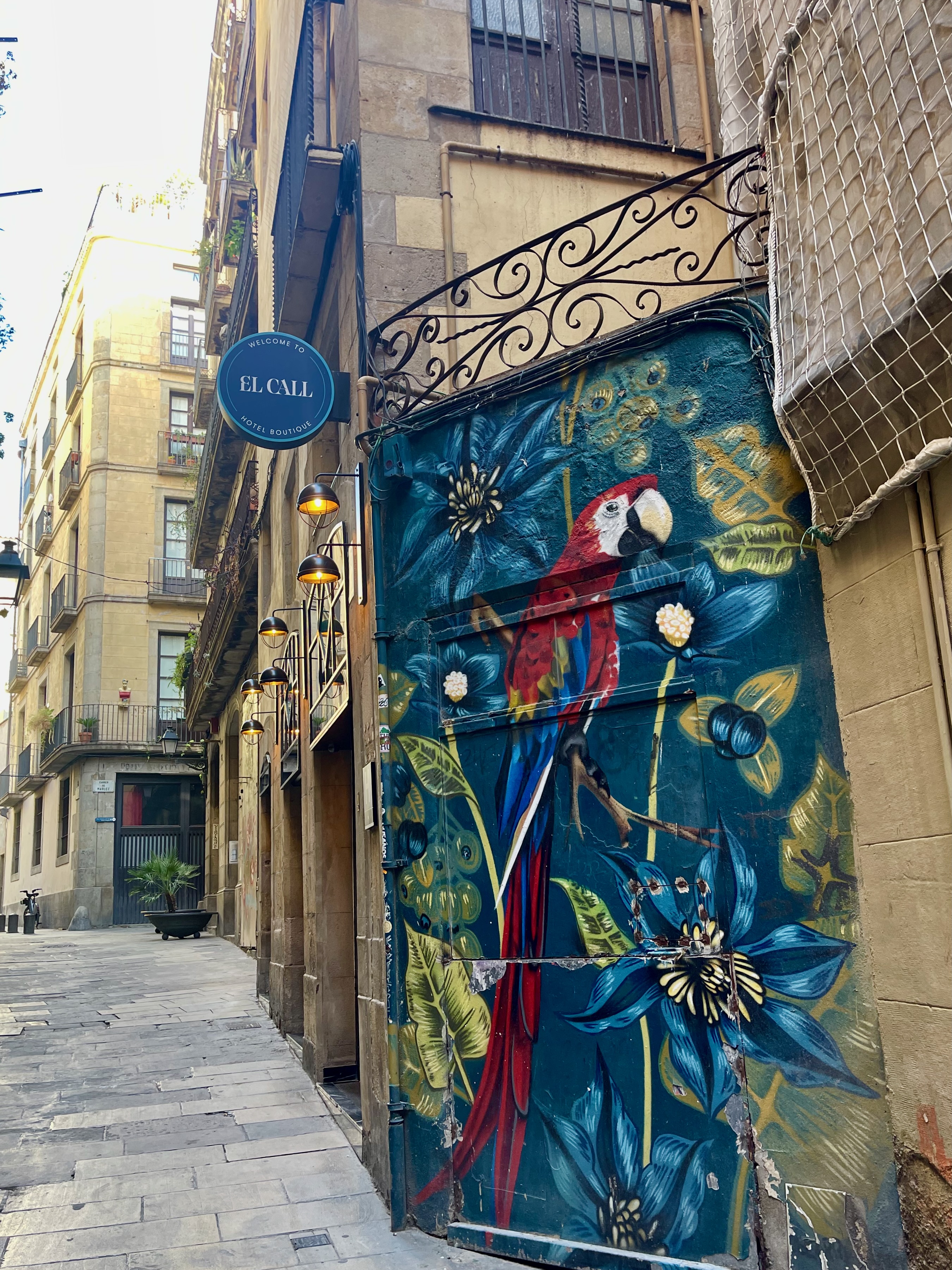
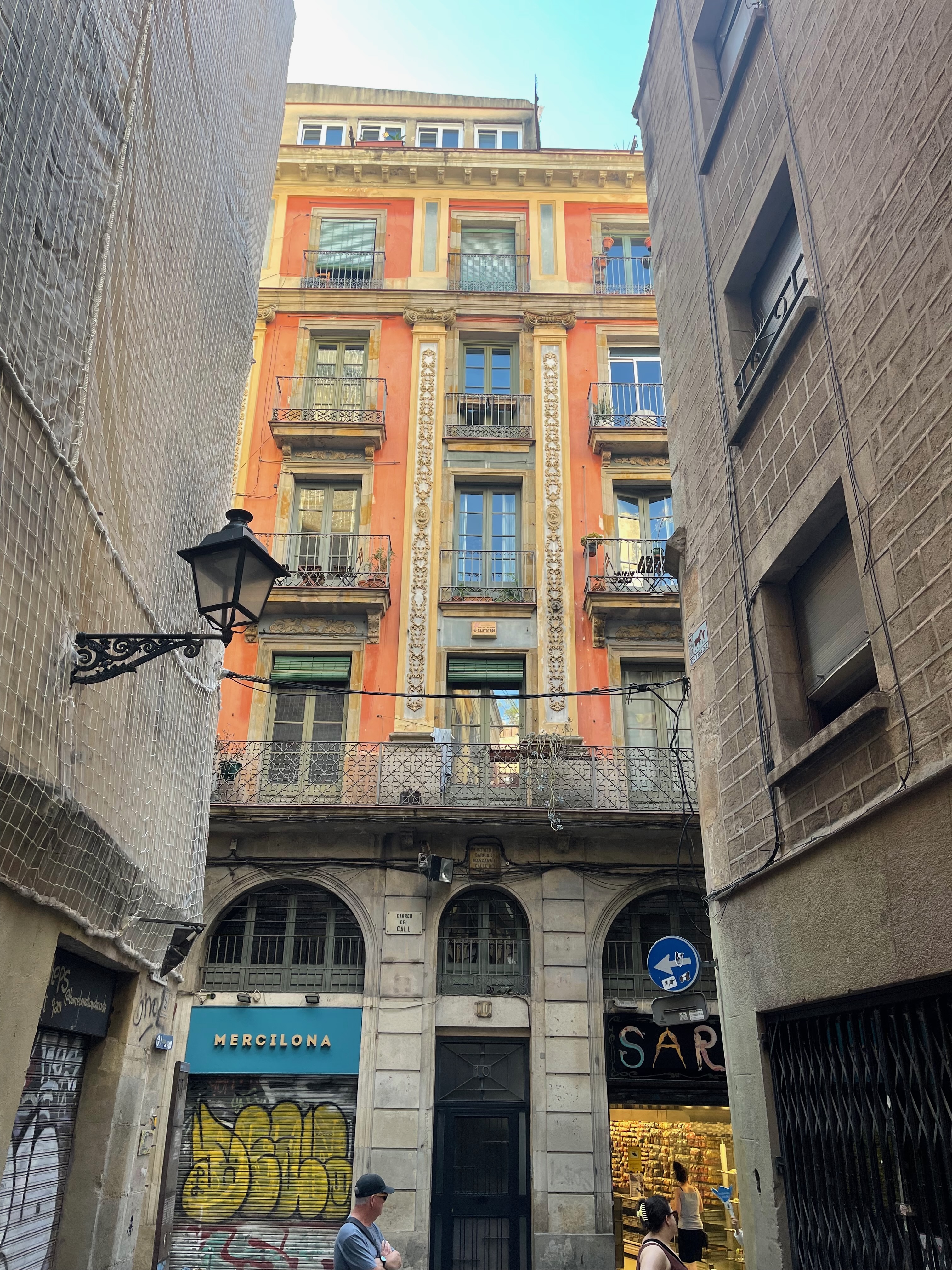
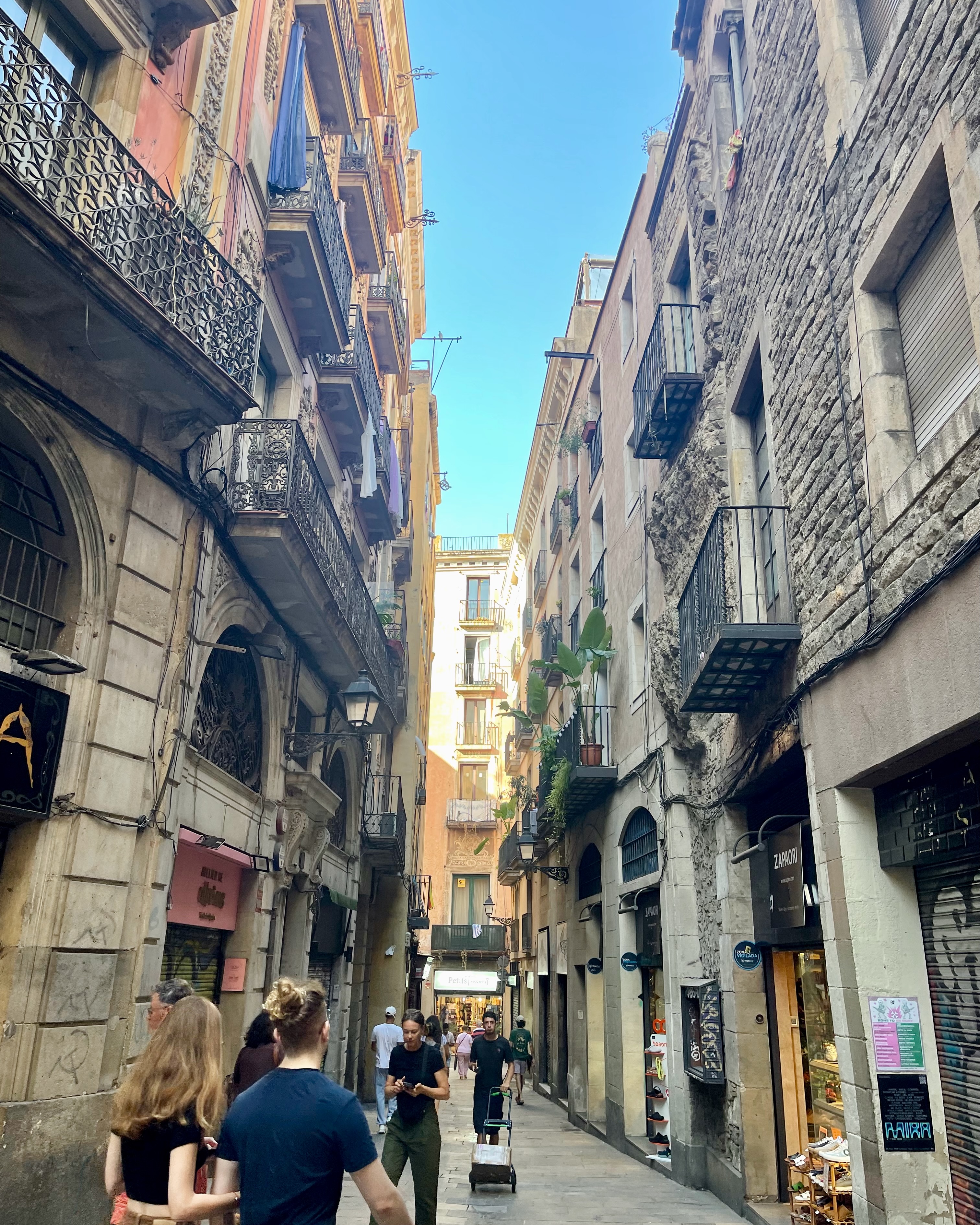
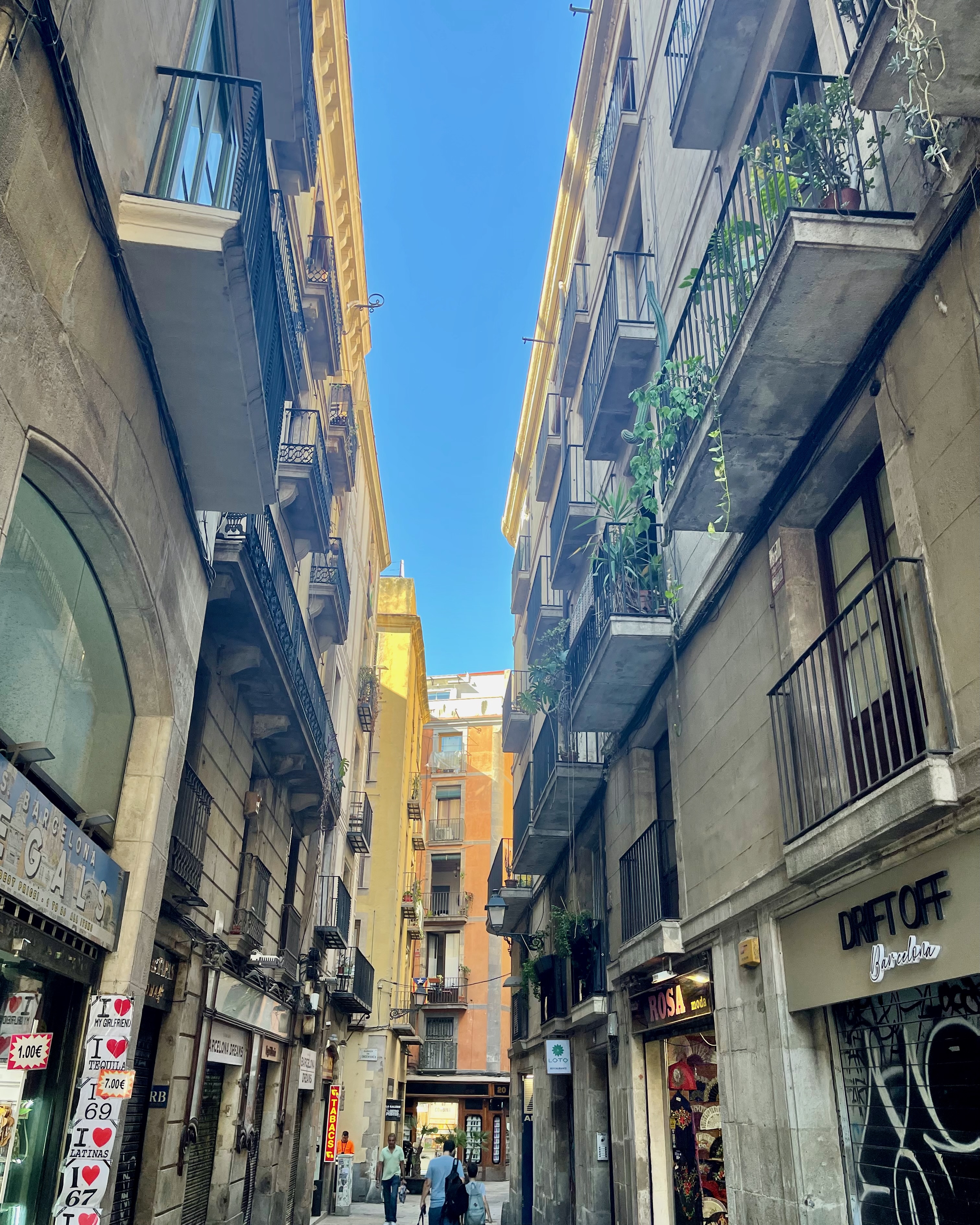
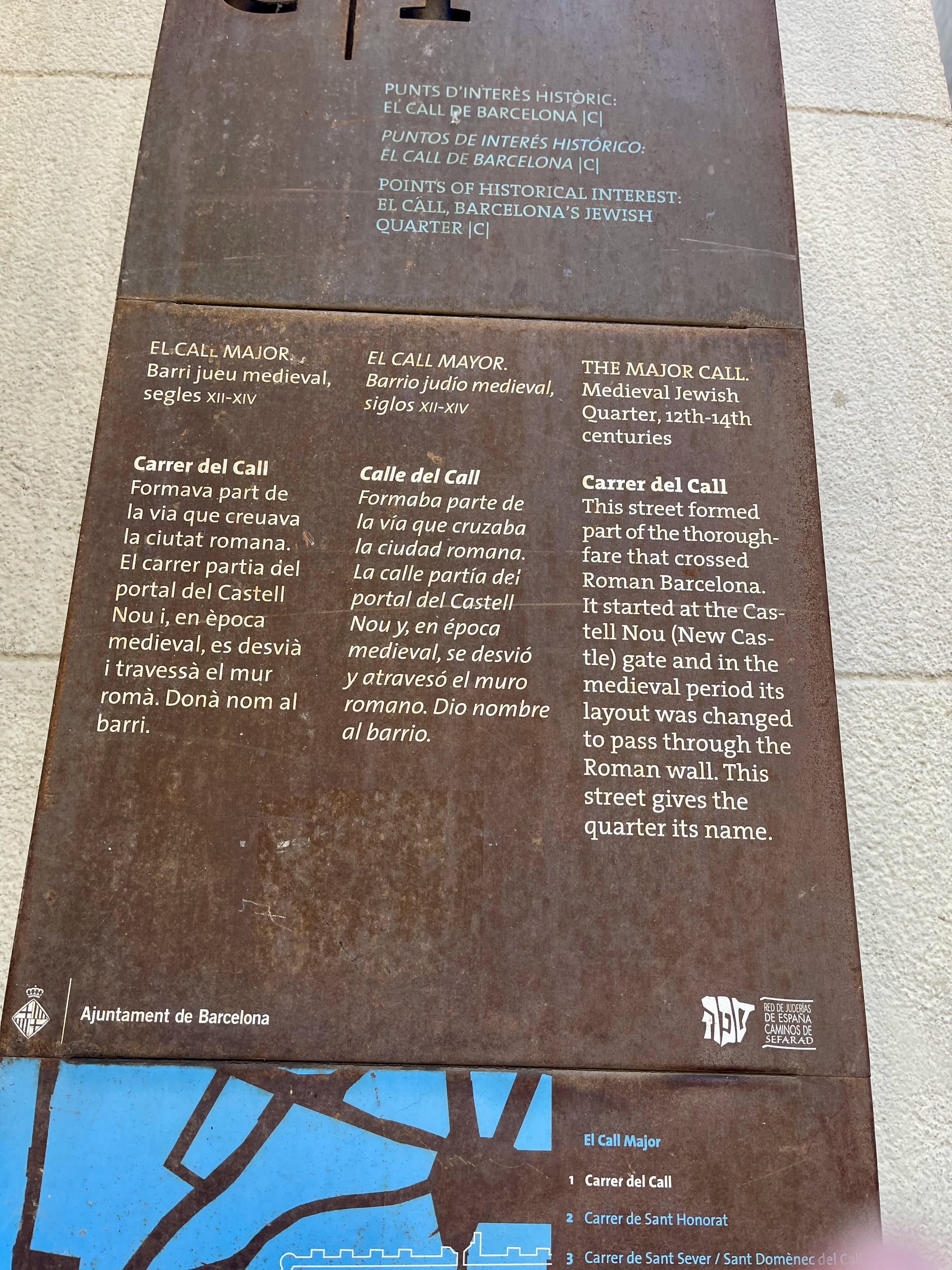
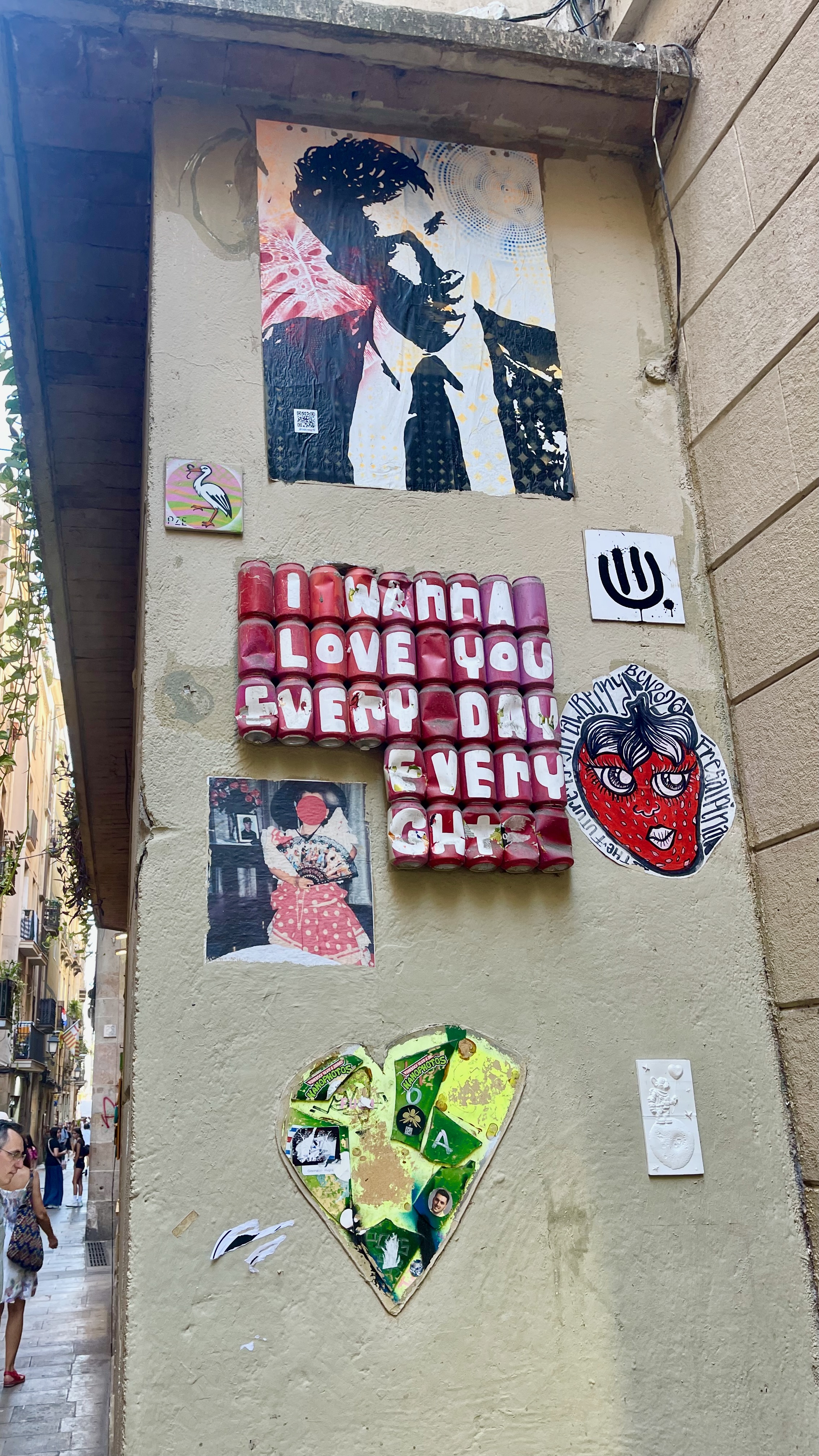
In the Middle Ages, the maze of narrow lanes and alleys in El Call was home to a vibrant Jewish community. Today, Carrer del Call and the streets off it, are full of some cool little shops, restaurants and cafes. Sarah bought a grating plate and some art prints. We make a note to come back another time for more wanders.
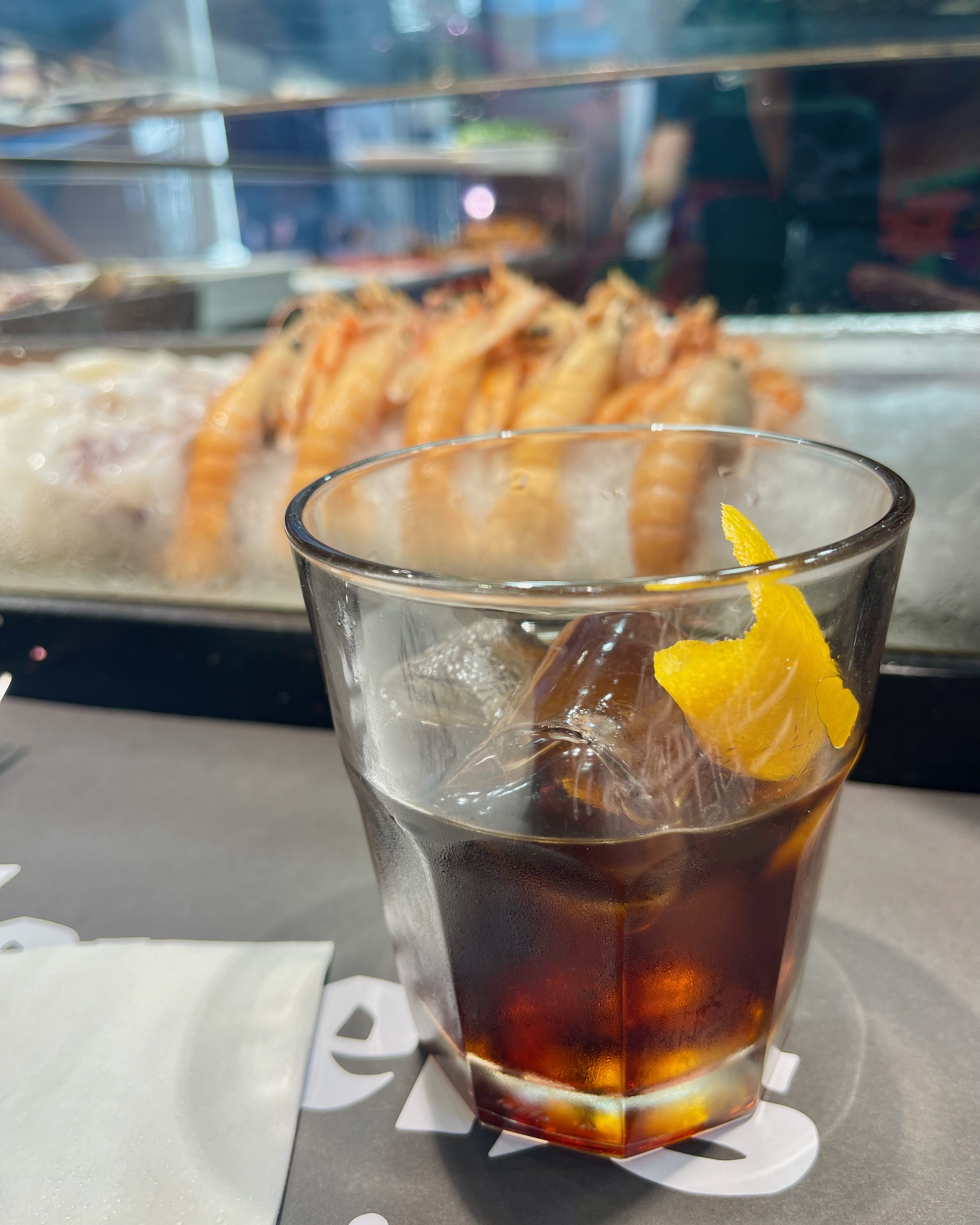
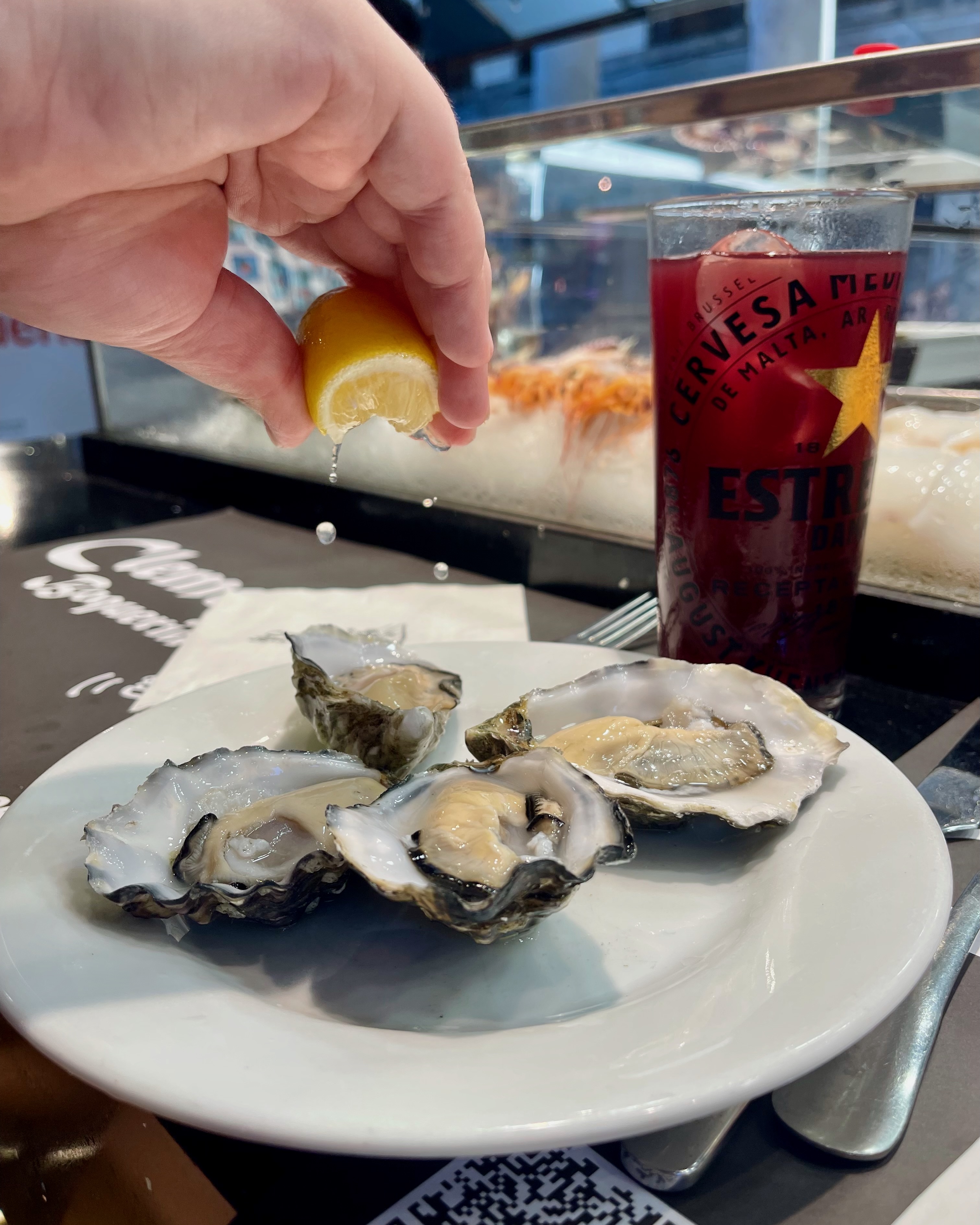
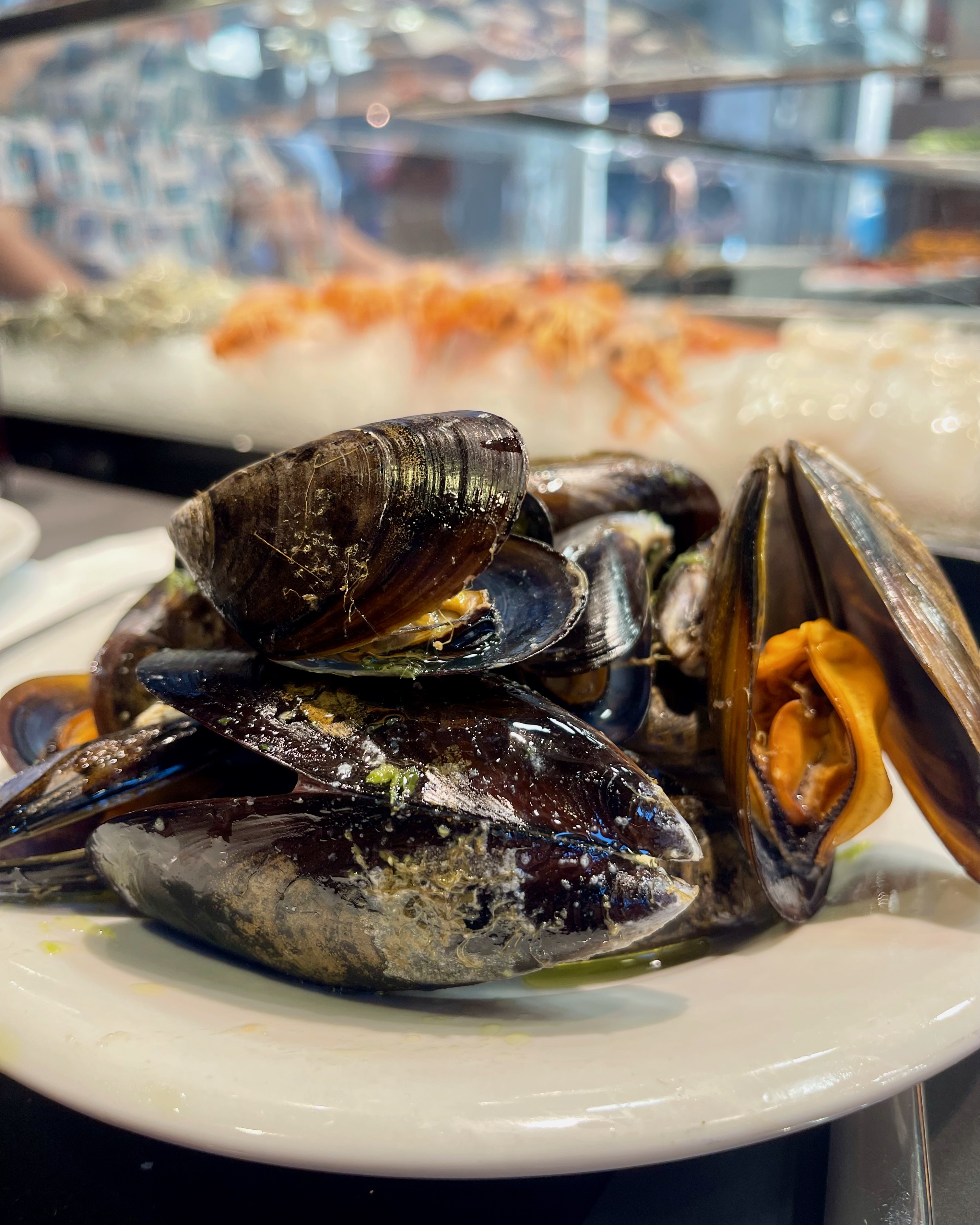
Today we have oysters, a plate of mussels, vermouth (me) and sangria (her).
It’s the hottest part of the day by now, so while Sarah spends the afternoon by the pool, I have a quick swim and chill out in our room. My back needs the break. Grant sleeps all afternoon. As I said, it’s his superpower.
The sleep obviously does him good and he’s able to join us for dinner which is at Guell Tapas.
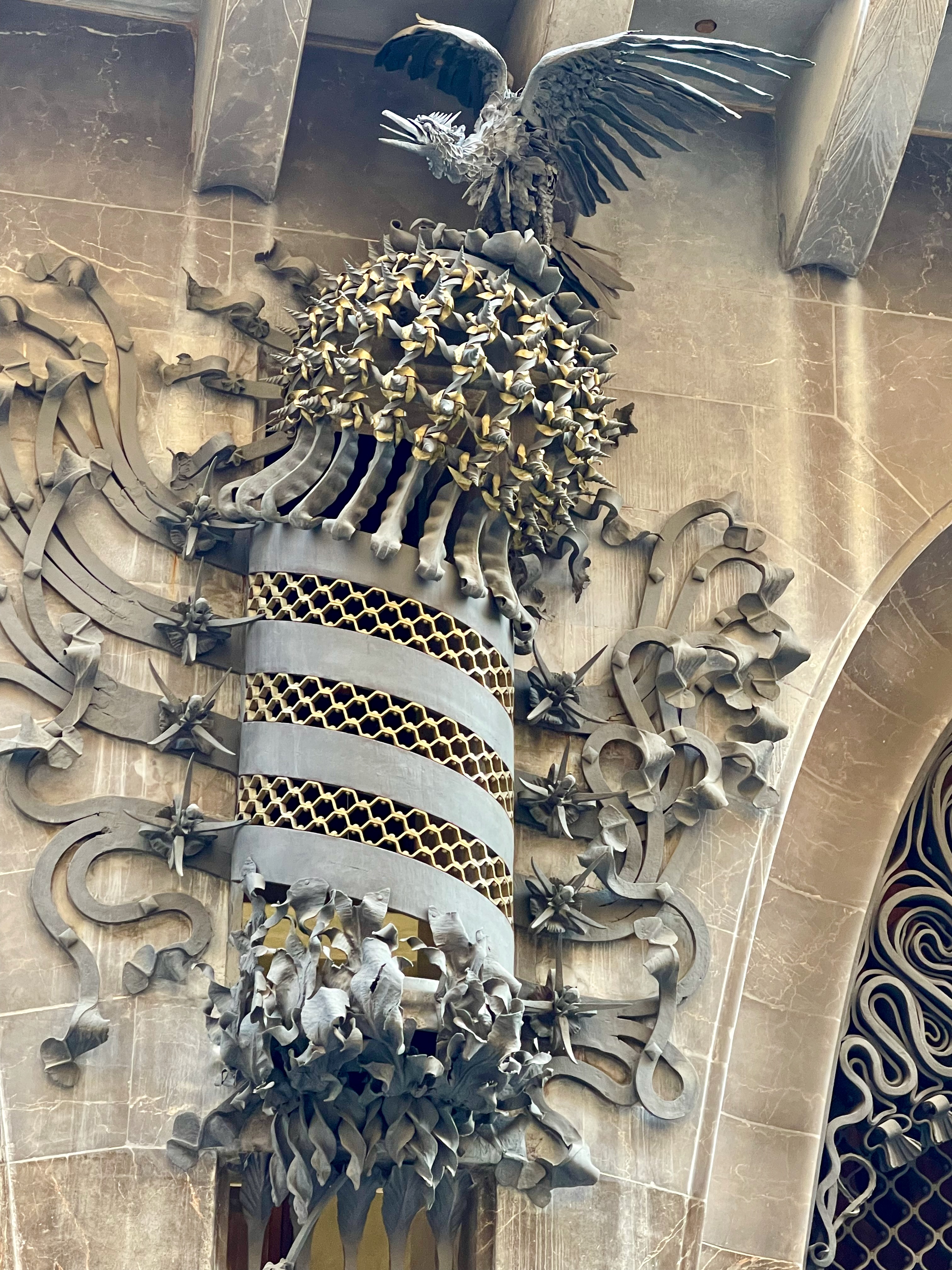
Situated next to Palau Güell (another Gaudi house), t’s a tad touristy, but the food is good.
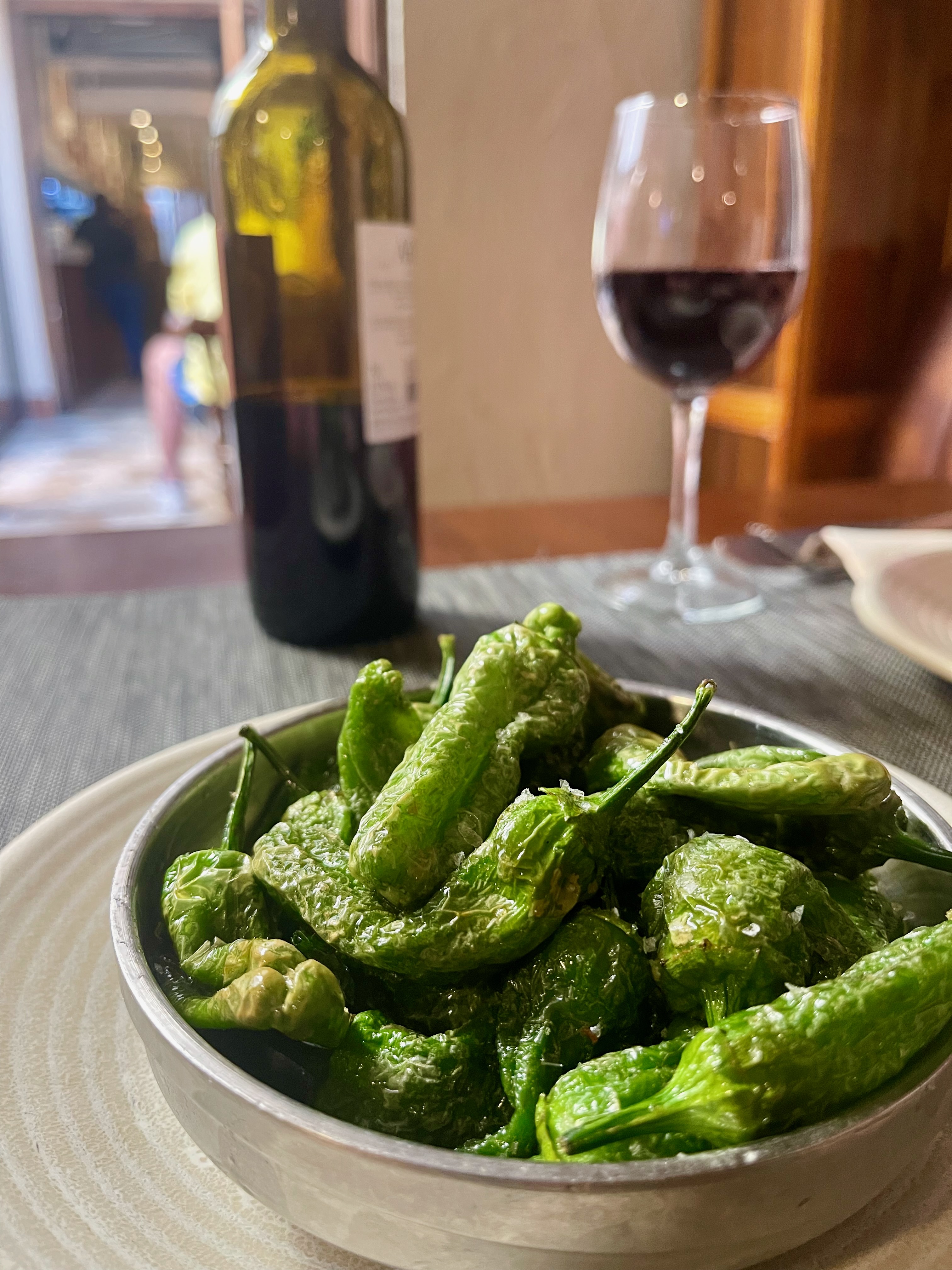
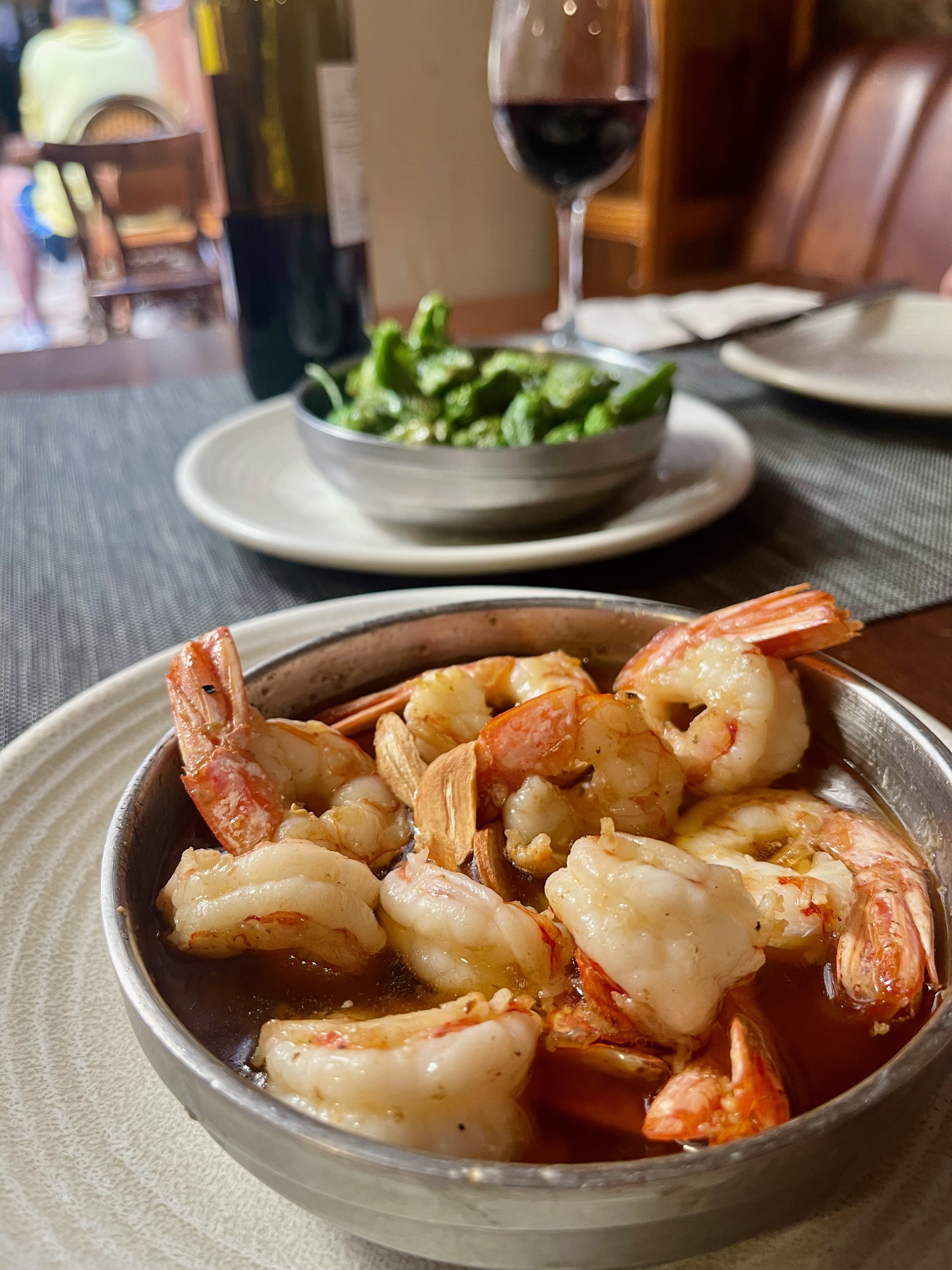
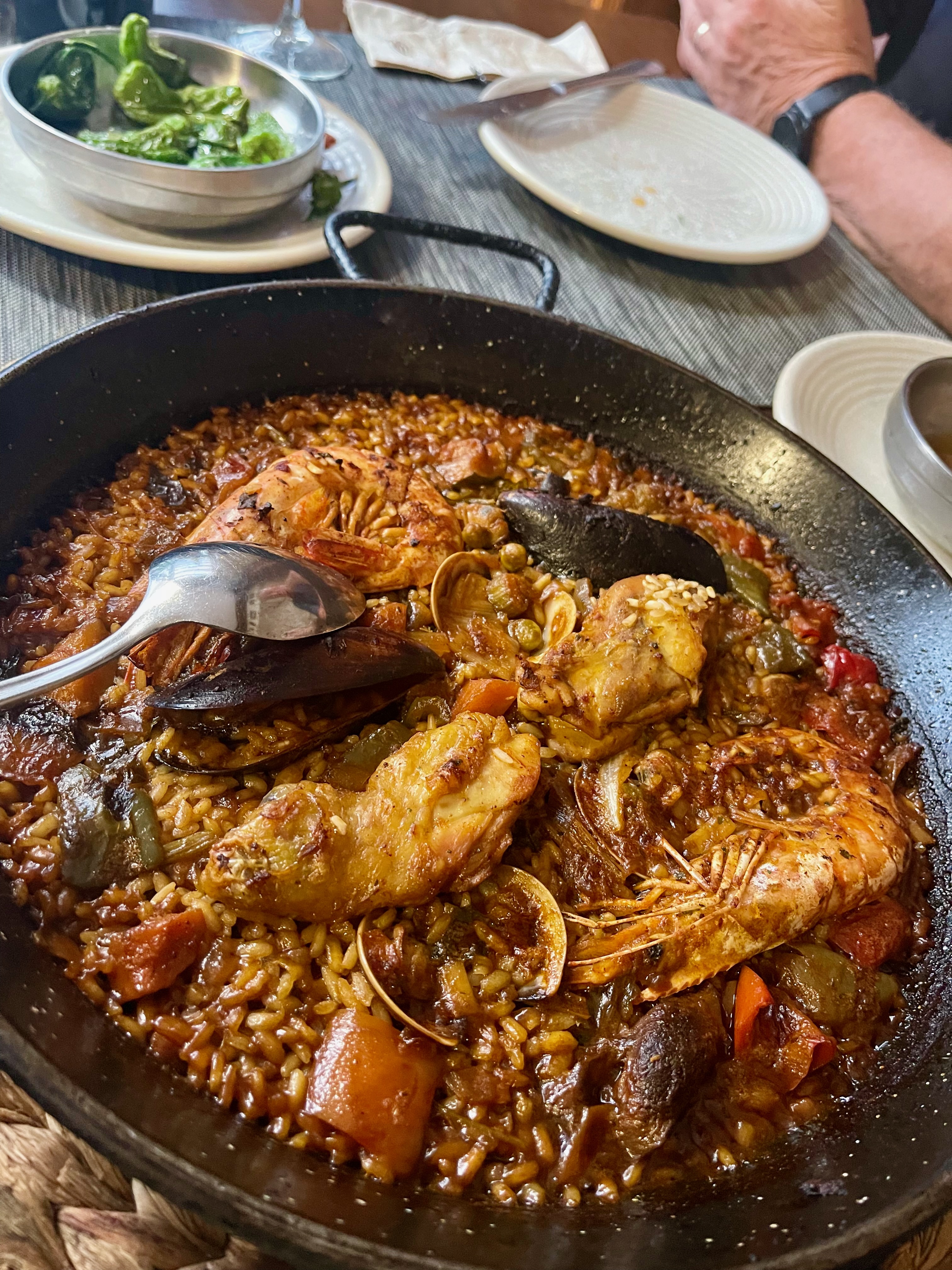
We eat garlic prawns (13.50), green peppers (6.20) and mixed paella (18.70). And drink a bottle of the house Rioja.
This series of posts are direct transcripts from my travel journals …


